Tag Archives: nature

Mountain Reedbuck

Redunca fulvorufula

South Africa’s mountainous areas is home to the Mountain Reedbuck, a grazing antelope uniquely adapted to the highlands, mountains, hills and rocky ridges, where they prefer open vegetation.

Though they closely resemble the related southern reedbuck, they’re much more lightly built, weighing approximately 30kg and standing about 75cm at the shoulder. Only the males carry the short, forwardly curved horns.

Mountain reedbuck are more social than their close cousins, occurring in herds of up to 40, but more usually up to 16 individuals, consisting mostly of ewes and their lambs accompanied by a mature, territorial male. They’re active during the cooler daylight hours and throughout the night, which is when they’re normally heading into the lower-lying areas to drink, returning to their rugged abodes before first light. Most lambs are born in the summer rainy season and remain hidden for up to three months, with the ewe returning to it regularly to suckle, before joining their mothers in the herd. Their life expectancy is not much more than 14 years, with most of Africa’s larger predators including them in their diet and jackals especially taking a heavy toll on lambs.

The mountain reedbuck is safely protected in several South African reserves and the IUCN estimates their population at 33,000 at least. We’ve encountered them in the uKhahlamba Drakensberg Park, at Golden Gate, Loskop Dam, Marakele, Pilanesberg and Rietvlei Nature Reserve, but in our experience Ithala Game Reserve and Willem Pretorius Game Reserve offers the best chances to have close-up sightings of this agile antelope.

Kamberg Nature Reserve

Talk about South Africa’s most scenic natural attractions, and the Drakensberg mountain range is sure to feature in the conversation. The Kamberg is a distinctive mountain, reminiscent of a comb (“kam” in Afrikaans, “berg” meaning mountain), in the foothills of the Drakensberg. The Kamberg Nature Reserve was originally proclaimed in 1951, covering only 2,232 hectares. Today it forms an integral part of the uKhahlamba Drakensberg Park‘s expansive 243,000 hectares of protected mountain paradise, recognised by UNESCO as a World Heritage Site of natural and cultural significance. Grasslands predominate, though forested sections exist in the sheltered valleys and extensive reedbeds and wetlands can be found along the Mooi (“pretty”) River, which forms a focal point for the reserve.

Whatever your energy levels, there’s ample opportunities to enjoy the refreshing mountain air at Kamberg. The reserve is well known in fly-fishing circles, with the Mooi River and two dams stocked with (admittedly exotic) trout. There’s three small, but well maintained, picnic sites – one in a copse of trees at the gate, one on the banks of Eland Dam, and one next to the river. Of course there are several trails leading down into the valleys and up into the mountains that may be explored on foot or mountain bike. And there’s a jungle gym and swings to keep the younger generation entertained within shouting distance of the chalets up at the camp.

The tiny camp at Kamberg, managed by Ezemvelo KZN Wildlife, is heaven-on-earth to any weary city dweller searching for peace and quiet, as there’s only 5 two-bedded chalets and one six-sleeper cottage at the camp. Eight kilometers from the main resort, the rustic and isolated Stillerust (Afrikaans for “quiet rest”) Farm House provides accommodation for ten guests. There’s a very limited selection of cooldrinks and sweets on sale at reception, and guests should bring along all their own provisions, firewood included. Just behind the camp, at the reception office, is the Kamberg San Rock Art Interpretive Centre where educational films on the San rock art of the Drakensberg are shown and from where the guided walks to the Game Pass Shelter departs. It’s a three-hour round trip to the internationally renowned cave, where high quality San paintings that were instrumental in deciphering the meaning behind the images left by these hunter-gatherers on rock faces across Southern Africa, can be appreciated. Unfortunately the prevailing weather conditions kept us from visiting the cave on this trip, but that’s reason enough in itself to return soon! For guests staying longer, Kamberg is also an ideal base from which to explore other destinations in the Drakensberg, such as nearby Giant’s Castle, and Midlands attractions like Midmar Dam, Karkloof Conservancy, Umgeni Valley Nature Reserve and Queen Elizabeth Park.

During our visit, the local wildlife mostly remained well hidden in the long, flowing grasslands through the day, except for a water mongoose that flashed across the trail next to Erskine Dam, a troop of baboons that sauntered through the camp one afternoon and a distant herd of black wildebeest we saw on the plains near Stillerust. At night however literally dozens of antelope; reedbuck, grey rhebuck and grey duiker, and hares and rabbits would come out to graze on the lawns between the chalets at the camp.

The Drakensberg is home to an amazingly diverse birdlife, with several rare and endemic species occurring at Kamberg. We were thrilled to see several pairs of grey crowned cranes in the wetlands, but absolutely overjoyed by our first ever sighting in the wild of the highly endangered  wattled cranes, even if the breeding pair was quite far off in the distance and our photograph nothing more than proof of the sighting 😉

Speaking of cranes, we paid a quick visit to the Hlatikulu Crane Sanctuary on the nearby property of the Entabeni Education Centre where they take care of injured and orphaned blue, crowned and wattled cranes and do more than their share to preserve these special and endangered birds for South Africa’s future generations.

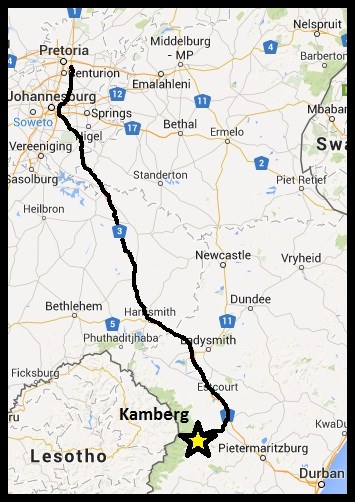
From Pretoria, it’s a drive of approximately 540km to Kamberg, following the N3 southwards to Mooi River. The road to the reserve turns off the R103 at Rosetta, between the Midlands towns of Mooi River and Howick. The 40km (30km tar and 10km gravel) stretch between Rosetta and Kamberg is a very scenic drive through green farmlands and the foothills that constitute the “Little ‘Berg”,  and should not be rushed (the road is not in a good enough condition to travel on at speed in any case).

Kamberg Map

Pretoria to Kamberg (drawn from Google Maps)

Our first visit to Kamberg over a long weekend early in May 2015 opened only a tiny window onto the rich cultural and natural treasures protected there. We’ll be back for sure; there’s still so much to explore, experience and appreciate at this little known gem of “the ‘Berg”.

Force of nature

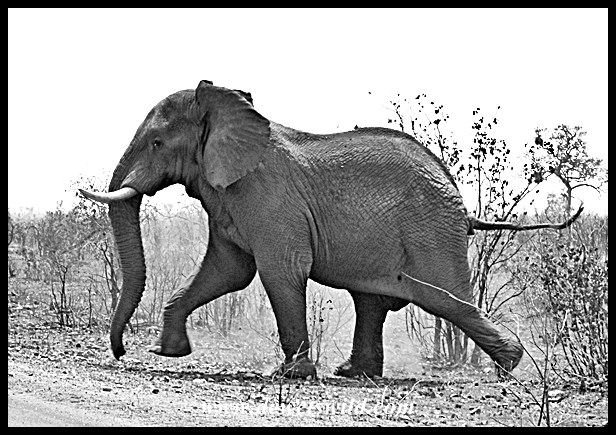
Few things will stop an African elephant bull at full speed… This photo was taken near Babalala, between Shingwedzi and Punda Maria, in the northern Kruger National Park.

Force of nature

“Forces of nature” is the theme for this week’s WordPress Photo Challenge

Kamberg tranquility

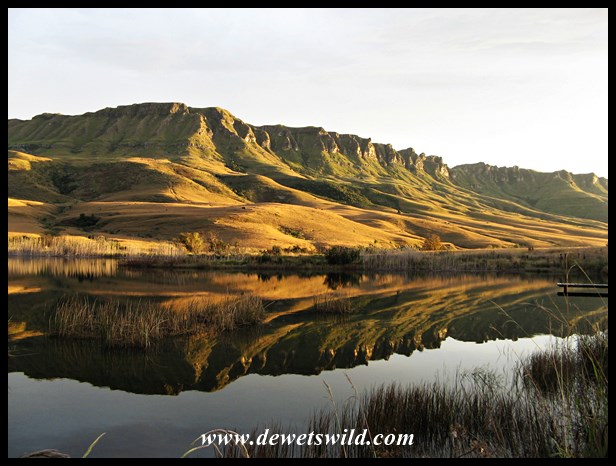
This morning, we awoke to beautifully clear skies here at Kamberg.

Kamberg 02-05-2015

We also learned just how quickly and unpredictably the weather can change in the Drakensberg; within half-an-hour of this photo being taken it was completely overcast!

48 hours in Golden Gate

A public holiday long weekend in South Africa was just the excuse we needed to head back into one of our favourite South African wild places, Golden Gate Highlands National Park.

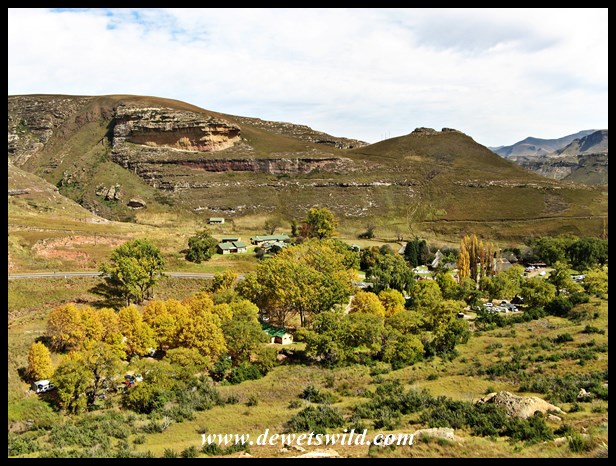
Golden Gate Autumn 2015 (1)

Glen Reenen Rest Camp, where cottage 25 was our abode for the two nights we spent in Golden Gate on this trip, was a festival of autumn colours. Two horses also made themselves right at home among the accommodation units, and provided loads of entertainment to us all, most especially involving Joubert either photographing them or inviting them over.

Of course we were not going to spend our time in camp only, as beautiful a place as Glen Reenen is, and we made sure we took in as much of Golden Gate’s spectacular scenery as we could fit into two days.

In a place this beautiful, the plentiful animal and birdlife certainly is a special bonus!

Almost exactly two days after we arrived, we set off back home to Pretoria, convinced yet again that Golden Gate is a very special place. If you’d like to learn more about Golden Gate Highlands National Park, have a read through the special blogpost we did on the Park’s fiftieth birthday.

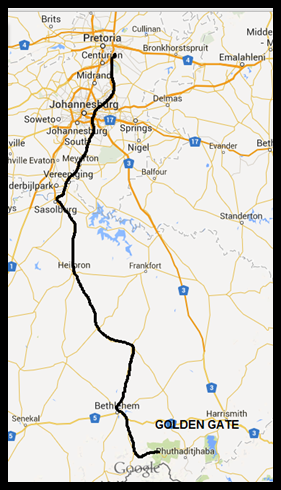
Our new favourite route to Golden Gate, via Sasolburg, Heilbron, Petrus Steyn and Bethlehem, a distance of about 400km from Pretoria (map drawn with Google Maps)

Our new favourite route to Golden Gate, via Sasolburg, Heilbron, Petrus Steyn and Bethlehem, a distance of about 400km from Pretoria (map drawn with Google Maps)

Autumn in the glen

Glen Reenen Rest Camp in the Golden Gate Highlands National Park, seen here this morning from the Mushroom Rocks walk, has been transformed into a feast of striking autumn colours.

Autumn at Glen Reenen

Motion

Animals on the move at Golden Gate Highlands National Park. And guess where we’re heading tomorrow for the Freedom Day Long Weekend? 😉

Motion” is the theme for this week’s WordPress Photo Challenge.


Loskop Dam Nature Reserve

In the 1930’s a wall of 45m high and 506m in length was built across a gorge cut by the Olifants River, giving rise to the Loskop Dam, intended to provide reliable irrigation for farming activities through a series of canals over 480km in length that was eventually completed in the late 1940’s. As was government policy at the time, only married white men were employed on the project initially, but due to a lack of labour stalling the progress unmarried white men were also later taken on. After the wall was raised to its present height of 54m by 1980, the dam now covers an area of 2,400ha at full capacity and stretches for up to 27km upstream.

Loskop April 2015 (28)

The reserve around the dam, originally proclaimed in the 1950’s, has since considerably increased in size, covering 22,850ha at present. Thanks to the exceptionally varied geology and hilly topography (ranging between 990 and 1,450m above sea level), and due to the fact that the reserve is located at the transition between the highveld grassland and lower lying bushveld biomes, a total of 1016 plant species have already been identified within its borders, unfortunately including a couple of species of exotic intruders which the reserve staff are continuously trying to eradicate. No less than 65 rare and threatened plant species occur here, including the only viable population of the Middelburg Cycad (Encephalartos middelburgensis). This amazing diversity of habitats and fodder supports almost 70 mammalian species (including leopard, brown hyena, white rhinoceros, hippopotamus, buffalo, giraffe, plains zebra, warthog, sable antelope, tsessebe, eland, kudu, nyala, bushbuck, reedbuck and oribi). Unfortunately chemical pollution entering the dam from upstream has had a devastating effect on the population of nile crocodiles, one of 42 reptile species that have been recorded at Loskop. The 367 bird species that call Loskop home include a successfully reintroduced population of red-billed oxpeckers, and other rare species like the ground hornbill, bald ibis and blue crane. The inventory of species found in this scenic reserve also includes 19 kinds of amphibians, 42 fish species (three of which introduced aliens) and 49 spider genera.

Loskop Dam Nature Reserve is managed by the Mpumalanga Parks and Tourism Agency, ably assisted by a volunteer organisation, the Friends of Loskop, who are very involved in the day-to-day running of the reserve, assisting with environmental education for visiting school groups, and projects involving the study, breeding and protection of endangered species that occur naturally within the reserve, such as the ground hornbill, black-footed cat and white rhino.

Loskop April 2015 (27)

We spent a morning exploring the reserve roads on the North-Western shore of the Dam, and found adequate facilities for day visitors in the form of two photographic hides and a well-kept picnic site with neat ablutions. We did not have any exceptional wildlife encounters (perhaps the overcast, drizzly weather and thick vegetation at the end of the rainy season was to blame), but the inspiring scenery more than made up for that. The limited road network is rough gravel, with some erosion damage and loose rocks in places, but most of the routes (with the exception of the Langeberg loop) can be carefully negotiated in a normal sedan. The direct distance between the gate and picnic site is approximately 18km, and you’ll need at least three to four hours to explore this section of the reserve in your own vehicle.

The very popular Forever Resort Loskop Dam offers accommodation, a huge camping area, shop, restaurant, several hot and cold swimming pools, sporting facilities, designated areas for fishing from the shoreline, boat launching facilities, and guided boat trips on the dam. Due to the risk of encountering hippos and crocodiles in the water, swimming and water-skiing is not permitted. Forever Resorts Loskop Dam hosts several fishing competitions every year, and in April annually the very popular 50km Loskop Ultra-Marathon, 21km Loskop Wild Challenge and Loskop Rhino Family Fun Run.

The resort’s beautifully kept gardens are a joy to explore, with beautiful flowers, interesting plants and fascinating wildlife within easy reach.

The wild figs scattered around the grounds are hives of activity, day or night.

Humans are not the only primates that find the resort at Loskop a choice destination, and guests would be well advised to ensure they keep the windows and doors of their tents or accommodation closed when not in attendance.

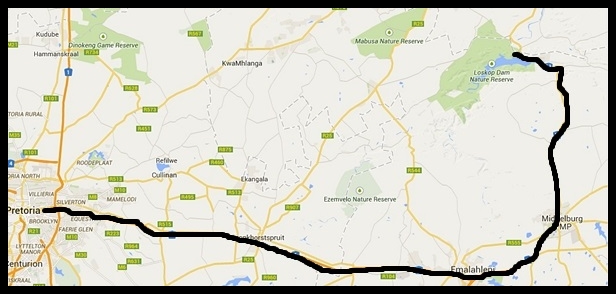
Forever Resort Loskop Dam lies on the North-Eastern shoreline of the dam, approximately 190km from Pretoria, easily accessible along the N11-route between the towns of Middelburg and Groblersdal. This was our base for the three nights we spent enjoying the reserve over Easter 2015, and from where we experienced the most glorious sunsets! The Loskop area holds many special memories for the de Wet family; and thanks to the long weekend we spent there together we’ve accumulated so many more!

Easter Sunday Sunset over Loskop Dam
Easter Sunday Sunset over Loskop Dam

The route from Pretoria to Loskop Dam (using Google Maps)

The route from Pretoria to Loskop Dam (using Google Maps)


Early Bird

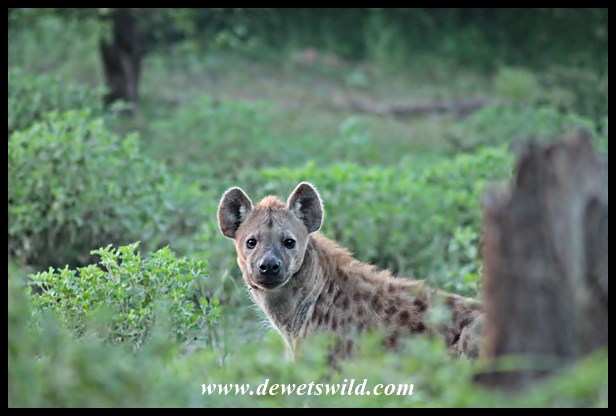
Being out and about at first light is often richly rewarded in South Africa’s wild places, as was the case with this memorable encounter with a spotted hyena near Letaba Rest Camp, in  the Kruger National Park.

Early Bird

Early Bird” is the theme for this week’s WordPress Photo Challenge


Easter Sunsets at Loskop

Just below the tennis courts at the Forever Resort at Loskop Dam, on a piece of land jutting into the watery expanse, there’s a big old thorn tree standing next to the water. The tree’s extended root system, exposed by the action of countless waves, is the perfect perch from which to enjoy the most spectacular sunsets over the dam and the hills that surround it. Though cloud cover on the distant horizon obscured the setting sun on Good Friday, we got enough of a taste to be sure that this was the spot we’d want to spend every evening this Easter…

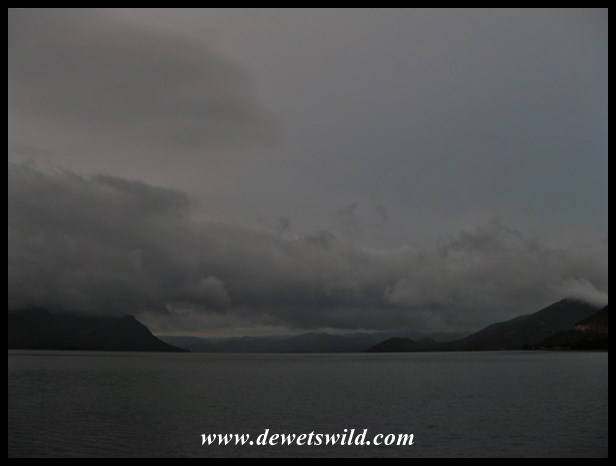
Saturday evening had an altogether different feel to it though. Very welcome rain had been falling almost the entire day, and dark, broody storm clouds and a constant drizzle were our companions that evening.

Loskop sunsets (3)

And then came Sunday’s sunset! On our tree-root front-row seats we were bathed in the glorious golden glow of a perfect bushveld sunset.

As a Christian family celebrating the cornerstone of our faith, we felt profoundly blessed for being together in that spot at that point in time. Life doesn’t get any better than this.