Tag Archives: nature

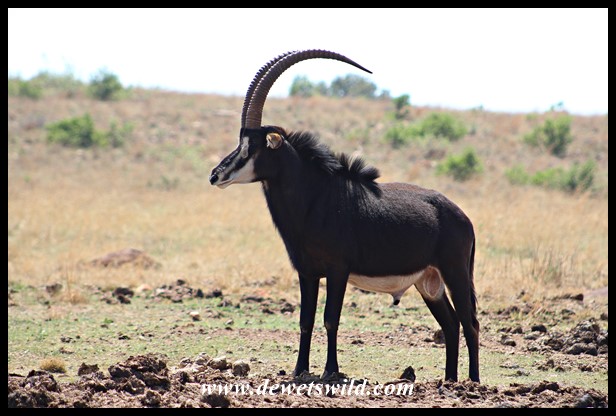
Sable Antelope

Hippotragus niger

To us, the Sable is the most majestic of all the antelope – the proud bulls with their gracefully curved horns, pitch-black bodies and contrasting white stomachs make a sight to behold! The Sable is a large antelope, weighing from 180 to 270 kg and standing up to 1.4m high at the shoulder. Bulls are only slightly larger than the cows.

The Sable Antelope inhabits open woodland and savannas, with medium to long grass, large trees and few shrubs. They are seldom far from water as they need to drink daily. They are almost exclusively grazers, consuming only small quantities of leaves and herbs, especially in the dry season.

Adult bulls maintain territories through ritual display and serious fights, and attempt to keep passing herds of cows and their calves in their area so that they can mate with receptive females. Breeding herds number about 20 animals, though larger, temporary groups of up to 200 may form in areas of good grazing. Males that aren’t able to hold territories come together in small bachelor herds. A strict hierarchy applies in both the bachelor and breeding herds, and appears to be based on age – the older the animal the higher its rank. Sable Antelope are most active in the early mornings and evenings, sometimes into the night, and rest in the shade during the heat of the day. Sable can be very dangerous and defend themselves valiantly against predator attacks – when cornered they will back into a thorny bush and face the attacker head-on with powerful swipes of those magnificent horns – even lions have been killed by Sable!

Most Sable calves are born in the rainy season, after a gestation of about 9 months. Cows leave their herds a few days before their calves are born and the calf then stays hidden for 2 to 4 weeks, during which time the mother nurses it twice daily, before joining up with the herd again. Young bulls are expelled from the herds at about three years of age to join bachelor groups, until they can establish their own territory at 5 – 6 years of age. Females remain in their maternal herds. Lions and crocodiles are the only natural threat to adult Sable Antelope, but leopards, cheetahs, spotted hyenas and wild dogs take a heavy toll on calves, especially while they are kept hidden those first few weeks of life. Sable have a life expectancy in the wild of between 10 and 18 years.

With a relatively stable population of 75,000 distributed from southern Kenya to northern South Africa, the IUCN considers the Sable Antelope as being of least concern overall, with at least half of this population occurring in protected areas. Outside of formal conservation areas they are becoming increasingly rare due to hunting and loss of habitat. An isolated population in Angola, known as the Giant Sable (H.n.variani) numbers only between 200 and 400 and is considered critically endangered. In South Africa, Namibia and Zimbabwe the Sable is regarded a valuable game ranching animal (mostly for trophy hunting) and as a result has been introduced widely onto private land, also outside their historical distribution range, representing the only sub-populations that are actually increasing in number and now make up about a quarter of the total population. South Africa’s biggest natural population occurs in the Kruger National Park, where their numbers have dropped significantly over the years due to competition from other herbivores. They can also be seen, amongst others, at Marakele, Mokala and Pilanesberg National Parks, at Loskop Dam and Willem Pretorius Game Reserves and in the Kgaswane Mountain Reserve.

Wrapping up the “Dads Trip to Mopani”

Middle-May presented an opportunity to visit one of my favourite corners of the Kruger National Park with three very good friends. We set off early on the Friday morning and returned the following Monday, having had a thoroughly enjoyable time exploring the wilds around Mopani Rest Camp. I’ve already shared with you some of what we saw – the exhilarating waterbuck fight, a towering elephant bull owning the road and the love of a mother hyena for her cubs – but of course in a paradise like Kruger there’s still much more to be seen, and shared!

When going to northern Kruger, apart from Impalas, there are three things you just KNOW you are going to see: Elephants, Buffaloes and Hippos!

Among all the beautiful elephants we saw, our most prized sightings were of Masasana and Ndlovane, two of the big tuskers that call the Kruger National Park home.

Early on the Saturday morning we thought we were going to be extremely lucky and see a pride of Lions take down a Blue Wildebeest at Tinhongonyeni waterhole. A passing rain shower however dampened the lions’ appetites and they went off to search for a drier spot among the dense mopane trees close-by.

Apart from the lions there were several predators in evidence around Mopani on this visit, with Black-backed Jackals and Spotted Hyenas being especially common.

And of course all those hungry meat-eater mouths rely on a steady supply of herbivores, which Mopani has no shortage of, especially around Tinhongonyeni and Mooiplaas Waterholes and in the marshland along the course of the Nshawu stream.

Kruger is always a paradise to birdwatchers, even now that most of the summer migrants have departed for warmer climes.

We always try to pay special attention to the interesting world of smaller creatures so often overlooked in a wild place like Kruger.

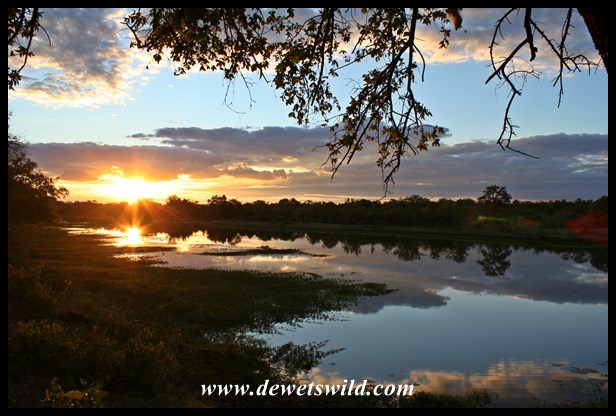
And then on the other side of the scale is the Park’s magnificent scenery!

The Kruger National Park is such a special place, and what a wonderful experience it was to share a piece of it with good friends!


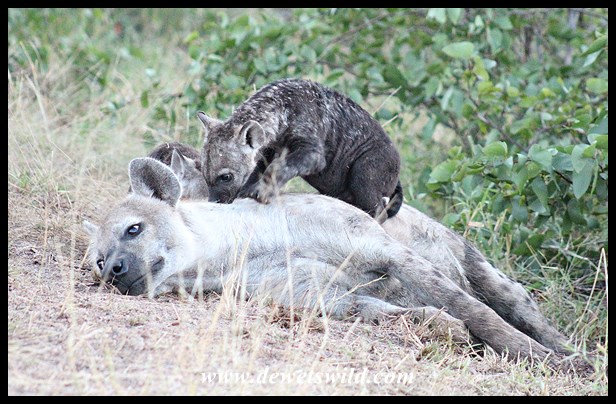
Even hyenas need a loving family

These tender moments shared by a Spotted Hyena female and her two small cubs, seen on a recent weekend visit to the Mopani region of the Kruger National Park, is another one of the reasons why we keep going back to the Park as often as we can. It also made the four dads in the car really miss their own “cubs” back home…

Elephants have right of way. Are you going to argue?

Just after sunrise last Sunday, while driving in the Mopani area of the Kruger National Park, we encountered this enormous Elephant bull in musth staking his claim to the narrow road. He was on his way to Mooiplaas waterhole and did not have any intention of letting four humans in a tiny (by his standards) metal cocoon derail his plans. In the end he made us reverse for over a kilometer before veering off towards the water.

Waterbuck Duel at Dusk

While visiting the Mopani area of the Kruger National Park this past weekend, we (myself and three very good friends) came across these waterbuck bulls involved in a massive fight about a patch of the Nshawu Vlei (marsh) and the eligible cows that inhabit it. As is the case with several antelope species in the Park, their rutting season will be coming to an end soon and these bulls are quite desperate to sire their share of the calves that will be born towards the end of the year.

Back from the bush, again

Fresh back from a self-made long weekend in the Kruger National Park again. Lots more photos coming your way in the days to follow!

Cape White-eye

Zosterops virens

Cape White-eyes are familiar birds in many South African suburbs, where their confiding attitude and characteristic song make them a well-loved garden bird. They inhabit a wide variety of naturally woody habitats, from forests to mountain scrub, as well as plantations and orchards. They feed primarily on insects, but will include fruits, flowers and nectar in their diet.

Cape White-eyes are social little birds, weighing only about 11g and growing to 12cm in length and usually seen in pairs or small flocks. They breed throughout the year, though mostly in summer, with both pair mates constructing the small cup-shaped nest from fine materials and spider web, well hidden deep in the dense foliage of a tree or shrub. Clutches contain 2-4 eggs and are incubated by both parents for almost 2 weeks, with the chicks taking to the wing for the first time when they’re about 14 days old.

The Cape White-eye occurs widely over Lesotho, Swaziland and South Africa (with the exception of the more arid parts of the Northern Cape, Free State and North West provinces), with a few scattered records from Botswana and Mozambique. The IUCN lists the Cape White-eye as being of least concern.

Southern Boubou

Laniarius ferrugineus

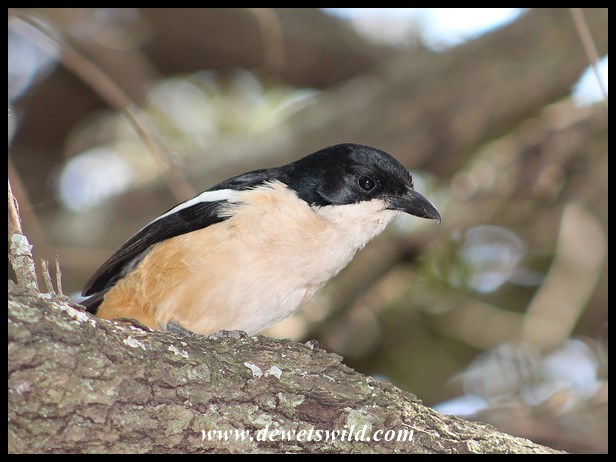
The shy Southern Boubou is heard far more often than it is seen and engages in a melodious duet that is often quite unique to the pair in note-combinations and pitch. They inhabit forests, thickets, dense coastal shrublands and riverine vegetation where they forage in the tangled undergrowth for insects, worms, snails, lizards, eggs, fruits, nectar and seeds. They have also adapted to well-planted gardens in some towns and cities. Adults grow to 22cm in length and weigh around 60g.

Southern Boubous are usually seen singly or in monogamous pairs that claim a small, lifelong territory for themselves. The females are responsible for building the shallow cup-shaped nest (using grass, twigs and roots) in a densely-leaved plant, but both parents take turns to incubate the clutch of 2 or 3 eggs for a little over two weeks and feeding the newly hatched chicks, which fledge at about 2 weeks old and stay with their parents for up to 3 months longer. Their breeding season spans spring and summer.

Apart from South Africa (where it is found from the Western Cape coast and adjacent interior, through the Eastern Cape and Kwazulu-Natal to Mpumalanga, Limpopo, Gauteng and North West Province) the Southern Boubou occurs only in southern Mozambique, Swaziland and a small portion of Botswana and Zimbabwe along the course of the Limpopo River. It is considered to be of least concern by the IUCN.

Cape Wagtail

Motacilla capensis

One of South Africa’s most familiar garden birds, the Cape Wagtail is usually seen in pairs of small family groups, and named for the family’s characteristic “pumping” of the tail while sitting or walking. They occupy any natural habitat that offers open ground near or adjacent to even the smallest water source (they love to bath) and have adapted superbly to farms, parks and gardens. Cape Wagtails feed primarily on insects and other invertebrates, as well as human scraps in urban settings. Adults are about 20cm long and weigh around 21g.

While there is a distinct peak in breeding attempts during spring and early summer, Cape Wagtails have been recorded as breeding throughout the year. Their nests are built in trees, bushes or earthen walls, and even in man-made structures, using a wide range of plant and other materials, Monogamous pairs stay together through several successive breeding seasons, raising clutches of 1-5 chicks that hatch after an incubation period of two weeks. The chicks leave the nest at around two weeks old but only become independent of their parents about 6 weeks later.

Cape Wagtails are patchily distributed from Kenya and Uganda to southern Africa. It occurs virtually all over South Africa and is listed as being of least concern by the IUCN, having recovered from a population decline following the introduction of domestic insecticides in the 1950’s and 60’s.

Mokala Scenery

We’ve already shown you so many of the animals and birds that call Mokala home that you must by now be convinced of the fact that this National Park is one of South Africa’s conservation gems. That sensational faunal diversity however would not have existed had it not been for the wide range of vegetation, habitats and landscapes that Mokala comprises, and now in this final post about our April 2018 visit it is fitting that we showcase that aspect.

One of our highlights from this trip was having a front row seat to one of the most awe-inspiring experiences one could hope to have in Africa: a powerful thunderstorm rolling over the parched plains, smelling the red dust rise into the air as big drops of cool rainwater smacks into the dry soil. Soul stirring stuff.

And finally a few shots of our favourite place to stay while visiting Mokala: the rustic Haak-en-Steek Cottage.

If you’d like to learn more about Mokala National Park, why not have a read through the detailed post we did about the Park in 2016.