The Easter break afforded us the opportunity to visit South Africa’s flagship National Park, and one of our favourite destinations, again, spending first three nights at Skukuza Rest Camp in the south of the Kruger National Park, and then four nights around Mopani Rest Camp in the north. After a summer of apparently good rainfall, the Park’s vegetation is lush and green, with water in ample supply. These conditions make searching for wildlife a bit trickier, but it is wonderful to see the Park transformed from the harrowing effects of the recent drought that is still so fresh in our minds.

Leadwood stump

Tsendze pool

Nshawu view

Sunset on the Shongololo Loop

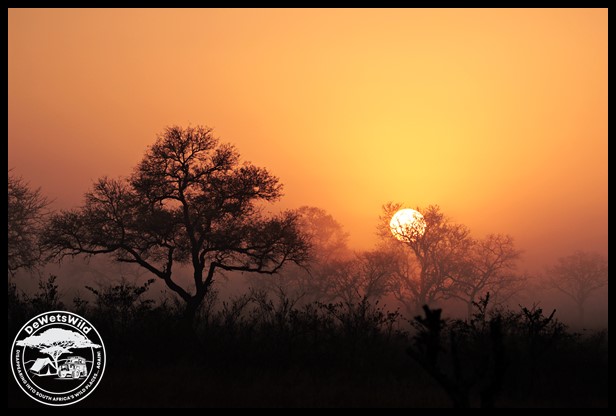
Sunrise over a pan near Mopani

Malelane mountains

Kwaggaspan

Sabie Bridge from Skukuza

Sabie River

Sabie Bridge near Skukuza

Blue Water Lily

White Water Lily in Skukuza

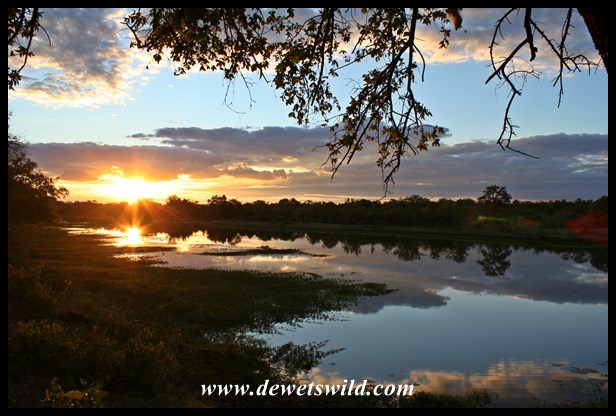
Kruger sunset

Sausage Tree Fruit

Shipandani Hide

Nkumbe View
The Kruger National Park is renowned for its Big-5 sightings. There isn’t very many other places where one can so easily find completely wild lions, leopards, elephants, buffaloes and rhinos from the comfort of your own vehicle, at your own pace and according to your own schedule. And then there’s always a chance that you may cross paths with a magnificent big tusker!

White rhino’s poor attempt at hiding

Lion near Skukuza

Lion with his zebra meal, just outside Satara

Lioness pacing the H4-1 between Skukuza and Lower Sabie

Pride of lions at Kumana Dam

Leopard near Lower Sabie

Leopard in a tree south of Skukuza

Buffalo near Mopani

Buffalo in the rain

Buffalo roadblock

Buffalo roadblock

Trio of buffalo bulls

Elephant near Mopani

Unknown Kruger Tusker (2018/03/21)

Testing their strength

Just a little irritated

Walking along the Ngwenyeni

Elephants on the way to Phalaborwa Gate

Elephant bull enjoying a puddle near Mopani

Young elephant interactions

Crossing the Letaba River

Tiny baby next to mom

Testing the wind

Elephant’s tail

The deep water in the reservoir is much cooler than that in the trough
On the other side of the scale are those less frequently noticed smaller critters (“creepy crawlies” or “goggas” as we call them), that fairly seldom feature on any of the Kruger visitors’ sightings wish-lists. They may be small and unobtrusive, but they are certainly no less fascinating than the glamorous Big-5. We already shared with your the exciting scenes of a Western Stripe-bellied Sand Snake catching and swallowing a skink in Shingwedzi, but there’s plenty more to see if you bend your knees!

Western Stripe-bellied Sand Snake swallowing a skink in Shingwedzi

Common River Frog in Skukuza

Painted Reed Frog in Skukuza

Plain Grass Frog at Twanana

Cricket perfectly imitating a mopane leaf

Rainbow Skink

Serrated Hinged Terrapin

Juvenile Mozambique Tilapia in the Tsendze River

Water Monitor
The Mopani area is well-known for prized sightings of the rarer antelope species, and we weren’t disappointed on that score either, ticking bushbuck, nyala, eland, tsessebe, reedbuck and roan antelope on our list.

Eland near Bowkerskop

Eland at Tinhongonyeni

Roan antelope in the dense mopane near Middelvlei

Southern Reedbuck in the Nshawu Vlei

Tsessebe at Mooiplaas

Tsessebe at Nshawu

Nyala near Skukuza

Bushbuck near Skukuza

Bushbuck mingling with baboons and impala along the Sand River
The lush vegetation made it very challenging to see the smaller antelope species. We managed to photograph steenbok, grey duiker and klipspringer, but unfortunately the grysbok just weren’t willing to pose for a picture this time around.

Grey Duiker

Klipspringer

Steenbok
There’s quite a few herbivore species that you are virtually guaranteed to see when visiting the Kruger National Park. Among these are baboons and vervet monkeys, blue wildebeest, plains zebra, impala, kudu, waterbuck, giraffe, warthog and hippo.

Wet Baboon after a rainstorm

Baboon youngsters at speed!

Blue wildebeest

Giraffe

Hippo eyeing us from the Sabie River

Impala Ram

Kudu Calf

Plains Zebra

Vervet Monkey

Warthog

Waterbuck Bull on the bank of the Sabie

Waterbuck cows and calves
Of course, with such a menu there are many predators in attendance. Apart from lions and leopards, on our latest visit we also encountered spotted hyena, side-striped and black-backed jackal, crocodile and large-spotted genet.

Nile crocodile at Sunset Dam

Nile crocodile at Sunset Dam

Large-spotted Genet patrolling outside our bungalow at Skukuza

Black-backed Jackal

Spotted Hyena cub

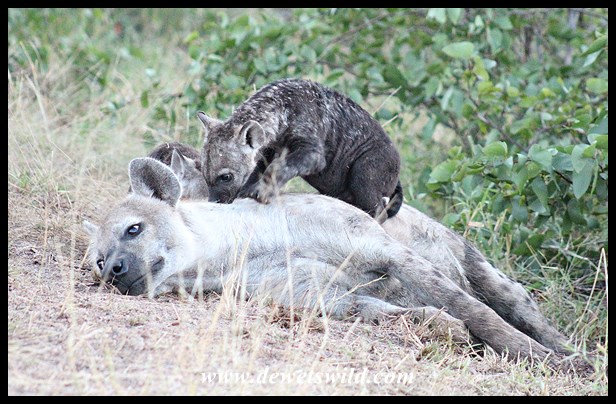
Spotted Hyena cub and mother

Spotted Hyena cubs with a bone
The Kruger National Park is regarded as a paradise for bird-watchers, and that is not without reason. During the warmer months especially, when many summer migrants from northern latitudes enjoy our warm weather, the variety and numbers of bird species to be seen is absolutely prolific, but even in winter feathered life abounds in the Lowveld.

European Bee-eaters

Temminck’s Courser

African Mourning Dove on a nest at Satara

Knob-billed Duck

White-faced Whistling Ducks

Black-chested Snake Eagle

Wahlberg’s Eagle

Tawny Eagle

Spotted Flycatcher

Swainson’s Spurfowl

Natal Spurfowl

Green-backed Heron

Grey Heron

Ground Hornbill juvenile

Hamerkop

African Jacana

Pied Kingfisher

Black-winged Kite

Red-crested Korhaan

Black-bellied Bustard

Kori Bustard

Blacksmith Lapwing

Ostrich male

Verreaux’s Eagle Owl

Red-billed Oxpecker

Yellow-billed Oxpecker on a festering wound

Long-tailed Paradise Whydah

European Roller

Common Sandpiper

Double-banded Sandgrouse

Lesser Grey Shrike

Male Red-backed Shrike

Saddle-billed Stork

Black Stork

White-backed Vultures in a tree near a carcass

African Pied wagtail

Greater Painted Snipe

Blue waxbill
The Kruger National Park is an addictive place. You only need to visit once for it to get under your skin, and stay there. The more you experience of Kruger’s wonders, the more you pine for it. We’ll be back again and again, no question about it.








 DeWetsWild