Looking back on another year of enjoying South Africa’s beautiful wild places!
Tag Archives: Lower Sabie Rest Camp
Never miss an opportunity to go back to Lower Sabie and Olifants!
There was a reason I dedicated the previous two posts on de Wets Wild to Lower Sabie and Olifants, two of the most popular camps in the Kruger National Park. That is because I had the opportunity to visit both camps again earlier this week, and now that you have been introduced to both destinations we can all just sit back and enjoy some photos from this latest trip. Here’s hoping you enjoy the gallery as much as I enjoyed putting it together!
Lower Sabie Rest Camp, Kruger National Park
Lower Sabie must be the most popular destination in the Kruger National Park. It is exceedingly hard to get a booking here if you don’t book a year in advance. In peak season, even just finding parking to visit the shop or restaurant can be a challenge, as visitors from all over the the southern sections of the Park flock to the camp. The camp’s location on the banks of the Sabie River, in an area of exceptionally high-quality grazing in the south-eastern corner of the Park, ensures that its surrounds is frequented by an astounding variety and number of herbivores and their attending predators, making for game-viewing heaven!

The Sabie River got its name from the Shangaan word “saba” meaning fear, probably due to the large number of enormous crocodiles that call the river home. The dam in front of the camp came about after the causeway across the river was built in 1987 (it had to be rebuilt higher after the floods in February 2000).
The first tourist accommodation at Lower Sabie was a 5-bedroom house converted from ranger Tom Duke’s quarters in 1930, but this was demolished again just two years later after becoming dilapidated. The only access to Lower Sabie was via Gomondwane from Crocodile Bridge until the road from Skukuza reached it in 1931. The next attempt at providing guest accommodation at Lower Sabie then commenced in 1936, when three buildings, built in a u-shape and each housing six bedrooms, were erected – these units are still used as accommodation to this day, but has been extensively renovated since. Over the years, more accommodation and a camping site was added to the camp, leading up to an extensive project to revamp and enlarge Lower Sabie in the early 2000’s. Today the camp provides overnight accommodation in 117 huts, bungalows, cottages and safari tents and has space for 34 caravans and tents in its camping area. Lower Sabie’s restaurant (Mugg & Bean), with its deck overlooking the Sabie River, is especially popular. The camp has a well stocked shop for groceries and curios, a fuel station, swimming pool for overnight guests and a day visitors picnic area near the gate. Along the river, in front of the bungalows south of the restaurant, lush lawns and deep shade provided by enormous trees is just the place to spend a lazy afternoon, surrounded by Lower Sabie’s prolific birdlife.
We can certainly recommend joining at least one of the guided activities on offer from Lower Sabie, as excellent sightings are almost guaranteed.
Sunset Dam is a brilliant spot just a kilometer from Lower Sabie, and as its name suggests is very popular with visitors whiling away the last minutes before they have to get back to camp in the evening. You can park your vehicle right on the water’s edge, allowing excellent photographic opportunities of hippos, crocodiles, wading birds and herds of game coming to quench their thirst.
Heading north from Lower Sabie along the H10 tarred route to Tshokwane, you’ll encounter the first highlight of this route just minutes after leaving camp. The causeway across the Sabie River is a favourite spot for many visitors, who flock here to enjoy glorious sunsets and an abundance of game and bird species attracted to the water. The plains between Lower Sabie and Tshokwane is home to incredible herds of zebra and wildebeest at the end of winter, and is also an excellent place to look for reedbuck, one of the rarer antelope that occurs in Kruger. Of course, with so many herbivores roaming around it stands to reason that the predators are not far behind. If you, like us, enjoy your game viewing with as little other traffic as possible, try the gravel S29, S122 and S128 loops that turn off the main road as alternatives to explore this area. Two other beautiful places not to be missed is Mlondozi Picnic Spot, overlooking a large dam from Muntshe mountain, and Nkumbe Viewpoint, which offers an exceptional view over the open plains of Kruger.
The tarred H4-2 Gomondwane Road leading south to Crocodile Bridge is another very productive route for game viewing, though we personally prefer taking the gravel loops running roughly parallel to the main road (S28 Nhlowa Road, S82 Mativuhlungu Loop, S130 Gomondwane Loop and S137 past Duke’s waterhole) as these carry a little less vehicle traffic.
The H4-1 road between Lower Sabie and Skukuza carries more traffic than any other road in Kruger, and not without reason. There’s an excellent chance of seeing all the “big 5” game animals and so much more along this route, which follows the course of the Sabie River, on just one drive. The vegetation along the portion of this road nearer Lower Sabie is much more open than the stretch between Nkuhlu and Skukuza, making for even better game viewing. Keep your eyes open for lions and leopards at the rocks at the Lubyelubye stream crossing about 5km from Lower Sabie, as this is one of their most reliable haunts. Also, don’t miss the short S79 gravel loop that crosses the Nwatimhiri causeway, which is another favourite spot for feline predators. Nkuhlu Picnic Spot is a great place to get out, stretch the legs and have a bite to eat (though beware the monkeys and baboons that hang around here, as they will attempt to steal your picnic if they get even the slightest chance!). The gravel S30 Salitje Road along the northern bank of the river is a wonderful alternative route back to Lower Sabie.
If all these photos did not convince you, allow us to reiterate: Lower Sabie IS game-viewing heaven! Remember to book early if you also want to enjoy all it has to offer.
Summer heat at Lower Sabie
We knew our December 2015 visit to the Kruger National Park was going to test our personal thresholds for high temperatures. It is general knowledge that South Africa’s Lowveld region has sweltering summers, confirmed by the weather forecasts in the week before our departure. On our early morning way, descending into the Lowveld along Schoemanskloof on the N4-highway, we were amazed at how quickly the outside temperature our car was registering was climbing upwards. By the time we arrived at Malelane Gate just after 08:00, we had reached 33°C, with the sun blazing down relentlessly. And yet, we couldn’t think of any place we’d rather be; we were back in South Africa’s flagship National Park, one of our favourite wild places, and we had ten days to explore the length and breadth of it to look forward to!
We were heading to Lower Sabie, and instead of following the tar roads via Skukuza we opted for the more direct route, along the gravel S25 and H5, from Malelane. Of course we had wonderful sightings along the way, most especially of some sleepy elephants! Early December is lambing season for the impalas, and each herd we passed had a few new members, all ears and long legs, to broaden our smiles.
By the time we checked in at Lower Sabie Rest Camp for our 3 night stay, the temperature had soared to a searing 43°C. Our cottage (unit 93), with a lovely view of the Sabie River in front of the camp and surrounded by huge, shady trees, provided welcome respite!
But of course no amount of heat was going to keep us indoors for long when there’s Big-5 country to explore outside! Our afternoon drive took in Gomondwane, Duke’s waterhole and a section of the Nhlowa-road to the south of Lower Sabie, after a quick visit to Sunset Dam just outside camp. Highlights of the drive included an unusually relaxed black rhinoceros, our best sighting ever of a side-striped jackal, and the cutest little warthog piglets you could imagine!
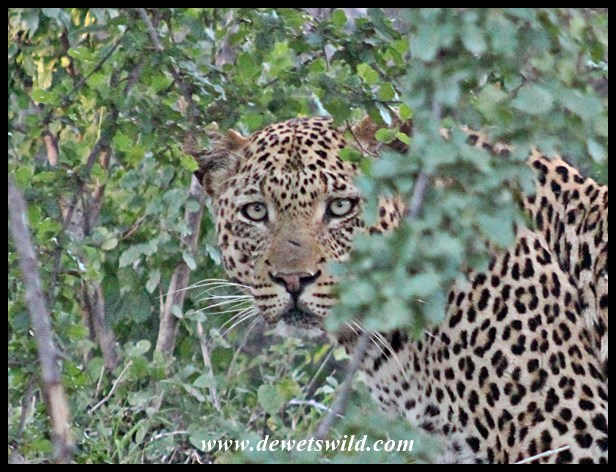
The itinerary planned for Sunday 13 December meant that we would be out of camp all day: a slow early morning drive (the camp gates open at 04:30 in high summer) to Skukuza along the Sabie River, visit with good friends at Skukuza over lunch, and then back to Lower Sabie via the Sand River, the Salitje road, Muntshe Mountain and Mlondozi Picnic Site. Covering that big an area is sure to deliver some unusual sightings; apart from a skittish leopard and all the more commonly seen game animals, we even found an African Rock Python along the way. Our final wildlife encounter of the day was with a pair of mating lions, within sight of Lower Sabie, resulting in sightings of all the Big-5 on a single day!
That wasn’t the end of the day however, as we were booked for a guided night drive after supper. Unfortunately strong winds sent the nocturnal animals into hiding, and the drive did not yield much more than a Verreaux’s Eagle Owl and enormous scorpion to get excited about.
We had one more day to explore the Lower Sabie area, and headed for Crocodile Bridge along the Nhlowa Road as soon as the camp’s gates opened. About halfway we met a large pack of hyenas at their den, and after spending some time with them our grumbling tummies told us that it was time to go enjoy our picnic breakfast at Croc Bridge. More great sightings on our way back to Lower Sabie along the Gomondwane Road, including a herd of elephants coming to drink from the Sabie River. We also noticed a male lion lying on the river bank and after slaking their thirst, the elephants started crossing the river. This was the lion’s cue to vacate his spot, and we were thrilled that he chose to head into the bush straight past our vehicle!
Lower Sabie is a wonderful place to while away the hot midday hours as there’s a constant stream of animals coming to drink from the river and birdlife abounds in the camp grounds!
There’s no better way to spend your last afternoon at Lower Sabie than slowly driving along the river, and spending some time at Sunset Dam. So that’s exactly what we did!
With that, our final night at Lower Sabie had arrived. Next morning we’d depart for Olifants Rest Camp, further north in the central regions of the Kruger National Park. We’ll share more about our time at Olifants next week, and will dedicate a special post in which we’ll tell you all about Lower Sabie and surrounds in an upcoming edition of de Wets Wild.
________________________
If you enjoy de Wets Wild as much as we enjoy sharing our love for South Africa’s wild places and their denizens with you, please vote for us in the 2015 South African Blog Awards.
We’ve entered the categories for “Best Travel Blog” and “Best Environmental Blog”, and you are allowed to vote for us in both. Clicking on the badge below will bring you to the voting site.
Thank you very much for your support!
Our 2015 in pictures
Looking back at the marvelous places we stayed at while exploring South Africa’s wild places in 2015 😀
> Glen Reenen, Golden Gate Highlands National Park, January 2015
> Forever Resorts Loskop Dam, Loskop Dam Nature Reserve, April 2015
> Glen Reenen, Golden Gate Highlands National Park, April 2015
> Kamberg Nature Reserve, uKhahlamba Drakensberg Park, May 2015
> Kgaswane Mountain Reserve, May 2015
> Cape Vidal, iSimangaliso Wetland Park, June 2015
> Mpila, Hluhluwe-Imfolozi Park, July 2015
> Lower Sabie, Kruger National Park, July 2015
> Sweni Wilderness Trail, Kruger National Park, July 2015
> Thendele, Royal Natal National Park, uKhahlamba Drakensberg Park, August 2015
> Ntshondwe, Ithala Game Reserve, September 2015
> Mopani Rest Camp, Kruger National Park, October 2015
> Pafuri Border Camp, Kruger National Park, October 2015
> Lower Sabie, Olifants and Shingwedzi, Kruger National Park, December 2015 (trip reports to follow soon!)
________________________
If you enjoy de Wets Wild as much as we enjoy sharing our love for South Africa’s wild places and their denizens with you, please vote for us in the 2015 South African Blog Awards.
We’ve entered the categories for “Best Travel Blog” and “Best Environmental Blog”, and you are allowed to vote for us in both. Clicking on the badge below will bring you to the voting site.
Thank you very much for your support!
Pigeon quarrels
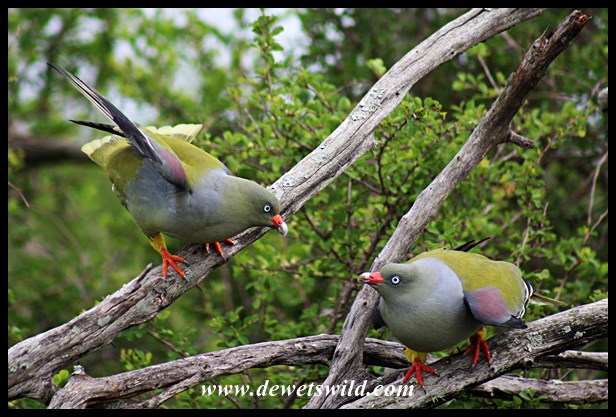
This morning we were entertained by the constant bickering between the members of a flock of beautiful African Green Pigeons.

Lion love at Lower Sabie
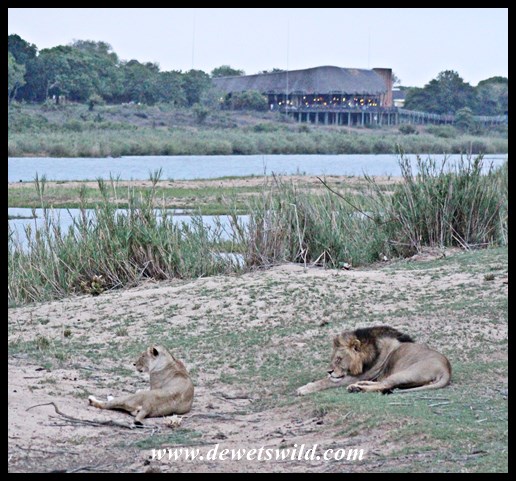
This evening we were welcomed back to Lower Sabie Rest Camp by a pair of mating lions!

This little piggy…
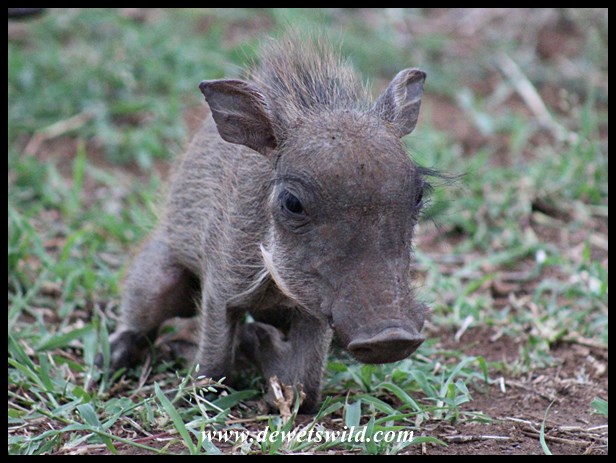
Day one of our annual December bush pilgrimage, this year to the Kruger National Park, and despite all the lions, jackals, elephants, rhinos, hippos, giraffes, buffaloes, zebras and antelope that crossed our paths today it was this tiny little warthog piglet and his siblings that were the real crowd pleasers!

———–
If you enjoy de Wets Wild as much as we enjoy sharing our love for South Africa’s wild places and their denizens with you, please vote for us in the 2015 South African Blog Awards.
We’ve entered the categories for “Best Travel Blog” and “Best Environmental Blog”, and you are allowed to vote for us in both. Clicking on the badge below will bring you to the voting site.
Thank you very much for your support!
Winter in Southern Kruger
My sister, Ansie, and I headed to the Kruger National Park for a 5 night visit in the early morning of Friday 17th July. After our latest trip to Hluhluwe-Imfolozi Park, Marilize had business to attend to and Joubert had to be back at school the following Monday, as the winter school holidays had come to an end. This therefore was a great opportunity for some sibling bonding in a place where we’d spend many wonderful days together growing up. Just a few hours easy drive along the N4-highway got us safely to Malelane Gate, on the southern border of the reserve, at around 08:30.

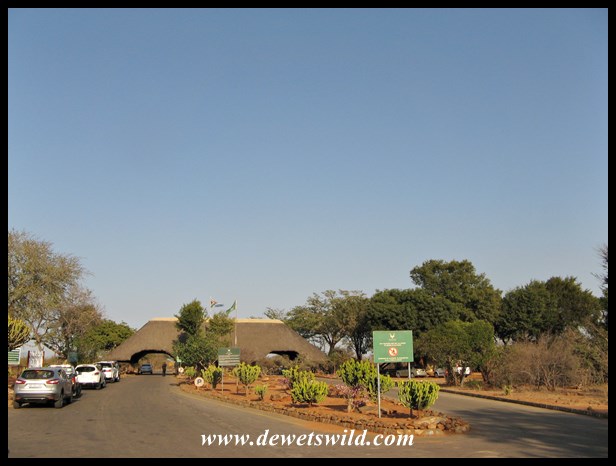
Malelane Gate, always a welcome sight after the drive from Pretoria

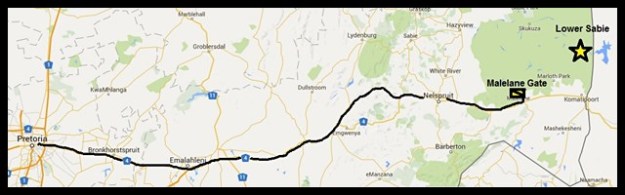
The route from Pretoria to Malelane, approximately 380km (drawn with Google Maps)
Just a few minutes spent getting our entry permit issued and to send a few quick text messages to let the loved ones back home know we arrived safely, before setting off into the Park. Our route took us along the S25 Crocodile River drive to Lower Sabie Rest Camp, where we’d booked the next two nights in a safari tent on the bank of the Sabie River.
After checking into our accommodation and unpacking the luggage and supplies, it was time to get back on the road again for our afternoon drive. We opted for just a short drive past Duke’s waterhole and Nthandanyathi Hide to the south of camp, and spent the last few minutes before the gates closed enjoying a magnificent sunset from the causeway over the Sabie just outside camp.
We awoke early on Saturday morning, eagerly anticipating what Kruger would have in store for us that day. We decided to stay out all day, and were one of the first vehicles waiting at the camp’s gates to open at 06:00. Lower Sabie’s renowned for predator sightings, which explains why it is so popular among visitors and often fully booked months in advance. Not long after leaving camp we encountered a pride of lions near Lubyelubye, keeping Lower Sabie’s reputation intact. After being robbed of our breakfast rusks by a big baboon at Nkuhlu Picnic Spot, we continued along the Sabie and onwards to Transport Dam via the S65-route. From there we had to get past a considerable traffic jam (where two lionesses, apparently with well-hidden cubs, were baking in the sun on a rocky outcrop), to get to Skukuza, where we enjoyed a picnic-lunch at the day visitors area near the Selati railway bridge. To get back to Lower Sabie, we chose the S21 Nwatimhiri Road, a gravel route that follows the course of the mostly dry stream of the same name. We were one of the first cars out that morning and one of the last to return to Lower Sabie that evening, just minutes before the gates closed at 17:30 – a long but very rewarding day in the wilds of the Kruger National Park.
After dinner, it was time to take our usual stroll through the camp, taking some night time photos along the way, before turning in.
Sunday was another early start to the day – we had to pack and head to Satara Rest Camp, northwards from Lower Sabie. We detoured to Mlondozi Picnic Site for breakfast, and ticked a quick leopard sighting (no photos unfortunately) about half-an-hour after leaving camp, completing the Big-5 for the trip less than two days into our visit. A quick pit-stop at Tshokwane and then arrived at Satara just in time for lunch, under the watchful eye of several of the camp’s feathered inhabitants.
Satara is the departure point for the next part, and undoubtedly the highlight, of this particular trip to Kruger – the Sweni Wilderness Trail. I’ll be telling you all about this incredible experience soon, in another installment of de Wets Wild.
Inspiration
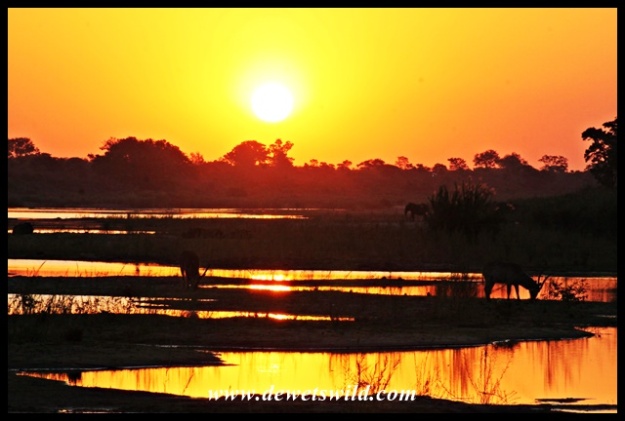
It probably comes as no surprise that we’re inspired by the beauty of a tranquil South African sunset, like this one over the Sabie River near Lower Sabie Rest Camp, in the Kruger National Park.

“Inspiration” is the theme for this week’s WordPress Photo Challenge