Tag Archives: Kruger National Park

Elephant mayhem at Mooiplaas

Marvelous Mooiplaas

There’s several waterholes in the Kruger National Park that have delivered us consistently good wildlife sightings over the years. One such drinking place is Mooiplaas, an artificial waterhole supplied by a borehole and windpump, adjacent to a natural wetland, about 5km to the south of Mopani Rest Camp. Directly translated from Afrikaans, Mooiplaas means “pretty farm”. The waterhole undeniably lives up to its name both in scenery and for the constant stream of birds and animals moving from the surrounding mopane vegetation to slake their thirst.

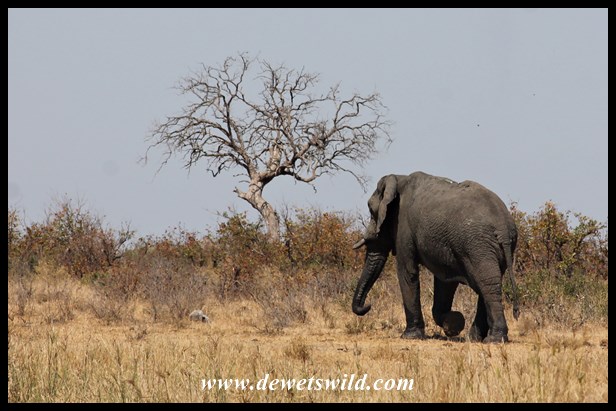
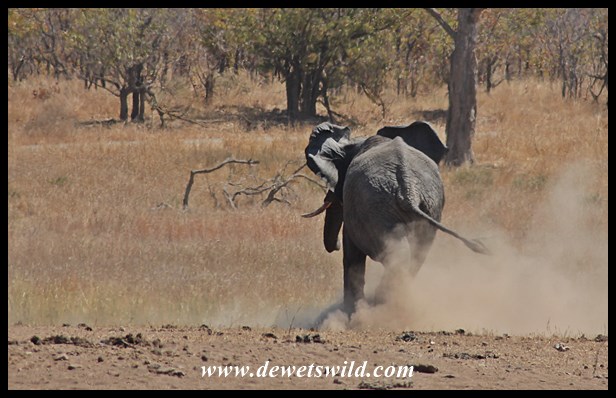
We visited Mooiplaas again on Heritage Day (24th September) while on our most recent visit to the Park. We arrived in the heat of the day, and found the place brimming with animals. Elephants, tsessebe, zebras, wildebeest, ostriches and a lone kori bustard were milling around, and from their behaviour we deduced that there must be predators around. Sure enough, in a clump of mopane shrubs, we saw two lions hiding from the heat; the female just out in the open enough to get photographic proof. It was obvious that these lions were not interested in hunting, and the animals could safely venture to the water for the moment. A young elephant bull caused a bit of an uproar among the plains game when he caught the lion’s smell on the wind, and started running around wildly, kicking up dust as he went.

After checking in for our night at Shipandani Hide, we decided to stop by Mooiplaas again in the late afternoon, and found that the lions had still not moved from their shady hideout. A group of elephant bulls were drinking from the reservoir, and a variety of birds were searching for food in the dust, but there was no sign of the large herds of zebra and antelope that frequented the area earlier in the day. Perhaps they understood that the lions would not be resting for much longer…

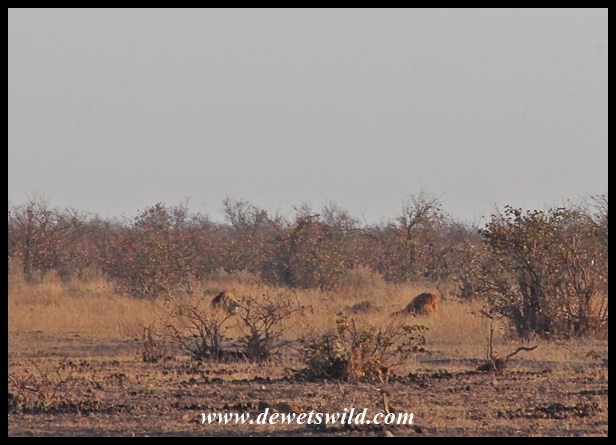
Throughout the night in the hide we could hear the lions roaring towards Mooiplaas, and of course that’s where we headed as soon as the gates opened. If the lions had made a kill during the night, the carcass wasn’t anywhere we could see it, and we had to be content with a far-off sighting of two large males lying in the grass some distance from the otherwise deserted waterhole.
Mooiplaas_25Sep2014

All too soon we had to leave, as we were heading for Shingwedzi and still had to return the keys for the hide to the reception at Mopani. Leaving Mooiplaas behind, we knew there would be more wildlife spectacles unfolding there that day. And we knew we’d return to Mooiplaas again as soon as we have the chance…


Dreamy

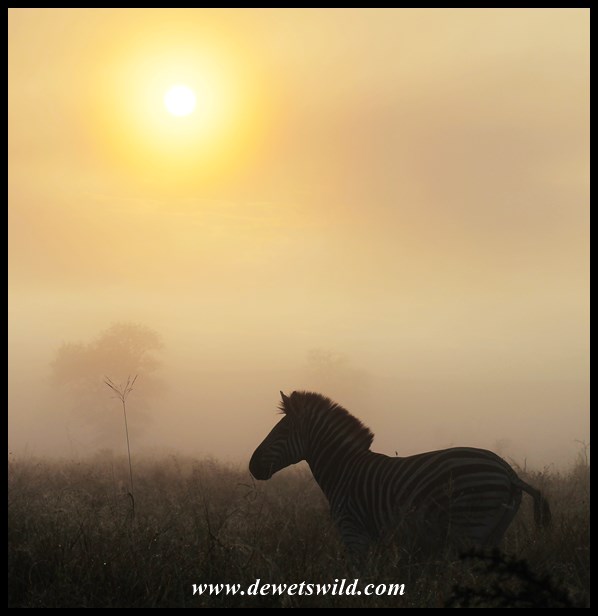
Plains zebra and a misty sunrise near Crocodile Bridge, in the Kruger National Park.

Dreamy

Dreamy” is this week’s photo challenge theme from WordPress

Memorable sighting: Cheetahs near Shingwedzi, 27 September 2014

At the end of a hot Lowveld afternoon, we’re enjoying a slow drive along the Shingwedzi River, as has become our habit every time our visits to Shingwedzi Rest Camp come to an end. This route, the gravel S50, is our absolute favourite road in the Kruger National Park and we’re taking in as much of the magical wilderness atmosphere as we can. After enjoying snacks and a cold drink in deep, cool, shade next to the Tshilonde waterhole, it’s time to head back towards camp.

Only minutes later, turning a corner near the Ntsumaneni Spruit crossing, we spy a feline shape next to the road… We’re thrilled to find two cheetahs waiting by the roadside, and our excitement grows tenfold as a third, fourth and then fifth make their way out of the mopane bushes towards us. With no other cars around, we find ourselves in the company of what we assume is a female with her four almost fully-grown cubs, a rare sighting indeed. The cheetahs seem nervous, constantly staring back towards the vegetation they emerged from, and do not hang around very long before crossing the road and heading into the bush again, disappearing from sight. We may have spent only a few minutes with these lithe cats, but it is another Kruger memory we’ll cherish for as long as we live.

(You may click on any of the images to view them in bigger resolution)

The Endangered Wildlife Trust in conjunction with the SANParks Honorary Rangers, is conducting a census of Kruger Park’s cheetahs and wild dogs, and inviting visitors to contribute to the project by submitting photos of these species they encounter between September 2014 and June 2015. Of course, we’ve already sent in our submission!

Five days later…

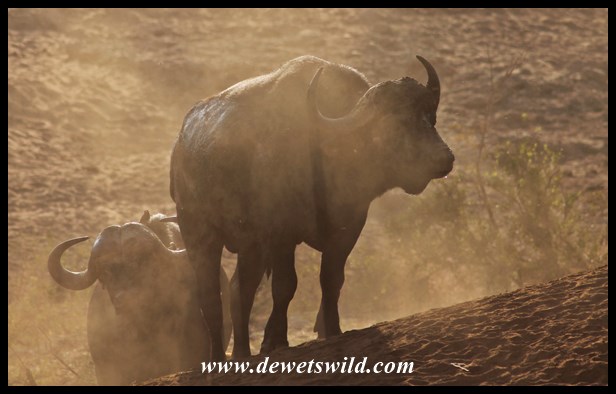
We’re back in Pretoria after five wonderful days in the Kruger National Park, and we’re praying with this buffalo that it won’t be too long before we go back 😉

Please let the de Wets come visit us again soon?

Please let the de Wets come visit us again soon?

We’ll share some more about this latest trip to the Kruger Park in upcoming editions of de Wets Wild, soon.

Nighttime

This was the scene above our heads after darkness fell over Shingwedzi in the Kruger National Park last night.

Milkyway above Shingwedzi

Milkyway above Shingwedzi

Nighttime” is this week’s WordPress Photo Challenge

In the company of cheetahs!

The Kruger is always full of surprises.

We thought we’d take a leisurely drive along the Shingwedzi River this afternoon,our last of this trip, not expecting to see much more than herds of elephants, buffalo, giraffe, antelope, and so on. And then, coming around a corner we unexpectedly found ourselves in the company of a mother cheetah with her four almost-grownup cubs.

Isn’t this just the best place on earth!?

Sunset, dust and buffaloes

Late this afternoon we encountered a massive herd of buffalo, making their way one-by-one, along a sandy ridge, out of the bed of the Mphongolo River. The climb was clearly tough on many of the animals, and the dust rising into the glaring sunlight added nicely to the fatigued feeling of the scene unfolding before us.

Laid back at Shingwedzi

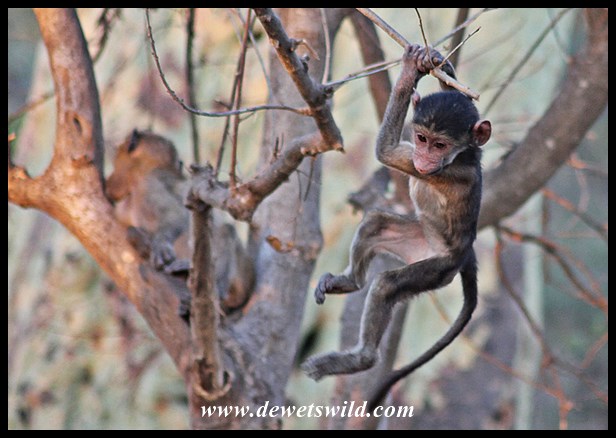
We’ve arrived at Shingwedzi Rest Camp, in the far northern Kruger National Park. We’ll be taking this baboon’s attitude to heart in the next few days as we explore what the Kruger still has in store for us

Heritage Day in Kruger

South Africa celebrates the 24th of September as Heritage Day, a public holiday. Of course, South Africa’s natural heritage is very close to the de Wets’ hearts, and so we’ve headed back to our beloved Kruger National Park for a few days (as if we needed an excuse 😉 )

The three of us are spending the night in Shipandani Hide, next to a tranquil pool in the Tsendze River, and kilometres away from the nearest other humans. As I’m typing this, Marilize and Joubert have already been lulled to sleep by the symphony of the wild African night; hippos bellowing metres away from the hide, scops owls hooting for attention, lions roaring in the distance and a myriad of crickets, frogs and bats chiming in.

Heaven.

KNP 24Sep2014

Shipandani Hide

Satara Rest Camp, Kruger National Park

Satara is unique among the Kruger National Park‘s camps. It is not situated on a serene river bank or atop a hill commanding views over the wilderness. Instead, it is located seemingly in the middle of a vast plain of flat grasslands and thornveld as far as the eye can see, inhabited by thousands of grazing animals and of course the predators that follow them. And that’s exactly the reason for Satara’s popularity; it probably has the highest density of large African predators in the entire Kruger.

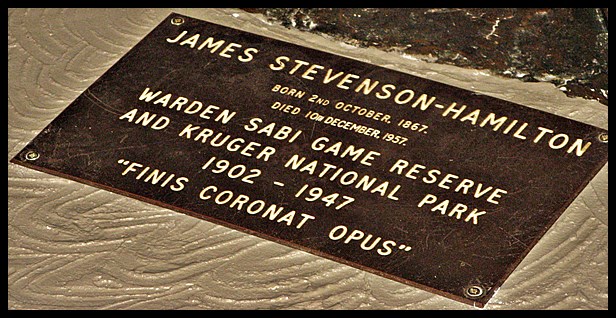
Satara is a misspelling of the Hindi word “satrah”, meaning seventeen, and so named by a land surveyor and his Indian assistant measuring up this piece of the lowveld for farmland in the late 1800’s. Colonel James Stevenson-Hamilton appointed Tim Healy as the first ranger to the post at Satara in 1910, and he was followed by ranger W. Lloyd, who met an untimely death due to pneumonia and was buried by his wife and a servant in a coffin made from ceiling planks, just outside the present perimeter of the camp. By 1929, 3 years after the Kruger National Park was proclaimed, the first twelve huts at Satara were made available to overnight visitors, and by 1974, with the threat of malaria and soggy roads in the rainy season adequately under control, visitors could enjoy Satara all year round (instead of just during winter).

Today, Satara is the second biggest, and by far one of the most popular, rest camp in the Kruger National Park, offering a variety of accommodation and camping options to overnight guests, serviced by a restaurant, shop and filling station. Satara has a large amphitheatre where wildlife filmshows are presented in the evenings, and in the projector room is an interesting display about the camp and the Park’s wildlife. The camp also has a large swimming pool and play area for those hot summer days, and guests can join a variety of guided activities like walks and drives. Inside the camp a rich variety of smaller animals and birds are quite at home; Satara’s famous for its owls, badgers and wild cats.

Mention Satara, and anyone who has ever been there will likely immediately think about the S100; a gravel road leading to Nwanetsi Picnic Spot and the most popular drive in the Satara area. The S90, S100, S41 and H6 roads explore the game-rich area to the east of Satara and seldom disappoints. Nwanetsi has a cliff-top viewpoint overlooking a peaceful stretch of water, while the Sweni Hide nearby is probably the better option for serious photographers.

The most direct access to Satara is through Orpen Gate, about 50km to the west along the tarred H7-route. This road offers excellent opportunities for seeing the “Big 5“, especially near Nsemani Dam, or along the short detour to Girivana waterhole. In fact, we often end our time at Satara by spending our final afternoon at Girivana, enjoying the procession of animals and birds coming to slake their thirst in the golden light of the setting sun.

Two long but very rewarding gravel roads turn of the H7 about 20km from Satara: Turn north and you’ll be following the S39-road to the popular Timbavati picnic spot and Ratelpan Hide (and onwards to the Olifants River if you wish), or turn south and follow the S36-road towards the rustic, and much quieter, Muzandzeni and Nhlanguleni picnic spots. Over the years, we’ve had excellent sightings on both roads though the road towards Timbavati probably offers slightly more frequent encounters with Kruger’s big game. Along both routes there’s also turnoffs that will get you back to Satara quicker, if you find yourself pressed for time, and that also provide good game viewing opportunities.

The H1-3 road south to Tshokwane Picnic Spot, and the H1-4 northwards to the Olifants River, both passes several waterholes and often offers wonderful sightings of the big cats, especially in the early morning. It’s also worthwile taking a longer detour to the Lindanda Memorial, at the site where ranger Harry Wolhuter had his epic battle with a lion.

Satara’s an excellent choice for those hoping to see Africa’s big predators in abundance, but it has so much more to offer and enjoy. Spend a couple of hours at Girivana, soaking in the peace and quiet of a golden African sunset, and you’re sure to agree.