While there’s no denying that the diversity and numbers of animal life of all descriptions steal the show in South Africa’s Kruger National Park, none of that would have been there if it wasn’t for the healthy Lowveld ecosystem sustaining it all. We were reminded again of this fact while exploring the Satara area of the Park during December 2021. From delicate plants to vast plains stretching as far as the eye can see, all of it forms an important piece in a wonderfully created and intricate jigsaw.
There’s a good reason why the opening sequence of Disney’s “The Lion King” features a rising sun. The symbolism aside, there’s very few things on this planet more beautiful or inspiring than an African sunrise. I am biased, I know.

Sunrise over the plains north of Satara

Satara sunrise

Sunrise on the S90 towards Olifants, 20 December 2021

Satara sunrise (29 December 2021)

Sunrise on the H6 towards Nwanetsi (27 December 2021)

First sunrise of 2022

Orange clouds over Satara at sunset on the 28th of December 2021
The central sections of the Kruger National Park is characterised by relatively flat plains stretching to the horizon and dotted with Marula, Knobthorn and Leadwood trees, interspersed with only a few rocky outcrops.

Central Kruger Scenery

Rocky outcrop

Satara plains

A seasonal pan on the plains west of Satara

Long dead Marula Tree

Long dead Leadwood Tree
Through these open plains flow a number of small streams, most of which have their source right here in the Park and are thus devoid of any human pollution and all eventually forming part of the greater Olifants and Nkomati River systems flowing towards the Indian Ocean – these are the arteries carrying the lifeblood of the Lowveld.

Central Kruger Scenery

Central Kruger Scenery

Olifants River

The Nwanetsi Spruit from the viewsite at Nwanetsi Picnic Spot, with the foothills of the Lebombo Range in the background

The Nwanetsi Spruit from the viewsite at Nwanetsi Picnic Spot

Hlanganini Spruit just outside Letaba

Olifants River

Piet Grobler Dam on the Timbavati River

Waterhole on the Sweni Spruit at the Sweni Hide

Waterhole on the Sweni Spruit at the Sweni Hide

The Mavumbye stream crossing on the S90

Crossing the Mavumbye stream on the S41

Crossing a small stream between Letaba and Olifants
With sunlight, soil and water available the plants and fungi thrive in greater diversity than I can even comprehend.

Interesting large fungus emerging from inside the ground

Enormous fungus growing on a lawn in Satara

White Water Lily

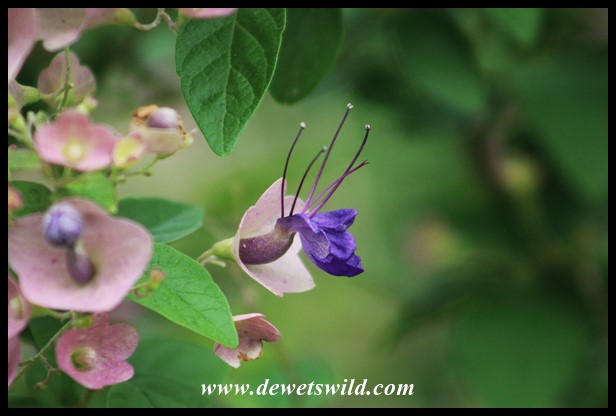
Weeping Bride’s Bush

Weeping Bride’s Bush

Lebombo Euphorbia growing on a rocky ridge along the Nwanetsi Spruit

Common Tree Euphorbia

Possibly a species of Solanum growing on the grassy plains around Satara

Reminiscent of Bell Flowers, these unidentified beauties grow wild on the grassy plains around Satara

A species of wild Foxglove growing on the open plains east of Satara

Tiny purplish flowers adorning a rocky outcrop near Olifants

Interesting fruit belonging to a yet-to-be-identified climber

Ground Lily

Knob Thorn

Marula Tree (photograph by Joubert)

Pride of De Kaap

Weeping Wattle blooms
What a privilege for us humans to be able to get a glimpse into this fascinating world in a place like the Kruger National Park.

A group of hikers and their ranger-guides encounter a small herd of elephant soon after starting their morning walk along the Sweni

















 DeWetsWild