Category Archives: Limpopo Province

Our experiences in the reserves of Limpopo, South Africa

Every day should start this way…

Sunrise this morning, seen from Tinhongonyeni waterhole near Mopani.

01-July-2016

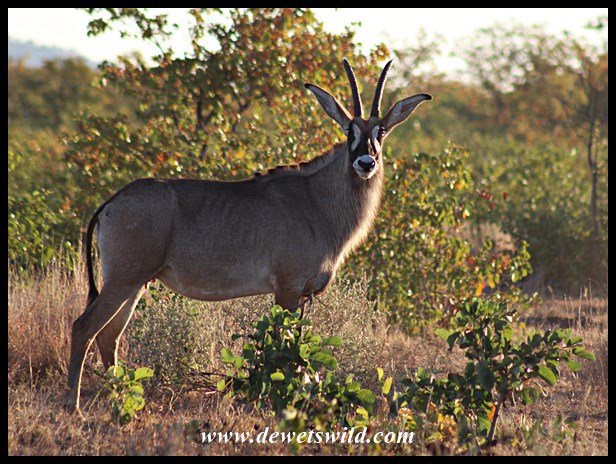
Roan Bonanza!

After five wonderful days of searching for predators at Satara we’ve now made our way to the Kruger’s Mopani Rest Camp, where our focus shifts to finding the rare antelope, like this roan antelope seen on the S50!

30-June-2016


Never miss an opportunity to go back to Lower Sabie and Olifants!

There was a reason I dedicated the previous two posts on de Wets Wild to Lower Sabie and Olifants, two of the most popular camps in the Kruger National Park. That is because I had the opportunity to visit both camps again earlier this week, and now that you have been introduced to both destinations we can all just sit back and enjoy some photos from this latest trip. Here’s hoping you enjoy the gallery as much as I enjoyed putting it together!


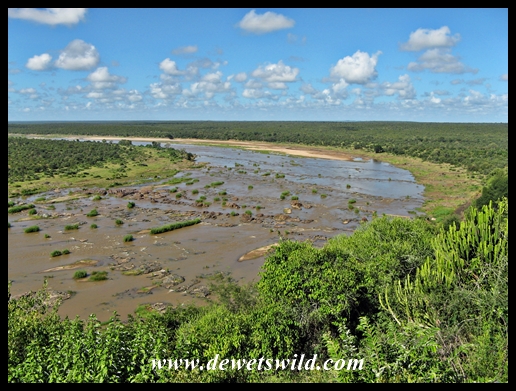
Sweeping views over the Olifants

Olifants Rest Camp, Kruger National Park

Olifants Rest Camp undoubtedly offers the best views of any of the Kruger National Park‘s camps, situated as it is on a cliff high above the Olifants River in the central regions of the Park. Many guests spend all day on their accommodation unit’s veranda, using their binoculars to scan the river below and the plains beyond for wildlife, or simply soaking in one of the grandest vistas in wild Africa.

Olifants was opened in June 1960, though it was closed for a 16 month period in the early 1970’s after a fire destroyed the reception, restaurant and shop. The cliff-top viewpoint near the restaurant is one of the most popular spots in the entire Park, and during the day is always packed with spectators enjoying the wildlife show along the river banks below. The camp offers guests a choice of 112 accommodation units, ranging from 2 and 3 bed bungalows to two luxurious and very exclusive guest houses that accommodate up to 8 guests each. Some of the accommodation units have been built right on the edge of the cliff, offering guests the most exquisite views, but you have to book a year in advance if you want to secure one of those. The two-bedroomed cottage number 14 is a personal favourite of ours. Olifants also offers guests a Mugg & Bean restaurant (itself with stunning views), a shop, filling station, small meeting room, swimming pool, picnic area for day visitors and guided activities.

Nearby, tiny Balule is a much more rustic camp offering accommodation in a small camping area and six very basic three-bed huts on the southern bank of the Olifants River. The huts were built in 1930 in the “Selby” style: a rondavel (round hut) without any windows, just a gap all around between the roof and wall for ventilation. The huts share a communal kitchen (with a paraffin freezer) and ablution block, and the same applies to the camping sites. Balule has no electricity and paraffin lamps are used to provide light at night. During the Apartheid years Balule was available only to non-white visitors.

Just outside Balule, a low level causeway crosses the Olifants River. The pontoon-crossing that operated over the river since 1929 was replaced by the causeway in 1937, but the old bridge was extensively damaged in the massive floods of January 2012 and had to be rebuilt. The high-span bridge across the same river, on the main tarred H1 route through the Park, lies about 5km due west from Balule and affords visitors the opportunity to stop and stretch their legs while enjoying the views up- and downstream. Both bridges are very popular with guests to Olifants, as they allow close-up views of so many of the river’s denizens.

South of Olifants, the roads initially follow the course of the river before leading down to the Satara-area. Nwamanzi offers more spectacular views over the Olifants, and the open plains south of the river host a huge number and variety of game and birds. Bangu waterhole and the Hlahleni stream crossing on the S90, as well as the Ngotso Weir on the S89, are especially rewarding spots to wait for the herds (and the predators that prey on them) to come and drink.

North of Olifants you enter the mopane-dominated northern plains of Kruger. There’s two general options of routes leading northwards from Olifants, both leading to Letaba Rest Camp. The quickest route follows the tarred H8 and H1-5 roads and is often very quiet game viewing-wise, especially once the road turns away from the river. The gravel S44, S93 and S46 roads follows the course of the Olifants and Letaba rivers through some very rocky terrain with several stream crossings and, apart from a lovely viewing point downstream from camp and the historic Von Wielligh’s Baobab, usually also offers lots more wildlife to see.

For scenic splendour alone, there’s no other camp in Kruger that can compete with Olifants. Combine that with the camp’s great facilities and excellent game viewing drives in the vicinity, and you’ll understand why it has become a firm favourite with many Kruger visitors.


Exploring Marakele

A “Place of Sanctuary”; that Marakele National Park certainly is. As its Tswana name suggests, this Park of around 650km² in size offers protection not only to some of the most awe-inspiring scenery one could hope to find, but also to an impressive variety of fauna and flora. Humans too can find a safe and peaceful haven here in the malaria-free Waterberg range, as we were reminded again on our recent visit.

A public road splits Marakele into two sections. Kwaggasvlakte in the south-western corner is much smaller than the main portion of the Park lying to the east. Kwaggasvlakte is where the Park’s entrance gate and Bontle  Camp is located, and is characterised by flat, sandy plains on which mixed bushveld is the main vegetation type.

Overlooking a waterhole in the northern corner of the Kwaggasvlakte section, Bollonoto Hide offers a great place from which to enjoy the constant stream of game and birdlife arriving to quench their thirst.

A subway connects Kwaggasvlakte to the bigger, eastern portion of the Park. It is in this more mountainous section of the Park where elephants, buffaloes and lions also occur, just some of the 91 species of mammals that the Park hosts. Tlopi Tented Camp is available to guests who’d like to overnight in this section of the Park, which is dominated by a wholly different type of vegetation, described as “Waterberg Moist Bushveld”. A good network of roads allows visitors to explore widely – some of Marakele’s roads are only accessible to 4×4 vehicles, but most of the Park’s 80km road network can easily and comfortably be traversed in a sedan.

A very narrow tarred pass leads to Marakele’s most impressive attraction, the Lenong View Point on top of the Waterberg massif. Lenong lies at an altitude of 2050m, over a kilometer higher than Bontle on the Kwaggasvlakte below – a fact you become well aware of when your ears pop on the very steep and winding ascent. From the viewpoint you normally have fantastic views over the plains below and the mountains around, and perhaps get a close-up glimpse at Marakele’s prized colony of Cape Vultures soaring on the thermals. Unfortunately the weather didn’t play along when we went up to Lenong on our latest visit, the top of the mountain being cloaked in a thick and teeth-chatteringly cold fog. However, dipping below the clouds on our way down we did get glimpses of the wonderful views to be had from up there.

Our latest visit to Marakele was just 3 nights long, and honestly we found that too short to fully savour all the Park had to offer. The broken terrain does make game-viewing a little more challenging than in many other parks and reserves, especially if you are mostly after the “Big 5” (which we luckily aren’t, we just enjoy being “out there” and enjoy anything we find along the way), but as far as spectacular scenery and serenity is concerned Marakele has few equals.

Marakele National Park is managed by South African National Parks, and the access gate is located just 12km outside the town of Thabazimbi, which offers most of the modern conveniences. Thabazimbi is easily accessed from Gauteng along the N1 and R516 via Bela-Bela or via the R511 through Brits.

Road to Marakele (2)

Marakele Monkey Business

This troop of vervet monkeys kept us thoroughly entertained on the last morning of our recent visit to Marakele National Park. While the adults just wanted to warm their old bones in the first rays of golden sunshine, the boisterous youngsters had a lot of pent up energy to get rid of!

Beautiful Bontle

It seems only fitting that we should start the report back on our recent visit to Marakele National Park at Bontle, the beautiful little bushveld campground set on the plains below the imposing Waterberg mountains, and that we called home during our three night stay.

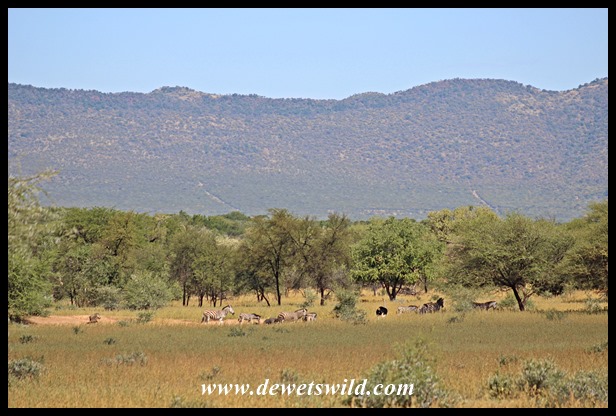
Bontle actually means “beautiful” in Setswana, and surveying the place from beneath a shady tree you can’t help but agree. Just outside the camp a waterhole attracts a constant stream of birds and animals, with a range of low hills to the south forming a beautiful backdrop to the scene.

View from Bontle

View from Bontle

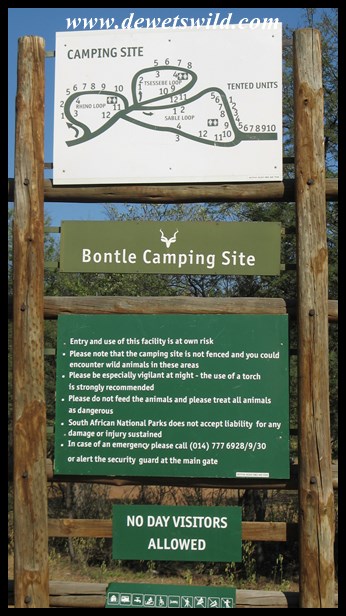
Wildlife has open access to Bontle, which is unfenced. While you don’t have to be concerned about being trampled by an elephant or eaten by a lion (these species occur elsewhere in Marakele, but not in the Kwaggasvlakte-section where Bontle’s located) you may well find yourself at close quarters with a variety of birds, various species of antelope, warthogs, zebras, giraffes, monkeys, baboons, bushbabies, springhares, jackals, ostriches and even white rhinos when you pop your head out your tent!

The campground accommodates 36 tents and caravans (all the campsites have electric plugpoints) around three communal ablution blocks (one of which is accessible to campers in wheelchairs). Ten safari tents are fairly recent additions to the offering at Bontle. Four of them sleep 4 guests each and the others 2 each. One of the two-bed tents have also been built with the needs of guests in wheelchairs in mind. The little kiosk at the entrance gate and reception office, about 1.5km from Bontle, conveniently stocks firewood, ice, sweets and cold drinks. Stock up on fuel and groceries in the nearby town of Thabazimbi.

This was our first stay at Bontle (managed by South African National Parks); on previous visits to Marakele we stayed at Tlopi Tented Camp in the bigger portion of the Park where the “Big-5” roam. But now that we’ve had a taste of Bontle’s beautiful tranquility it is hard to imagine that we’ll be able to resist the urge to return for very long.

Welcome to Bontle!

Welcome to Bontle!

More on Marakele in upcoming editions of de Wets Wild!


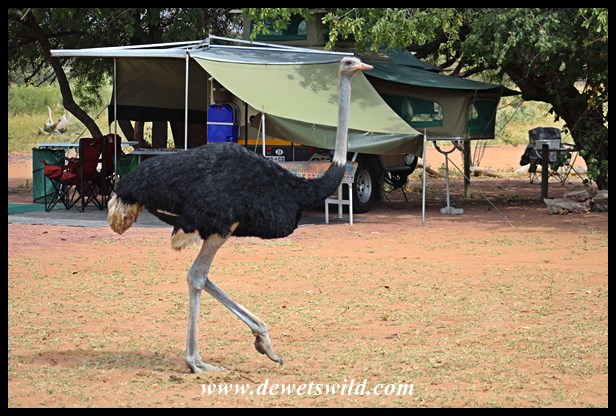
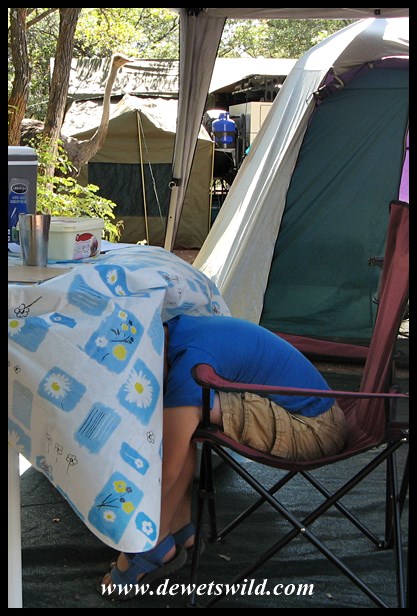
Hiding from an ostrich, like an ostrich…

Wildlife moves freely through the campsites at Bontle, in the Marakele National Park. Here Joubert demonstrates just how to hide from an inquisitive female ostrich…

Marakele_30Apr-2Mei2016 (2)

We’ve come to the end of our long weekend at Marakele, and will share some of this wonderful Park’s sights with you in upcoming editions of de Wets Wild – stay tuned!


Summer heat at Shingwedzi

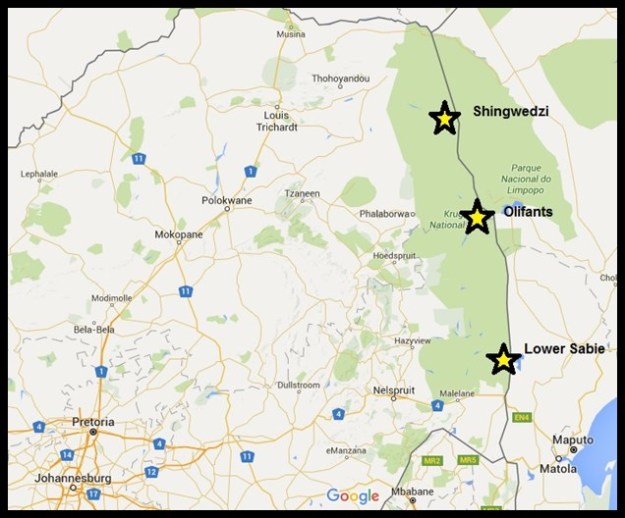
After three enjoyable nights in Olifants‘ spectacularly situated unit 14, we had only a third of our December holiday in the Kruger National Park left. Happily that didn’t depress our mood too much, as we would be spending the last three nights in our beloved Shingwedzi Rest Camp.

Soon after leaving Olifants, we came across a cantankerous hippo bull blocking the road to the north. While waiting for him to get out of the way, in his own time of course, a rustle in the dry mopane leaves beside the roads alerted us to a hyena that was also waiting for the traffic to clear…

Our plan was to stop at Mopani for brunch, so we only had a quick cup of coffee and a rusk or two at Letaba, no snakes in sight this time! On the way we couldn’t resist making a quick detour to marvelous Mooiplaas waterhole, as there is always something interesting to see there, and were handsomely rewarded with a couple of tsessebe sightings as well as a blue wildebeest that was having far too much fun rolling around in elephant dung to be considered sane…

Mopani was a delight of feathered friends, with there even being a pair of African Paradise Flycatchers nesting in a tree right between the shop and the Tindlovu restaurant (which serves delicious mince-meat jaffles by the way!)

The final stretch to Shingwedzi delivered special sightings of yet more mating lions, unfortunately spoiled by an idiot who got out of his car to try and get a better photo, as well as a beautiful old tusker.

Whenever we stay at Shingwedzi, there’s only one road we take for our first afternoon drive – a slow drive along the S50 gravel road that follows the river, offering ample opportunity to appreciate the diverse and abundant wildlife that congregate on the river bank. That’s exactly where we pointed the Jazz’s nose after checking into our cottage, number 29, donated by the Wildlife Society in the 1950’s.

Around Shingwedzi the best viewing is usually along the watercourses, which is why we decided on the S56-route along the Mphongolo River for our first morning drive from Shingwedzi.

That afternoon, Red Rocks and Tshange viewpoints to the southwest of camp beckoned.

One last guided nightdrive in search of nocturnal wildlife delivered much better sightings than the windy nightdrive we undertook from Lower Sabie a few days earlier.

By the time the sun rose over the horizon on our last full day in the Park, we were already travelling along the S50-route enjoying the Shingwedzi River’s abundant wildlife and awesome scenery before returning to camp and a late breakfast.

Shingwedzi was nice and quiet in the early morning, as most guests were still out on the road searching for game, giving us an excellent opportunity to amble through the camp.

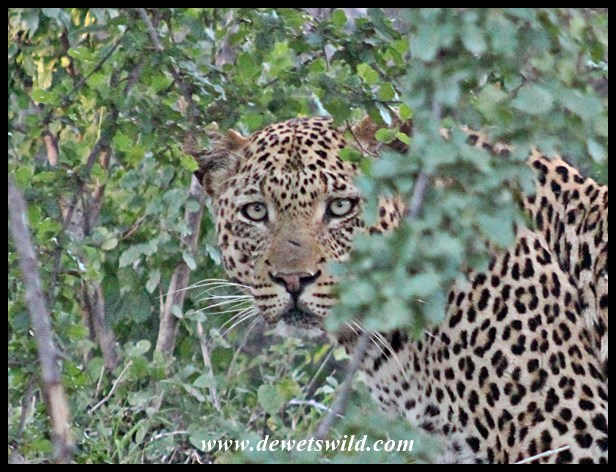
With such a wide variety of bird and animal life around Shingwedzi it was a rather difficult decision which area we’d drive to on our final afternoon. In the end we opted for the Mphongolo Loop (S56) again, and what a great choice that was! We’ve already shown you pictures of the waterhole meeting between large herds of elephants and buffaloes we witnessed that day. Dodging a couple more elephant and buffalo herds along the way, navigating through several herds of antelope and scanning the landscape for new species of birds to add to our ticklist, we were thrilled that our afternoon was concluded with a leopard lying in wait at a small waterhole.

And so, our time at Kruger National Park has come to an end, for this visit at least as, of course, the next trip has already been booked. All that remained was to drive down to Phalaborwa Gate, from where Pretoria lay a hot six-hour drive away.


KNP Dec15


Summer heat at Olifants

After three nights at Lower Sabie it was time to move northwards to the central regions of the Kruger National Park. Just as we set off, a light drizzle started falling, and kept falling for the entire 50km or so distance between Lower Sabie and Tshokwane picnic site. While the low clouds meant that we could not enjoy the magnificent view from the top of Nkumbe mountain, we did not mind having a break from the previous few days’ oppressive heat! Pretty soon little puddles were forming on rocks and in the road, and while the shower would not have broken the drought, it would have brought a little bit of relief to the parched veld.

Between Tshokwane and Satara we encountered two more pairs of mating lions. While one couple moved away from the road for more privacy, the other was a lot more relaxed in the company of the few cars that had gathered to watch them. The prevailing drought makes catching prey much easier, and the way the lions are going on there will soon be many more young and hungry mouths to feed.

After lunch (take-away pizzas enjoyed in Satara‘s day visitors area) we tackled the final stretch of the long drive from Lower Sabie to Olifants Rest Camp. The plains between Satara and the Olifants River were positively teeming with wildlife of all descriptions.

Checking in at Olifants Rest Camp, we were given the keys to our cottage, number 14, one of the most popular units in the camp, and for good reason. The view of the wide bend of the Olifants River with its pods of hippos and lurking crocodiles far below, the endless wild plains beyond and the continuous stream of game and birds arriving to slake their thirst, is almost unrivaled anywhere on the continent, and you can take it all in from the comfort of a sofa on the wide veranda!

With the area around Olifants suffering from an extreme drought and intense heat, we thought it best to stick to the routes along the Olifants River and some of its tributaries that still held water for our afternoon drive. The high bridge and low-level causeway crossing the Olifants, and the weir at the Ngotso-crossing (on the S89 route) proved to be hot-beds of wildlife activity, though in the areas in between, away from the water, there were few animals to be found.

Next morning we were already waiting, with a few other cars, at Olifants’ gate for the 04:30AM opening – that’s the way to maximise your chances of encountering large predators on the prowl in the hot summer and we didn’t have to drive far before encountering two spotted hyenas just as first light started painting the African morning. Our drive took us along the Olifants and Letaba rivers, an area of rugged beauty, to Letaba Rest Camp, where we planned on enjoying our picnic breakfast. We didn’t however bargain that we’d be joined by a snake, even if only a slightly venomous Olive Grass Snake. Happily the snake was very well behaved and totally relaxed, and so he enjoyed the warm morning sun while we enjoyed our rusks and coffee…

Seeing as the Olifants river delivered such enjoyable sightings to us the previous day, we again focussed on the H1-5 tar road and the connecting S90, S91 and S92 gravel roads the following afternoon. This time we worked a quick detour to Bangu waterhole, some distance to the south of the river, into our drive as well – a well rewarded decision as we found a pair of black-backed jackals and flock of Temminck’s Coursers at the Xipembane stream, which still held a bit of water.

Driving up to Olifants two days earlier, the tremendous concentrations of game around Satara really drew our attention, and we decided that we had to explore that area a bit more on our final full day at Olifants. With the tarred road between Olifants and Satara carrying most of the tourist traffic, we opted to rather follow the gravel S90 “old main road”, past Bangu and Gudzani waterholes, to Satara, and then return to our lovely cottage at Olifants along the tar route when the day starts hotting up. Ticking excellent sightings along the way; a large pack of hyenas, showboating hippos, a rarely seen honey badger, two regal lions, more jackals and a quick view of a pair of cheetahs surrendering their kill to descending vultures, not to mention a huge number of more commonly seen birds and animals, and despite heavy cloud cover, a howling wind and the irritation of a punctured tire (quickly fixed at Satara’s car wash), you’ll appreciate that we were a very happy group when we arrived back at Olifants that morning!

After spending the hot midday hours in camp appreciating the enchanting view and the accompanying birdlife, it was time for our final leisurely afternoon drive along the Olifants and Letaba Rivers. While the drive wasn’t anywhere as exhilarating as our drive that morning, it did give us another opportunity to enjoy the rugged scenery of the valleys these rivers have carved over aeons through the Lebombo foothills.

We still had three nights left at Shingwedzi Rest Camp after our time at Olifants, and we’ll be telling you all about those next week. We’ll also be telling you more about Olifants and its environs in an upcoming edition of de Wets Wild.