Category Archives: Kruger National Park

Just another day in the Kruger…

… as if there’s such a thing!

While touring the Lowveld in February, we concluded our trip with a stay at Swadini in the Blyde River Canyon Nature Reserve – more on the time we spent there in an upcoming edition of de Wets Wild. Having first explored the Pafuri area in the far north of the Kruger National Park and then spending time at Letaba in the Park’s central region, we wanted to make one more day visit to the Park, and Swadini being only 70km from the Orpen Gate made that an easy undertaking.

Our route took us from Orpen Gate down to Muzandzeni Picnic Site for breakfast, past Nhlanguleni Picnic Site to Tshokwane Picnic Site where we had lunch, and back to Orpen via Satara Rest Camp. Despite it being an overcast day with regular downpours, we still managed great sightings, as evidenced by this little gallery of images we took on the day (you can click on any of the pictures for a better view).

Letaba, February 2014

Following our explorations of the paradise that is Pafuri, in the far north of the Kruger National Park, we headed towards the central regions of the Park, for a two-night stay at Letaba Rest Camp.

It’s a long drive down from Pafuri to Letaba and, at game viewing speeds with regular stops for photographs and leg stretches at the camps and picnic spots along the way, it took us the entire day to cover the distance of 250km, reaching Letaba just before the gates closed. Covering such a distance in a national park like Kruger, you’re bound to come across some great sightings and some thrilling experiences, but we didn’t count on getting growled at when we stopped at Mooiplaas picnic site for a bit of a break. We were back in the car in a flash, and still have no idea what it was that was so irritated by our presence…

When you’re hoping for great wildlife sightings in any wild place, you have to be out-and-about at the times that the animals are most active, being the early morning and late afternoon, to maximise your chances.

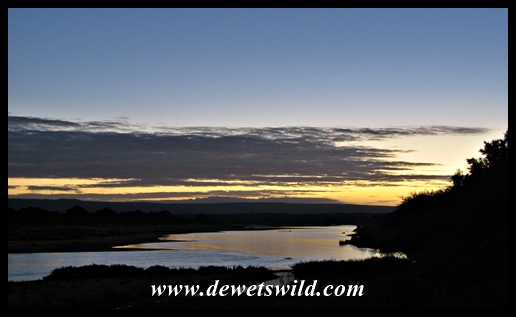
Letaba sunrise

We set out early from Letaba the next morning, heading towards Olifants Rest Camp along the gravel roads that follow the courses of the Letaba and Olifants Rivers. We were soon rewarded with a great sighting of a spotted hyena, followed shortly afterwards by the highlight of our trip: an encounter with wild dogs! The dogs came running along the road in the opposite direction we were travelling in, and passed us in a flash. We had to make a u-turn and followed them a couple of hundred metres, before they decided to take a bit of a break right in the middle of the road. These animals are so rare and sightings so infrequent that we spent quite a bit of time with them before moving on.

Fish eagle

Shortly before reaching Olifants we crossed a small stream and noticed lots of terrapins and a lone juvenile crocodile sharing a pool next to the road. It soon became apparent that these animals have become accustomed to being fed by passing tourists as they started moving towards our vehicle the moment we came to a halt. This aberrant behaviour is exactly the reason why the park authorities are so strict about visitors not being allowed to feed the animals, but some choose to ignore it nonetheless. We didn’t stay long, fearing that the terrapins would end up beneath our vehicle preventing us from driving away.

We spent the hot hours of the day walking around the Letaba campgrounds, enjoying the peace and quite and the company of Letaba’s resident bushbuck and birds.

Our afternoon excursion focused on the riverine drives to the north of the camp. Again we were not disappointed, seeing two waterbuck bulls sparring, herds of other game, including elephants, hippos, impalas, nyalas, bushbuck, giraffes, buffalo and baboons, various bird species, even some fish at a river crossing, and of course beautiful scenery.

A fascinating but gruesome sighting of a ground hornbill using its massive bill to kill and devour a tortoise in its carapace was a reminder that this is still wild Africa after all…

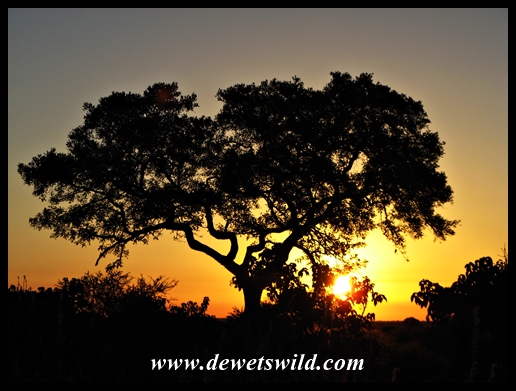
Letaba Sunset

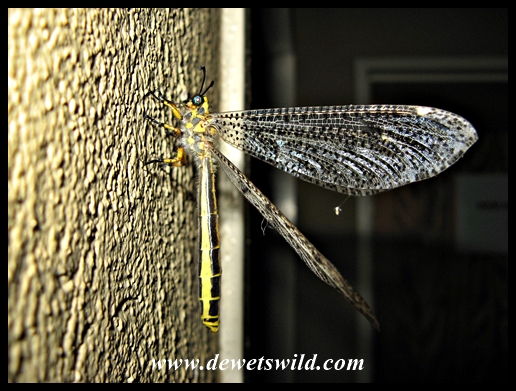
Lacewing

With the sunrise the next morning it was time to pack up and head to our next destination, the Forever Swadini Resort in the Blyde River Canyon Nature Reserve. It wouldn’t be our last taste of the Kruger National Park however, and as we were heading towards the Orpen Gate we could console ourselves in the knowledge that we were planning one last day visit for later in the week.

We’ve previously dedicated a special post to Letaba – have a look here if you’d like to read more about this peaceful rest camp

Pafuri Paradise

Pick up any guidebook about the Kruger National Park, and it will probably tell you that you’ve not experienced the “real” Kruger if you haven’t seen Pafuri.

Pafuri Treasure (7)

Pafuri is a diverse wilderness in the far north-eastern corner of South Africa, where the borders of SA, Zimbabwe and Mozambique meet at the confluence of the Limpopo and Luvuvhu Rivers. Because all kinds of smugglers, bandits and poachers from the late 1800′s and early 1900′s could evade capture by the law-enforcement authorities of these countries by simply slipping across the borders, the area quickly became known as “Crook’s Corner”.

Pafuri Treasure (10)

The wide variety of habitats – muddy rivers, glimmering pans, lush riverine vegetation with magnificent stands of yellow fever trees , mopane woodland interspersed with huge baobabs (some hundreds if not thousands of years old) and dramatic sandstone ridges and cliffs, are home to probably the greatest variety of birds in the country and supports large concentrations of mammals.

Along the roads that follow the course of the Luvuvhu River, five species of game are especially numerous. The antics of the vervet monkeys and chacma baboons are always entertaining to watch, and the warthogs go about their business as if without a care in the world. Impalas are a familiar sight; as they are in many other parts of the Kruger National Park. But it is to the regal Nyala that Pafuri belongs.

Pafuri however has even more to offer in terms of big game viewing with hippos, elephants, buffaloes, zebras, giraffe, wildebeest, kudu, bushbuck and crocodiles being encountered often, while lucky visitors enjoy sightings of the resident lion pride.

As already mentioned, Pafuri is a bird-watcher’s heaven. Several bird species are at the southernmost limit of their range here and can be seen nowhere else in South Africa. During summer, when the already astounding diversity of birdlife swells with the arrival of migrants from further north, Pafuri is the place to be!

The Pafuri Picnic Site on the bank of the Luvuvhu River is the ideal stopover for anyone and everyone that find themselves in the magical place. Among the picnic tables and benches that overlook the river the birdlife seems especially relaxed and a keen eye is sure to notice many of the small invertebrates that hide among the leaf litter and twigs. We spent lots of time enjoying the energetic vervet monekys that frequent the site, but our most memorable sighting of this visit to Pafuri was the stiff-legged show of dominance between two mature nyala bulls, strutting their stuff as if we were not even there.

And this is exactly why Pafuri has such a special place in our hearts. It still feels like a wild frontier, a place where humans are just passing through. We absolutely agree: You haven’t experienced the “real” Kruger if you haven’t spent some time at Pafuri.

________

While exploring magical Pafuri on our latest (February 2014) visit, we based ourselves at the Pafuri Rivercamp, which is located just 3km outside the Kruger’s Pafuri Gate, in mature riverine woodland along the Mutale River. Rustic though the camp may be (there’s no electricity or cellphone reception and everything is built from wood, reeds, canvas, gauze and chicken mess) but you could hardly imagine a more romantic place from which to explore the Pafuri’s wilderness. The camp staff are friendly and hospitable, and the camp has a central pool, bar, lounge, and lapa where meals (which must be pre-arranged) can be enjoyed. The tents are pitched on platforms among the branches of large jackalberry, leadwood and apple-leaf trees and in the clearing below is a fireplace, picnic table and comfortable canvas chairs with your private kitchen and ablutions located to the side. There’s nothing like being lulled to sleep on a hot February night by a cool breeze passing through the leaves around you and straight through your open tent windows, accompanied by the sounds of bushbabies and nightjars! We’ll definitely return to Pafuri Rivercamp at the first opportunity.

The Kruger National Park’s own Punda Maria Rest Camp is also a highly recommendable alternative accommodation option if you want to visit Pafuri. Have a look at our special Punda Maria post if you’d like to learn more about this historic rest camp.

Abandoned

This little museum hut is all that remains of Kruger National Park’s erstwhile Rabelais Rest Camp, long since abandoned when the Parks’ central-western boundary was moved to its present position at the Orpen Rest Camp & Entrance Gate.

Abandoned” is the theme for WordPress’ weekly photo challenge.

Three would have been a crowd…

We spent another day on the Kruger National Park today, entering for a day visit through the Orpen Gate.

Only a few kilometers into the Park, we met with the King and Queen of the Beasts on their honeymoon…

Threes” is the theme for this week’s WordPress Photo Challenge

Letaba, February 2014

From Pafuri, we travelled southwards towards the central section of the Kruger National Park, spending two nights at peaceful Letaba Rest Camp and exploring the mopane country between the Letaba and Olifants Rivers.

Letaba 17Feb14

We had some great sightings – including wild dogs! – and will share some more photos from our visit to Letaba in an upcoming installment of de Wets Wild.

Valentines at Pafuri Rivercamp

We spent our Valentine’s Weekend at the rustic but very romantic Pafuri Rivercamp, in the extreme north-east of South Africa’s Limpopo Province.

Pafuri Rivercamp 14Feb14

We’ll share more about our travels in the Pafuri region of the Kruger National Park soon, but for a teaser have a look at our entry into the “Treasure” photo challenge.

Treasure

We’ve just spent three days exploring the beautiful Pafuri region of the Kruger National Park. Unspoiled and remote, Pafuri is true wilderness.

Heaven!

We post these pictures in response to WordPress’ weekly photo challenge theme “Treasure” and will soon publish more from our trip, showcasing all that Pafuri has to offer.

Our 2013 in pictures

As the year is rushing to its end, we’re looking back at all the wonderful places we stayed at in South Africa’s wild places during 2013:

Crocodile Bridge Rest Camp, Kruger National Park

Crocodile Bridge

Almost right in the south-east corner of the Kruger National Park lies quaint Crocodile Bridge, which serves both as an entrance gate into the Park and a rest camp providing overnight accommodation and other amenities to visitors.

Crocodile Bridge sunset

Crocodile Bridge sunset

The first Europeans to set foot in what is today the Kruger National Park was a Dutch expedition from Delagoa Bay (today Maputo, Mozambique) in 1725, under command of Francois de Kuiper, who was forced to turn around at Gomondwane just north of Crocodile Bridge by antagonistic locals.

By 1894 work started on the railway bridge across the Crocodile River, an important section of the Selati Line.

Crocodile Bridge railway bridge

Crocodile Bridge railway bridge

Crocodile Bridge was one of the first four ranger stations in the Sabie Game Reserve, which later became the Kruger National Park. The first stretch of road in the Park was built by ranger de la Porte from Crocodile Bridge to his post at Lower Sabie for use by his personal Model-T Ford, but it was too rough to be used by visitors and so had to be upgraded soon after the Park’s proclamation in 1926. The pontoon over the Crocodile River was in use until 1945, the last in the Park to be replaced with a low-level causeway.

Misty Crocodile Bridge sunrise

Misty Crocodile Bridge sunrise

In March 1929, the Crocodile Bridge area was the scene of one of the most notorious events in the young Park’s history. Two lorry loads of American tourists, visiting South Africa on a cruise ship tour, were driven into the Park on their way to Lower Sabie, when they were caught in a thunderstorm and decided to turn back. A dry stream they had crossed earlier was now in flash flood, but the drivers decided to cross it nevertheless, with dreadful consequence, as the first truck was summarily overturned by the raging water. Luckily no one was killed or seriously injured. When lions started roaring nearby, the soggy tourists climbed into the thorn trees and this is where the local ranger found them hours later; cold, miserable, wet, muddy and tattered. The subsequent reports all over the world describing the Park as a “death trap” lead to it being closed to visitors annually through the wet season, a ruling that was scrapped only in the late 1970’s.

The perils of working as the ranger guide at the Hippo Pools - a herd of buffalo may just cause you to be late for work!

The perils of working as the ranger guide at the Hippo Pools – a herd of buffalo may just cause you to be late for work!

Today, the area around Crocodile Bridge is one of the most popular regions in the Park – little wonder considering that the immediate area around the camp supports large numbers of a huge variety of animals and birds. The tarred road leading to Lower Sabie carries most of the “traffic”, and so we prefer to travel on the gravel roads instead when we are in the vicinity. The S25 road that follows the course of the Crocodile River westwards towards Malelane is a particular favourite that often delivers sightings of predators. A short turn-off from this road takes you to the Hippo Pools, where an armed ranger escorts visitors to the river’s edge for a closer view of the hippos, crocodiles and riverine birds. The S28 Nhlowa Road is an alternative, and highly recommended, route through to Lower Sabie. Near camp, Gezantfombi Dam is just the place to enjoy that first morning coffee or to while away the last couple of minutes before the gates close for the night.

The camp lies on the bank of the Crocodile River and its shady grounds are frequented by a myriad of small animals and a rich birdlife – just keep a watchful eye on the little vervet monkeys who’ll part you from any food left in the open in the blink of an eye! Crocodile Bridge first opened to visitors in the 1930’s but was completely rebuilt in 1987. It offers twenty 3-bed bungalows with their own bathrooms and kitchenettes, eight safari tents that make use of communal facilities, and a small campsite (with plugpoints). The camp also has a small, but well stocked, shop and a fuel station.

It’s the family-friendly atmosphere that draws us to Crocodile Bridge most. The spacious, green, shady lawns of the camp, the game-rich surroundings and the peacefulness of it all will see us return again and again…

Crocodile Bridge

Crocodile Bridge