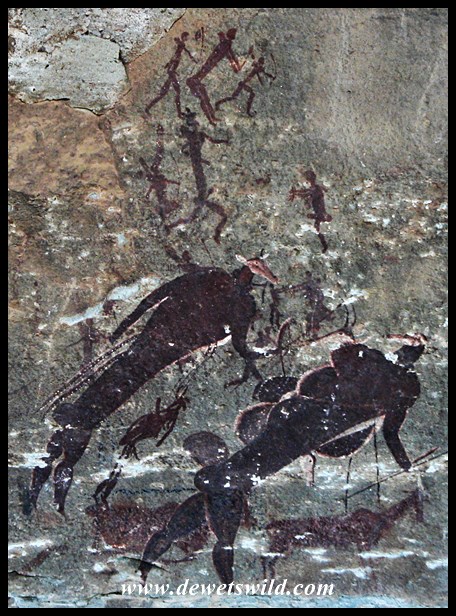
An exquisite example of San rock art, on display at the Main Caves Museum in Giant’s Castle Game Reserve, in the uKhahlamba Drakensberg Park World Heritage Site.

“Intricate” is this week’s WordPress photo challenge theme.
An exquisite example of San rock art, on display at the Main Caves Museum in Giant’s Castle Game Reserve, in the uKhahlamba Drakensberg Park World Heritage Site.

“Intricate” is this week’s WordPress photo challenge theme.
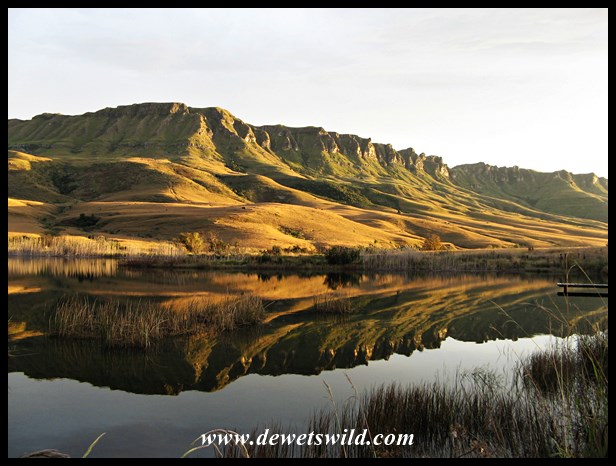
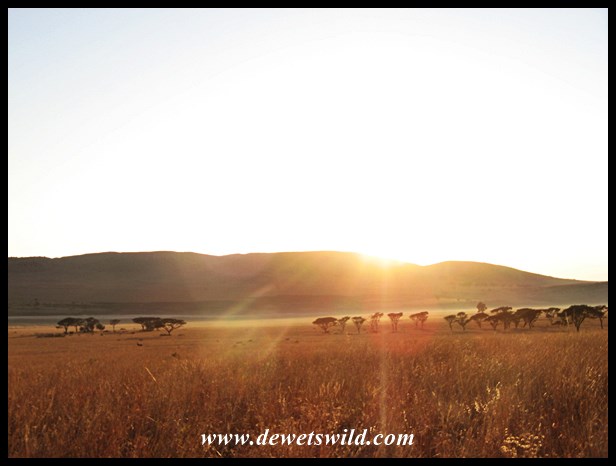
This morning, we awoke to beautifully clear skies here at Kamberg.

We also learned just how quickly and unpredictably the weather can change in the Drakensberg; within half-an-hour of this photo being taken it was completely overcast!
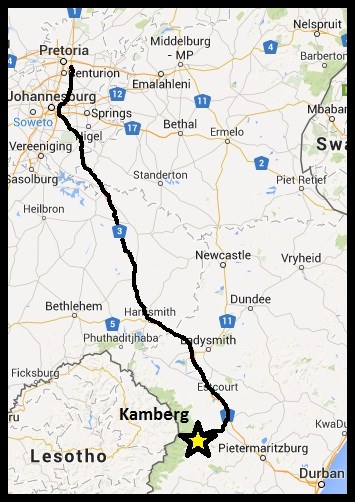
It’s the Workers’ Day long weekend in South Africa, and we find ourselves at the tiny camp at Kamberg, in the uKhahlamba Drakensberg Park. It is our first time at Kamberg, and thus far we’re quite impressed with what we found.

A public holiday long weekend in South Africa was just the excuse we needed to head back into one of our favourite South African wild places, Golden Gate Highlands National Park.

Glen Reenen Rest Camp, where cottage 25 was our abode for the two nights we spent in Golden Gate on this trip, was a festival of autumn colours. Two horses also made themselves right at home among the accommodation units, and provided loads of entertainment to us all, most especially involving Joubert either photographing them or inviting them over.
Of course we were not going to spend our time in camp only, as beautiful a place as Glen Reenen is, and we made sure we took in as much of Golden Gate’s spectacular scenery as we could fit into two days.
In a place this beautiful, the plentiful animal and birdlife certainly is a special bonus!
Almost exactly two days after we arrived, we set off back home to Pretoria, convinced yet again that Golden Gate is a very special place. If you’d like to learn more about Golden Gate Highlands National Park, have a read through the special blogpost we did on the Park’s fiftieth birthday.

Our new favourite route to Golden Gate, via Sasolburg, Heilbron, Petrus Steyn and Bethlehem, a distance of about 400km from Pretoria (map drawn with Google Maps)
Joubert really had a lot of fun with the two horses that roamed Glen Reenen Rest Camp in Golden Gate Highlands National Park this past weekend. Having had his fill of equine photography on Saturday, the next day he decided to lure the horses to our cottage, with nothing more than handpicked pieces of prime grass-stalks. His efforts were quickly rewarded, to the point where they would have followed him INTO the cottage if he didn’t rudely slam the door in their faces…
We think “Horse Whisperer” has opened up as a new career option for our boy!
(you can click on the images to enjoy them in a larger format 😉 )
Glen Reenen Rest Camp in the Golden Gate Highlands National Park, seen here this morning from the Mushroom Rocks walk, has been transformed into a feast of striking autumn colours.

Joubert really put in a lot of effort today to photograph two horses grazing among the cottages here at Glen Reenen Rest Camp, in the Golden Gate Highlands National Park. Here’s two of his shots!

And this one of mine showing him in action. Yes, we’re very proud of our little five year old!

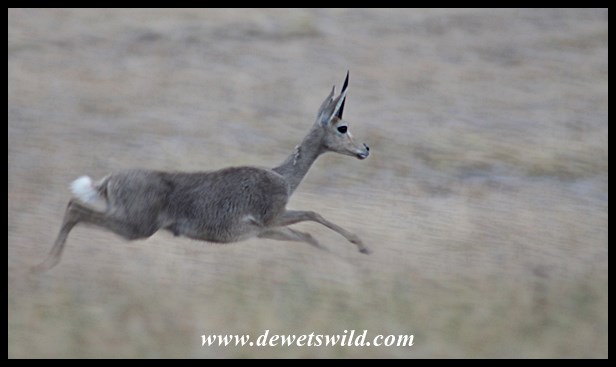
Animals on the move at Golden Gate Highlands National Park. And guess where we’re heading tomorrow for the Freedom Day Long Weekend? 😉
“Motion” is the theme for this week’s WordPress Photo Challenge.
In the 1930’s a wall of 45m high and 506m in length was built across a gorge cut by the Olifants River, giving rise to the Loskop Dam, intended to provide reliable irrigation for farming activities through a series of canals over 480km in length that was eventually completed in the late 1940’s. As was government policy at the time, only married white men were employed on the project initially, but due to a lack of labour stalling the progress unmarried white men were also later taken on. After the wall was raised to its present height of 54m by 1980, the dam now covers an area of 2,400ha at full capacity and stretches for up to 27km upstream.

The reserve around the dam, originally proclaimed in the 1950’s, has since considerably increased in size, covering 22,850ha at present. Thanks to the exceptionally varied geology and hilly topography (ranging between 990 and 1,450m above sea level), and due to the fact that the reserve is located at the transition between the highveld grassland and lower lying bushveld biomes, a total of 1016 plant species have already been identified within its borders, unfortunately including a couple of species of exotic intruders which the reserve staff are continuously trying to eradicate. No less than 65 rare and threatened plant species occur here, including the only viable population of the Middelburg Cycad (Encephalartos middelburgensis). This amazing diversity of habitats and fodder supports almost 70 mammalian species (including leopard, brown hyena, white rhinoceros, hippopotamus, buffalo, giraffe, plains zebra, warthog, sable antelope, tsessebe, eland, kudu, nyala, bushbuck, reedbuck and oribi). Unfortunately chemical pollution entering the dam from upstream has had a devastating effect on the population of nile crocodiles, one of 42 reptile species that have been recorded at Loskop. The 367 bird species that call Loskop home include a successfully reintroduced population of red-billed oxpeckers, and other rare species like the ground hornbill, bald ibis and blue crane. The inventory of species found in this scenic reserve also includes 19 kinds of amphibians, 42 fish species (three of which introduced aliens) and 49 spider genera.
Loskop Dam Nature Reserve is managed by the Mpumalanga Parks and Tourism Agency, ably assisted by a volunteer organisation, the Friends of Loskop, who are very involved in the day-to-day running of the reserve, assisting with environmental education for visiting school groups, and projects involving the study, breeding and protection of endangered species that occur naturally within the reserve, such as the ground hornbill, black-footed cat and white rhino.

We spent a morning exploring the reserve roads on the North-Western shore of the Dam, and found adequate facilities for day visitors in the form of two photographic hides and a well-kept picnic site with neat ablutions. We did not have any exceptional wildlife encounters (perhaps the overcast, drizzly weather and thick vegetation at the end of the rainy season was to blame), but the inspiring scenery more than made up for that. The limited road network is rough gravel, with some erosion damage and loose rocks in places, but most of the routes (with the exception of the Langeberg loop) can be carefully negotiated in a normal sedan. The direct distance between the gate and picnic site is approximately 18km, and you’ll need at least three to four hours to explore this section of the reserve in your own vehicle.
The very popular Forever Resort Loskop Dam offers accommodation, a huge camping area, shop, restaurant, several hot and cold swimming pools, sporting facilities, designated areas for fishing from the shoreline, boat launching facilities, and guided boat trips on the dam. Due to the risk of encountering hippos and crocodiles in the water, swimming and water-skiing is not permitted. Forever Resorts Loskop Dam hosts several fishing competitions every year, and in April annually the very popular 50km Loskop Ultra-Marathon, 21km Loskop Wild Challenge and Loskop Rhino Family Fun Run.
The resort’s beautifully kept gardens are a joy to explore, with beautiful flowers, interesting plants and fascinating wildlife within easy reach.
The wild figs scattered around the grounds are hives of activity, day or night.
Humans are not the only primates that find the resort at Loskop a choice destination, and guests would be well advised to ensure they keep the windows and doors of their tents or accommodation closed when not in attendance.
Forever Resort Loskop Dam lies on the North-Eastern shoreline of the dam, approximately 190km from Pretoria, easily accessible along the N11-route between the towns of Middelburg and Groblersdal. This was our base for the three nights we spent enjoying the reserve over Easter 2015, and from where we experienced the most glorious sunsets! The Loskop area holds many special memories for the de Wet family; and thanks to the long weekend we spent there together we’ve accumulated so many more!

Easter Sunday Sunset over Loskop Dam

The route from Pretoria to Loskop Dam (using Google Maps)
Being out and about at first light is often richly rewarded in South Africa’s wild places, as was the case with this memorable encounter with a spotted hyena near Letaba Rest Camp, in the Kruger National Park.

“Early Bird” is the theme for this week’s WordPress Photo Challenge