Breathtaking Mountains

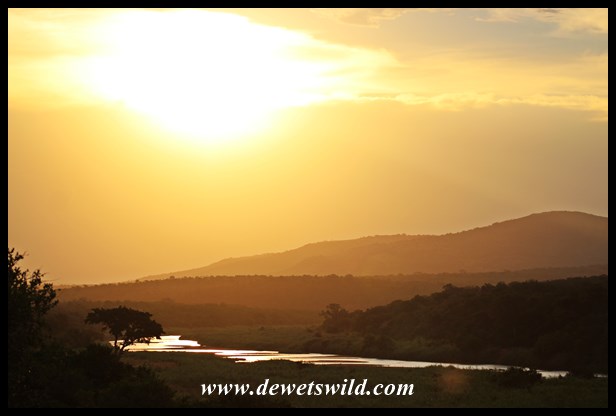
Come rain or shine, and no matter which way you look, the mountain scenery at Royal Natal National Park, dominated by the magnificent cliff face of the Amphitheatre, will take your breath away!

Bush Blackcap

Lioptilus nigricapillus

Our December 2016 visit to Thendele in the Royal Natal National Park afforded us our first opportunity to photograph the Bush Blackcap, a rarely seen endemic South African bird with a very limited distribution along the Eastern Escarpment.

These small birds occur singly or in pairs in the dense canopy of mountain forests and their verges, moving down to coastal forests (and lush gardens) during winter. Breeding takes place in summer. They feed on fruits, berries and insects. The IUCN considers them “near threatened” due to a small population size (estimated at most around 5,000) and threats to their forest habitat.

Squatters at the lodgings

From the moment we arrived at chalet 27 in Thendele Camp in the Royal Natal National Park in December, we just loved the unit’s setting. And we were not the only ones, as a pair of Greater Striped Swallows were diligently building their mud-walled nest on the veranda, quite unconcerned about the humans sitting below them and watching them go about the task.

Drakensberg Dwarf Chameleon

Bradypodion dracomontanum

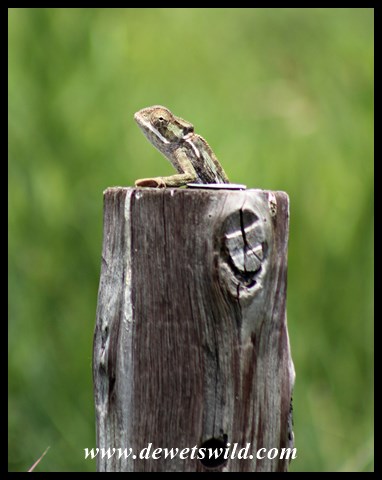
Just as we arrived at Royal Natal National Park in the Drakensberg for our visit in December, Joubert noticed this laid-back little chameleon resting an elbow on a fence post in the campsite at Rugged Glen.

drakensberg-dwarf-chameleon

Turns out he (or she) is a Drakensberg Dwarf Chameleon, a species found only in the Drakensberg mountain range in Kwazulu-Natal Province, where they inhabit sheltered forests and bushes in alpine vegetation at altitudes of between 1,500 and 2,500m and feed on small insects. They grow to a length of only about 14cm. Interestingly, dwarf chameleon females give birth to between 5 and 20 live young that develop in eggs inside the female (known as ovivivipary).

Rainbows in the mountains

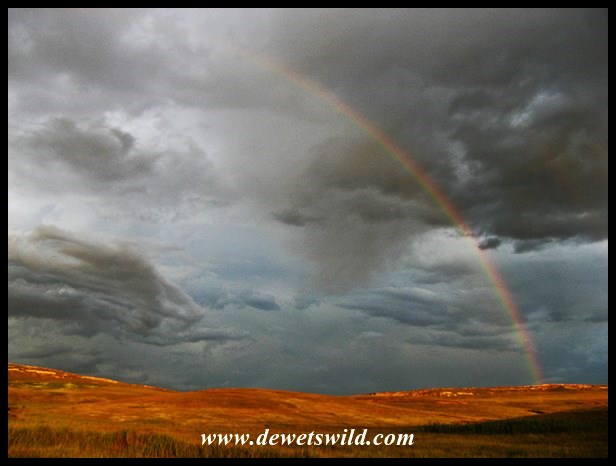
While enjoying our December 2016 holidays in three of South Africa’s wild places, we experienced rainfall in varying degrees on a daily basis. In a country currently suffering through one of the worst ever recorded droughts, this was a real blessing, made even more special when the sun broke through the clouds at the end of a downpour to reveal beautiful rainbows, like this one at Golden Gate Highlands National Park (the photos really don’t do it justice).

Exploring Golden Gate

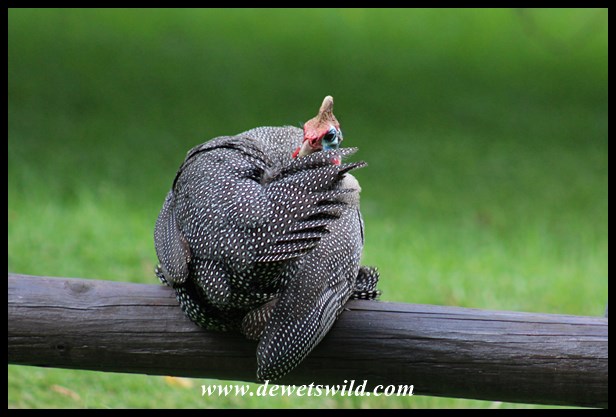
As wonderful a place as Glen Reenen is, and as terrific as the trails that lead into the mountains from there are, to really experience all the Golden Gate Highlands National Park has to offer you also must take a drive along the Lichens Pass road that leads through the Park all the way between the eastern and western boundaries, the gravel road to Kestell to the northern boundary, and the Oribi and Blesbok loops that meanders up and over two plateaus near the camp. Along the way you can appreciate magnificent scenery and you could encounter some of the almost 200 species of birds and 60 species of mammals that occur here, including the bald ibis, crowned crane, guineafowl, secretarybird, cape and bearded vultureblesbok, eland, hartebeest, oribi, grey rhebok, springbok, black wildebeest and plains zebra. Here’s just a few of the photographs we took while exploring the larger Park area during our December 2016 visit.

Up into the Echo Ravine again

The last time we walked the Echo Ravine Trail from Glen Reenen, Joubert was still a bit too young to join. This time around Marilize and I could finally share this beautiful walk with our son, something we’ve been looking forward to for some time.

Let nature come to you at Glen Reenen

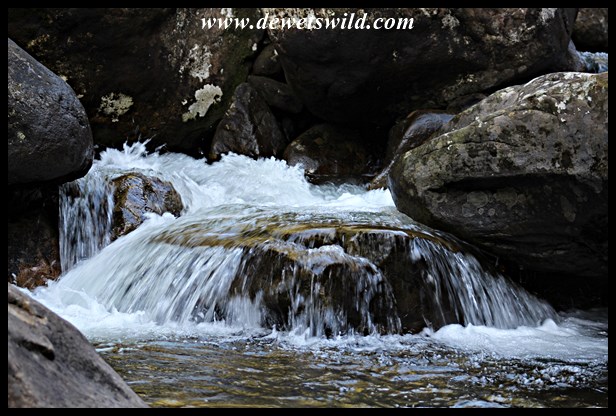
Glen Reenen Rest Camp is one of our favoured options for an overnight stay when visiting Golden Gate Highlands National Park. The camp has an amazing setting surrounded by the magnificent mountains, with two crystal clear mountain streams flowing past and converging at one end, and is frequented by an equally impressive diversity of wildlife – we showed you the antics of the baboons yesterday, as well as the ground woodpeckers that call Glen Reenen home – just one of many kinds of birds that you’ll find there, and at night you may be lucky to see a jackal or various kinds of antelope roaming between the huts and campsites. It is also a fantastic base from which to explore the Park, be it on foot, horseback or in your own vehicle.

Glen Reenen, and Golden Gate Highlands National Park, is managed by the South African National Parks and is an easy 350 to 400km drive from Johannesburg and Pretoria.

Our new favourite route to Golden Gate, via Sasolburg, Heilbron, Petrus Steyn and Bethlehem, a distance of about 400km from Pretoria (map drawn with Google Maps)

Our new favourite route to Golden Gate, via Sasolburg, Heilbron, Petrus Steyn and Bethlehem, a distance of about 400km from Pretoria (map drawn with Google Maps)


Baboon antics in Glen Reenen

People will always find the primates entertaining, and the baboon troops in Golden Gate Highlands National Park is no exception. However, when they come foraging between the accommodation units and in the camping site at Glen Reenen Rest Camp they can really cause havoc. They’ll inspect every open window to see what’s inside a car, tent or hut, and will help themselves to whatever they find that even vaguely resembles food, while the naughty little ones can cause quite a lot of damage to property and structures with their rough-and-tumble play.

Ground Woodpecker

Geocolaptes olivaceus

Glen Reenen Rest Camp in the Golden Gate Highlands National Park is one of the best places in the country to go searching for the Ground Woodpecker, a bird that occupies open, rocky hillsides in arid scrubland, fynbos and grasslands and occurs only in upland parts of South Africa, Swaziland and Lesotho.

With a length of 30cm and a weight up to 130g, this is the largest woodpecker in South Africa. They can usually be found in pairs or small family groups, and unlike other, more well-known, woodpeckers search for food (mostly ants) on the ground and among rocks rather than in trees. They are always to be found near water, and usually very conspicuous thanks to their load calls and habit of using high vantage points to watch for danger. Most breeding takes place in early spring, when 3 eggs are laid in nesting chambers at the end of tunnels excavated in vertical soil banks. Some of these tunnels are occupied year-round and not only during the nesting season.

Ground Woodpeckers are common over most of their range and not currently considered to be under any threat to their survival, as their preferred habitat is mostly inaccessible and largely unsuited to human habitation or agriculture.