Author Archives: DeWetsWild

Unknown's avatar

About DeWetsWild

Nature and wildlife enthusiast and tour guide, based in Pretoria, South Africa.

The results of the 2015 South African Blog Awards are in…

SABA-Logo-Horiz

And we are thrilled that de Wets Wild has been voted runners-up in both categories we entered – Best Environmental Blog and Best Travel Blog!

Thank you very much to every one of our friends here at de Wets Wild who voted for us and provided regular encouraging comments while we waited for the results to be announced. Your support means so much to us, and we hope you will continue to stick with us for years to come, as we hope to continue to share the beauty of South Africa’s wild places with you. THANK YOU!

Congratulations also to all the category winners and other runners-up. We are proud to be in your company.

Finally, a big word of thanks to the organizers and judges of the 2015 South African Blog Awards!


A month of monochrome memories: Hunting Little Egret

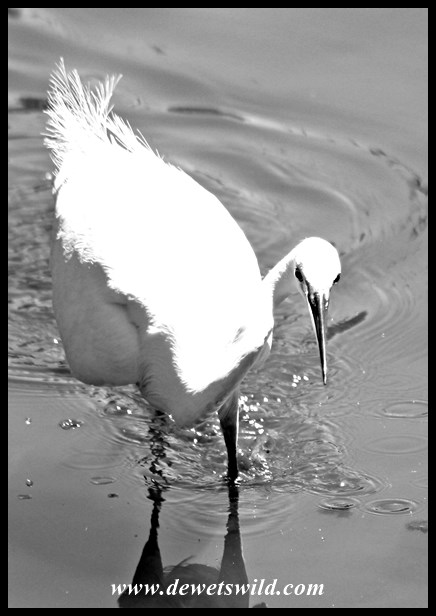
Austin Roberts Memorial Bird Sanctuary is a haven for several kinds of herons and egrets, going about their business rather unperturbed by the presence of human spectators. The hunting technique of the black heron we enjoyed close-up views of there was a special treat, and quite unlike the side-ways bobbing head movements employed by this hunting Little Egret in zoning in on its prey.

Austin Roberts 22112015 (2) Austin Roberts 22112015 (4)

Our end-of-year 2015 holidays were absolutely packed to the brim. Apart from our ten-day visit to the Kruger National Park (read more about our time at Lower Sabie, Olifants and Shingwedzi in December), we also made day trips to five other reserves, and will be sharing photos from those (except Suikerbosrand, which we introduced in a post all of its own) daily through the month of February, in a series we call “a month of monochrome memories”.
A month of monochrome memories: Metro Mahem

The tiny Austin Roberts Memorial Bird Sanctuary is one of the city of Pretoria’s gems, and the reserve’s flock of Grey Crowned Cranes (known as “mahem” in Afrikaans) must be among the most photographed of their species.

Austin Roberts 22112015 (1)

Our end-of-year 2015 holidays were absolutely packed to the brim. Apart from our ten-day visit to the Kruger National Park (read more about our time at Lower Sabie, Olifants and Shingwedzi in December), we also made day trips to five other reserves, and will be sharing photos from those (except Suikerbosrand, which we introduced in a post all of its own) daily through the month of February, in a series we call “a month of monochrome memories”.
Crimson-breasted Shrike

Laniarius atrococcineus

The Crimson-breasted shrike is a small (53g, 25cm) insectivorous bird native to the drier north-western regions of South Africa and neighbouring Botswana, Namibia and Zimbabwe, where it can be found in thorny savanna thickets. They are monogamous and pairs defend a territory throughout the year, though breeding occurs mainly in the summer months. They build their nests of bark and spiderwebs.

The striking scarlet, black and white plumage of the Crimson-breasted Shrike is a perfect fit for this week’s WordPress Photo Challenge “Vibrant“.

Optimistic

When we’re out exploring South Africa’s wild places, the world’s problems seem a little further away…

Optimistic” is this week’s WordPress Photo Challenge theme.

Suikerbosrand Nature Reserve

Suikerbosrand Nature Reserve is one of the largest and most popular wild places in Gauteng, South Africa’s most urbanised province, providing vital environmental education and outdoor recreation to thousands of overworked city dwellers.

Suikerbosrand (5)

Proclaimed in 1974 and substantially enlarged in 2003, Suikerbosrand is managed by the Gauteng Department of Agriculture and Rural Development. Today it protects 220km² of scenic highveld grassland, rich in flowering plants and grasses, interspersed with areas of thorny bushveld, aloe forests, wooded gorges and marshland. The reserve is named after the Suikerbosrand range of hills (1,545 to 1,917m above sea level), which in turn is named for the Sugarbush (Protea caffra) that’s quite common in the area.

More than 250 bird species have been recorded at Suikerbosrand, and several species of non-threatening indigenous large game animals have been introduced. There is also an abundance of smaller mammals and reptiles, including a few venomous snakes, that find protection here.

Hiking is a big attraction at Suikerbosrand, with day trails ranging from the 800m long Toktokkie trail, accessible in wheelchairs, and the 4km long Cheetah Trail to the 10 or 17km Bokmakierie Trail, while overnight hikes that take up to 6 days to complete along a 66km network of trails, with basic huts to sleep in, can also be undertaken. The reserve is immensely popular with the cycling fraternity, especially so on weekends and holidays, and due care is required wherever vehicles and cyclists have to share the roads. The reserve has a network of approximately 60km good tar road that traverses most of the area’s habitats, allowing good game- and bird viewing. Two picnic areas cater to the needs of day visitors. At the time of our last visit (December 2015), the Kareekloof Resort, which used to offer options to overnight in the reserve in addition to the usual holiday resort amenities, was closed with no indication as to when, or if, it will reopen. Sadly, the same applied to the information centre at Diepkloof, the reserve headquarters.

Suikerbosrand is easily accessible from the N3 highway, just north of the town of Heidelberg, south-east of sprawling Johannesburg.

Road to Suikerbosrand

Summer heat at Shingwedzi

After three enjoyable nights in Olifants‘ spectacularly situated unit 14, we had only a third of our December holiday in the Kruger National Park left. Happily that didn’t depress our mood too much, as we would be spending the last three nights in our beloved Shingwedzi Rest Camp.

Soon after leaving Olifants, we came across a cantankerous hippo bull blocking the road to the north. While waiting for him to get out of the way, in his own time of course, a rustle in the dry mopane leaves beside the roads alerted us to a hyena that was also waiting for the traffic to clear…

Our plan was to stop at Mopani for brunch, so we only had a quick cup of coffee and a rusk or two at Letaba, no snakes in sight this time! On the way we couldn’t resist making a quick detour to marvelous Mooiplaas waterhole, as there is always something interesting to see there, and were handsomely rewarded with a couple of tsessebe sightings as well as a blue wildebeest that was having far too much fun rolling around in elephant dung to be considered sane…

Mopani was a delight of feathered friends, with there even being a pair of African Paradise Flycatchers nesting in a tree right between the shop and the Tindlovu restaurant (which serves delicious mince-meat jaffles by the way!)

The final stretch to Shingwedzi delivered special sightings of yet more mating lions, unfortunately spoiled by an idiot who got out of his car to try and get a better photo, as well as a beautiful old tusker.

Whenever we stay at Shingwedzi, there’s only one road we take for our first afternoon drive – a slow drive along the S50 gravel road that follows the river, offering ample opportunity to appreciate the diverse and abundant wildlife that congregate on the river bank. That’s exactly where we pointed the Jazz’s nose after checking into our cottage, number 29, donated by the Wildlife Society in the 1950’s.

Around Shingwedzi the best viewing is usually along the watercourses, which is why we decided on the S56-route along the Mphongolo River for our first morning drive from Shingwedzi.

That afternoon, Red Rocks and Tshange viewpoints to the southwest of camp beckoned.

One last guided nightdrive in search of nocturnal wildlife delivered much better sightings than the windy nightdrive we undertook from Lower Sabie a few days earlier.

By the time the sun rose over the horizon on our last full day in the Park, we were already travelling along the S50-route enjoying the Shingwedzi River’s abundant wildlife and awesome scenery before returning to camp and a late breakfast.

Shingwedzi was nice and quiet in the early morning, as most guests were still out on the road searching for game, giving us an excellent opportunity to amble through the camp.

With such a wide variety of bird and animal life around Shingwedzi it was a rather difficult decision which area we’d drive to on our final afternoon. In the end we opted for the Mphongolo Loop (S56) again, and what a great choice that was! We’ve already shown you pictures of the waterhole meeting between large herds of elephants and buffaloes we witnessed that day. Dodging a couple more elephant and buffalo herds along the way, navigating through several herds of antelope and scanning the landscape for new species of birds to add to our ticklist, we were thrilled that our afternoon was concluded with a leopard lying in wait at a small waterhole.

And so, our time at Kruger National Park has come to an end, for this visit at least as, of course, the next trip has already been booked. All that remained was to drive down to Phalaborwa Gate, from where Pretoria lay a hot six-hour drive away.


KNP Dec15


Black Heron

Egretta ardesiaca

One of the most interesting birds you could hope to see in action in South Africa’s wild places, is the Black Heron. It’s a smallish species, about 55cm long and less than 350g in weight. Their black plumage and bright orange-yellow feet make them easily recognisable.

Black Heron (10)

Black Herons roost and breed communally in reedbeds or trees, near or over water, with others of their own species, and other kinds of egrets, herons, cormorants and ibises. Nests are platforms built of twigs at the start of the rainy season, on which clutches of 2 to 4 eggs are incubated.

Black Heron (9)

They search for food, alone or in flocks of varying sizes, in rivers, swamps, lakes and estuaries, and feed predominantly on fish.

Black Heron

Black Herons occur widely in Sub-Saharan Africa, excluding the equatorial forests, The IUCN considers the species’ population stable and in no immediate danger of extinction, though they are highly threatened in Madagascar.

Black Heron (8)

A recent visit to Austin Roberts Memorial Bird Sanctuary afforded us the opportunity to enjoy up-close views of the Black Heron’s characteristic hunting method, knows as “canopy feeding“. The bird uses its wings to create an umbrella around its head, and then picks off fish and tadpoles beneath. This behaviour may serve a dual purpose of preventing glare from the water, making it easier to see their prey, and tricking the prey into thinking that the shadow is a safe hiding place. They are also known to wiggle their toes underwater to attract their fishy prey.

Summer heat at Olifants

After three nights at Lower Sabie it was time to move northwards to the central regions of the Kruger National Park. Just as we set off, a light drizzle started falling, and kept falling for the entire 50km or so distance between Lower Sabie and Tshokwane picnic site. While the low clouds meant that we could not enjoy the magnificent view from the top of Nkumbe mountain, we did not mind having a break from the previous few days’ oppressive heat! Pretty soon little puddles were forming on rocks and in the road, and while the shower would not have broken the drought, it would have brought a little bit of relief to the parched veld.

Between Tshokwane and Satara we encountered two more pairs of mating lions. While one couple moved away from the road for more privacy, the other was a lot more relaxed in the company of the few cars that had gathered to watch them. The prevailing drought makes catching prey much easier, and the way the lions are going on there will soon be many more young and hungry mouths to feed.

After lunch (take-away pizzas enjoyed in Satara‘s day visitors area) we tackled the final stretch of the long drive from Lower Sabie to Olifants Rest Camp. The plains between Satara and the Olifants River were positively teeming with wildlife of all descriptions.

Checking in at Olifants Rest Camp, we were given the keys to our cottage, number 14, one of the most popular units in the camp, and for good reason. The view of the wide bend of the Olifants River with its pods of hippos and lurking crocodiles far below, the endless wild plains beyond and the continuous stream of game and birds arriving to slake their thirst, is almost unrivaled anywhere on the continent, and you can take it all in from the comfort of a sofa on the wide veranda!

With the area around Olifants suffering from an extreme drought and intense heat, we thought it best to stick to the routes along the Olifants River and some of its tributaries that still held water for our afternoon drive. The high bridge and low-level causeway crossing the Olifants, and the weir at the Ngotso-crossing (on the S89 route) proved to be hot-beds of wildlife activity, though in the areas in between, away from the water, there were few animals to be found.

Next morning we were already waiting, with a few other cars, at Olifants’ gate for the 04:30AM opening – that’s the way to maximise your chances of encountering large predators on the prowl in the hot summer and we didn’t have to drive far before encountering two spotted hyenas just as first light started painting the African morning. Our drive took us along the Olifants and Letaba rivers, an area of rugged beauty, to Letaba Rest Camp, where we planned on enjoying our picnic breakfast. We didn’t however bargain that we’d be joined by a snake, even if only a slightly venomous Olive Grass Snake. Happily the snake was very well behaved and totally relaxed, and so he enjoyed the warm morning sun while we enjoyed our rusks and coffee…

Seeing as the Olifants river delivered such enjoyable sightings to us the previous day, we again focussed on the H1-5 tar road and the connecting S90, S91 and S92 gravel roads the following afternoon. This time we worked a quick detour to Bangu waterhole, some distance to the south of the river, into our drive as well – a well rewarded decision as we found a pair of black-backed jackals and flock of Temminck’s Coursers at the Xipembane stream, which still held a bit of water.

Driving up to Olifants two days earlier, the tremendous concentrations of game around Satara really drew our attention, and we decided that we had to explore that area a bit more on our final full day at Olifants. With the tarred road between Olifants and Satara carrying most of the tourist traffic, we opted to rather follow the gravel S90 “old main road”, past Bangu and Gudzani waterholes, to Satara, and then return to our lovely cottage at Olifants along the tar route when the day starts hotting up. Ticking excellent sightings along the way; a large pack of hyenas, showboating hippos, a rarely seen honey badger, two regal lions, more jackals and a quick view of a pair of cheetahs surrendering their kill to descending vultures, not to mention a huge number of more commonly seen birds and animals, and despite heavy cloud cover, a howling wind and the irritation of a punctured tire (quickly fixed at Satara’s car wash), you’ll appreciate that we were a very happy group when we arrived back at Olifants that morning!

After spending the hot midday hours in camp appreciating the enchanting view and the accompanying birdlife, it was time for our final leisurely afternoon drive along the Olifants and Letaba Rivers. While the drive wasn’t anywhere as exhilarating as our drive that morning, it did give us another opportunity to enjoy the rugged scenery of the valleys these rivers have carved over aeons through the Lebombo foothills.

We still had three nights left at Shingwedzi Rest Camp after our time at Olifants, and we’ll be telling you all about those next week. We’ll also be telling you more about Olifants and its environs in an upcoming edition of de Wets Wild.


Heavyweights

Wide load ahead! African elephants laying claim to the road…

Weight(less)” is the theme for this week’s WordPress Photo Challenge.