Monthly Archives: August 2019

Rock Kestrel

Falco rupicolus

Despite what its name suggests, the Rock Kestrel is at home in a wide variety of habitats and occurs all over South Africa, though they are most numerous in arid, rocky terrain and require cliffs for roosting and nesting. They hunt over open areas for birds (up to the size of doves), small mammals (including bats in flight), reptiles and invertebrates. Adults measure about 32cm in length and weigh around 215g.

Rock Kestrels are often seen sitting on conspicuous perches or hovering over open areas, using both techniques as effective hunting strategies. Pairs are monogamous and territorial, nesting on cliff ledges and lately on tall buildings in towns and cities. Clutches of 1-6 eggs are laid in spring and summer, with the female mostly responsible for the incubation process over a period of about a month. The chicks fledge about 5 weeks after hatching, with the male in turn taking most of the hunting responsibility to provision the ravenous chicks and attending female. The chicks remain with their parents for another few weeks after leaving the nest.

The Rock Kestrel is a common species and not currently in any danger of extinction. Apart from South Africa it can be found as far north on the continent as Tanzania and the DRC. At one time it was considered a subspecies of the Common Kestrel (Falco tinnunculus).

Forest Canary

Crithagra scotops

Forest Canaries are endemic to South Africa and Swaziland, where they are found in and on the edges of forest and other moist, dense habitats from the Western Cape to the escarpment of Mpumalanga and Limpopo. They feed primarily on small seeds, flowers and fruit and are very fond of bathing, even in cold mountain streams.

Adults measure 13cm in length and weigh around 15g. They nest in summer, when they’re usually encountered in monogamous pairs or small family groups as opposed to larger flocks numbering around 12 individuals outside of the breeding season. The female constructs the bulky, cup-shaped nest in which she incubates the clutch of 2-4 eggs over a two-week period, with the chicks leaving the nest when they’re almost 3 weeks old.

The IUCN considers the Forest Canary to be of least concern.

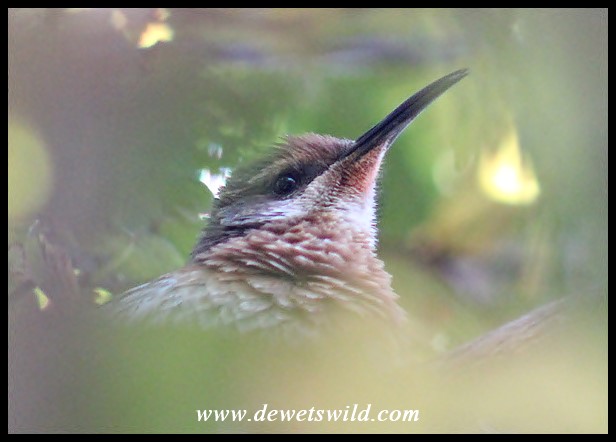
Gurney’s Sugarbird

Promerops gurneyi

Gurney’s Sugarbird has a patchy distribution on the highlands on the border between Zimbabwe and Mozambique, in Swaziland, Lesotho and South Africa (suitable parts of Limpopo, Mpumalanga, Kwazulu-Natal and the Eastern Cape), where it inhabits montane grassland and scrub dominated by proteas and aloes. They feed on nectar from a wide range of flowering plants and also include insects and spiders in their diet to a lesser extent.

Usually seen singly or in pairs, Gurney’s Sugarbirds only congregate in larger numbers at rich food sources. When breeding they form monogamous bonds, with the male defending the pair’s territory while the female builds the nest; a shallow, cup-shaped formation of twigs, grass, rootlets and bark lined with grass and fluffy protea-seeds usually placed in a fork in a protea bush. The breeding season spans the spring and summer months. The female alone incubates the clutch of 2 eggs over a period of about 3 weeks, while both parents feed the chicks, which leave the nest when they’re 3 weeks old, on a diet of insects and spiders. The chicks remain dependent on their parents for another 3 weeks or so after fledging. Fully grown Gurney’s Sugarbirds measure up to 29cm long (including the tail) and weigh between 30 and 40g.

Gurney’s Sugarbird is classified as Near Threatened by the IUCN, owing to an apparent decline in their numbers likely attributable to loss of their preferred habitat to commercial plantations and damaging land management practices.

Birthday outing to Rietvlei

This past weekend saw us, accompanied by good friends and close family, heading to our local Rietvlei Nature Reserve to celebrate Joubert’s tenth birthday. The highlight of the day for Joubert and his mates was a tour to Rietvlei’s lions, with the birthday boy getting the seat of honour next to the very knowledgeable ranger-guide.

Growing up with a love for nature: Joubert turns 10!

Today is Joubert’s 10th birthday.

Marilize and I thank God for creating Joubert for us and us for him. What more could we need? What a blessing it’s been to watch this bright and beautiful little boy grow up to share our appreciation and deep love for South Africa’s wild places.

Looking back at some photos of him enjoying the great outdoors brings a smile to my face and joy to my heart. Has ten years really flown by so quickly!?

Happy Birthday, Joubert!

Drakensberg Prinia

Prinia hypoxantha

The Drakensberg Prinia is endemic to Swaziland, Lesotho and South Africa, occurring along the Drakensberg Range and its foothills from Limpopo Province to the Eastern Cape. The IUCN considers the Drakensberg Prinia a species of least concern. Some authorities believe it to be a subspecies of the Karoo Prinia.

Usually encountered in monogamous pairs or small family groups, these small (10g, 14cm) but very active birds inhabit grassy mountainous slopes, fern-grown gullies and forest edges in high rainfall areas, where they subsist on a diet of insects and other invertebrates. Their nests are oval, ball-shaped constructions of grass built deep in thick bushes. Clutches of 2-4 eggs are laid in the spring and summer and incubated for about 2 weeks, with the fledglings leaving the nest around that same length of time after hatching.

Ouhout

Leucosidea sericea

The Ouhout (Afrikaans for old wood) is a shrub or small tree of up to 4m high, occurring on the escarpment and highveld straddling all South Africa’s provinces (with the exception of the Northern and Western Cape), Lesotho, Swaziland and the highlands of Zimbabwe. It owes its name both to its aged, gnarled appearance and to its slow burning wood that produces copious billows of smoke, like old or decayed wood does. The Ouhout grows best in deep, damp soils in mountainous grasslands and along streams, and can form dense stands in suitable conditions. They’re exceptionally frost resistant, fast-growing and evergreen. Ouhout-wood is soft and not of much use for anything other than firewood and fence posts. Giants’ Castle Game Reserve and Golden Gate Highlands National Park have some exceptional specimens of this plant.

What makes the Kruger “THE KRUGER”?

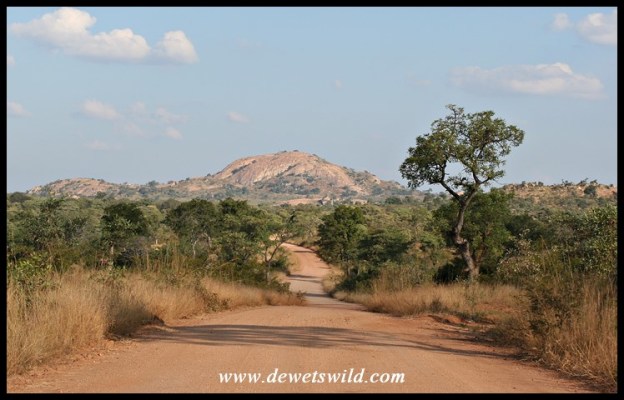
Well, if you ask us what makes the Kruger National Park “THE KRUGER”, our answer wouldn’t be the prolific game or birdlife, awesome as that might be. To us, what makes the Kruger National Park special is the wide variety of habitats and scenery where all this life finds a niche to flourish. At almost 20,000km² in size, the Kruger National Park is bigger than some countries, and naturally a piece of land that enormous would encompass many different landscapes and habitats; in fact there are pronounced differences in the scenery as one travels from south to north through Kruger’s 350km length.

This first gallery of images were taken during my solo visit at the end of May to Pretoriuskop and Skukuza in the south of the Park.

The north of Kruger has a quite different character to the southern parts. Here, the Mopane and Baobab trees dominate the landscape, by virtue of their numbers and size, respectively.

This gallery of images were taken during our visit from 15 to 24 June to the northern reaches of the Park (based at Shingwedzi Rest Camp)


Game-viewing in Kruger (May and June 2019)

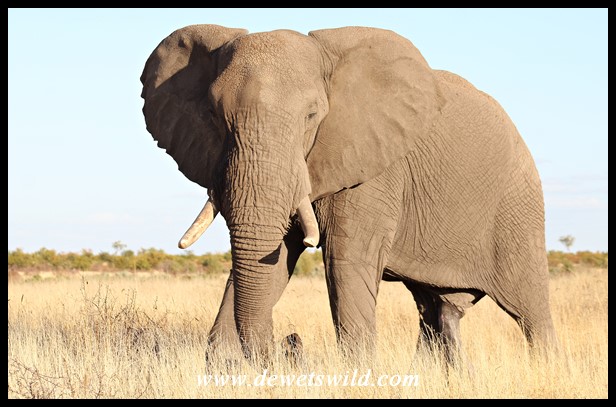
When talking about “game-viewing”, most people immediately have images of Africa’s iconic Big Five flashing through their minds. And of course our recent trips to the Kruger National Park did not disappoint at all when it came to these most charismatic of African mammals, as well as many other furry creatures great and small.

This first gallery of pictures were taken during my solo trip to the southern part of the Kruger Park between 30 May and 2 June 2019.

There’s also much interest in the Kruger’s invertebrates (including a bounty of beautiful butterflies), fish, amphibians and reptiles, many of which are difficult to see elsewhere in South Africa.

Returning to Kruger two weeks later, this time to Shingwedzi in the north of the Park, proved just as fruitful with memorable encounters not only with predators and rare antelope, but also a menagerie of other mammalian species.


Bird-watching in Kruger (May and June 2019)

With over 500 species recorded, the Kruger National Park deserves its reputation as one of South Africa’s finest bird-watching destinations through and through. We’ve already shown you the cute little Spurfowl chicks that strutted all over the Park during our visits in May and June this year, but there was so much more feathered variety to point our lenses at that it surely deserves a dedicated post!

This first gallery of images were taken in the south of the Park on my solo trip to Pretoriuskop and Skukuza – all in all I ticked 110 species in the 4 days I spent south of the Sabie River.

Two weeks later, this time with Marilize and Joubert alongside, we headed to the north of the Kruger Park, basing ourselves at our favourite Shingwedzi for 9 nights, during which time we recorded 99 species of birds.