Tag Archives: wildlife

Common Blue Butterflies

Leptotes species

We have four-species of Leptotes butterflies that are so similar to each other that they’re impossible to distinguish in the field. Three of these, the Common Zebra Blue (L. pirithous), the Babault’s Blue (L. babaulti) and Short-toothed Blue (L. brevidentatus) are widely distributed over the country, while Jeannel’s Blue (L. jeanneli) occurs only in the Lowveld.

The Common Blues inhabit a wide range of natural vegetation, cultivated fields and gardens all over the country throughout the year. They’re also familiar over most of the rest of Africa, Madagascar, the Near East and southern Europe. Adults often congregate at wet mud and have a wingspan of 2-3cm.

The larvae feeds on Plumbago and plants from the legume family. Adults are on the wing year-round, though much more numerous in the warmer months. Their complete life-cycle spans about 2 months.

Cape Turtle Dove

Streptopelia capicola

The Cape Turtle Dove, also known as the Ring-necked Dove, is one of South Africa’s most common and widespread birds, occurring in every corner of the country in a wide range if habitats, both natural and man-made. They feed on seeds, fruit and small invertebrates, foraged predominantly on the ground.

Cape Turtle Doves breed throughout the year and the monogamous pairs may raise up to 5 broods annually. They construct flimsy stick platforms for use as nests in which 2-4 eggs are incubated for about two weeks. The chicks are looked after by both parents and leave the nest when they’re about two weeks old, after which they may stay with the parents for as long as three weeks before becoming fully independent. Though they’re mostly seen singly or in pairs the Cape Turtle Dove may congregate in large flocks numbering in the hundreds, especially at waterholes or feeding grounds.

Adult Cape Turtle Doves measure about 27cm in length and weigh around 150g. Their peaceful song is a welcome addition to the playlist in any garden. Apart from South Africa, Cape Turtle Doves are also to be found over all of Africa south of the equator and extending to Ethiopia and Somalia in the north-east. The IUCN lists the species as being of least concern, and it is probably expanding both its distribution and population.

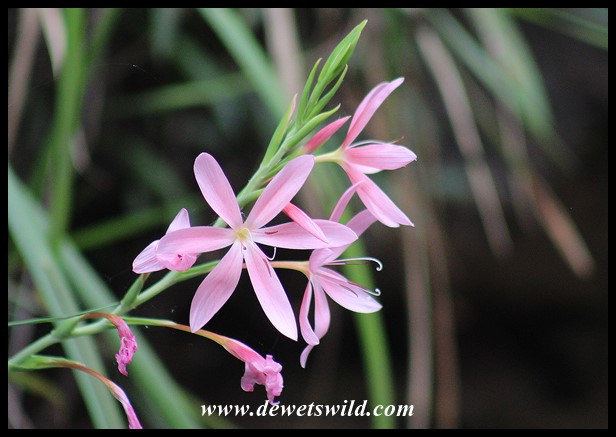
River Lily

Hesperantha sp.

The River Lily is a much-loved plant in gardens the world over, but it grows wild here in saturated soil along the mountain streams of South Africa’s Drakensberg Range. These bulbous plants stand about 50cm high, grow and flower in full sun during summer with the beautiful blooms being carried from December to April. Apart from the pink form shown here there’s also white and bright red varieties growing wild, while cultivated forms with much wider petals than the wild forms are normally sold at nurseries. The flowers are pollinated by butterflies and flies, and the whole plant goes dormant in winter.

Golden-breasted Bunting

Emberiza flaviventris

A species of open woodland and savanna, the beautiful Golden-breasted Bunting feeds mainly on seeds and other plant material, with invertebrates foraged on the ground being an important supplementary food source especially during the breeding season. They’re rather dependent on a reliable source of drinking water, and increasingly gardens, farmyards and exotic plantations is also being utilised as habitat. They’re usually encountered singly, in pairs or small groups.

During spring and summer, monogamous pairs of Golden-breasted Bunting nest in untidy nests built by the female close to the ground in a thick shrub or other dense growth. Clutches of 2 or 3 eggs are incubated, also by the female, for around 2 weeks, with the chicks fledging at about the same length of time after hatching. Adults measure around 16cm in length and weigh approximately 20g.

Golden-breasted Buntings are considered of least concern by the IUCN. They occur patchily over sub-Saharan Africa, with the main centre of their distribution falling in southern and central Africa. In South Africa they are found in all provinces with the exception of the Western Cape.

Olive Thrush

Turdus olivaceus

Olive Thrushes are usually seen singly or in pairs, searching for worms, insects and other invertebrates (and occasionally fruit) on the floor of indigenous woodlands and forests and increasingly in well-planted parks and gardens. Adults weigh around 65g and measure about 23cm in length.

Olive Thrushes breed throughout the year, though there appears to be a peak in nesting during spring and early summer. Pairs are monogamous and territorial. Females build cup-shaped nests high up in trees and shrubs and incubate the clutch of 1-3 eggs over a two week period. The chicks grow quickly and leave the nest when they’re around 16 days old, but they will remain with their parents for up to two months.

Olive Thrushes occur patchily in Mozambique, Malawi, Zimbabwe, Swaziland, Lesotho and South Africa (Western Cape to escarpment of Mpumalanga and Limpopo). The IUCN regards it to be of least concern. The Karoo Thrush was previously considered to be a subspecies of the Olive Thrush and it is possible that the two species may interbreed on occasion.

Easter at Marakele

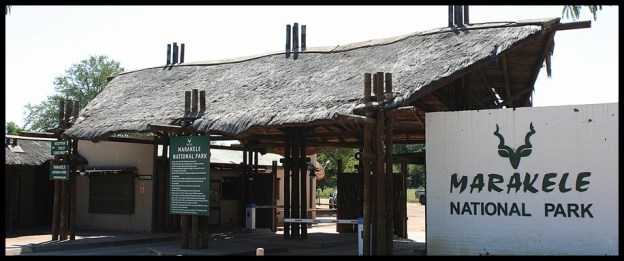
If you thought we were a bit quiet over the Easter Weekend you’d be right, as we disappeared into the Marakele National Park in the Waterberg Mountains of the Limpopo Province, celebrating the cornerstone of our Chrisitian faith with good friends and family surrounded by awesome scenery and beautiful wildlife.

Marakele’s such a treasure chest of diverse wildlife that it is hard to decide what to show and what to leave out. Let’s start then with a few of the “creepy crawlies” that we encountered while exploring the Park.

WIth Autumn now in full swing in South Africa most of the summer visiting migrant birds have departed for warmer environs already, but bird watching at Marakele over Easter was still a special treat!

What would a National Park be without some charismatic large mammals? Marakele certainly didn’t disappoint on that score, even though the lush vegetation following the rainy season did make game-viewing a bit trickier than usual.

Altogether we spent 4 nights in Marakele on this trip, arriving late on the 18th and departing again on the morning of the 22nd of April 2019. When visiting Marakele in a big group there’s no better option than to stay at the Thutong Environmental Education Centre (as we did) in a remote corner of the Park.

We’ve covered Marakele extensively in previous posts on de Wets Wild, so why not have a read through all of them if you are interested to learn more about this magical piece of our country.

Drakensberg Malachite

Chlorolestes draconicus

Occurring along sunlit, rocky, high-altitude mountain streams flowing through forested and other densely vegetated habitats, the Drakensberg Malachite is a beautiful damselfly that is found only in the Drakensberg Mountain Range along South Africa’s border with Lesotho – as most of its distribution falls within the uKhahlamba Drakensberg Park, the IUCN considers the species to be of least concern. Nymphs live under water on rocks and roots, the eggs having been laid on vegetation overhanging the water and the larvae then dropping into the stream below after hatching. Both adults and nymphs feed on insects.

Autumn Highlands Holidays – uKhahlamba Drakensberg

After kicking off at Glen Reenen in the Golden Gate Highlands National Park, the next destination on our Autumn Highlands Holidays itinerary was the uKhahlamba Drakensberg Park in Kwazulu-Natal Province – we planned to spend five nights at Thendele in the Royal Natal National Park followed by five nights at the Giant’s Castle Game Reserve.

The Drakensberg is a favourite destination for many South Africans (like us!) and international visitors alike – with such magnificent scenery and diverse activities on offer to enjoy the great outdoors it is easy to understand why! We’ve already shown off the beauty of the Amphitheatre and the Cascades but the Drakensberg has so much more to see – just look:!

One would expect that any plants occurring in the often difficult climatic conditions of the Drakensberg would be very tough and hardy – and they are, but that doesn’t mean the plants found here are any less pretty than those found in more tropical climes! We’ll be showcasing a few of them in more detail in the coming weeks.

The number of invertebrates that find a home in these harsh highland habitats always astounds me – there are interesting insects and spiders to be found almost everywhere you look! You can look forward to new posts featuring a few of these in the coming weeks as well!

Do you still remember the great fun Joubert had photographing the guineafowls in Thendele? They’re just one of 83 species of birds we managed to identify during our time in “The ‘Berg” – here’s a few more of the feathered inhabitants of the Royal Natal section of the uKhahlamba Drakensberg Park and some of them will soon feature in their own posts here at de Wets Wild.

We’ve already shown you some of the amphibians we found at Mahai, but Royal Natal is also home to many other kinds of four-footed creatures, both cold- and warm blooded.

Thendele is the only accommodation option in the Royal Natal National Park (campers can set up their caravans and tents at Mahai or Rugged Glen) and is built in two sections – the older Lower Camp and the newer Upper Camp. All units have lovely views of the Amphitheatre, but those units in the Upper Camp are more spacious and has more privacy. On this trip however we stayed in unit 12, a 2-bedroomed chalet in the Lower Camp, for 5 nights, and had no reason for complaint – everything was in good working order and it was a very comfortable place to rest after a day exploring the scenic splendour on offer at Royal Natal.

From Thendele we departed for Giant’s Castle, further south into the Drakensberg range, on the 26th of March. We were booked to stay at Giant’s Castle for 5 nights as well, but due to me feeling quite unwell we opted to return to Pretoria after just one night there. Unfortunately this meant that we left Giant’s Castle with very few photographs, but that’s a good excuse to return soon we think!

The Royal Natal National Park and Giant’s Castle Game Reserve are our two favourite destinations in the uKhahlamba Drakensberg Park. Both of these places can be booked through Ezemvelo KZN Wildlife.

Location of Royal Natal and Giant’s Castle (drawn with Google Maps)


Autumn Highlands Holidays – Frogging at Mahai

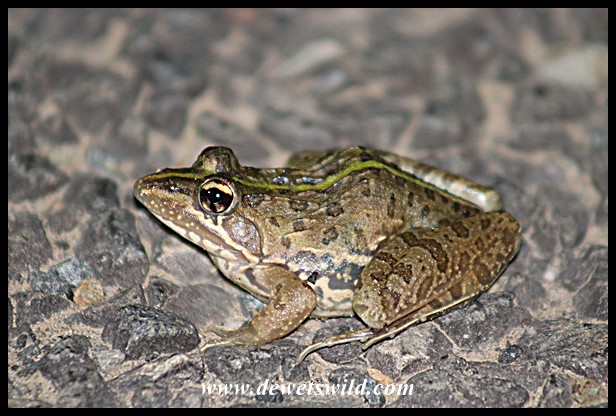
We recently started nurturing more than a passing interest in South Africa’s different kinds of amphibians, adding another fascinating facet to our enjoyment of our natural heritage. When we visited the Royal Natal National Park in March the trout dam at Mahai proved an excellent spot to go looking for frogs and toads, and other aquatic life, as soon as darkness fell.

(Look out for a special feature post about the Common River Frog to be published here in early June, and follow the links for more on the Painted Reed Frog and Raucous Toad in the meantime)

By day, the dam at Mahai is a favourite spot for a quiet picnic. We also saw a few trout fisherman achieving success with their rods.


Autumn Highlands Holidays – Golden Gate

About time we started telling you about our autumn holidays in the mountains in detail, isn’t it!?

Our first stop was an old and familiar favourite: Golden Gate Highlands National Park in the eastern Free State Province, with scenery so unique that photos from there are instantly recognisable. Here in the foothills of the Maluti and Drakensberg ranges, rugged rocks, hillsides green with waving grass and crystal-clear streams of fresh water all beckon to be explored, and the de Wets just can’t resist!

Walking around Golden Gate is the best way to experience the variety of beautiful wildflowers adorning this special place.

And then while taking in the floral splendour you are bound to notice the astounding diversity of insects, amphibians and reptiles that have made this highland habitat home.

Golden Gate also boasts with a wonderful array of birds, many kinds of which are hard to find elsewhere in the country. During the 4 days we spent in the Park we identified 56 species of bird, just a small slice of the 180 kinds that have been recorded here since the Park was proclaimed over 50 years ago.

Golden Gate’s also home to a selection of mammals, both big and small, that are well adapted to the sometimes harsh climatic conditions of a mountainous abode, and these are often encountered while exploring the Park on foot, horseback or the comfort of a vehicle.

Glen Reenen is one of six SANParks-managed establishments offering accommodation to visitors at Golden Gate. On this trip we spent four nights in cottage 27, which has a lovely view from its veranda of the Mushroom Rocks and the glen from which the camp takes its name.

Golden Gate lies about 400km south of Pretoria. Our favourite route to the Park is over Sasolburg, Heilbron, Bethlehem and Clarens, though the quickest option is probably via Harrismith and the N3-highway.
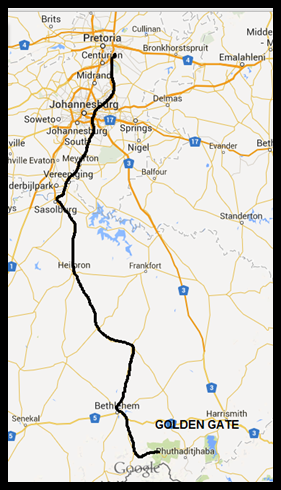
Our favourite route to Golden Gate, via Sasolburg, Heilbron, Petrus Steyn and Bethlehem, a distance of about 400km from Pretoria (map drawn with Google Maps)

From Golden Gate we made our way to Royal Natal National Park in the uKhahlamba Drakensberg Park, and we’ll be sharing some pictures from there in following posts.