Tag Archives: wildlife

Easter at Marakele

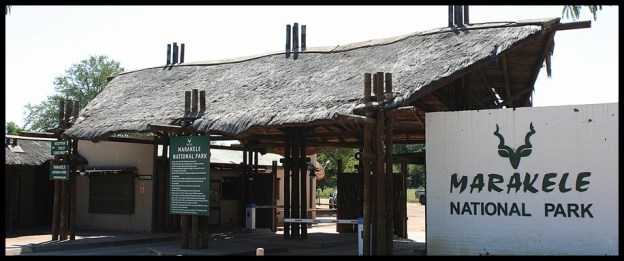
If you thought we were a bit quiet over the Easter Weekend you’d be right, as we disappeared into the Marakele National Park in the Waterberg Mountains of the Limpopo Province, celebrating the cornerstone of our Chrisitian faith with good friends and family surrounded by awesome scenery and beautiful wildlife.

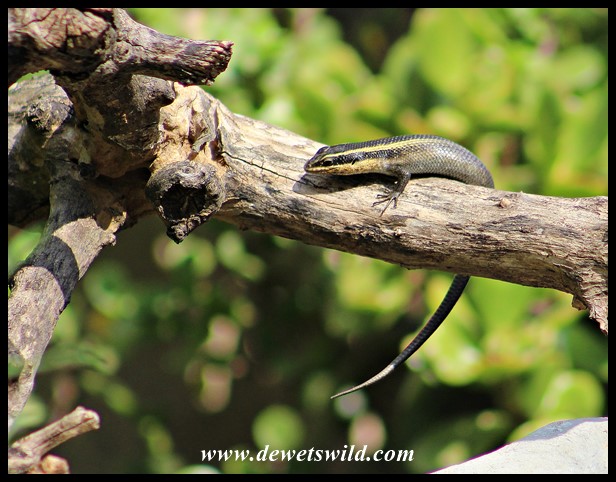
Marakele’s such a treasure chest of diverse wildlife that it is hard to decide what to show and what to leave out. Let’s start then with a few of the “creepy crawlies” that we encountered while exploring the Park.

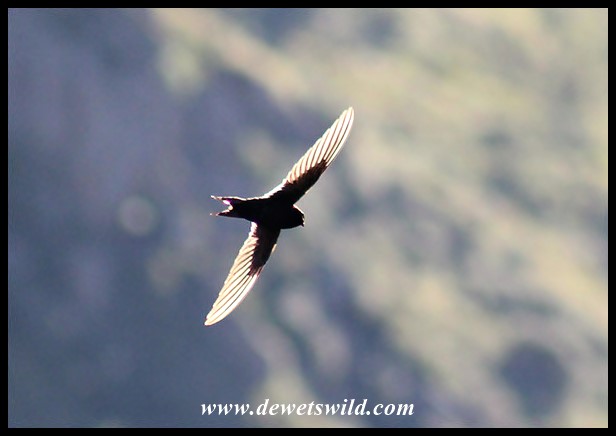
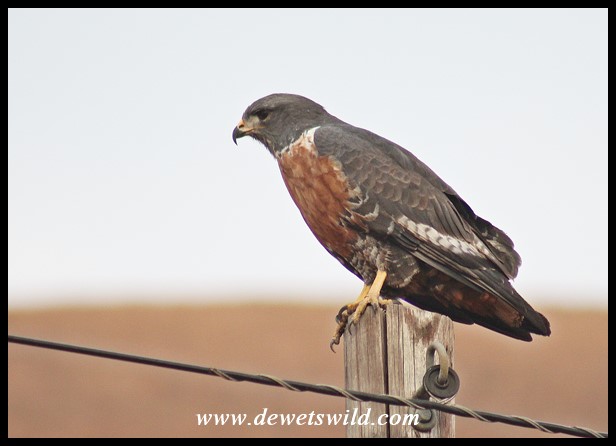
WIth Autumn now in full swing in South Africa most of the summer visiting migrant birds have departed for warmer environs already, but bird watching at Marakele over Easter was still a special treat!

What would a National Park be without some charismatic large mammals? Marakele certainly didn’t disappoint on that score, even though the lush vegetation following the rainy season did make game-viewing a bit trickier than usual.

Altogether we spent 4 nights in Marakele on this trip, arriving late on the 18th and departing again on the morning of the 22nd of April 2019. When visiting Marakele in a big group there’s no better option than to stay at the Thutong Environmental Education Centre (as we did) in a remote corner of the Park.

We’ve covered Marakele extensively in previous posts on de Wets Wild, so why not have a read through all of them if you are interested to learn more about this magical piece of our country.

Drakensberg Malachite

Chlorolestes draconicus

Occurring along sunlit, rocky, high-altitude mountain streams flowing through forested and other densely vegetated habitats, the Drakensberg Malachite is a beautiful damselfly that is found only in the Drakensberg Mountain Range along South Africa’s border with Lesotho – as most of its distribution falls within the uKhahlamba Drakensberg Park, the IUCN considers the species to be of least concern. Nymphs live under water on rocks and roots, the eggs having been laid on vegetation overhanging the water and the larvae then dropping into the stream below after hatching. Both adults and nymphs feed on insects.

Autumn Highlands Holidays – uKhahlamba Drakensberg

After kicking off at Glen Reenen in the Golden Gate Highlands National Park, the next destination on our Autumn Highlands Holidays itinerary was the uKhahlamba Drakensberg Park in Kwazulu-Natal Province – we planned to spend five nights at Thendele in the Royal Natal National Park followed by five nights at the Giant’s Castle Game Reserve.

The Drakensberg is a favourite destination for many South Africans (like us!) and international visitors alike – with such magnificent scenery and diverse activities on offer to enjoy the great outdoors it is easy to understand why! We’ve already shown off the beauty of the Amphitheatre and the Cascades but the Drakensberg has so much more to see – just look:!

One would expect that any plants occurring in the often difficult climatic conditions of the Drakensberg would be very tough and hardy – and they are, but that doesn’t mean the plants found here are any less pretty than those found in more tropical climes! We’ll be showcasing a few of them in more detail in the coming weeks.

The number of invertebrates that find a home in these harsh highland habitats always astounds me – there are interesting insects and spiders to be found almost everywhere you look! You can look forward to new posts featuring a few of these in the coming weeks as well!

Do you still remember the great fun Joubert had photographing the guineafowls in Thendele? They’re just one of 83 species of birds we managed to identify during our time in “The ‘Berg” – here’s a few more of the feathered inhabitants of the Royal Natal section of the uKhahlamba Drakensberg Park and some of them will soon feature in their own posts here at de Wets Wild.

We’ve already shown you some of the amphibians we found at Mahai, but Royal Natal is also home to many other kinds of four-footed creatures, both cold- and warm blooded.

Thendele is the only accommodation option in the Royal Natal National Park (campers can set up their caravans and tents at Mahai or Rugged Glen) and is built in two sections – the older Lower Camp and the newer Upper Camp. All units have lovely views of the Amphitheatre, but those units in the Upper Camp are more spacious and has more privacy. On this trip however we stayed in unit 12, a 2-bedroomed chalet in the Lower Camp, for 5 nights, and had no reason for complaint – everything was in good working order and it was a very comfortable place to rest after a day exploring the scenic splendour on offer at Royal Natal.

From Thendele we departed for Giant’s Castle, further south into the Drakensberg range, on the 26th of March. We were booked to stay at Giant’s Castle for 5 nights as well, but due to me feeling quite unwell we opted to return to Pretoria after just one night there. Unfortunately this meant that we left Giant’s Castle with very few photographs, but that’s a good excuse to return soon we think!

The Royal Natal National Park and Giant’s Castle Game Reserve are our two favourite destinations in the uKhahlamba Drakensberg Park. Both of these places can be booked through Ezemvelo KZN Wildlife.

Location of Royal Natal and Giant’s Castle (drawn with Google Maps)


Autumn Highlands Holidays – Frogging at Mahai

We recently started nurturing more than a passing interest in South Africa’s different kinds of amphibians, adding another fascinating facet to our enjoyment of our natural heritage. When we visited the Royal Natal National Park in March the trout dam at Mahai proved an excellent spot to go looking for frogs and toads, and other aquatic life, as soon as darkness fell.

(Look out for a special feature post about the Common River Frog to be published here in early June, and follow the links for more on the Painted Reed Frog and Raucous Toad in the meantime)

By day, the dam at Mahai is a favourite spot for a quiet picnic. We also saw a few trout fisherman achieving success with their rods.


Autumn Highlands Holidays – Golden Gate

About time we started telling you about our autumn holidays in the mountains in detail, isn’t it!?

Our first stop was an old and familiar favourite: Golden Gate Highlands National Park in the eastern Free State Province, with scenery so unique that photos from there are instantly recognisable. Here in the foothills of the Maluti and Drakensberg ranges, rugged rocks, hillsides green with waving grass and crystal-clear streams of fresh water all beckon to be explored, and the de Wets just can’t resist!

Walking around Golden Gate is the best way to experience the variety of beautiful wildflowers adorning this special place.

And then while taking in the floral splendour you are bound to notice the astounding diversity of insects, amphibians and reptiles that have made this highland habitat home.

Golden Gate also boasts with a wonderful array of birds, many kinds of which are hard to find elsewhere in the country. During the 4 days we spent in the Park we identified 56 species of bird, just a small slice of the 180 kinds that have been recorded here since the Park was proclaimed over 50 years ago.

Golden Gate’s also home to a selection of mammals, both big and small, that are well adapted to the sometimes harsh climatic conditions of a mountainous abode, and these are often encountered while exploring the Park on foot, horseback or the comfort of a vehicle.

Glen Reenen is one of six SANParks-managed establishments offering accommodation to visitors at Golden Gate. On this trip we spent four nights in cottage 27, which has a lovely view from its veranda of the Mushroom Rocks and the glen from which the camp takes its name.

Golden Gate lies about 400km south of Pretoria. Our favourite route to the Park is over Sasolburg, Heilbron, Bethlehem and Clarens, though the quickest option is probably via Harrismith and the N3-highway.

Our favourite route to Golden Gate, via Sasolburg, Heilbron, Petrus Steyn and Bethlehem, a distance of about 400km from Pretoria (map drawn with Google Maps)

From Golden Gate we made our way to Royal Natal National Park in the uKhahlamba Drakensberg Park, and we’ll be sharing some pictures from there in following posts.


Fun in the Mountains!

We’re still enjoying our holiday in the Drakensberg very much, and it seems we’re not the only ones taking a break!

Joubert’s photographic study of Thendele’s Guineafowl

This afternoon we were relaxing on the veranda of our cottage here at Thendele in the Royal Natal National Park, when a flock of Helmeted Guineafowl came around for a visit, presenting Joubert with an excellent opportunity to practice some close-up bird photography – and with great success I might add!

The clouds also lifted just high enough for a while to provide a clear view of the Amphitheatre!

Drakensberg Amphitheatre seen from Thendele in the Royal Natal National Park, 23 March 2019

Chasing butterflies at Golden Gate

This afternoon, Joubert and I went searching for butterflies in the grasslands around Glen Reenen Rest Camp in the Golden Gate Highlands National Park, and we were not disappointed!


Boomslang

Dispholidus typus

The highly venomous but rather shy Boomslang (Afrikaans for “Treesnake”) occurs in parts of all South Africa’s provinces, occupying fynbos, savanna, thicket and forest habitats. It is also widely distributed over much of the rest of sub-Saharan Africa.

The Boomslang is diurnal, arboreal and very agile, hunting by sight for chameleons, lizards, geckos, frogs, small mammals and small birds. When threatened, a Boomslang will inflate its throat and strike out at the attacker (see photos in gallery below). Their venom is a potent haemotoxin, delivered in extremely small doses of between 1 and 15mg, breaking down blood components, preventing blood from clotting and causing hemorrhages into the body tissues and externally. While it may be a slow-acting venom in these small doses, drop for drop it is the most potent venom of any African snake, and without prompt treatment with antivenom and blood transfusions a Boomslang envenomation of just 1mg will kill an adult human within 1-3 days. Thankfully a Boomslang will much rather retreat than bite when crossing paths with a human, and left unmolested a bite from one is highly unlikely to occur.

Boomslange mate in spring, with females laying clutches of up to 30 eggs in holes in trees, burrows in the ground or in heaps of dead leaves about 60 days later. The eggs hatch about 3 months after being laid, with the newly hatched babies measuring about 25cm. Adults measure up to 2m long and can weigh up to half a kilogram. Males are far more colourful than the females.

Now, for a bit of a tongue-in-cheek Public Service Announcement: If ever you visit South Africa, and in the unlikely event of being bitten by a Boomslang, then be sure to pronounce the name correctly, as can be heard in this very interesting video, when you arrive at the hospital. Pronouncing it as the two English words “BOOM” and “SLANG” (as in this horrible tutorial), especially with an ominous tone in your voice, will cause your nursing staff to start laughing uncontrollably and delay your rescue until they’ve been able to compose themselves…


Cape Batis

Batis capensis

The Cape Batis, listed as least concern by the IUCN, is endemic to Africa south of the Zambezi; parts of Mozambique, Zimbabwe, Swaziland, Lesotho and of course South Africa, from the Western Cape to the Soutpansberg in Limpopo, where it inhabits temperate coastal, montane and riverine forests and more open adjacent areas, as well as densely planted gardens. It feeds almost exclusively on insects and other invertebrates. They are usually seen in monogamous, territorial pairs that build compact and well camouflaged cup-shaped nests during the breeding season, which spans spring and summer. Adult Cape Batisses weigh around 12g and measure just 13cm from the tips of their beaks to the tips of their tails.