Tag Archives: wildlife

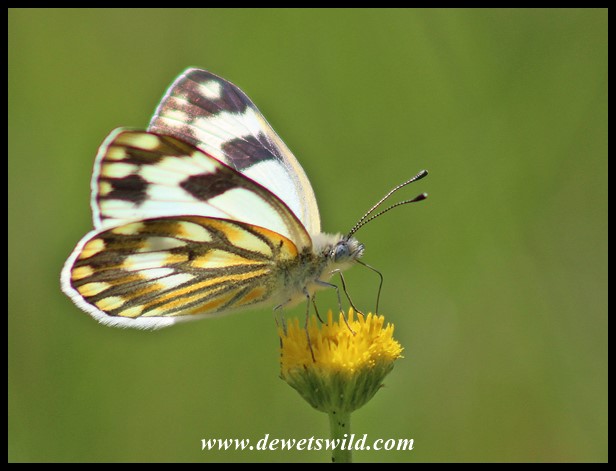
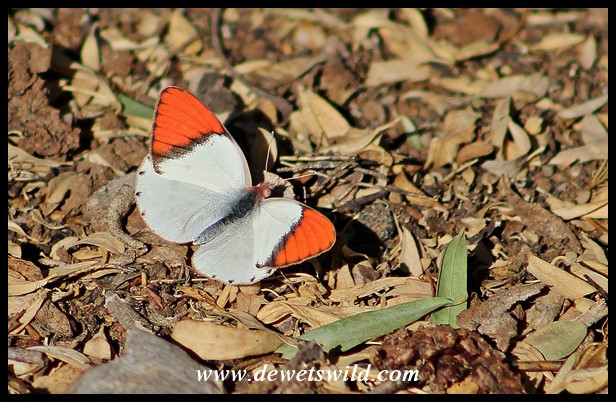
Common Orange Tip

Colotis evenina

The Common Orange Tip is a common and widespread savanna butterfly, occurring in all South Africa’s provinces with the exception of the Western Cape and as far north as Ethiopia and Somalia. They are striking butterflies that fly low and fast, staying within close proximity to flowers. Eggs are laid singly on Boscia-plants (including the Shepherd’s Tree) and Caperbushes (Capparis-spp). Adults have a wingspan of 3.5 – 5cm and are on the wing throughout the year (though most numerous in late summer and autumn).

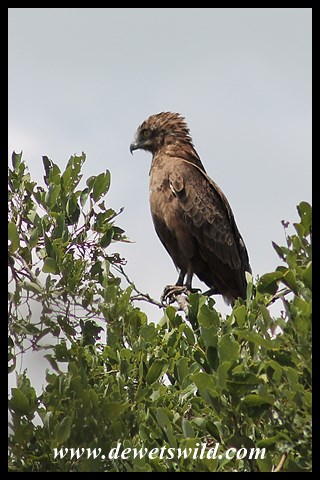
Brown Snake Eagle

Circaetus cinereus

An inhabitant of savannas and open woodland areas, where they are often seen on high vantage points such as dead trees or utility poles, the Brown Snake Eagle subsist on a diet of snakes (large and venomous kinds included) and other reptiles and smaller mammals.

Adult Brown Snake Eagles are usually solitary, except in the summer breeding season when they form monogamous pairs and construct their stick nests on the flat crowns of thorn trees, also often taking over the abandoned nests of other raptors and refurbishing these for their own needs. They usually lay and hatch only one egg at a time, the female incubating the egg for around 7 weeks with the male feeding her at the nest and the hatchling taking to the wing for the first time when it is about 3 months old. Adult Brown Snake Eagles weigh around 2kg, and measure about 74cm in length with a wingspan of 1.6m or so.

Despite noting that some populations are declining due to habitat loss and poisoning, the IUCN currently lists the Brown Snake Eagle as being of least concern. It is widely distributed over the savanna regions of sub-Saharan Africa, and in South Africa is found predominantly in the north-east of the country, from Kwazulu-Natal to North West Province through Mpumalanga, Limpopo and northern Gauteng, where they are much more commonly encountered inside large conservation areas than outside in the adjacent rural areas.

Gaudy Commodore

Precis octavia

The strikingly beautiful Gaudy Commodore inhabits rocky grasslands, savannas and gardens and in South Africa can be found from the Eastern Cape northwards to the Lowveld and Limpopo Valley. North of our borders they occur in similar habitats throughout sub-Saharan Africa. They are restless and fast fliers, often hiding in the shade along stream banks and earthen walls in winter though commonly encountered in the open on hilltops during warmer weather. Eggs are laid singly and the larvae is sustained by a wide range of food plants. Adult Gaudy Commodores have a wingspan of 5 – 6.5cm and can be seen throughout the year.

Mountain folk

There’s so much more animal life occurring in the mountainous habitats of the Royal Natal National Park than the butterflies we’ve already shown you, many of them wonderfully adapted to the harsh environmental extremes at these altitudes.


A bouquet from the ‘Berg

The mountainous grasslands and forested riverbanks around Mahai in the Royal Natal National Park are adorned by the most beautiful, though hardy, plants – a treat to even the most amateurish of botanists like me; so if you can help with identifying most of these beauties I’d be forever in your debt (I know at least that mushrooms aren’t plants, strictly speaking…)


The hills are alive… with butterflies!

I know this is a post that will be very pleasing to several of our regular followers!

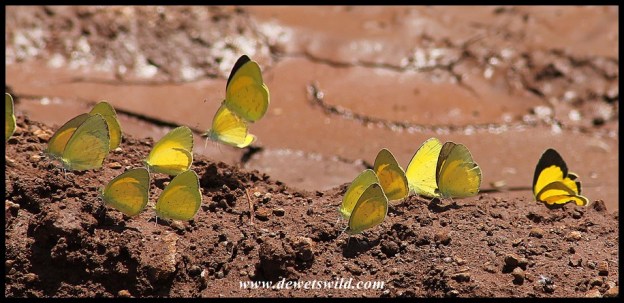
With bright sunshine and warm autumn weather in the Drakensberg the butterflies come out to play in their numbers, and we go chasing them with camera in hand. These little beauties were all fluttering around Mahai in the Royal Natal National Park on Monday.

Fresh air and fresh water at Royal Natal

With a massive storm looming over the Drakensberg this evening we can look back on another fun-filled day in the great outdoors at Royal Natal.

Reflections at Mahai

The Cascades in the Mahai stream

We fled to the Mountains

Well, not really – our bookings were made long before the current health crisis and we opted not to cancel, figuring that it is nice to know that for a while at least we can breathe the fresh mountain air of the Royal Natal National Park again. So here we are.

Rainbow Skink

Trachylepis margaritifera

The Rainbow Skink, or Five-lined Skink, is an active lizard occurring in rocky terrain in savanna habitats from Kwazulu-Natal, through the Lowveld and Limpopo Valley to as far north as Kenya. They feed primarily on insects and other invertebrates. Males are territorial. Females lay one, perhaps two, clutches of 6-10 eggs in summer, with the baby skinks emerging around two months later. Females, adolescents and immature males exhibit the distinct lines and brilliant blue tails associated with this species, while the adult males have an olive base-colouration speckled with tiny white spots. Adults may grow to 20cm in length, including the tail. The IUCN lists the Rainbow Skink as being of least concern.

Violet-backed Starling

Cinnyricinclus leucogaster

Violet-backed Starlings occur throughout much of sub-Saharan Africa, migrating to South Africa to breed from October to April and they can then be found in Kwazulu Natal, Mpumalanga, Limpopo, Gauteng and North West Province. They inhabit savannas, various kinds of woodland habitats, and gardens, feeding on fruit and insects.

The Violet-backed Starling is one of the smaller members of its family, growing to about 18cm in length and weighing around 45g. The males and females are so dimorphic that they may easily be confused for two different species.

Usually seen in monogamous pairs, or small flocks (fewer than 20 birds) at the end of the breeding season before starting their migration back northwards, Violet-backed Starlings breed in holes in trees or fence posts. The female is singly responsible for the incubation of the clutch of 2-4 eggs over a 2 week period, though the male takes an active role in feeding the chicks until they fledge about 3 weeks after hatching.

The IUCN lists the Violet-backed Starling as being of least concern, though it does note that their populations may be declining due to habitat degradation.