This past Women’s Day long weekend afforded us the opportunity to make a long overdue return visit to one of our favourite South African wild places – the Ithala Game Reserve in northern Kwazulu-Natal. We’ve been singing the praises of this little known yet exceptionally scenic reserve for as long as this blog’s been running and if you’d like to see all our posts about Ithala and learn more about it please follow this link.
While the weekend’s weather ranged from cold, wet and blustery to glorious sunshine, that didn’t curtail our explorations in the least. How could it, when the majestic scenery is so rewarding!?

Mountain stream at Ithala

Pongola River

Low hanging clouds over Ngotshe Mountain

Low hanging clouds over Ngotshe Mountain

A viewpoint in the mountains

The Pongola River flowing far below

Inclement weather over Ithala

Sunset glowing on Ngotshe

Ngubhu stream

Ngubhu stream

Ngotshe in morning light
And, when the sun came out, so did the butterflies and various kinds of reptiles!

Common Dwarf Gecko

Rainforest Brown

Variable Skink

Barberton Girdled Lizard
Ithala has a rich variety of bird species and many of them are easily seen and photographed in Ntshondwe, the reserve’s main camp.

African Dusky Flycatcher

Amethyst Sunbird

African Firefinch (male)

Southern Bald Ibis

Blue Waxbill

Cape Batis (male)

Cape Glossy Starling

Cape Rock-Thrush (male)

Cape White-eye

Chinspot Batis (female)

Chinspot Batis (female)

Common Waxbill

Eastern Nicator

Familiar Chat

Fork-tailed Drongo

Mocking Cliff Chat (male)

Olive Woodpecker

African Pied Wagtail

Purple-crested Turaco

Red-billed Oxpeckers

Red-capped Robin Chat

Scarlet-chested Sunbird

Male Southern Double-collared Sunbird

Tawny-flanked Prinia

White-bellied Bustards

White-crested Helmetshrike

Yellow-billed Kite

Yellow-breasted Apalis

Yellow-throated Longclaw

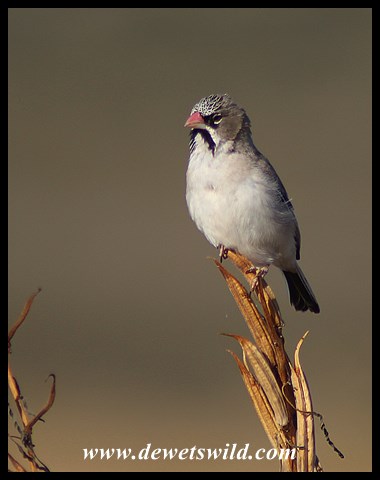
Yellow-throated Bush Sparrow
And of course, what would a “game reserve” be without a rich assortment of large animals? Ithala never disappoints in its variety of mammals, and especially the giraffes (Ithala’s emblem) were out in force!

Blue Wildebeest

Rock Hyrax (Dassie)

Acrobatic Rock Hyrax (Dassie)

Rock Hyrax (Dassie)

Rock Hyrax (Dassie)

Eland bull

A warning well worth heeding!

Elephant cresting a hill

Elephant bull

Iconic Ithala: Giraffe and Ngotshe Mountain

Giraffe calf nibbling on tender shoots

Giraffe at a gallop

Giraffe bull

Newly born Giraffe calf

Common Duiker lamb

Impala Ram with Red-billed Oxpeckers

Kudu calf

Young Kudu bull

Mountain Reedbuck pair

Mountain Reedbuck ewe hiding from the cold morning air

Nyala ewe

Nyala bull

Red Hartebeest

Southern Reedbuck

Steenbok

Thoughtful Vervet Monkey

Grooming Vervet Monkeys

Grooming Vervet Monkeys

Warthog on the run!

Waterbuck bull
We spent three nights at Ithala, staying in comfort in Ntshondwe’s chalet #20. Ithala’s a relaxed 6 hour drive on good tarred roads from our home in Pretoria.
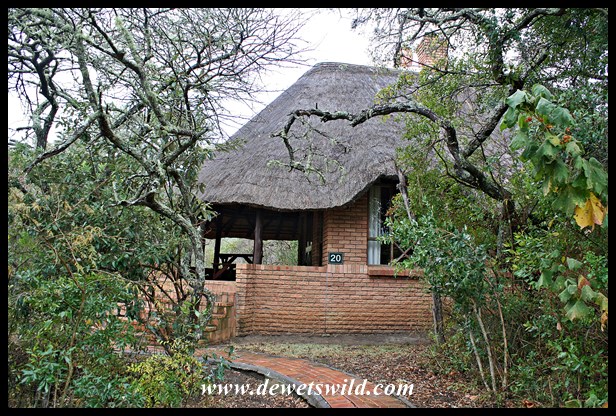
Ntshondwe Chalet #20, Ithala Game Reserve, August 2018
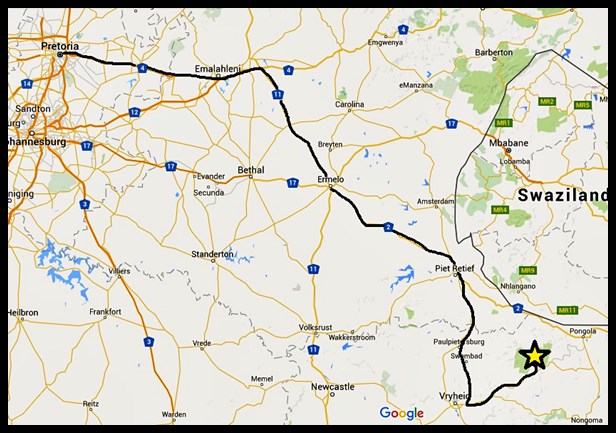
Pretoria to Ithala
(drawn with Google Maps)
-27.544550
31.280915