Tag Archives: travel

Barn Swallow

Hirundo rustica

Barn Swallows are amongst the best known birds in the world, occurring on all the continents (except Antarctica) for at least part of the year. They breed in the northern hemisphere and migrate to the southern continents during the northern winter, covering distances of up to 11,500km between their breeding grounds and non-breeding abodes. Locally they arrive from late September and depart again by April and can be seen in basically every corner of the country during that time. The IUCN estimates that there’s at least 290-million Barn Swallows in the world and lists the species as being of least concern.

in South Africa Barn Swallows can be found in any habitat though they reach their highest densities in areas of higher rainfall. They feed mainly on insects caught on the wing. Barn Swallows are highly gregarious and usually roost in reed beds – some of these have been in use for decades and may host up to 3 million birds! Barn Swallows measure about 14cm in length and weigh around 20g.

Three new Lodges added to DeWetsWild’s portfolio: Cliffhanger, Leopard Rock and Recce

DeWetsWild is pleased to announce that we’ve added three more wonderful lodges to the portfolio of destinations to which we offer a reservation service, can use on guided tours or for hosting photographic safaris and workshops. The lodges are located on a private game reserve just outside of Bela-Bela in the Limpopo Province, about 160km north of Pretoria. All three are ideally suited for groups of family and friends looking for a comfortable self-catered breakaway within easy reach of the Gauteng metros. The Kritzinger Family, the lodges’ owners who have decorated them very tastefully and furnished the houses with all the modern conveniences, very graciously hosted us there last week to experience it first hand.

Recce Lodge

Recce sleeps up to 12 guests in four air-conditioned en-suite bedrooms, each with a queen-size bed. Two of the rooms also have a loft with two single beds each, suitable only for children.

Leopard Rock Lodge

Leopard Rock boasts 3 en-suite bedrooms with a queen-size bed each, two bedrooms also having a loft suitable for 2 children on single beds with a third separate loft providing three single beds, thus accommodating a total of 13 guests.

Cliffhanger Lodge

Cliffhanger has a lovely setting overlooking a dam and the expansive bushveld beyond. Three en-suite bedrooms are furnished with a queen-size bed below and a loft with 2 single beds above (accessed with a ladder and only suitable for children), while a fourth bedroom with a queen-size bed, perfect as a honeymoon suite, perches below the main lodge.

The most direct route to Recce Lodge entails a drive of 18km gravel roads, while that to Cliffhanger and Leopard Rock is about 8km of gravel. Cliffhanger and Leopard Rock Lodges are located in an exclusive-use area of the reserve where private vehicles are not allowed on the game-viewing routes. Guests can however rent an open safari vehicle for self-guided traversing over this part of the reserve, or can book to join guided walks and drives. These options are also available to guests staying at Recce Lodge but guests who overnight there may also access the wider reserve road network which is open to all visitors in their own vehicles, though a vehicle with high ground clearance would be recommended. Aside from the attractions on the game reserve itself guests staying at Recce, Cliffhanger and Leopard Rock can use them as bases from which to explore other attractions in the Waterberg, not least of which is some terrific golf courses located nearby.

If you’d like more information or would like to make a booking at Cliffhanger, Leopard Rock or Recce Lodge, please don’t hesitate to reach out. You are welcome to email us on dries@dewetswild.com with your request or alternatively complete the following form if you would like DeWetsWild to take care of your next reservation in the bushveld (the more detail you provide us, the better service we can provide to you):

Go back

Your message has been sent

Warning
Warning
Warning
Warning
Warning
Warning

Warning.


March ’24 update from Rietvlei Nature Reserve

Since late February I’ve been guiding hiking groups and game drives in our local Rietvlei Nature Reserve on a freelance basis. Regular readers of our blog will know that we are rather fond of Rietvlei, so it is especially rewarding to be showcasing this special reserve in this way. I thought I might start doing a monthly round-up of what Rietvlei revealed while I explored it with my guests (assisted by Joubert who accompanied me on several of the trips).

All counted I managed to see and identify 111 species of birds at Rietvlei in the month of March, including a couple of summer visitors that will soon depart for warmer climes. You can find the complete list at the end of this post.

A recently independent Black-chested Snake Eagle has put on some amazing displays.

The males of various kinds of widow-birds were still displaying in their feathery finery early in the month, desperately trying to mate with as many females as possible before the end of the summer breeding season. By the end of the month they were rapidly transitioning into their drabber winter garb.

The biggest birding highlight of the month for me was my first ever sighting of an Orange River Francolin, taking my tally to 611 species of bird seen in South Africa.

At the end of the summer season Rietvlei’s mammals are in excellent condition and during the month of March I recorded 16 species. The tall grass made it difficult to spot the smaller species though and the list might grow as we progress through autumn and winter.

If you’d like to join me on a guided tour of Rietvlei – on a hike or on an open vehicle drive – you can book through melanie@rietvleicoffee.co.za / +27(0)74-820-9926.

List of birds seen at Rietvlei Nature Reserve during March 2024:

Scientific Afrikaans English
Acridotheres tristis Indiese Spreeu Common Myna
Acrocephalus gracilirostris Kaapse Rietsanger Lesser Swamp Warbler
Afrotis afraoides Witvlerkkorhaan Northern Black Korhaan
Aix sponsa Carolina Eend Wood Duck
Alopochen aegyptiaca Kolgans Egyptian Goose
Amandava subflava Rooiassie Orange-breasted Waxbill
Amblyospiza albifrons Dikbekwewer Thick-billed Weaver
Anas erythrorhyncha Rooibekeend Red-billed Teal
Anas sparsa Swarteend African Black Duck
Anas undulata Geelbekeend Yellow-billed Duck
Anomalospiza imberbis Koekoekvink Cuckoo-Finch
Anthus cinnamomeus Gewone Koester African Pipit
Apus apus Europese Windswael Common Swift
Ardea melanocephala Swartkopreier Black-headed Heron
Asio capensis Vlei-uil Marsh Owl
Batis molitor Witliesbosbontrokkie Chinspot Batis
Bostrychia hagedash Hadeda Hadeda Ibis
Bubulcus ibis Veereier Western Cattle Egret
Burhinus capensis Gewone Dikkop Spotted Thick-knee
Butorides striata Groenrugreier Green-backed Heron
Calendulauda sabota Sabota Lewerik Sabota Lark
Caprimulgus pectoralis Afrikaanse Naguil Fiery-necked Nightjar
Cecropis cucullata Grootstreepswael Greater Striped Swallow
Centropus burchellii Gewone Vlieloerie Burchell’s Coucal
Certhilauda semitorquata Grasveldlangbeklewerik Eastern Long-billed Lark
Ceryle rudis Bontvisvanger Pied Kingfisher
Chalcomitra amethystina Swartsuikerbekkie Amethyst Sunbird
Chrysococcyx caprius Diederikkie Diederik Cuckoo
Cinnyris talatala Witpenssuikerbekkie White-belled Sunbird
Circaetus pectoralis Swartborsslangarend Black-chested Snake Eagle
Cisticola juncidis Landeryklopkloppie Zitting Cisticola
Cisticola tinniens Vleitinktinkie Levaillant’s Cisticola
Colius striatus Gevlekte Muisvoel Speckled Mousebird
Corvus albus Witborskraai Pied Cow
Corythornis cristatus Kuifkopvisvanger Malachite Kingfisher
Coturnix coturnix Afrikaanse Kwartel Common Quail
Crinifer concolor Kwevoel Grey Go-Away Bird
Crithagra gularis Streepkopkanarie Streaky-headed Seedeater
Cypsiurus parvus Palmwindswael African Palm Swift
Dessonornis caffer Gewone Janfrederik Cape Robin-Chat
Dicrurus adsimilis Mikstertbyvanger Fork-tailed Drongo
Elanus caeruleus Blouvalk Black-winged Kite
Estrilda astrild Rooibeksysie Common Waxbill
Euplectes afer Goudgeelvink Yellow-crowned Bishop
Euplectes albonotatus Witvlerkflap White-winged Widowbird
Euplectes ardens Rooikeelflap Red-collared Widowbird
Euplectes orix Rooivink Southern Red Bishop
Euplectes progne Langstertflap Longtailed Widowbird
Falco biarmicus Edelvalk Lanner Falcon
Falco peregrinus Swerfvalk Peregrine Falcon
Fulica cristata Bleshoender Red-knobbed Coot
Gallinago nigripennis Afrikaanse Snip African Snipe
Gallinula chloropus Grootwaterhoender Common Moorhen
Glaucidium perlatum Witkoluiltjie Pearl-spotted Owlet
Hirundo albigularis Witkeelswael White-throated Swallow
Hirundo rustica Huisswael Barn Swallow
Icthyophaga vocifer Visarend Fish Eagle
Jynx ruficollis Draaihals Red-throated Wryneck
Lamprotornis bicolor Witgatspreeu Pied Starling
Lamprotornis nitens Klein Glansspreeu Cape Glossy Starling
Laniarius atrococcineus Rooiborslaksman Crimson-breasted Shrike
Laniarius ferrugineus Suidelike Waterfiskaal Southern Boubou
Lanius collaris Fiskaallaksman Common Fiscal
Lanius minor Gryslaksman Lesser Grey Shrike
Lophaetus occipitalis Langkuifarend Long-crested Eagle
Lybius torquatus Rooikophoutkapper Black-collared Barbet
Macronyx capensis Oranjekeel Kalkoentjie Cape Longclaw
Megaceryle maxima Reuse Visvanger Giant Kingfisher
Merops apiaster Europese Byvreter European Bee-eater
Microcarbo africanus Rietduiker Reed Cormorant
Mirafra africana Rooineklewerik Rufous-naped Lark
Motacilla capensis Gewone Kwikkie Cape Wagtail
Muscicapa striata Europese Vlieevanger Spotted Flycatcher
Netta erythrophthalma Bruineend Southern Pochard
Numida meleagris Gewone Tarentaal Helmeted Guineafowl
Nycticorax nycticorax Gewone Nagreier Black-crowned Night Heron
Passer diffusus Gryskopmossie Southern Grey-headed Sparrow
Passer melanurus Gewone Mossie Cape Sparrow
Phalacrocorax lucidus Witborsduiker White-breasted Cormorant
Phoeniculus purpureus Rooibekkakelaar Green Wood-hoopoe
Phylloscopus trochilus Hofsanger Willow Warbler
Plectropterus gambensis Wildemakou Spur-winged Goose
Ploceus velatus Swartkeelgeelvink Southern Masked Weaver
Prinia flavicans Swartbandlangstertjie Black-chested Prinia
Prinia subflava Bruinsylangstertjie Tawny-flanked Prinia
Psittacula krameri Ringnekparakiet Rose-ringed Parakeet
Pternistis swainsonii Bosveldfisant Swainson’s Spurfowl
Pycnonotus tricolor Swartoogtiptol Dark-capped Bulbul
Saxicola torquatus Gewone Bontrokkie African Stonechat
Scleroptila gutturalis Kalaharipatrys Orange River Francolin
Scopus umbretta Hamerkop Hamerkop
Sigelus silens Fiskaalvlieevanger Fiscal Flycatcher
Sphenoeacus afer Grasvoel Cape Grassbird
Spilopelia senegalensis Rooiborsduifie Laughing Dove
Streptopelia capicola Gewone Tortelduif Cape Turtle Dove
Streptopelia semitorquata Grootringduif Red-eyed Dove
Struthio camelus Volstruis Common Ostrich
Tachybaptus ruficollis Kleindobbertjie Little Grebe
Tadorna cana Kopereend South African Shelduck
Telophorus zeylonus Bokmakierie Bokmakierie
Terpsiphone viridis Paradysvlieevanger African Paradise Flycatcher
Threskiornis aethiopicus Skoorsteenveer African Sacred Ibis
Trachyphonus vaillantii Kuifkophoutkapper Crested Barbet
Turdoides jardineii Pylvlekkatlagter Arrow-marked Babbler
Turdus smithi Geelbeklyster Karoo Thrush
Upupa africana Hoephoep African Hoopoe
Vanellus armatus Bontkiewiet Blacksmith Lapwing
Vanellus coronatus Kroonkiewiet Crowned Lapwing
Vanellus senegallus Lelkiewiet Wattled Lapwing
Vidua macroura Koningrooibekkie Pin-tailed Whydah
Zosterops virens Kaapse Glasogie Cape White-eye

List of mammals seen at Rietvlei Nature Reserve during March 2024:

Scientific Afrikaans English
Acinonyx jubatus Jagluiperd Cheetah
Alcelaphus buselaphus Rooihartbees Red Hartebeest
Antidorcas marsupialis Springbok Springbuck
Canis mesomelas Rooijakkals Black-backed Jackal
Ceratotherium simum Witrenoster White Rhinoceros
Chlorocebus pygerythrus Blouaap Vervet Monkey
Connochaetes gnou Swartwildebees Black Wildebeest
Cynictis penicillata Witkwasmuishond Yellow Mongoose
Damaliscus pygargus Blesbok Blesbuck
Equus quagga Bontsebra Plains Zebra
Herpestes sanguineus Swartkwasmuishond Slender Mongoose
Hippopotamus amphibius Seekoei Hippopotamus
Hydrictis maculicollis Kleinotter Spotted-necked Otter
Kobus ellipsyprymnus Waterbok Waterbuck
Syncerus caffer Buffel Cape Buffalo
Taurotragus oryx Eland Eland

Manyeleti Magic, 27 June to 1 July 2024

DeWetsWild and Hannes Rossouw Photography invite you to Manyeleti Magic, 27 June to 1 July 2024. A one-of-a-kind photographic safari in the Manyeleti Nature Reserve, an integral part of the Greater Kruger National Park.

Serene Sirheni, 1 to 5 May 2024

DeWetsWild, Hannes Rossouw Photography and Irving Knight Safaris invite you to a one-of-a-kind photographic safari in the Kruger National Park. Serene Sirheni, 1 to 5 May 2024.

A final round-up of our January ’24 visit to the Kruger National Park

Over the past couple of weeks we’ve been showing you some of what we experienced during a holiday visit to the Kruger National Park in early January. There was the excitement of a wild dog hunt, endearing hyena pups, smiles thanks to dung beetles and baboons, the royal presence of lions and leopards and even a concert by the Skukuza frog choir. The Kruger National Park is an amazing place, and well deserving of its position among the great wild places on the planet. We just cannot stay away.

The Kruger National Park is one of South Africa’s premiere bird-watching destinations, and even more so in summer when the park’s prolific birdlife is boosted by summer migrants from as far away as Eurasia. This gallery is but a tiny morsel of the amazing diversity of birds we encountered while exploring the southern reaches of the Park in January.

The Kruger National Park is even better known for its astounding variety of mammals, which at almost 150 recorded species is among the highest of any conservation areas on the planet! The animals are so used to the gawking people driving around them all day that it makes for wonderful photographic opportunities.

Far less glamorous – some may even call them creepy-crawlies! – but equally as important in the natural cycles that drums the beat in the Kruger National Park is the extraordinary variety of insects, fish, amphibians and reptiles that you may encounter if you keep your eyes peeled.

We’d love for you to join DeWetsWild on a guided tour of the Kruger National Park or to help you arrange a self-guided visit. Don’t hesitate to reach out!

Picture Balule, 26 April to 1 May 2024

DeWetsWild, Hannes Rossouw Photography and Irving Knight Safaris invite you to a one-of-a-kind photographic safari in the Kruger National Park. Picture Balule, 26 April to 1 May 2024.


You just can’t tire of seeing Lions

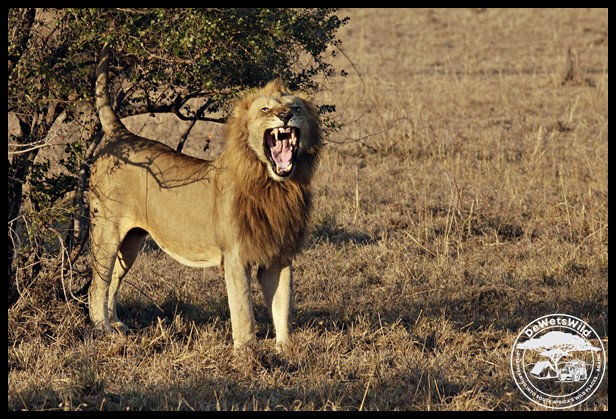
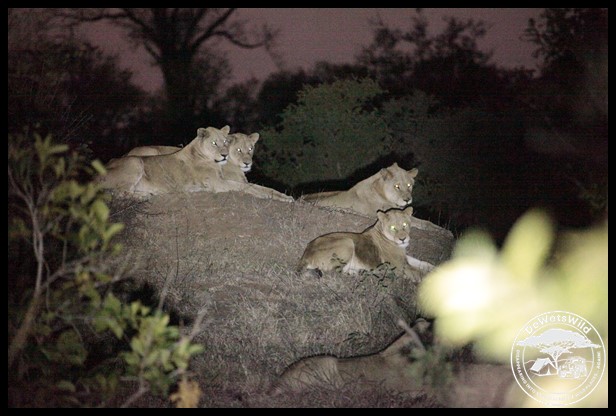
No matter how often you visit our national parks and game reserves or how many encounters you have with these regal cats, you just don’t get blasé about seeing Lions in the wild. Our most recent visit to the southern Kruger National Park earlier this month delivered some very exciting and some not so exciting, but still very memorable, sightings of Lions.

Our first Lion sighting of the trip came at the bridge over the Nwatimhiri River, where a small pride of lionesses and youngsters were lying in the long grass and trying their best to blend in with their surroundings.

Not much further we found the Lubyelubye pride walking along the road with a cavalcade of vehicles following them. As they walked past our vehicle they were close enough to touch, not that we’re foolish enough to ever attempt that – watch how carefully Joubert videos the passing procession from inside the car! 😉

Early the next morning we were on our way from Skukuza to Tshokwane when we came across three lionesses stalking a zebra in dense growth. The zebra did not notice the lions until it almost step on the closest one, but it still got away! Thrilling to watch for us but I thought I saw a rather miffed expression on the faces of the lions…

Sometimes you have to work really hard for even a glimpse of a lion, as this one relaxing in the shade in the heat of the day proves.

Being out of the camp gates as soon as they open improves your chances of finding the lions up and active. On our final morning in the Kruger National Park we found this group of 4 lionesses walking over the Sand River Causeway.

We were still wondering where the males associated with the group of female’s we’d just seen could be, when we found these two lazing on the Marula Loop road only about 2km further.

If seeing lions in the wild is on your wish list we’d love for you to join DeWetsWild on a guided tour of the Kruger National Park or to help you arrange a self-guided visit. Don’t hesitate to reach out!

Baboon antics in the Kruger National Park

Chacma Baboons are great entertainers and most visitors to the Kruger National Park enjoy seeing these animals. I suppose that’s because their obvious intelligence, playful nature, endearing family interactions and the occasional aggressive altercation is like a mirror held up to our faces.

We’d love for you to join DeWetsWild on a guided tour of the Kruger National Park or to help you arrange a self-guided visit. Don’t hesitate to reach out!

Skukuza’s frog community

Outside of the reception office at Skukuza in the Kruger National Park is a beautiful pond, which by night is transformed into a stage for dozens of frogs of various kinds. For us it has become a tradition to visit the pond every night we spend in Skukuza to admire the sights and sounds of animals that are becoming ever more rare in the modern world.

We’d love for you to join DeWetsWild on a guided tour of the Kruger National Park or to help you arrange a self-guided visit. Don’t hesitate to reach out!