It was still very dark and cold when the de Wet’s piled into the trusty Starwagon for the drive from Pretoria to Pilanesberg on the 10th of May, a Thursday. After a quick stop at the petrol station close to Sun City’s entrance to fill up, considering that there’s no fuel available inside the Park, we arrived at the Bakubung Gate just before the official gate opening time of 06:30.
Formalities completed, we were on our way into the Park, the plan being to proceed straight through the reserve to Bakgatla Resort, where we would be camping for the next three nights – a total distance of only 22 kilometres or so.
Reports from earlier in the week indicated that lions were frequenting the area around Lengau dam, but no such luck for us this morning. Our first sightings of note included giraffe and plains zebra.
A notice at the entrance gate warned that a section of the tarred Kubu drive through to the centre of the reserve would be closed for major maintenance, and although we could definitely appreciate why the road required the attention, as it was dangerously potholed, we found that it had not yet been closed to traffic at the time. The next day we were in the area again but the road had been closed and work was progressing at an impressive pace.
The decision to turn off the tar road onto the Letsha gravel loop, that skirts Lake Mankwe’s southern shores, proved to be the correct choice as we ticked our first “lifer” bird of this trip: an African Finfoot. Now, the birdwatchers among you will appreciate what a lucky strike that is! We had just passed the birding hide (it was rather chilly and we didn’t feel like getting out just yet) when I noticed the tell-tale posture, and a closer look through the binoculars left no doubt that this was definitely bird specie number 479 on our all time South African list (I know many of our readers will have notched up much more impressive numbers, but in fairness to us we’ve only been actively “birding” for about five years now).
By the time we reached Bakgatla Resort at around 08:15 in the morning, the sun had warmed up nicely and we’ve already had good sightings of impala, zebra, blue wildebeest, steenbok, springbok, red hartebeest and warthog.
Checking in at the reception office was an absolute pleasure. The three staff members manning the desk offered a warm and friendly welcome, as did all the employees we had the pleasure of interacting with during our stay, and in no time at all we were searching for the best site to pitch the tent. Setting up camp completed quicker than anticipated, we set about exploring the resort terrain.
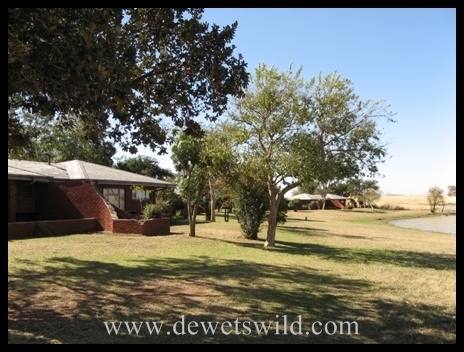
Managed by Golden Leopard Resorts, Bakgatla Resort is situated on the northern edge of the Pilanesberg National Park, right next to the Bakgatla entrance gate. Amenities provided include a huge swimming pool, trampoline, outdoor chess set, a number of children’s playgrounds, a restaurant (where take-aways are also available), a small kiosk selling cold beverages, snacks, firewood etc, conferencing facilities and a health and beauty spa. Accommodation options range from well appointed self-catering chalets and safari tents with en-suite bathrooms, to a spacious camping and caravanning area serviced by spotlessly clean communal ablution blocks.
This is a game reserve after all, and there’s more than enough wildlife inside the resort to while away the midday hours if one does not feel up to driving around. A short stroll through camp after lunch produced sightings of great sparrow, red-billed hornbill, squirrels, agamas, speckled pigeon, grey go-away bird, chestnut-vented tit-babbler and white-browed scrub robin.
Heading into the Park again after lunch, we find a herd of giraffe close to the gate before heading to Rathlogo where a game and bird-watching hide overlooks a very natural looking expanse of water. Immediately below the hide structure we hear the snores of a hippopotamus sleeping in the shade and through holes in the wooden floor we can see terrapins lounging on his back and head. You need to be this close to a hippo to appreciate what a massive animal it is! Inside the Rathlogo hide a much habituated southern boubou hops around looking for scraps of food to eat.
Onwards to Hippo Loop, where a troop of vervet monkeys are foraging amongst a herd of plains zebra along the northern shores of Lake Mankwe while a fish eagle keeps vigil over a stretch of water from his perch atop a long submerged tree with a pod of hippos lazing the daylight hours away on the bank – an iconic African scene.
Making our way along the Thlware, Motlobo and Mankwe roads we enjoy the company of kudu, dassies (hyrax), warthog, giraffe and eland (not to forget the plentiful impala, wildebeest and zebra that you will find all over the Pilanesberg reserve). Arriving at Makorwane Dam, along the Tshukudu eNtsho road, we find a breeding herd of elephant enjoying a swim in the cool water on the opposite bank.
Slow driving along the Tlou route yields a single sub-adult tsessebe in the company of a bachelor group of young impala rams. The excitement levels rises quite a few levels when we come across a pride of lions – one male in the company of three females – going about the business of investing in the next generation of Pilanesberg lions, to describe the scene euphemistically, in the shade of a large tree and partially obscured by thick shrubbery, in the vicinity of the short Tlou link road.
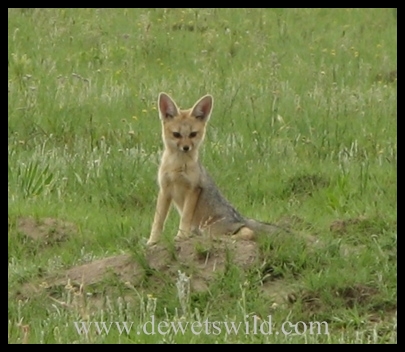
Heading to camp, we bring our first day back in the bush to a close with a black-backed jackal rushing across the road and disappearing into the distance, never even pausing to look back at us.
After a peaceful night’s rest filled with the sounds of the veld, we’re waiting at Bakgatla Gate quarter of an hour before gate opening time on the Friday morning. Considering that the lions we had encountered on Tlou Drive the previous day were mating there’s a good chance they would still be in the area, so we are heading in that direction again this morning in the hope of finding them. No such luck I’m afraid, but we are compensated for our trouble with a magnificent African sunrise.
We follow the Moloto drive as far as Batlhako Dam, where we upset a flock of white-faced ducks by our sudden arrival. Heading south, a large troop of baboons keep us enthralled with their antics on the wall of the Lengau Dam, while a pod of hippos noisily move towards deeper water.
On the way back to camp in the late morning, routing along Ntshwe and Tlou Drives and the Makorwane Dam (Kubu Drive now being closed due to the road works mentioned earlier), we encounter several elephant herds on their way to or from their water supplies.
After spending three or so hours in camp enjoying the silence and a hearty lunch we head into the Park again for our afternoon drive just after 14:00. Our route takes us along the Tau Link road toward Lake Mankwe where we enjoy a far-off sighting of elephants mating on the opposite bank. It seems that the people in the bird viewing-hide had a much better view.
At the crossing over the Mankwe stream we spot a small crocodile basking in the sun, and shortly afterwards, on the Letsha Link, we come across a much larger relative of his partaking of the same pastime.
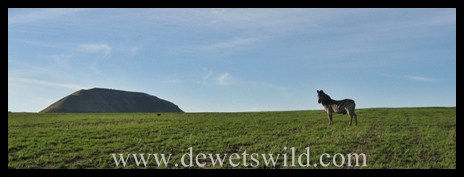
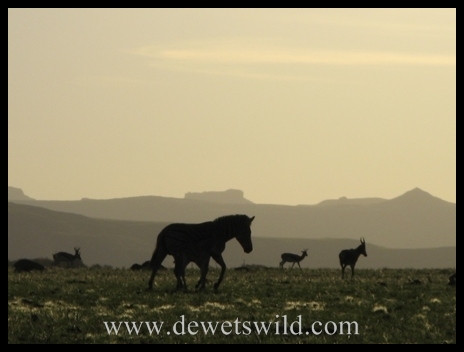
Heading eastwards now along Mankwe Way, passing through boulder-strewn koppies that seem to be excellent leopard habitat, our path is blocked by a very laid-back zebra stallion with no intention of moving out of the way. Of course we use the opportunity to take some close up pictures, zebras being such photogenic animals. It is only after another vehicle approaches from the opposite direction that he decides to follow his family down the hill.
Proceeding along Kwalata Drive there seems to be impala, wildebeest and warthog everywhere, keeping the cameras clicking away in the golden light of late afternoon.
With gate closing time approaching, we head back to Bakgatla along Tshepe and Motlobo Drives and the Korwe Link road, stopping along the way to admire a variety of animals ranging in size from the diminutive steenbok to ox-like eland.
Cosily tucked into our sleeping bags that night after a traditional South African braai, we could make out the faint crackling of a veld fire crawling at snails pace across a nearby hill. Luckily there was almost no wind to speak of, or the fire could have wreaked real havoc.
Arriving at the gate the next morning, it was obvious that the weekend had arrived. In front and behind of us a long queue of vehicles were waiting for the gates to open to enter the Park.
Unfortunately the increased number of vehicles, the drivers of some apparently having no idea what courteous driving etiquette would be, seemed to negatively influence the quality and quantity of our sightings. Our route took us past Lake Mankwe towards Manyane but it was not until we reached Tilodi Dam that we had our first noteworthy sighting – an African Harrier Hawk gliding low across the hills.
We decided to stick to the gravel loops as far as possible to get back to Bakgatla, and just after we passed Mothata picnic site (along Dithabaneng road) this decision started paying off when we encountered a skittish group of eland rushing across the road.
Malatse Dam offered hippopotamus, waterbuck and a wide variety of aquatic birds while a large group of giraffe caused a traffic jam in the bush by blocking the Moruleng road for a while. Along Moruleng the path of the brush fire mentioned earlier was quite clear and it was interesting to note that the fire seemed to remain entirely on the hillside while apparently not spreading onto the adjacent flats at all.
Given the large number of vehicles now in the Park, we decide to go sit ourselves down at the Ruighoek Hide instead of ducking and diving along the roads for the afternoon. Nevertheless, on our way there, a potentially excellent sighting of a breeding herd of elephants on the Tlou Drive is spoiled repeatedly by some very brave visitors intent on driving straight through the herd. On the quieter, albeit short, Tlou Link we spend some time photographing a red hartebeest bull resting up in short grass next to the road.
At Ruighoek Dam we have a feast watching the birds and animals coming and going: hippo, waterbuck, impala, warthog, giraffe, grey heron, pied kingfisher, African darter, natal and crested francolins, tsessebe, zebra, black-backed jackal, vervet monkeys, terrapin, three-banded plover, red-billed oxpeckers, laughing doves, reed cormorant and Egyptian geese all put in an appearance.
Driving back towards Bakgatla that evening the realisation that our last full day in the Park is drawing to a close puts us in a sombre mood, although sightings of elephant, tsessebe, zebra and steenbok did lift the spirits somewhat.
On Sunday morning we take our last drive out towards Lenong View, pausing for a while at Rathlogo Hide on the way and ticking off a distant buffalo sighting on the Sefara road (buffalo are rarely seen from the tourist roads in Pilanesberg so we count ourselves very lucky, even if we couldnt get a decent picture) before heading back to Bakgatla.
Why do our bush breakaways always fly by at a staggering pace while the weeks prior seem to drag on forever? All too soon the tent and equipment is packed up and there’s no alternative left for us but to point the Starwagon’s nose towards Pretoria. Of course we know: We will be back!
A note in closing: Pilanesberg is home to populations of both black and white rhinoceros, and although we had the pleasure of numerous excellent sightings of both species during our trip I’ve purposefully omitted mentioning where and when exactly we had seen these awesome creatures due to the threat posed by poaching.







 DeWetsWild