Tag Archives: picnic spots

Enjoying a sunnier Royal Natal

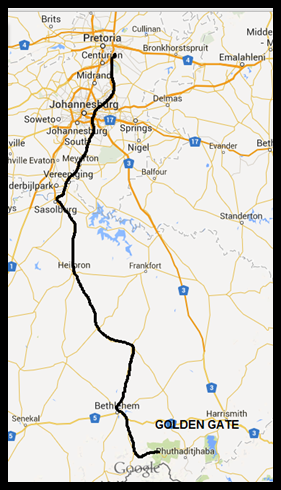
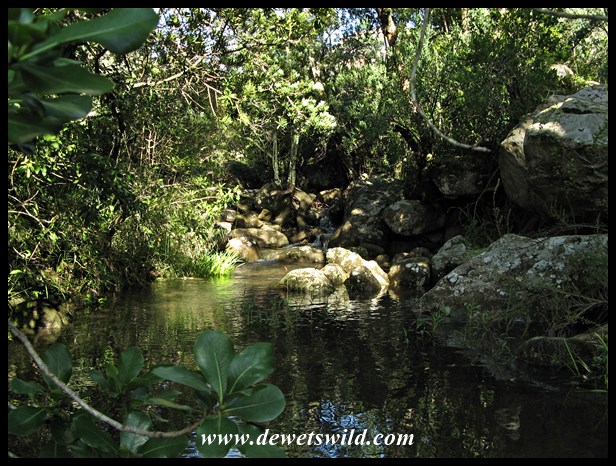
Good evening from a much drier Royal Natal National Park, where we used the opportunity provided by the shining sun to explore some of the myriad trails that traverses this beautiful piece of earth, enjoying scenes like this along the Mahai stream.

royal-natal-21dec16-wp

Tomorrow we’re heading for the Hluhluwe-Imfolozi Park, and may not be able to post regular updates until we get back home to Pretoria (though we will try). If you don’t hear from us again before then, here’s wishing all our friends at de Wets Wild a blessed Christmas!


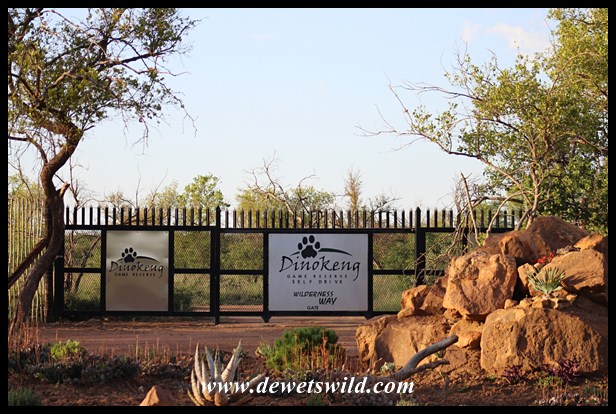
Dinokeng Game Reserve

When I was planning a quick weekend getaway for our milestone tenth wedding anniversary, I was looking for a destination we’ve not visited before, within easy driving distance of Pretoria in case Joubert still had to attend classes in the morning, and that Marilize would never guess as I wanted it to be a surprise. Dinokeng Game Reserve fitted the bill perfectly, but even now I still can’t believe just how much this place exceeded my every expectation!

As promised, we’ll give a bit of an overview of the reserve and share some of what we saw and experienced during our first visit to Dinokeng. Having been used as farmlands for so long before the reserve’s founding, I expected there to be little left of the pristine natural vegetation that would have occurred here centuries ago, but I couldn’t have been further off the mark. The reserve’s vegetation is typical varied bushveld (savanna) on a flat to gently undulating landscape, drained by three large streams and their tributaries. The Tswana name “Dinokeng” translates to “a place of rivers” in English, and obviously the name is well deserved.

For a relatively newly established reserve, the list of recorded bird species found at Dinokeng, already over 350 species strong, is phenomenal! We managed to connect with 74 kinds of birds during our weekend visit and have no doubt that more proficient birders would have had an even longer list at the end of theirs.

Dinokeng’s mammalian inhabitants are obviously flourishing. Of the “Big 5” we only managed to see White Rhinos, though we found ample evidence of the reserve’s three Lion prides in the remains of their kills. The Lions, Elephants, Buffaloes and Leopards will have to wait for our next visit then. Sightings of Impala, Kudu, Warthog, Plains Zebra, Blesbok and Blue Wildebeest were numerous, with rarer glimpses of Cheetah, Tsessebe, Eland, WaterbuckNyala, SpringbokGrey Duiker, Giraffe, Banded Moongoose, Black-backed Jackal and Vervet Monkey adding variety to our game drives.

Dinokeng Game Reserve boasts more than 30 different accommodation providers, ranging from rustic camping areas to luxury, full-service lodges. For our first visit to the reserve we had the pleasure of staying at OuKlip Game Lodge, deep inside the reserve, where eight fully self-contained safari tents (rated 4-stars) provide very comfortably for two to four guests each. We were immediately taken in by the great facilities in the tents and camp as a whole, not forgetting the warm hospitality of the owners and staff, and have already decided that OuKlip will be our preferred base for future visits to Dinokeng as well. I think what I will most remember about our tent, number one, was the two magnificent sunsets we enjoyed from the veranda! Contact Marilize if you’d like to make reservations at OuKlip; it is sure to be one of Dinokeng’s most popular retreats.

The Dinokeng Game Reserve was officially opened in September 2011, following the amalgamation of 200 private properties, and is managed co-operatively with the provincial government. Visitors to Dinokeng should remember that this is still a developing reserve and that there remains a lot of work to do to remove old farming infrastructure, derelict buildings and fences, and that a few public roads, with associated traffic, crosses through the reserve. It is the only game reserve with free-roaming populations of the “Big 5” in Gauteng Province, South Africa’s economic hub. Today it covers 185km², with plans for further expansion. The Self-Drive Route covers large areas of the reserve, and most of the over 100km of track is good enough to traverse in a sedan. Along the way visitors will find picnic sites (with toilets), hides and viewpoints, and several restaurants (we can honestly recommend the Kingfisher Restaurant at Mongena). Overnight guests and day visitors can also join guided drives and walks from many of the reserve’s private lodges. Other exhilarating activities available inside the reserve includes cultural tours, hot air ballooning and microlight flights, fishing, clay-pigeon shooting, boat cruises and spas. The “Safari Mall” stocks basic groceries and baked goods and also offers a fuel station and bottle store.

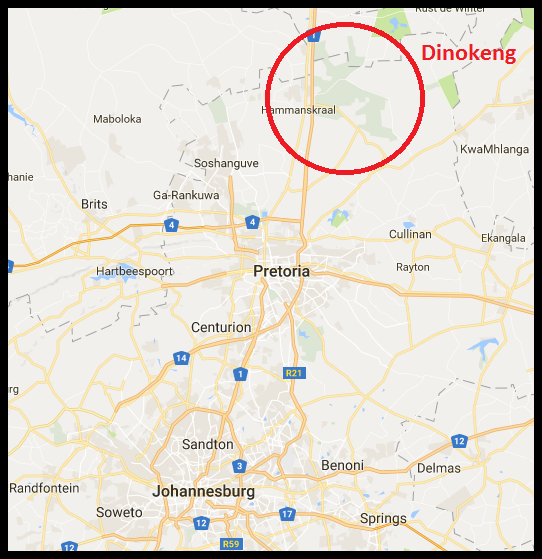
Dinokeng Game Reserve is easily accessed from the Hammanskraal offramp from the N1-highway heading north, around half-an-hour from Pretoria.

Dinokeng is located just north of Pretoria and easily accessible.

Dinokeng is located just north of Pretoria and easily accessible.


Addo’s Diversity

Addo Elephant National Park must be one of South Africa’s most diverse wild places, a fact really brought home as the plane flew over the Park on our way back to Johannesburg. What follows is just a selection of photos taken on a 24-hour working visit to Addo last week!

(I’ve shared pictures of Addo’s elephants and lions in seperate posts)


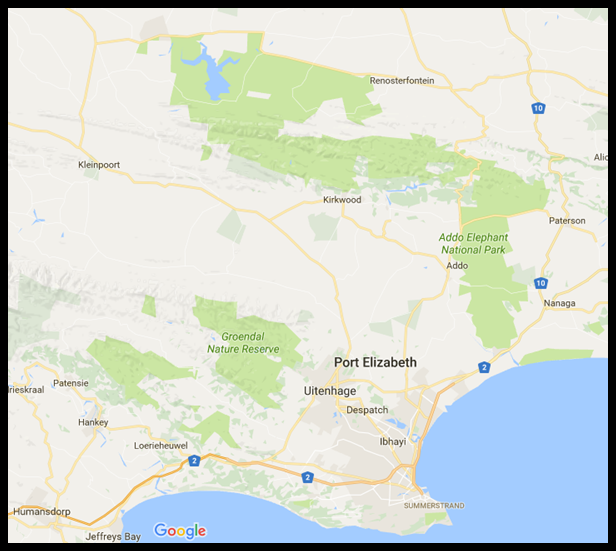
Addo Elephant National Park, managed by South African National Parks, is located in South Africa’s Eastern Cape Province, within easy reach of the city of Port Elizabeth’s modern airport along the recently upgraded N2 highway.

addo-location

Return to Kgaswane

Joubert and I have been planning a father-and-son camping trip to beautiful Kgaswane Mountain Reserve, and invited a few other dads and their sons to join us there this past weekend. It’s amazing just how quickly a weekend in the fresh mountain air surrounded by amazing scenery can fly past, especially when you have good company! I am also happy to report that we didn’t miss out on Kgaswane’s majestic sable antelope this time! Have a read here to learn more about Kgaswane.

Enjoying the first Spring Rains at Rietvlei

This past weekend allowed us our first brief escape from city life of the new season. Our day at Rietvlei Nature Reserve was blessed with the first, and very welcome, rainfall of Spring, although accompanied by a terribly windy cold front which put an early end to our plans for a nice picnic next to the dam. Happily the reserve’s wildlife came out to greet us in their numbers, despite the inclement weather.


Mokala National Park

The recent Women’s Day long weekend in South Africa allowed us the opportunity to visit Mokala National Park for the first time. Mokala is our country’s newest National Park, and in our opinion one of the most enchanting and underrated!

Mokala was proclaimed a National Park in 2007, and today covers over 28,000 hectares of sandy plains and rocky ridges, with plans to expand further. The Riet River forms a significant part of the Park’s northern border, while artificial water holes are dotted through the rest of the reserve. The thorny woodland vegetation is dominated by iconic Camel Thorn (Mokala in Tswana) and Umbrella Thorn (Mosu in Tswana, Haak-en-Steek in Afrikaans), with extensive areas of open grasslands. The Park gets an average of only around 400mm of rainfall annually, most of it in summer, when temperatures can soar into the forties on the Celsius scale. Temperatures on winter nights on the other hand often falls below freezing, which we can certainly vouch for having seen the Stofdam entirely frozen over on our last morning at Mokala.

Mokala offers some brilliant visitor facilities. The two main accommodation options are self-catering chalets at Mosu Lodge and Lilydale Rest Camp (with grand views over the Riet River), each located near to one of the Park’s two entrance gates, while Mofele Lodge provides dormitory style accommodation for big groups. Haak-en-Steek Cottage is a private hide-away for small families (more on that in the next paragraph) and Stofdam Hide has four bunks that can be booked for one night at a time. The Park also has a stunning tree house available, with plans afoot to construct more. Each of the sites at the small Motswedi Camping Area provides a private kitchenette and ablution block with shower and toilet. The interpretation centre near Mofele offers fascinating insights into the Park’s history and management. The Park’s gravel road network is in fair condition, and for the most part easily traversable in a sedan. There’s no fuel station in the Park – the nearest is at Modder Rivier, a small town just a few kilometers from the Park. Mosu has only a tiny selection of souvenirs and a few essential groceries for sale, so it is best to stock up on provisions before arriving or to take your meals in Mosu’s excellent restaurant. Mosu also has a small venue for conferences. Two picnic sites cater for the needs of day visitors to the Park. Guided game drives and walks, including visits to San Rock Art sites, accompanied by knowledgeable ranger-guides can be booked through Mosu’s reception, while catch-and-release fly fishing for yellowfish in the Riet River is a popular excursion available from Lilydale.

We stayed at the secluded Haak-en-Steek Cottage, a lovely two-bedroomed unit with gas appliances in the small kitchen and solar powered lighting, in the west of the Park. The cottage has a fantastic view over its own waterhole, especially well frequented in the afternoon and early evening hours by a steady procession of game and birds coming to quench their thirst. A few campsites are available to house additional guests when Haak-en-Steek is booked by larger parties, but it is only ever sold to a single group at a time, offering fantastic privacy. Haak-en-Steek is not surrounded by a fence, and game often moves straight past the cottage on their way to the water.

Mokala’s located in the transition zone between the arid west and wetter east of the country, and as such offers a haven to a wide variety of big game in impressive numbers. Black and White Rhinoceros, Buffalo, Giraffe, Plains Zebra and Warthog share the Park with no less than 17 species of antelope: Blue and Black Wildebeest, Red Hartebeest, Blesbok, Tsessebe, Springbok (including copper-coloured and black specimens), Grey Duiker, Steenbok, Klipspringer, Impala, Roan Antelope, Sable Antelope, Gemsbok (Oryx), Kudu, Nyala, Eland, Mountain Reedbuck and Waterbuck. In fact, the Park really deserves its tagline of “Where Endangered Species Roam”, as it is probably the best place in South Africa to see endangered Tsessebe and Roan Antelope (both of which we’ll feature in more detail soon here at de Wets Wild).

Visitors should not however keep their eyes open only for the bigger mammals, as Mokala is also home to a wide variety of smaller creatures, many of them rarely seen in other reserves.

Although only recently proclaimed, Mokala’s bird list is already over 150 species strong, ranging from the booming population of ostrich to the sociable weavers with their spectacular mansions.

Mokala National Park is located in the Northern Cape Province, approximately 60 to 80km to the south of the historic diamond-mining city of Kimberley, depending on which gate you are heading for, and accessible from the N12 national highway, from which gravel roads leading to the gates at Mosu and Lilydale turn off. These roads are not always in the best condition, but you shouldn’t let that deter you from experiencing the thirst-land paradise that awaits you. We’ve already started planning our next trip to Mokala!

Mokala location

Mokala location

Baobabs and Owls in Mopani

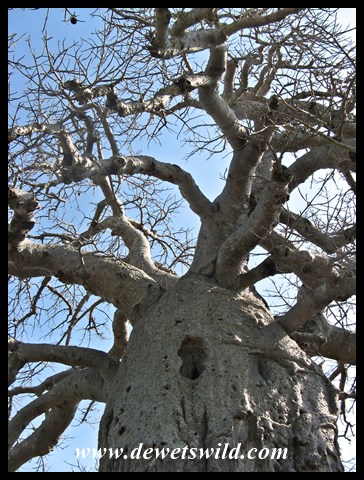
Inside Mopani Rest Camp in the Kruger National Park grows a most impressive specimen of a Baobab, which has now been selected as a nesting site by a pair of barn owls. During the day they remain well hidden, but during a night-time walkabout we were thrilled to see one of the pair pluck a thick-knee out of the air in mid-flight!

Kruger Funnies

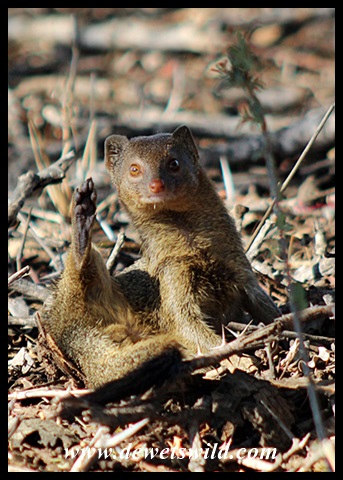
Before we get to some of the more dramatic stuff, let’s share a few funny shots taken during our recent winter visit to Satara and Mopani in the Kruger National Park.

Sweeping views over the Olifants

Olifants Rest Camp, Kruger National Park

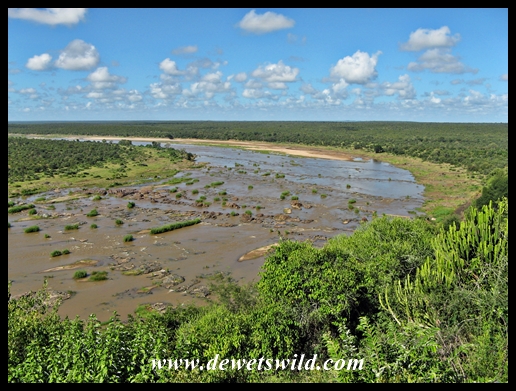
Olifants Rest Camp undoubtedly offers the best views of any of the Kruger National Park‘s camps, situated as it is on a cliff high above the Olifants River in the central regions of the Park. Many guests spend all day on their accommodation unit’s veranda, using their binoculars to scan the river below and the plains beyond for wildlife, or simply soaking in one of the grandest vistas in wild Africa.

Olifants was opened in June 1960, though it was closed for a 16 month period in the early 1970’s after a fire destroyed the reception, restaurant and shop. The cliff-top viewpoint near the restaurant is one of the most popular spots in the entire Park, and during the day is always packed with spectators enjoying the wildlife show along the river banks below. The camp offers guests a choice of 112 accommodation units, ranging from 2 and 3 bed bungalows to two luxurious and very exclusive guest houses that accommodate up to 8 guests each. Some of the accommodation units have been built right on the edge of the cliff, offering guests the most exquisite views, but you have to book a year in advance if you want to secure one of those. The two-bedroomed cottage number 14 is a personal favourite of ours. Olifants also offers guests a Mugg & Bean restaurant (itself with stunning views), a shop, filling station, small meeting room, swimming pool, picnic area for day visitors and guided activities.

Nearby, tiny Balule is a much more rustic camp offering accommodation in a small camping area and six very basic three-bed huts on the southern bank of the Olifants River. The huts were built in 1930 in the “Selby” style: a rondavel (round hut) without any windows, just a gap all around between the roof and wall for ventilation. The huts share a communal kitchen (with a paraffin freezer) and ablution block, and the same applies to the camping sites. Balule has no electricity and paraffin lamps are used to provide light at night. During the Apartheid years Balule was available only to non-white visitors.

Just outside Balule, a low level causeway crosses the Olifants River. The pontoon-crossing that operated over the river since 1929 was replaced by the causeway in 1937, but the old bridge was extensively damaged in the massive floods of January 2012 and had to be rebuilt. The high-span bridge across the same river, on the main tarred H1 route through the Park, lies about 5km due west from Balule and affords visitors the opportunity to stop and stretch their legs while enjoying the views up- and downstream. Both bridges are very popular with guests to Olifants, as they allow close-up views of so many of the river’s denizens.

South of Olifants, the roads initially follow the course of the river before leading down to the Satara-area. Nwamanzi offers more spectacular views over the Olifants, and the open plains south of the river host a huge number and variety of game and birds. Bangu waterhole and the Hlahleni stream crossing on the S90, as well as the Ngotso Weir on the S89, are especially rewarding spots to wait for the herds (and the predators that prey on them) to come and drink.

North of Olifants you enter the mopane-dominated northern plains of Kruger. There’s two general options of routes leading northwards from Olifants, both leading to Letaba Rest Camp. The quickest route follows the tarred H8 and H1-5 roads and is often very quiet game viewing-wise, especially once the road turns away from the river. The gravel S44, S93 and S46 roads follows the course of the Olifants and Letaba rivers through some very rocky terrain with several stream crossings and, apart from a lovely viewing point downstream from camp and the historic Von Wielligh’s Baobab, usually also offers lots more wildlife to see.

For scenic splendour alone, there’s no other camp in Kruger that can compete with Olifants. Combine that with the camp’s great facilities and excellent game viewing drives in the vicinity, and you’ll understand why it has become a firm favourite with many Kruger visitors.


Lower Sabie Rest Camp, Kruger National Park

Lower Sabie must be the most popular destination in the Kruger National Park. It is exceedingly hard to get a booking here if you don’t book a year in advance. In peak season, even just finding parking to visit the shop or restaurant can be a challenge, as visitors from all over the the southern sections of the Park flock to the camp. The camp’s location on the banks of the Sabie River, in an area of exceptionally high-quality grazing in the south-eastern corner of the Park, ensures that its surrounds is frequented by an astounding variety and number of herbivores and their attending predators, making for game-viewing heaven!

Lower Sabie (22)

The Sabie River got its name from the Shangaan word “saba” meaning fear, probably due to the large number of enormous crocodiles that call the river home. The dam in front of the camp came about after the causeway across the river was built in 1987 (it had to be rebuilt higher after the floods in February 2000).

The first tourist accommodation at Lower Sabie was a 5-bedroom house converted from ranger Tom Duke’s quarters in 1930, but this was demolished again just two years later after becoming dilapidated. The only access to Lower Sabie was via Gomondwane from Crocodile Bridge until the road from Skukuza reached it in 1931. The next attempt at providing guest accommodation at Lower Sabie then commenced in 1936, when three buildings, built in a u-shape and each housing six bedrooms, were erected – these units are still used as accommodation to this day, but has been extensively renovated since. Over the years, more accommodation and a camping site was added to the camp, leading up to an extensive project to revamp and enlarge Lower Sabie in the early 2000’s. Today the camp provides overnight accommodation in 117 huts, bungalows, cottages and safari tents and has space for 34 caravans and tents in its camping area. Lower Sabie’s restaurant (Mugg & Bean), with its deck overlooking the Sabie River, is especially popular. The camp has a well stocked shop for groceries and curios, a fuel station, swimming pool for overnight guests and a day visitors picnic area near the gate. Along the river, in front of the bungalows south of the restaurant, lush lawns and deep shade provided by enormous trees is just the place to spend a lazy afternoon, surrounded by Lower Sabie’s prolific birdlife.

We can certainly recommend joining at least one of the guided activities on offer from Lower Sabie, as excellent sightings are almost guaranteed.

Sunset Dam is a brilliant spot just a kilometer from Lower Sabie, and as its name suggests is very popular with visitors whiling away the last minutes before they have to get back to camp in the evening. You can park your vehicle right on the water’s edge, allowing excellent photographic opportunities of hippos, crocodiles, wading birds and herds of game coming to quench their thirst.

Heading north from Lower Sabie along the H10 tarred route to Tshokwane, you’ll encounter the first highlight of this route just minutes after leaving camp. The causeway across the Sabie River is a favourite spot for many visitors, who flock here to enjoy glorious sunsets and an abundance of game and bird species attracted to the water. The plains between Lower Sabie and Tshokwane is home to incredible herds of zebra and wildebeest at the end of winter, and is also an excellent place to look for reedbuck, one of the rarer antelope that occurs in Kruger. Of course, with so many herbivores roaming around it stands to reason that the predators are not far behind. If you, like us, enjoy your game viewing with as little other traffic as possible, try the gravel S29, S122 and S128 loops that turn off the main road as alternatives to explore this area. Two other beautiful places not to be missed is Mlondozi Picnic Spot, overlooking a large dam from Muntshe mountain, and Nkumbe Viewpoint, which offers an exceptional view over the open plains of Kruger.

The tarred H4-2 Gomondwane Road leading south to Crocodile Bridge is another very productive route for game viewing, though we personally prefer taking the gravel loops running roughly parallel to the main road (S28 Nhlowa Road, S82 Mativuhlungu Loop, S130 Gomondwane Loop and S137 past Duke’s waterhole) as these carry a little less vehicle traffic.

The H4-1 road between Lower Sabie and Skukuza carries more traffic than any other road in Kruger, and not without reason. There’s an excellent chance of seeing all the “big 5” game animals and so much more along this route, which follows the course of the Sabie River, on just one drive. The vegetation along the portion of this road nearer Lower Sabie is much more open than the stretch between Nkuhlu and Skukuza, making for even better game viewing. Keep your eyes open for lions and leopards at the rocks at the Lubyelubye stream crossing about 5km from Lower Sabie, as this is one of their most reliable haunts. Also, don’t miss the short S79 gravel loop that crosses the Nwatimhiri causeway, which is another favourite spot for feline predators. Nkuhlu Picnic Spot is a great place to get out, stretch the legs and have a bite to eat (though beware the monkeys and baboons that hang around here, as they will attempt to steal your picnic if they get even the slightest chance!). The gravel S30 Salitje Road along the northern bank of the river is a wonderful alternative route back to Lower Sabie.

If all these photos did not convince you, allow us to reiterate: Lower Sabie IS game-viewing heaven! Remember to book early if you also want to enjoy all it has to offer.