We were still very fresh into our latest visit to the Satara area of the Kruger National Park when, on the 14th December, we came across a pack of seven African Wild Dogs, or Painted Wolves, near the Nsemani Dam on the H7 road leading to Orpen. To find such rare animals so early into our Kruger visit really was a good omen of things to come, and we were very excited even with the dogs resting so sedately in the heat of the late afternoon.

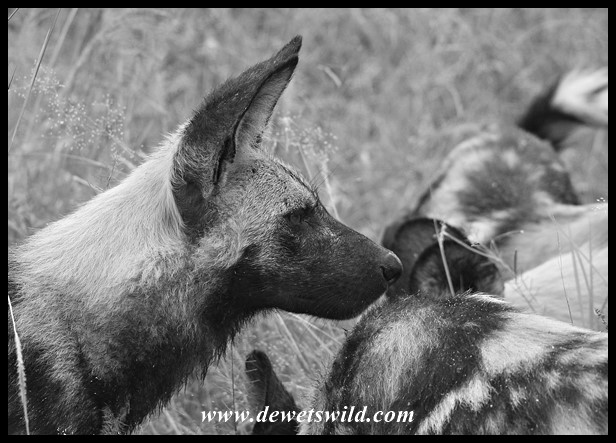
Painted Wolves, or African Wild Dogs, on the road between Orpen and Satara

Painted Wolves, or African Wild Dogs, on the road between Orpen and Satara

Painted Wolves, or African Wild Dogs, on the road between Orpen and Satara

Painted Wolves, or African Wild Dogs, on the road between Orpen and Satara

Painted Wolves, or African Wild Dogs, on the road between Orpen and Satara

Painted Wolves, or African Wild Dogs, on the road between Orpen and Satara

Painted Wolves, or African Wild Dogs, on the road between Orpen and Satara

Painted Wolves, or African Wild Dogs, on the road between Orpen and Satara

Painted Wolves, or African Wild Dogs, on the road between Orpen and Satara
In the early morning of the 30th December we had just finished breakfast at the Muzandzeni Picnic Spot when the attendant alerted us to a pack of Wild Dogs rapidly approaching. We were just in time to see 10 of them run past the picnic spot and into the marshy area covered by long grass next to it. They paused a while on a little rise and then continued running, clearly seriously on the hunt. We decided to try and find them again on one of the roads leading from Muzandzeni.

Wild Dogs passing Muzandzeni (photo by Joubert)

Wild Dogs passing Muzandzeni

Wild Dogs passing Muzandzeni

Wild Dogs passing Muzandzeni

Wild Dogs passing Muzandzeni
As we left Muzandzeni we found three Spotted Hyenas following behind the Wild Dogs, no doubt hoping to score an easy meal.

One of the Spotted Hyenas on the trail of the Wild Dogs

One of the Spotted Hyenas on the trail of the Wild Dogs

One of the Spotted Hyenas on the trail of the Wild Dogs
First we tried turning south on the S36, but quickly realised that it leads away from the direction we last saw the dogs heading into, so we turned around. The S126 Sweni River Road might be the better option. Just as we started thinking following the S126 might be a lost cause too, we saw a hyena loping along. And then, just around the next corner, two dogs in the road – we found them again! Pretty soon all ten dogs were running in the road ahead of us, with the hyenas following some distance behind and just visible in the rear view mirrors every now and then. We followed the dogs for almost 10 kilometers, over the course of an hour-and-a-half, while they hunted. Every now and then they’d pause, take a scent trail leading into the long grass to disappear from view, only to return to the road a minute or two later. The dogs, with us in tow, decided against taking on a big warthog boar and then actually passed an impala ram standing in the long grass, not any the wiser how close he was to death. Just short of the Welverdiend waterhole however the dogs must have picked up a very promising lead as they left the road a final time, ears pulled back and bodies kept low to the ground. We waited around for several minutes, then searched up and down the road for a few kilometers either side of where we last saw them, but they didn’t re-appear. This probably means that they were successful at their kill.

Wild Dogs hunting along the S126, 30 December 2021

Wild Dogs hunting along the S126, 30 December 2021

Wild Dogs hunting along the S126, 30 December 2021

Wild Dogs hunting along the S126, 30 December 2021

Wild Dogs hunting along the S126, 30 December 2021 (photo by Joubert)

Wild Dogs hunting along the S126, 30 December 2021

Wild Dogs hunting along the S126, 30 December 2021 (photo by Joubert)

Wild Dogs hunting along the S126, 30 December 2021

Wild Dogs hunting along the S126, 30 December 2021

Wild Dogs hunting along the S126, 30 December 2021 (photo by Joubert)

Wild Dogs hunting along the S126, 30 December 2021

Wild Dogs hunting along the S126, 30 December 2021 (photo by Joubert)

Wild Dogs hunting along the S126, 30 December 2021

Wild Dogs hunting along the S126, 30 December 2021

Wild Dogs hunting along the S126, 30 December 2021 (photo by Joubert)

Wild Dogs hunting along the S126, 30 December 2021 (photo by Joubert)

Wild Dogs hunting along the S126, 30 December 2021

Wild Dogs hunting along the S126, 30 December 2021

Wild Dogs hunting along the S126, 30 December 2021

Wild Dogs hunting along the S126, 30 December 2021 (photo by Joubert)

Wild Dogs hunting along the S126, 30 December 2021 (photo by Joubert)

Wild Dogs hunting along the S126, 30 December 2021

Wild Dogs hunting along the S126, 30 December 2021

Wild Dogs hunting along the S126, 30 December 2021

Wild Dogs hunting along the S126, 30 December 2021
Our plan for the morning of 31st December was a slow drive to a picnic breakfast at N’wanetsi. Our meal plans were slightly delayed however when we found another pack of Wild Dogs – nine animals – not 200m from the picnic spot! The dogs had a fresh kill and most were still feeding deep in a bush and not very clear to the eye. We stayed a few minutes and then moved to the picnic spot for a much needed comfort break and a quick bite to eat. When we returned to the dogs the whole pack had moved into the open and treated us to wonderful views.

Wild Dogs at N’wanetsi

Wild Dogs at N’wanetsi

Wild Dogs at N’wanetsi

Wild Dogs at N’wanetsi

Wild Dogs at N’wanetsi (photo by Joubert)

Wild Dogs at N’wanetsi (photo by Joubert)

Wild Dogs at N’wanetsi (photo by Joubert)

Wild Dogs at N’wanetsi (photo by Joubert)

Wild Dogs at N’wanetsi (photo by Joubert)

Wild Dogs at N’wanetsi
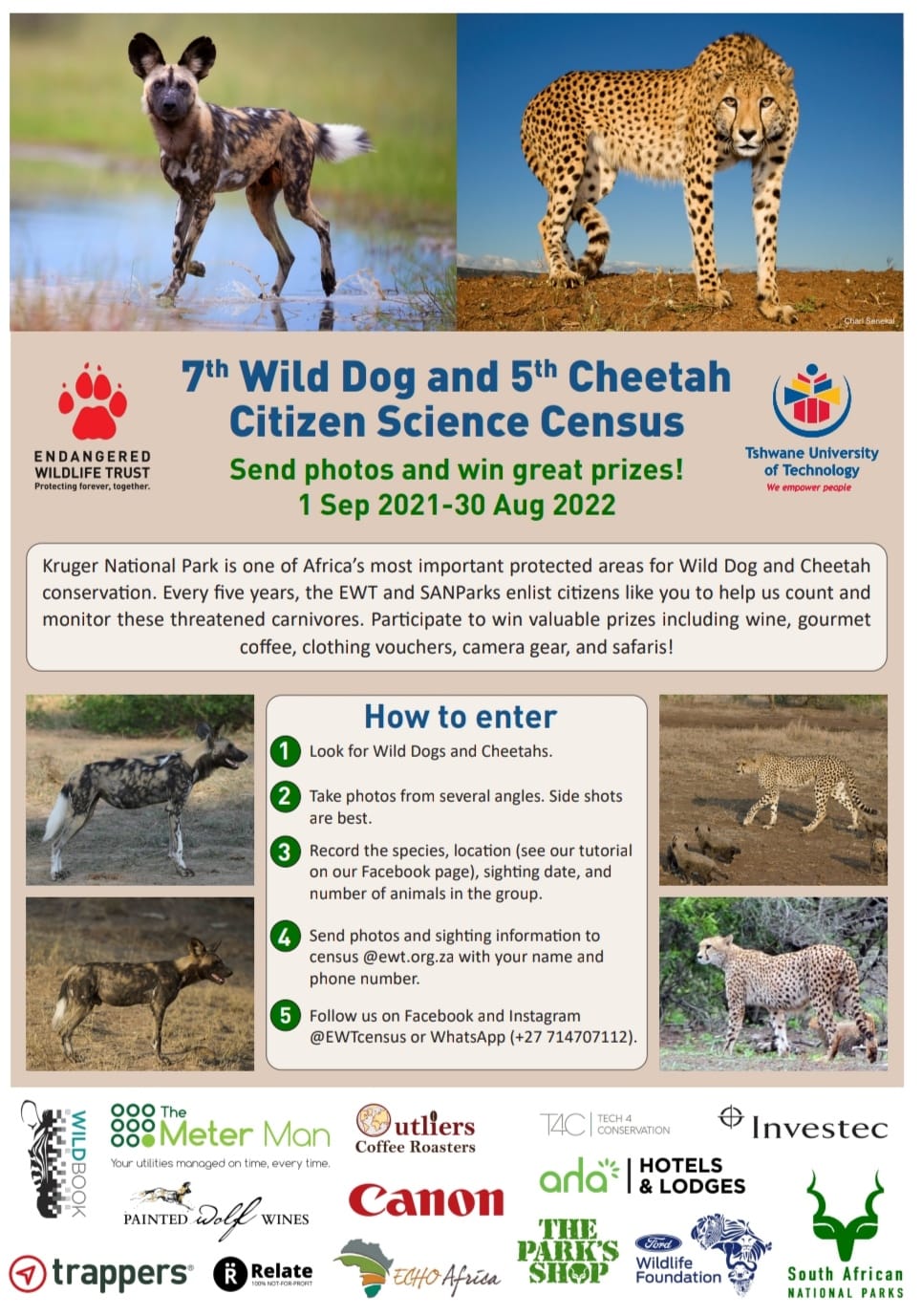
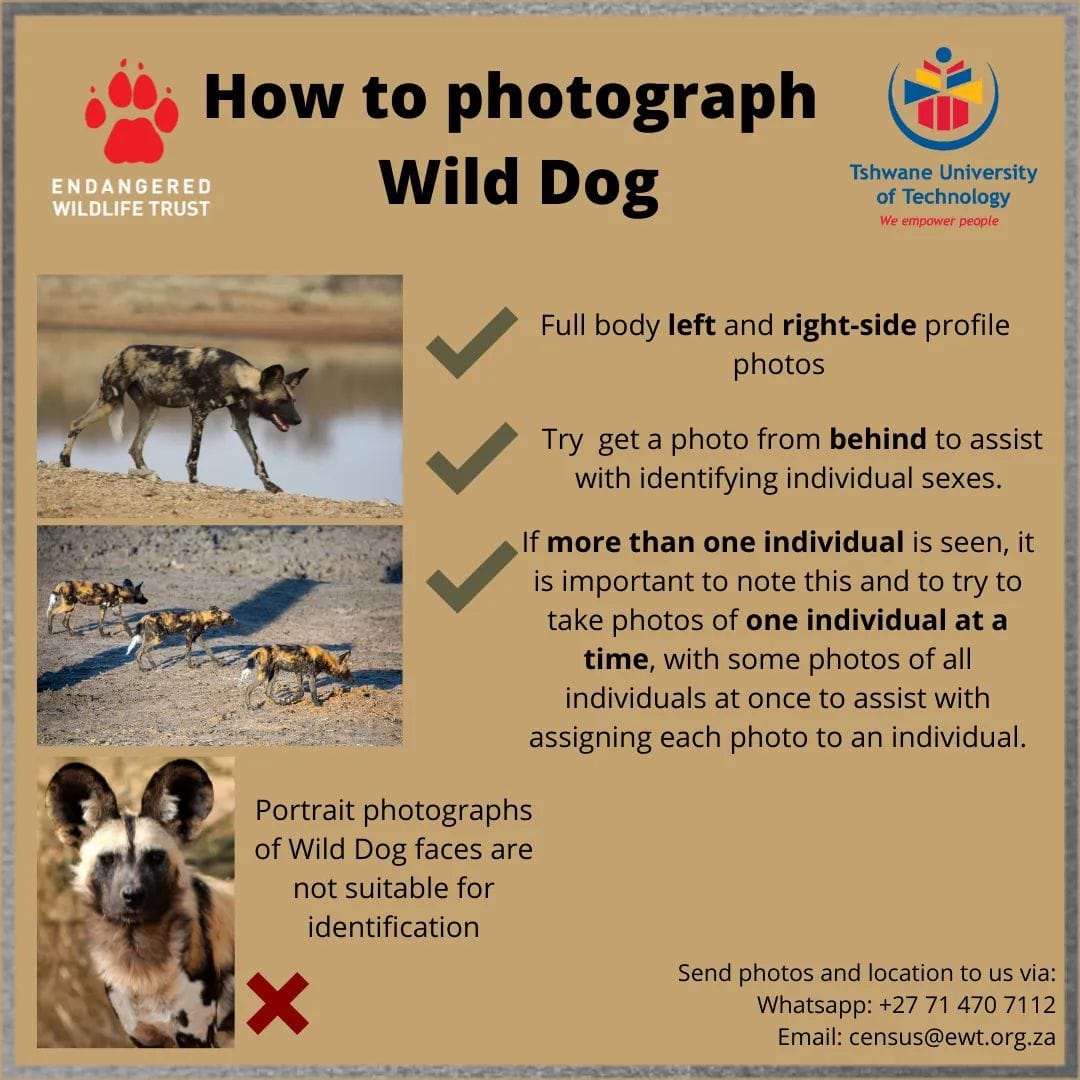
The African Wild Dog is endangered, not only in South Africa but across the whole continent, where its range has been drastically diminished. South Africa is home to approximately 500 of these beautiful animals, about half of which live in Kruger National Park and adjacent reserves. For us to have seen three different packs during our 3 week visit to the Park was extremely lucky! The Endangered Wildlife Trust is again calling on citizen scientists to submit photos of Wild Dogs (and Cheetahs) taken during visits to the Kruger Park to their 7th Wild Dog Census, and Joubert and I will definitely be making our contributions.




















 DeWetsWild