Tag Archives: nature

Layers

For this week’s photo challenge, themed “Layers“, we’re taking you back to one of our all time favourite destinations, the Golden Gate Highlands National Park, where the layers of differently coloured sandstone cliffs are the Park’s most recognisable feature.

(click on any of the images to see them enlarged)

Face to face with nature…

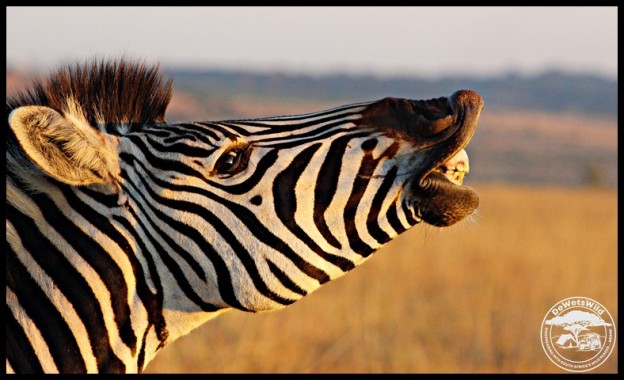
Joubert and I spent the afternoon strolling through our local Moreletakloof Nature Reserve today, encountering a variety of animals along the way and accompanied by a most relaxing chorus of birdsong.

Face-to-face_Moreletakloof_20131109_3

Face-to-face_Moreletakloof_20131109_2

Face-to-face_Moreletakloof_20131109_1


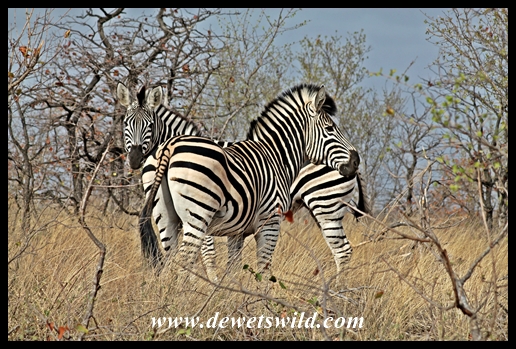
Plains Zebra

Equus quagga

Plains zebra_Kruger_9

The photogenic plains zebra is one of Africa’s most familiar and popular large game animals and they occur in good numbers in protected areas almost all over South Africa.

They occur in small and relatively stable family groups of up to 30 animals, consisting of a dominant stallion, up to nine mares and their foals of various ages. Young stallions are kicked out of their maternal groups at about the age of three years, and then band together in bachelor groups. Larger groups, that sometimes number into the thousands, are aggregations of these family and bachelor groups. Adults are normally very protective of the foals, though stallions will often kill foals when they take over a family group from another stallion.

Plains zebra inhabits open grasslands and bushveld and avoid densely vegetated areas. They are extremely dependant on water and need to drink daily, and subsists almost exclusively on a diet of grass.

Foals are born at any time of the year, though births peak around the start of the rainy season. The foals can stand and walk within twenty minutes of birth and are suckled until about 13 months of age. Adults weigh between 220 and 340kg (stallions being only slightly heavier than adult mares) and stand up to 1.4m high at the shoulder.

Zebras are a favourite prey of lions and spotted hyenas, and foals also often fall prey to leopards, cheetahs and wild dogs. As a result, their life expectancy in the wild is usually below 20 years.

One of the most inspiring conservation projects in South Africa is the breeding of zebras that resemble the extinct quagga (Equus quagga quagga), the southernmost subspecies of the plains zebra that was hunted to extinction in the late 1870’s, with the last specimen of this uniquely South African species of horse, a mare, dying in distant Amsterdam Zoo in 1883. Over a century later however it was realised, through DNA analysis, that the quagga was a localised race of the still extant plains zebra, and the Quagga Project came into being to try and bring them back through selective breeding. With each subsequent generation showing more and more quagga-like characteristics, one day we may again see true-to-form quaggas roaming their native country in vast numbers.

Punda Maria Rest Camp, Kruger National Park

Punda Maria, the Kruger National Park’s northern-most rest camp, is a unique place rich in character, history and natural beauty.
Pafuri

Pafuri

In 1919 Captain JJ Coetzer, after serving in the military in East Africa, was appointed to a new ranger post in the north of the then Shingwedzi Game Reserve. He named his base, at the Shikokololo fountain at the foot of Dimbo Hill, Punda Maria – a combination of punda milia, Swahili for zebra, after the first animals he encountered in the area, and his wife’s name, Maria, who reportedly loved wearing striped dresses.
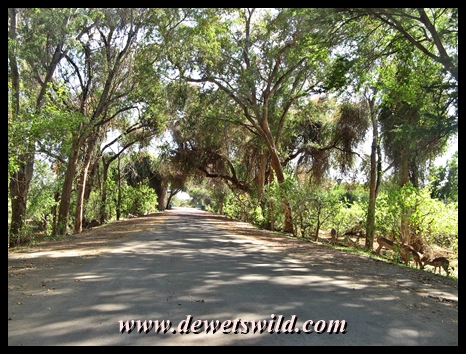
Pafuri

Pafuri

The original lattice-and-mud, white-washed walls and thatched roofs of the accommodation units constructed in 1933 are still used to house guests today. The interiors of the units were modernised in the 1980’s without altering the exterior appearance, preserving Punda Maria’s wilderness outpost atmosphere. The camp also offers two comfortable family cottages and seven two-sleeper safari tents, as well as a large camping area at the foot of the hill. Facilities in the camp includes a small shop, restaurant, filling station, laundry, swimming pool and a hide overlooking a flood-lit waterhole next to the perimeter fence. Guided drives and walks are available and the self-guided Paradise Flycatcher Trail that meanders through a piece of natural vegetation on the hillside within the camp allows an opportunity to get close to the small animals and numerous birds that call Punda Maria home.

The area around Punda Maria is exceptionally rich in plant, animal and bird life and is renowned for its scenic splendour.


Mahonie Loop is one of the prettiest drives in the Kruger National Park. The loop goes around Dimbo Hill, passes three waterholes and crosses several small streams. Even though the entire route is less than 30 kilometres in distance, there’s so much to see and enjoy that it usually takes several hours to complete.


To the south-east of Punda Maria, in the direction of Shingwedzi, Dzundwini hill rises from the surrounding mopane plains. Dzundwini Loop passes between the hill and a series of fountains that attract good numbers of game, especially during the dry season, and a short cul-de-sac takes one high up onto the hill to a scenic vantage point.

Dzundwini
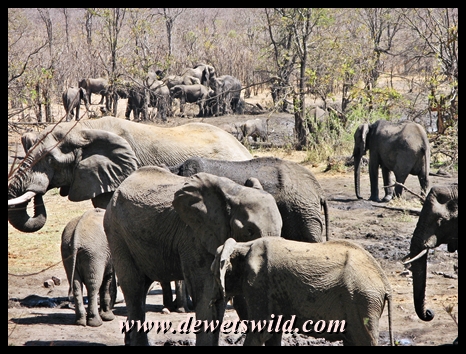
Dzundwini

Dzundwini

Dzundwini

Close to camp, on the S60 heading towards Pafuri, lies the long, flat hill of Gumbandebvu, regarded as sacred and haunted. The hill is named after a chief who’s daughter, Khama, was reputed to have had the gift of rain-making.
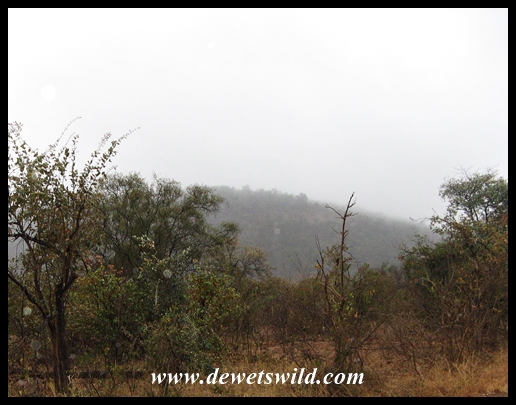
Khama working her rain-making magic over Gumbandebvu

Khama working her rain-making magic over Gumbandebvu

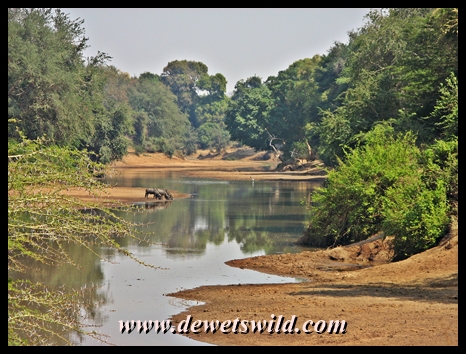
No visit to the North of the Kruger National Park would be complete without a pilgrimage to Pafuri. This is one of the Kruger’s most unspoilt areas and is regarded as one of the best birding locations in the entire country. The Pafuri Picnic Spot is a peaceful place to enjoy a leisurely meal or cool drink, watching the waters of the Luvuvhu River flow slowly past, with only the constant twittering of colourful birds, the call of a fish eagle, the bark of a baboon or the snort of a hippo to break the silence.

Thulamela, located on a hill overlooking the Luvuvhu River at the end of the short Nyala Loop, was a 16th century citadel from the same culture responsible for Great Zimbabwe. Artifacts found on the site is evidence of trade between this sophisticated hierarchical society and places as far afield as India, China and West Africa. Guided tours of the ruins can be undertaken from Punda Maria.

Thulamela Hill

Thulamela Hill

At the confluence of the Luvuvhu and Limpopo Rivers three countries meet – South Africa, Mozambique and Zimbabwe. Because all kinds of smugglers, bandits and poachers from the late 1800’s and early 1900’s could evade capture by the law-enforcement authorities of these countries by simply slipping across the borders, the area quickly became known as “Crook’s Corner”.
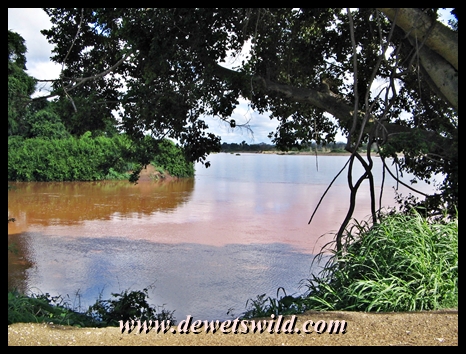
Crooks Corner

Crooks Corner

Crooks Corner

Crooks Corner

If you long to touch the wilderness, if you want to experience the Kruger National Park at its uncluttered wildest and if your pioneering spirit wants to drift back to more romantic times, then ensure that you include Punda Maria in your Kruger Park itinerary!

Pafuri

Pafuri

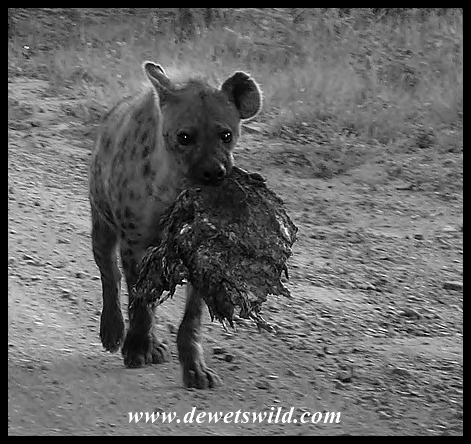
Eerie

A spotted hyena heading for home at first light in the Hluhluwe-Imfolozi Park, and carrying with him a sizable chunk of wildebeest…

Eerie

WordPress’ new theme for their weekly photo challenge is “Eerie

Ezemvelo Nature Reserve

We recently made our first visit to the privately owned Ezemvelo Nature Reserve, located just over 70 kilometres to the east of Pretoria, near the town of Bronkhorstspruit.

Ezemvelo entrance

Unfortunately the last twenty kilometres to the reserve’s entrance was a bone-shaking, teeth-rattling gauntlet along an extremely corrugated gravel road and we suspect many visitors turn around before they reach the reserve because of it. That’s a real pity, as we quickly found out that Ezemvelo is a gem of a place.

Ezemvelo scenery

The reserve protects a fairly sizeable piece (4000 hectares) of typical Highveld grassland vegetation interspersed with wooded “koppies” (hills), and is watered by the Wilge River and some of its smaller tributaries. This diversity of habitats allows Ezemvelo to host a wide variety of game, including leopard, brown hyena, and both black and blue wildebeest, and almost 300 bird species have been recorded here.

Visitors can take on one of the many walking trails or cycle around the reserve to their heart’s content. Guided horse trails and day-or night game drives can be arranged, but the reserve also has an extensive network of roads that you can traverse in your own vehicle (though some sections are more suited to vehicles with high ground clearance). A swimming pool, dam (for fishing), putt-putt course and picnic sites are all available for visitors’ enjoyment. Chalet accommodation and a very shady and inviting camping area are available near the main reception complex, which also has a little shop with limited supplies. The two rustic hiking huts are beautifully located below a cliff and overlooks a pool in a small stream that is obviously a popular watering hole for many animals, while the three family huts nearby are situated in a rocky environment high above the river course below.


On the whole we were very impressed with Ezemvelo Nature Reserve. It offers a relaxing atmosphere, great facilities, a variety of experiences, good sightings of a wide variety of birds and animals and inspiring scenery. We will definitely return (but next time we’ll just phone ahead to hear what condition the access road is in).

Ezemvelo scenery

Horizon

Sunset over Chelmsford Nature Reserve showing off Leokop and a lone Acacia on the horizon

Horizon

Horizon” is the newest weekly photo challenge theme from WordPress

Oribi Gorge

The deep valley of the Umzimkulwana River is one of the most spectacularly scenic areas of Kwazulu-Natal. Known as the Oribi Gorge, this haven for nature lovers and thrill seekers is located just over 20 km inland from Port Shepstone, on the Natal South Coast.

Oribi Gorge

Oribi Gorge

The Oribi Gorge Nature Reserve, under the auspices of Ezemvelo KZN Wildlife, the provincial conservation authority, was proclaimed on the 1st of April 1950 (having been protected as the Umzimkulwana State Forest since 1928). The reserve covers 1,917 hectares, the majority of which lies inside the valley of the Umzimkulwana, which meanders for a distance of almost 27km through the reserve. The gorge itself varies in width from a half to one kilometer and is up to 400 meters deep in places. Habitats in the reserve comprises mostly coastal forests, with grasslands covering the plains around the gorge, providing a safe home to a wide variety of flora, with over 500 species of plant identified, and fauna, which includes rarities like the samango monkey and blue duiker, and over 250 species of birds. Some lucky visitors even encounter leopard from time to time, or caracal like we did. Accommodation and camping is available in a small rest camp, complete with a reservoir swimming pool, while there are numerous beautiful picnic spots and view-sites along the tar road that travels down into the gorge along an old elephant path. The reserve is best explored along the many hiking trails that radiate through the gorge.

On the property of the Oribi Gorge Hotel are a number of sites, accessible for a small fee, offering spectacular views over the gorge and the river far below. It is also home base to Wild 5 Adventures, a company specialising in outdoor adventure activities. Thrill-seekers can enjoy abseiling down a cliff next to a waterfall or white-water rafting, a zipline crossing a portion of the gorge, or the highest swing in the world, at 165 meters!

At the privately owned Lake Eland Game Reserve, where accommodation and camping, and a restaurant, is available, visitors can enjoy picnics, self-drive or guided game and bird viewing, cycling, horse riding and fishing. The 80 meter long suspension bridge over a section of the gorge gets the heart racing, while the 4.5 km zipline tour, the longest in Africa, of which one section crosses 300 m across the gorge, is probably not for the faint-of-heart…

With the beaches of the South Coast less than half-an-hour’s drive away, and offering such a variety of leisure and adventure activities while surrounded by natural beauty, the Oribi Gorge definitely is an attractive holiday destination for the whole family.

The Hue of Us

Given our love for South Africa’s wild places, the earthy, natural colours would probably describe us best…

Hues

This picture was taken at Pafuri, in the far north of the Kruger National Park and we post it here in response to the latest weekly photo challenge from WordPress; “The Hue of You

Ezemvelo Nature Reserve, 13 October 2013

We spent our Sunday enjoying nature and each other’s company at Ezemvelo Nature Reserve, a new destination for us, located about 75km east of Pretoria.

Ezemvelo_13102013

We’ll share more photos and our impressions of Ezemvelo in an upcoming post.