Tag Archives: nature

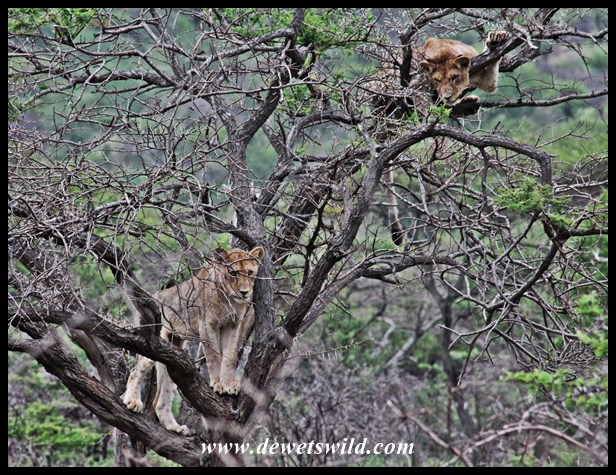
Hluhluwe-Imfolozi’s tree climbing lions

Lions are not generally known for their tree-climbing abilities, and there’s only a handful of prides on the African continent that seem to have this skill and regularly use it. We’ve often heard of Hluhluwe-Imfolozi‘s lions‘ tree-climbing tendencies, but we never saw this for ourselves, despite visiting the Park frequently and enjoying many sightings of these regal cats there.

That is until early morning on Boxing Day 2014, and what an unbelievable sight! We found a lioness (on the ground) with two rather large cubs in a small thorn tree. I did not think that something as big as a lion could get so high up in a flimsy-looking thorn tree, and then be so well camouflaged at that!

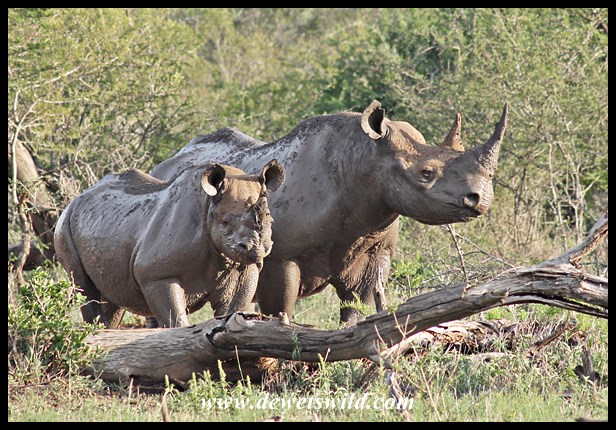
In the rhinos’ home at Hluhluwe-Imfolozi

Hluhluwe-Imfolozi Park is the place where the southern white rhino was saved from the brink of extinction in the previous century, by legendary conservationists like Ian Player. Today, the white rhino, and it’s smaller but much more aggressive cousin the black rhino, still find protection in this beautiful reserve, one of the oldest on the continent, where a force of dedicated rangers face a daily onslaught from armed poachers on their behalf.

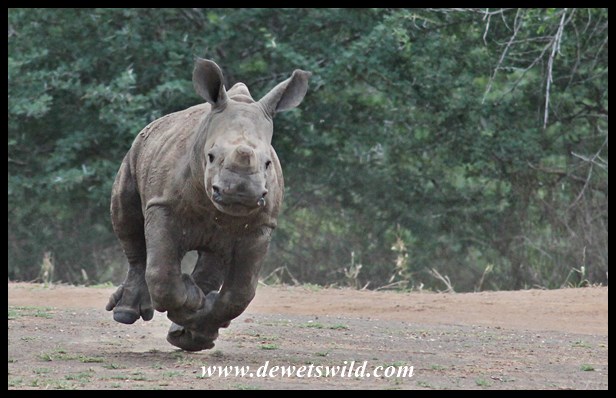
During our December visit to Hluhluwe-Imfolozi, we enjoyed some wonderful rhino sightings, not least of which the cute and playful little white rhino calf we told you about earlier in the week.

This little fellow, one of the tiniest baby rhino we’ve ever seen and probably not much older than a few weeks, gives us hope that the hard-work of Hluhluwe-Imfolozi’s ranger-corps will not be in vane.


Rule of thirds

Joubert and his grandpa heading for the swimming pool at Glen Reenen, in the Golden Gate Highlands National Park

Rule of thirds

Rule of thirds” is the theme for this week’s WordPress Photo Challenge.

Basically, the Rule of Thirds asks you to imagine a tic-tac-toe grid over the thing you’re photographing, and suggests that you put your subject at one of the four spots where the lines intersect

The exuberance of youth

We had plenty of wonderful sightings during our recent three week long holidays in the bush – we already shared much of it with you, and there’s yet more to come in the next few weeks – but this was probably the biggest highlight of the trip!

Late in the afternoon of Christmas Eve, in the Hluhluwe-Imfolozi Park, we encountered a white rhino cow and her small calf just where the road goes into and through a thicket of thorny trees. We followed slowly behind as they ambled along, until eventually there was a clearing in the vegetation, just at the spot where there’s also a broad bend in the road. Mom started grazing on the roadside, while her little one decided it was time for some fun. He started running like crazy, at times flying with all four feet off the ground, running circles around his mother and us, then slamming on the brakes in a cloud of dust. Several times he’d charge directly at our vehicle, stopping a meter or two in front of us, only to spin around again, running away at breakneck speed, likely hoping that our silver-grey Jazz was a playmate he could chase and be chased by. Of course, with mom keeping an eye on his antics from close-by, there was no way we could join him for playtime. But inside the car we were laughing out loud in sheer delight.

Eventually he realised that his mom has disappeared around the corner, and he hightailed it to catch up. As we rounded the bend ourselves, we found him next to mom, totally breathless.

We were in awe of the fantastic Christmas present Hluhluwe-Imfolozi had just gifted us.

(you may click on the photos below to view them all in a carousel gallery)

Southern Reedbuck

Redunca arundinum

As its name suggests, the reedbuck is an antelope with very special habitat requirements; occurring in reedbeds and areas of long, often flooded, grasslands, always within easy reach of a permanent water source.

Reedbuck (8)

Rams are slightly larger than the ewes, standing approximately 90cm high and weighing as much as 80kg. Only the males carry horns, that normally reach lengths of around 38cm.

Reedbuck live alone, in pairs or in small family groups within a territory defended by a mature ram, while the ewes dictate where and when the group moves. They graze mostly from dusk to dawn, preferring to hide in shady reedbeds and patches of long grass during daylight hours. They are not very fast nor agile, and rely heavily on camouflage to evade predators (all of Africa’s large meat-eaters prey on reedbuck). Ewes give birth to single lambs, mostly in the rainy season, and hide them away for two to four months before joining up with the family group again.

In South Africa, the reedbuck occurs mostly in the wetter eastern part of the country. While there’s a small population of reedbuck in the Kruger National Park (sightings there are special treats), the country’s (and probably the continent’s) biggest concentrations can be found along the shores of Lake Saint Lucia, in the iSimangaliso Wetland Park in Kwazulu-Natal Province. We’ll share some photos from our December visit to the Western Shores of Lake St. Lucia with you in our regular Friday post this week.

Reedbuck (2)

Fight for dominance

We were fortunate to witness these two plains zebras settling a dispute at Ithala Game Reserve, during our recent summer visit there. They were so close to our vehicle we almost felt every bite and kick they dealt one another…

More from Ithala soon!


The Oribi

Ourebia ourebi

The long-legged oribi (oorbietjie in Afrikaans) is a small antelope, and one of the most special wildlife sightings you could hope for in South Africa.

Oribi (8) Oribi (7)

They stand only between 50 and 65cm high at the shoulder, and weigh around 14kg. Only the males carry the sharp little horns that average between 10 and 13cm long.

Oribi (4)

These dainty antelope have very specific habitat requirements, preferring grasslands and floodplains with just the correct mix of short (for grazing) and long (for hiding) patches of grass. They also have very specific preferences as to the type of short grasses they feed on and, while they often occur near water, do not appear to drink very regularly, if at all.

Oribi (9)

Oribis are the most social of the smaller antelope species; the most commonly encountered grouping being a single territorial ram with up to four adult ewes and their lambs.

Oribi (6)

Oribi grazing next to the Kamberg Road

Oribi rams are territorial, and the family groups are extremely reluctant to leave their home ranges, even when being pursued (they prefer sprinting short distances to hide in long grass). For this reason, they suffer more than most dwarf antelope from predation and poaching.  In South Africa, most lambs are born in the summer months of November and December and remain hidden for up to 4 months before they join their mother’s family group. They have a natural lifespan of 8 to 13 years.

Oribi (5)

Today, the oribi is one of South Africa’s most endangered mammals, although in many other parts of Africa they are still quite numerous. Their favoured grassland habitat is prime for farming and thus getting ever scarcer and more fragmented, while illegal hunting with dogs is a further risk to their continued survival. Nevertheless, a substantial portion of the population still occurs on private land, and the Oribi Working Group’s annual census is an important tool to establish population sizes and trends.

Oribi (3)

South Africa’s biggest single population of oribi occurs in the Chelmsford Nature Reserve in Kwazulu-Natal Province. Chelmsford was the first destination on our recent summer holidays in the bush, and we’ll soon share more about our latest visit there with you.

Oribi (2)

Magnificence embodied

This must surely rank as one of the most special wildlife encounters we’ve ever had.

We came across this beautiful black rhino cow and her two younger companions (at least one, maybe both, her calves) in December in one of the game reserves we visited on our summer trip to the bush. It was an overcast evening, with the little available light fading fast and perfectly accentuating the cow’s aggressive temperament, so characteristic of the species.

Long may she reign over her piece of African wilderness.

(click on any of the images to view them in a bigger format gallery)

Yellow

The grasslands of the Golden Gate Highlands National Park are a tapestry of wild flowers and seeding grasses in summer. Among these are some brilliant yellow varieties.


We’re catching up on the WordPress Photo Challenges we missed while on our extended summer holidays in the bush. “Yellow” was the theme for the challenge of 19/12/2014

Twinkle

The sun reflecting from a rapid in the Golden Gate Highlands National Park’s Little Caledon River

Twinkle

We’re catching up on the WordPress Photo Challenges we missed while on our extended summer holidays in the bush. “Twinkle” was the theme for the challenge of 12/12/2014