Many of our friends here at de Wets Wild are great fans of cheetahs, so they especially would be thrilled to know that we had three wonderful encounters with these lithe cats during our December visit to Hluhluwe-Imfolozi Park.
This tiny vervet monkey, playing with his toes and being amazed by the things he sees around him in the Hluhluwe-Imfolozi Park’s Hilltop Camp, must be one of the cutest things I’ve seen in a long time!
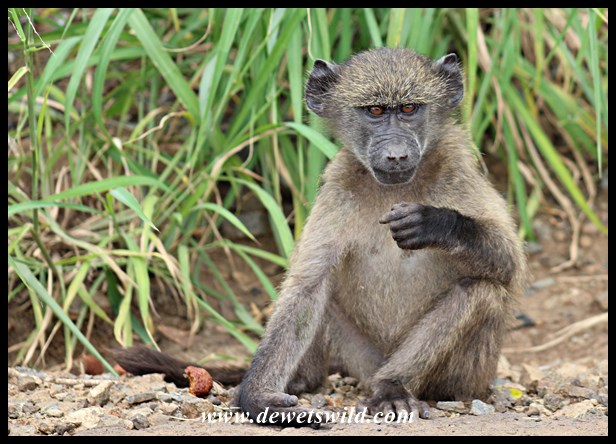
This baboon youngster on the other hand reminds me of that evil doll Chucky…

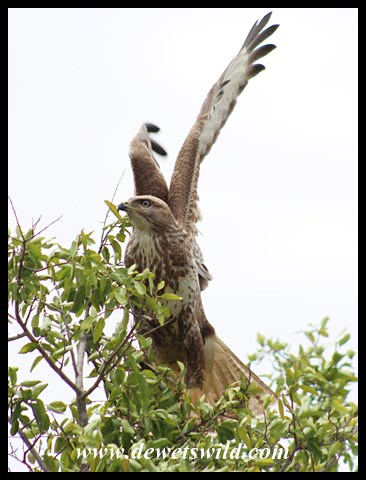
Hluhluwe-Imfolozi is blessed with a rich diversity of avifauna – this gallery shows just a small selection of the 104 bird species we identified during our visit in December.
A pair of Secretarybirds had just started building their platform-nest on top of a small tree near the Hluhluwe-Imfolozi Park’s Cengeni Gate when we visited in December. It was quite interesting to watch them searching the surrounding area for sticks and twigs to use in the construction.
When we found a small colony of Mauritian Tomb Bats on the outside walls of the reception office at the Hluhluwe-Imfolozi Park’s Nyalazi Gate, it presented a good opportunity to learn a bit more about this seldomly seen creature.
Mauritian Tomb Bats are quite large for insectivorous bats, weighing as much as 36g and up to 11cm long. They occur in the moist savanna areas of north-eastern South Africa, further north into Central and East Africa, as well as on a few of the islands of the Indian Ocean. By day they roost in small, loosely associated groups on the shaded walls of buildings or on tree trunks, and not in caves or tombs as their name might suggest. At night they forage for moths and other nocturnal invertebrates, which they catch and eat in flight.
Most females raise a single baby at a time, though some do give birth twice annually. Dependent young cling to the mother as she flies around and at their roost, but as soon as they can fly themselves they become autonomous.
The IUCN considers the Mauritian Tomb Bat of “Least Conservation Concern” owing to its wide distribution, large population, and tolerance for habitat change.
When you’re surrounded by a landscape filled with big and dangerous animals it is easy to forget that there’s a wholly different but equally fascinating world of smaller creatures to enjoy down on ground level! While out exploring Hluhluwe-Imfolozi Park in December we used the time we spent in camp and at the numerous picnic spots, hides and viewsites throughout the Park to appreciate the smaller fry as well.
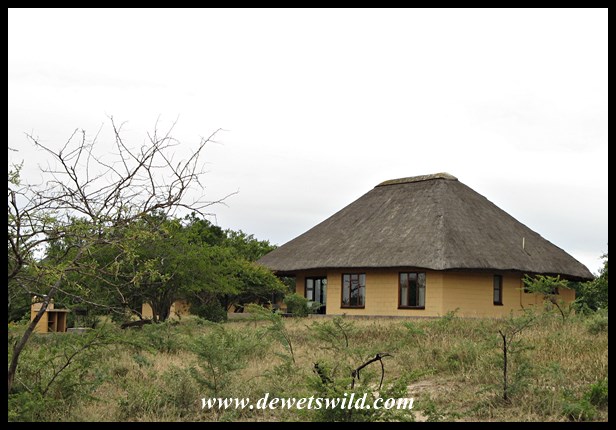
It appeared our accommodation unit (#21) at Mpila (Hluhluwe-Imfolozi Park) in December was some kind of magnet to some very large and very hairy caterpillars intent on spinning their cocoons in any available nook or cranny. We didn’t mind, of course, as the whole process is just so darn interesting!
Mpila, set high on a hill with sweeping views over both the Black and White Umfolozi Rivers, is the main accommodation base in the Imfolozi section of the Hluhluwe-Imfolozi Park. Apart from a single strand of electric wire strung high above the ground, designed to keep the elephants from coming into camp and digging up the water pipes, animals – including predators – have free access to the grounds. This of course make the place just all the more alluring to the de Wets!
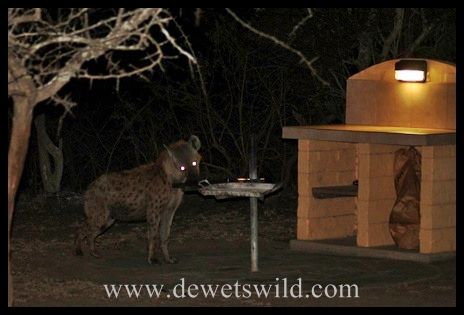
This image of a spotted hyena licking our braai (barbeque) grid was taken on a previous visit to Mpila

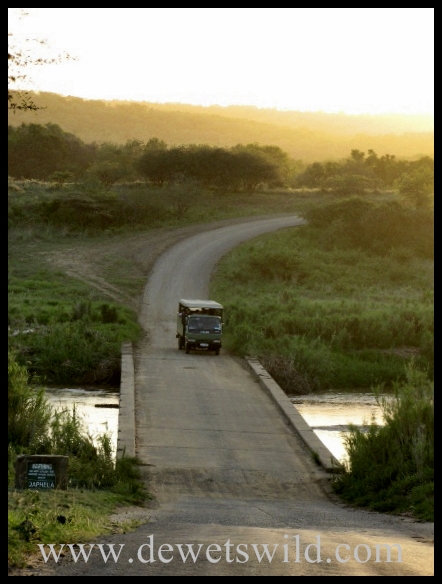
One of our favourite spots in Hluhluwe-Imfolozi Park is the bridge crossing the Black Umfolozi River on the road to Mpila Camp. There just always seem to be something of interest to find there!
This picture of a guided sunset drive about to cross the bridge was taken on a previous visit to Hluhluwe-Imfolozi

The Hluhluwe-Imfolozi Park is Africa’s oldest officially declared conservation area, and as such offers a wonderful escape to a piece of wilderness relatively unscathed by our destructive human nature. Good rains had been falling before our December 2016 visit, and continued throughout our six day stay, transforming the Park into a sea of greenery in stark contrast with the parched landscape we experienced on our previous visit in winter of 2015.