When talking about “game-viewing”, most people immediately have images of Africa’s iconic Big Five flashing through their minds. And of course our recent trips to the Kruger National Park did not disappoint at all when it came to these most charismatic of African mammals, as well as many other furry creatures great and small.
This first gallery of pictures were taken during my solo trip to the southern part of the Kruger Park between 30 May and 2 June 2019.
Grooming Chacma Baboons
Baboon youngster thinking of mischief
Blue Wildebeest with an unusual chevron mark on its muzzle
Blue Wildebeest having a rest in the shade
Blue Wildebeest herd
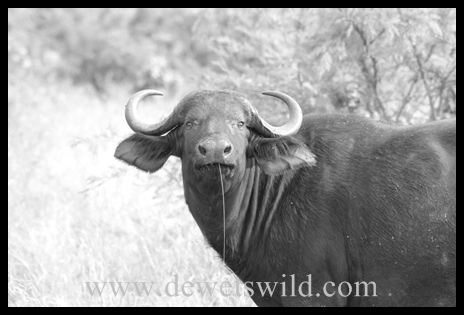
Buffalo bull
Buffalo cow
Buffaloes next to the Sabie River
Bushbuck Ram at sunset
Grey Duiker
Dwarf Mongooses settling an argument in the camping area at Pretoriuskop
Dwarf Mongoose standing sentry atop a termite mound
Elephant youngster enjoying a snack while crossing the road
Elephant herd quenching their thirst at Shitlhave Dam
Elephant enjoying a mud bath
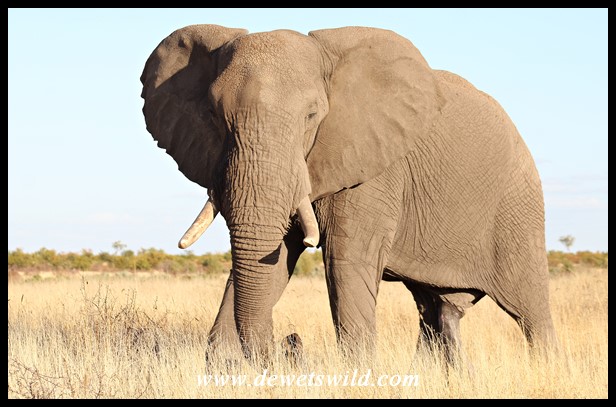
Elephant bull at Mestel Dam
Baby Ellie
Big Elephant Bull in contemplative mood
In the hot African sun any shade will do!
Giraffe
Giraffe
Giraffe
Hippo gang at Sunset Dam
Baby Hippo at Mestel Dam
Impala ram on the bank of the Sabie
Klipspringer
Big Kudu Bull
Immature Kudu Bull at Biyamiti Weir
Mating Kudus
Lioness on the bridge at Lower Sabie
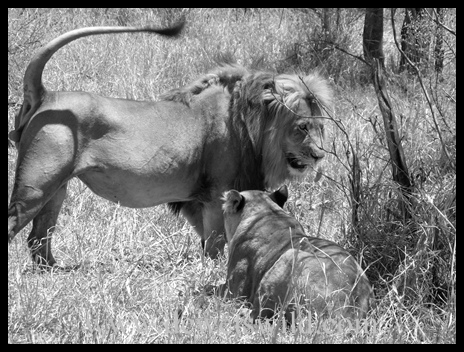
Lions in the grass next to the Crocodile River
Plains Zebra
Plains Zebra
Spotted Hyenas in profile
Spotted Hyena youngster bullying a sibling
Steenbok pair
Tree Squirrel in the camping area at Pretoriuskop
Vervet Monkey youngster with a pod of some kind
Grooming Vervet Monkeys
Waterbuck Bull
Waterbuck Calf
Waterbuck Cow
Waterbuck herd at Transport Dam
Warthogs investing in their future.
African Wild Dogs
There’s also much interest in the Kruger’s invertebrates (including a bounty of beautiful butterflies), fish, amphibians and reptiles, many of which are difficult to see elsewhere in South Africa.
Water Monitor lizard
Marsh Terrapin encountered on dry land
Rainbow Skink
Striped Skink
Yellow-throated Plated Lizard
Baby Nile Crocodile
Medium-sized Nile Crocodile
Enormous Nile Crocodile at Sunset Dam
Tigerfish in the Sabie River
Juvenile Redbreast Tilapia
Speke’s Hinged Tortoise
Common River Frog in Skukuza
Platanna
Bushveld Rain Frog
Male Mozambique Tilapia (non-breeding colours)
Female Mozambique Tilapia
Young Nile Crocodile
Nile Crocodiles
Baby Nile Crocodile and Adult Water Monitor lying next to a pool in the Shingwedzi River
Matabele Ants
Solifuge a.k.a. Sun Spider
Western Stripe-bellied Sand Snake
Striped Skink
Common Tropical House Gecko
Returning to Kruger two weeks later, this time to Shingwedzi in the north of the Park, proved just as fruitful with memorable encounters not only with predators and rare antelope, but also a menagerie of other mammalian species.
Blue wildebeest herd
Buffalo cow
Buffalo calf
Buffalo bull emerging from the mopane
Buffalo bull
Buffalo cow and calf
Buffalo cow
Buffalo on the Mphongolo loop
Half-blind Buffalo bull
Buffalo calf
Prime Buffalo Bull
Big old Buffalo Bull
Dwarf Mongoose standing sentry atop a termite mound
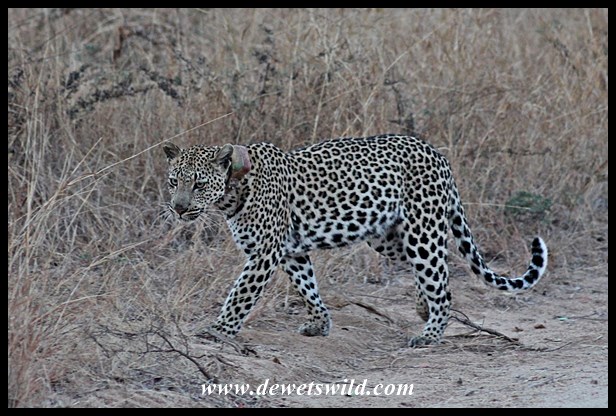
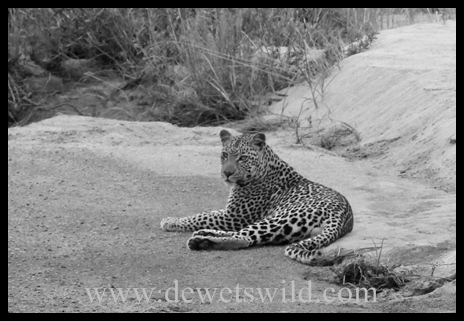
The beautiful Leopard is at the top of the wishlists of many visitors to South Africa’s wild places, and certainly deserves its position among Africa’s “Big Five“. One of the most adaptable of the large carnivores, their build and colouration is supremely attuned to the environment in which they live. Depending on the harshness of the environment and the size of prey available, the weight of adult males can vary between 20 and 90 kilograms (females weigh slightly less), with a shoulder height ranging between 55 and 80cm.
Serene leopard near Punda Maria
Catnapping leopard near Punda Maria
Leopard seen near Olifants
Beautiful leopard encountered near Red Rocks
Leopard male and kill
Leopard and kill (photo by Joubert)
She quickly repositions (photo by Joubert)
Leopardess eyeing an injured wildebeest calf
Her interest peaked by a growl from the male, the leopardess moves to a lower branch
Leopardess in a tree
There’s a leopard hidden in the Sausage Tree
Leopard along the Timbavati
Hidden leopard
Leopard in a tree
Lazy leopard
Leopards have adapted to every habitat on the African continent, from the driest deserts to the tropical rainforest and high mountain ranges. They are just as catholic in their diet, which ranges from insects, fish, amphibians, reptiles, birds and rodents to large mammals and even other predators (including jackals, spotted hyenas and cheetahs) or carrion, though they normally prefer commonly occurring medium-sized antelope and wild pigs. Though they are not dependent on the availability of surface water they will drink regularly if it is available. Their penchant for storing the carcasses of their prey up high in the branches of trees, where it is inaccessible to competing predators, allows them to feed from the same carcass for up to 6 days.
Leopard hunting jackals
Leopard lying in wait at a waterhole
Leopard lying in the bed of the Nwatimhiri near Skukuza in the Kruger Park
Remains of a leopard kill
Leopard on the prowl
Leopard hiding in long grass
Leopard camouflage in a thicket
Lazy Leopard
Leopard up a tree near Phalaborwa Gate
Leopard in a tree on the bank of the Tsendze River south of Mopani
Leopard seen early morning in the Sedudu Valley
Leopard stalking a steenbok in the Kruger National Park
Solitary by nature, Leopards only associate with others of their kind when mating or when cubs accompany their mother. Adults of both sexes hold territories that may cover enormous areas, depending on the availability of prey, are advertised by their rasping call and marked with urine, scat and scrape marks against prominent trees, and defended viciously, sometimes to the death, against interlopers of the same sex. Male territories are larger and can overlap with the areas of up to six females. Leopards are nocturnal, with most activity occurring from dusk to dawn, resting up in the deep shade of tree canopies, thickets and caves. They love basking in the early morning or late afternoon sun. Leopards can reach a speed of up to 60km/h, but can only maintain it for short bursts and rely on their camouflage and expert stalking skills to get within range of their prey.
Leopard at Nwanetsi Bridge, on a night drive from Satara in the Kruger Park
Leopard hunting jackals
Leopard in a tree, S36 (Kruger Park)
Leopard in a tree on the S3 near Skukuza, Kruger Park
Leopard on the Maroela Loop, near Skukuza in the Kruger Park
Leopard on the Maroela Loop, near Skukuza in the Kruger Park
Leopard in tree, at Ximangwaneni Dam (Kruger Park)
Leopard on Ngubhu Loop in Ithala Game Reserve
Leopard trying to hide among the thorns
Leopard sighting on the Grassland Loop on the Eastern Shores of Lake St Lucia – 15th June 2015
Leopard in golden early morning sunshine
Leopard in golden early morning sunshine
Leopard in a tree south of Skukuza
Leopard near Lower Sabie
Leopard
Leopard lounging in a tree
Female Leopards usually give birth to 2 or 3 cubs (range from 1 to 6) after a short 3 month gestation at any time of the year. Newborn cubs are kept hidden in caves, among boulders, in thickets and even burrows while the mother is out hunting, until they start accompanying her at the age of about two to four months. Cubs become independent anywhere between 12 and 24 months of age, though only about half of the cubs born reach that age. Lions and spotted hyenas will attack and kill adult Leopards, while even jackals pose a threat to unguarded cubs.
Leopard female calling for her cubs
Sub-adult leopard cubs
Leopard cub in a rocky outcrop between Tshokwane and Skukuza
Leopards have a wide distribution in Africa and Asia, but their populations have been reduced and become confined to increasingly isolated pockets over most of that range, leading the IUCN to classify it as “vulnerable” due to the persistent threats of illegal hunting and loss of habitat and prey. In South Africa, Leopards can be found in the mountains of the Western and Eastern Cape, along the Namibian and Botswana borders with the Northern Cape, in the Drakensberg range and northern Kwazulu-Natal, and widely in the North-West, Limpopo and Mpumalanga provinces, but their secretive nature makes it virtually impossible to determine their population size, with the EWT estimating the number of leopards occurring in South Africa between 2,800 and 11,600. In our experience, the Kruger National Park, Kgalagadi Transfrontier Park, Mapungubwe National Park, Pilanesberg National Park, Hluhluwe-Imfolozi Park, iSimangaliso Wetland Park (especially the Eastern Shores section) and Ithala Game Reserve presents the best chance of finding these elusive cats on a self-drive safari in South Africa.
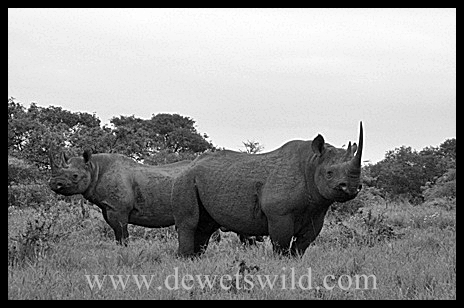
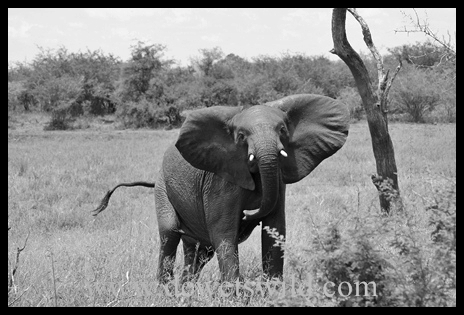
The “Big Five” is probably Africa’s most sought-after animals – the term was coined by colonial-era trophy hunters to describe the group of animals considered the most dangerous to hunt: Black Rhino, Buffalo, Elephant, Leopard and Lion. Today, these animals are a major reason for the popularity of South Africa’s wildlife reserves among locals and tourists from all over the world.


 DeWetsWild