
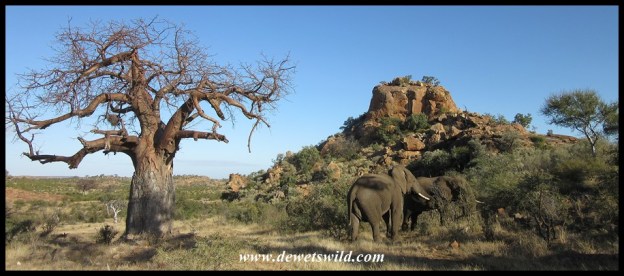
In the Mapungubwe National Park, three aspects are truly iconic of this landscape: Elephants, baobabs, and rocky hills and cliffs. It’s as if the entire atmosphere of the Park hinges on these key natural attributes.
Mapungubwe, situated as it is at the place where the borders of South Africa, Botswana and Zimbabwe meet, has a high population of elephants and especially so when the dry season concentrate the behemoths along the banks of the Limpopo River. From families of cows and tiny calves to enormous bulls can all be expected along any of the roads traversing the Park, and sometimes waiting for these charismatic animals to clear the way can be a very entertaining delay. At other times, the dense mopane veld may lead to you inadvertently finding yourself in the personal space of one of the giants and they might react with more than a little agitation!


The Elephants even move through Mapungubwe’s unfenced main camp Leokwe, as we experienced one evening upon arriving at out cottage.


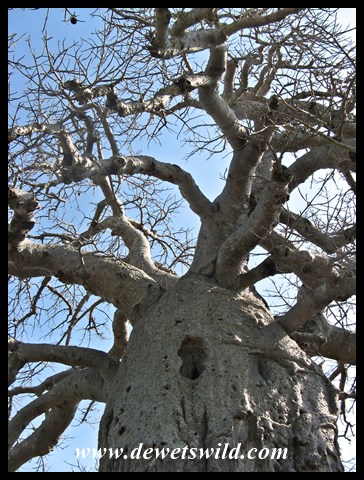
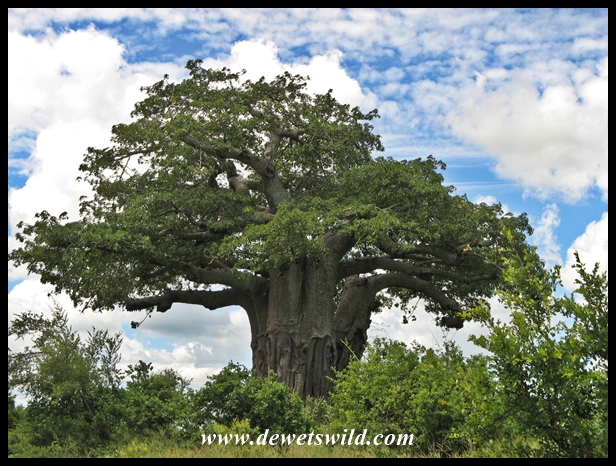
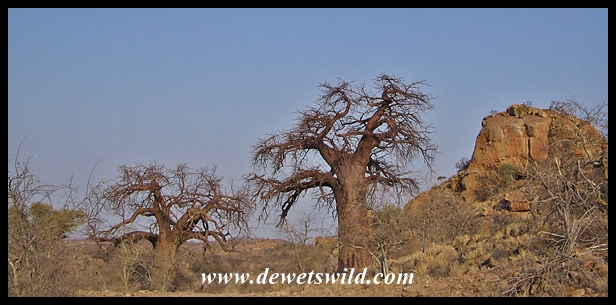
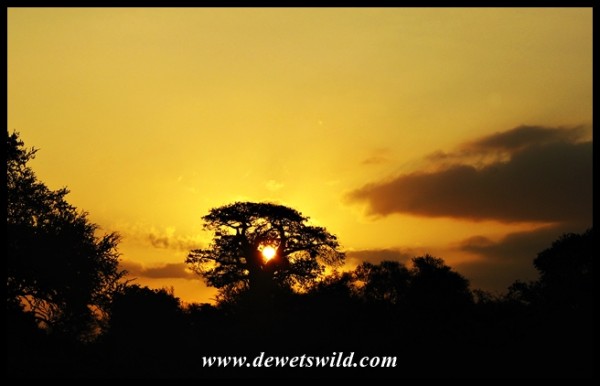
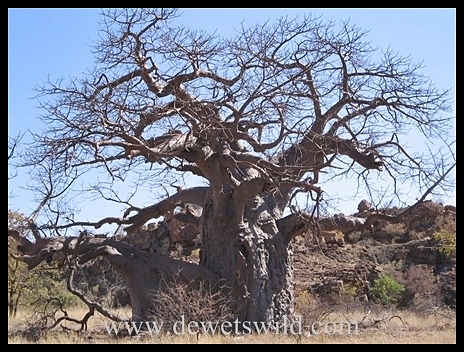
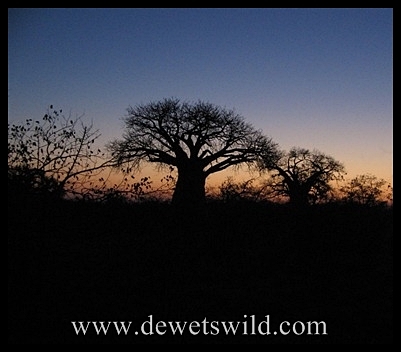
Baobabs are the undisputable rulers of Mapungubwe’s plant kingdom. With this part of the world now firmly in Winter’s grip, the trees are mostly leafless, lending more credence to the myth that the Creator tossed them to earth, planting them upside down. Elephants have a paticular liking for the pulpy wood of the baobab, and many of Mapungubwe’s trees show damage as a result, leading to the Park authorities protecting some prime specimens by using wire as wrapping around their trunks (those of the trees, not those of the elephants 😉 )


On the largest scale of all, it is the rocky, hilly landscapes that really forms the basis of Mapungubwe’s ancient atmosphere. The hills are composed mainly of dolerite – the remains of molten rock pushed up from deep inside the earth through sandstone that has long since weathered away to leave only the harder volcanic geology visible.







 DeWetsWild