Category Archives: Western Cape Province

Summertide Diary: Departing from Bontebok

20 December 2020

With our next destination, the Wilderness section of the Garden Route National Park, relatively close we can afford to have a leisurely start to our final morning at Bontebok National Park. Marilize and Joubert opt to sleep in, while I start my morning attempting to get photographs of the Cape Serotine Bats catching moths around the outside lights in the camp before setting off on a drive. By the time I get back we have breakfast together before packing the car and heading to reception to check out.

If you’d like to learn more about the Bontebok National Park, have a read through this special feature we published after a previous visit. For more about the beautiful Bontebok antelope, read here.

Map of Bontebok National Park, from a brochure published by SANParks

Summertide Diary: Exploring Bontebok

19 December 2020

Our first morning in the Bontebok National Park started with a visit from a VERY big Rain Spider in the kitchen. Despite their large size these spiders aren’t deadly to humans (though a bite would be very painful), but considering that other visitors might overreact if they encounter this one and kill it I decided to catch it and relocate it to a suitable spot outside (and had to keep a curious Cape Bulbul at bay while the spider hid in an aloe). After all this excitement we could enjoy breakfast overlooking the Breede River as morning broke over the Lang Elsie’s Kraal Rest Camp feeling very pleased with ourselves.

The previous time we visited Bontebok it rained for most of the two days we spent in the Park, and so we didn’t get to explore much. This beautiful morning presented an opportunity to rectify that, so we got an early start to our first drive through the reserve.

We wanted to go check out the local picnic spot, known as Die Stroom (“The Stream”) before it got too busy with day visitors. It does seem a lovely spot to enjoy a relaxed picnic while also taking pleasure in all the Park’s other attractions.

When we got back to camp one of the star attractions of the Park, a Bontebok, was waiting for us at our chalet, together with an Angulate Tortoise and lots of birds.

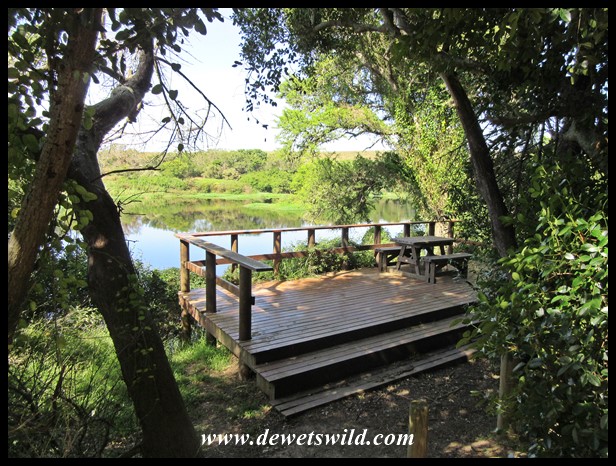
Another one of the things we missed out on during our previous visit to Bontebok was most of the walking trails available to visitors, so before lunch (and before it got too hot) I got going on the Acacia and Bushbuck Trails, which follow the course of the Breede River. Along the way a few viewing decks have been built overlooking peaceful stretches of the river.

After lunch there was time to walk around the camp.

And then another circuit of the Park’s game viewing drives saw us through till sunset.

After dinner and with the camp now clothed in darkness I went down to the river to look for frogs at the water’s edge. Thrilled to find a few of three different species, though even more exciting to see was the Sharp-toothed Catfish actually jumping onto the river banks to catch any frogs sitting too close to the water!

While away from our chalet our little “camera trap” caught this Large-spotted Genet patrolling outside.
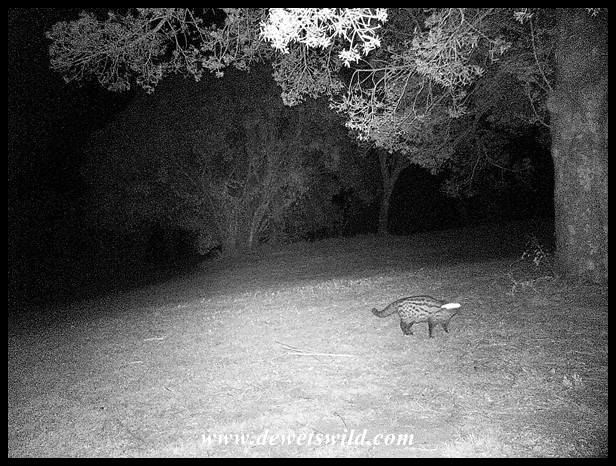
Large-spotted Genet caught by our camera-trap outside our chalet at Bontebok National Park

If you’d like to learn more about the Bontebok National Park, have a read through this special feature we published after a previous visit. For more about the beautiful Bontebok antelope, read here.
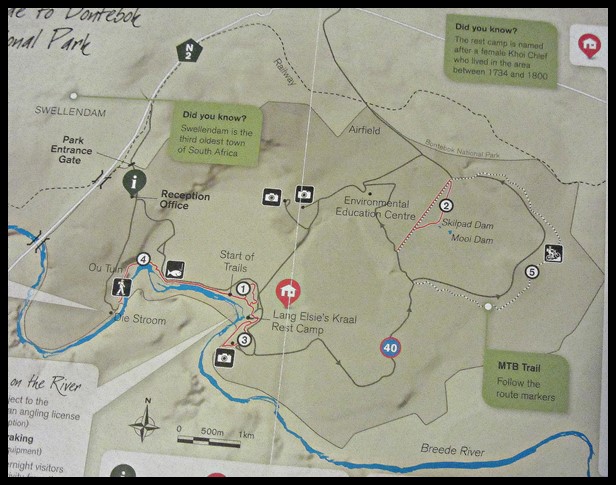
Map of Bontebok National Park, from a brochure published by SANParks

Summertide Diary: Arriving at Bontebok

18 December 2020 (cont.)

After an exhilarating day on the road, traversing no less than four different mountain passes including the famous Swartberg Pass, it was good to arrive at the Bontebok National Park outside Swellendam in the Western Cape. It’s just a short drive from the reception office to the Lang Elsie’s Kraal Rest Camp.

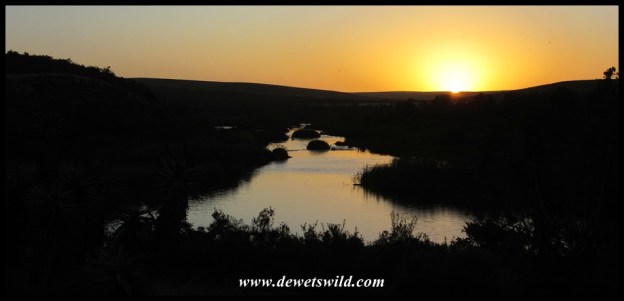
With our chalet overlooking the serenity of the Breede River and the sunset beyond, the day came to a fitting close.

If you’d like to learn more about the Bontebok National Park, have a read through this special feature we published after a previous visit. For more about the beautiful Bontebok antelope, read here.

Map of Bontebok National Park, from a brochure published by SANParks


Summertide Diary: Swartberg Pass

18 December 2020 (cont.)

On a clear day, when you turn onto the N12-highway just west of the gates to the Karoo National Park, you will see straight ahead of you the outlines of a large mountain range some 100km to the south. That’s the Swartberg (“Black Mountain“) – the highest mountains in the Western Cape, separating the Great Karoo from the Little Karoo.

We had two choices to get to the other side of the Swartberg, driving as we were from the Karoo National Park to the Bontebok National Park. The first is to stay on the N12 and go “through” the mountain along Meiringspoort – a beautiful stretch of tarred road but the less adventurous of the two options. The other option is to turn off the N12 onto the R407 just before Meiringspoort, following the road that leads to the small town of Prince Albert, and then taking a left turn into the Swartberg Pass (road R328). For us, the choice is an easy one.

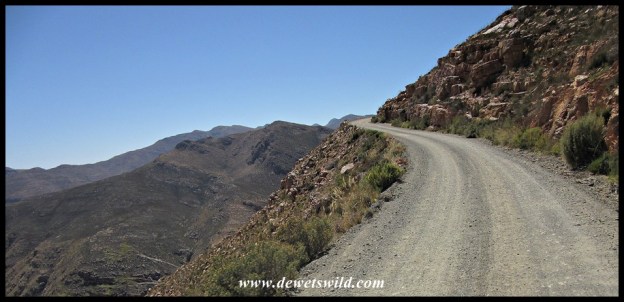
Unquestionably one of the most exhilarating drives in South Africa and a personal favourite of ours, the Swartberg Pass is an engineering masterpiece designed and built (with convict labourers, many of whom died during construction) by the renowned Thomas C.J. Bain between 1881 and 1888. Recognised as a national monument, with a gravel surface and supported by impressive dry-stone retaining walls, the pass connects the Western Cape towns of Oudtshoorn and Prince Albert. Crossing over the beautifully unspoilt Swartberg, itself a declared nature reserve and World Heritage Site, while reaching a maximum altitude of 1,575 metres above sea level, the scenery along the Swartberg Pass is as awe-inspiring as the numerous tight switch-back bends, blind rises and steep gradients are hair-raising!


Summertide Diary: Departing the Karoo

18 December 2020

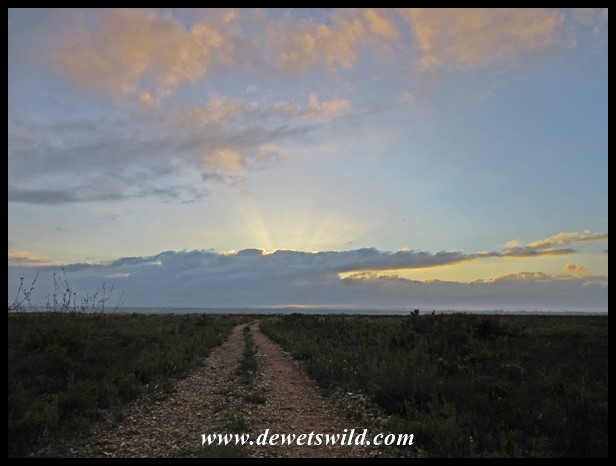
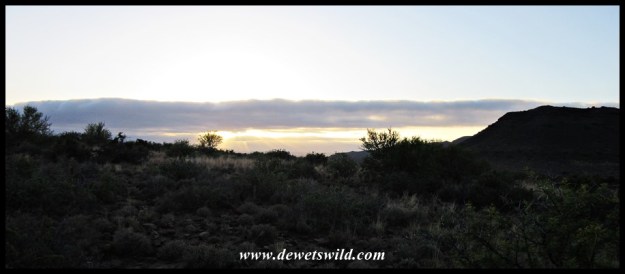
Sunrise over the Karoo

Today we have to leave the Karoo National Park to travel to our next destination, however there is still time for one last drive through Lammertjiesleegte before we go.

We were very lucky to encounter Black Rhinos during our visit to the Karoo National Park, but for their safety will not divulge when or where we saw them.

Black Rhino in the Karoo National Park

If you’d like to learn more about the Karoo National Park, have a read through this earlier post of ours detailing the natural and man-made features of the Park.

Map of the Karoo National Park showing Potlekkertjie Loop, Klipspringer Pass and Lammertjiesleegte, from the official guide book published by SANParks

Summertide Diary: Exploring the Karoo

17 December 2020

As the sun rise over the Great Karoo on the 17th of December we’re joined at the breakfast table by a very tame Cape Bunting hoping for a few crumbs.

Now that we are all wide awake and with full tummies thanks to our coffee and rusks, we set off on our morning drive, again taking the Klipspringer Pass and Potlekketjie Loop, but this time the other way around.

By the time we reach the Doornhoek Picnic Site all three of us are in need of a leg stretch.

The second leg of our morning drive delivers even more encounters with the wild inhabitants of the Karoo.

Back in camp by midday we explore as much of it as we can – from the interpretive centre and camping site at the one end to the swimming pool and bird hide at the other.

For our final afternoon drive of this visit to the Karoo National Park we opt for a leisurely amble through the Lammertjiesleegte; the open plains between the rest camp and the park’s eastern border which, despite its foreboding name (translated directly from Afrikaans it means “empty place of the lambs”, which sounds like a sequel to a horror movie), is actually a section of the park very rich in wildlife.

If you’d like to learn more about the Karoo National Park, have a read through this earlier post of ours detailing the natural and man-made features of the Park.

Map of the Karoo National Park showing Potlekkertjie Loop, Klipspringer Pass and Lammertjiesleegte, from the official guide book published by SANParks

Summertide Diary: Arriving in the Karoo

16 December 2020

From our home in Pretoria the shortest route to the Karoo National Park in the Western Cape Province is a distance of roughly 1000km, almost all of it along the N1 national highway. With Marilize still having to work the morning of the 15th of December, we opted to depart home by midday that Tuesday and break our journey at Bloemfontein, a historic city almost smack in the middle of our beautiful country.

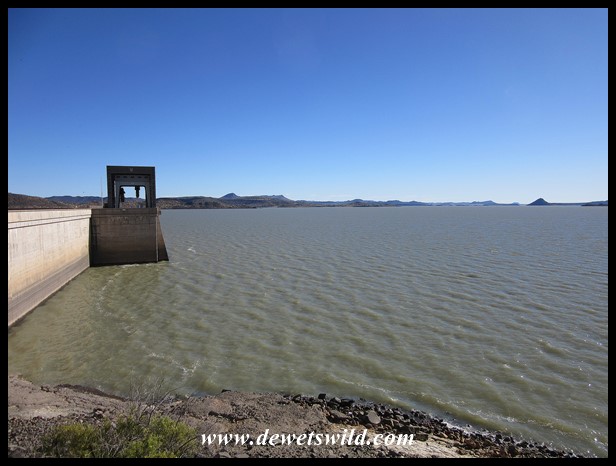
We rise early on the 16th of December, a public holiday in South Africa, at the cosy A Little Guesthouse on the outskirts of Bloemfontein. The sun is just starting to peak over the eastern horizon as we tackle the final leg of our journey to the Karoo National Park. With Joubert’s grade 5 geography syllabus, freshly concluded, including a few South African landmarks, we take a detour to one of the them – the Gariep Dam, South Africa’s biggest man-made lake, located at the border between the Free State and Eastern Cape provinces.

The Gariep Dam

Just after midday we arrive at the entrance gate to the Karoo National Park, a most welcome sight after the long drive.

After quickly checking in, thoroughly sanitizing every corner of our accommodation unit (oh, the joys of travelling in the time of COVID-19, and yes the Park staff do sanitize the units before you arrive, we are just very cautious) and unpacking the luggage we waste no further time in starting our explorations of the vast national park. Our route of choice for the afternoon is the delectably-named Potlekkertjie-loop – this being the local name for a kind of lizard, translating into English as “little pot licker” – and ending with the Klipspringer Pass leading back to camp.

Arriving back at camp, we can relax on the stoep (verandah) of Chalet 28, reveling in the beautiful view and visits from a variety of creatures. The holiday we’ve been looking forward to for so long has finally arrived…

If you’d like to learn more about the Karoo National Park, have a read through this earlier post of ours detailing the natural and man-made features of the Park.

Map of the Karoo National Park showing Potlekkertjie Loop, Klipspringer Pass and Lammertjiesleegte, from the official guide book published by SANParks

Merry Christmas!

We’re wishing all our friends here at de Wets Wild a Blessed Christmas!

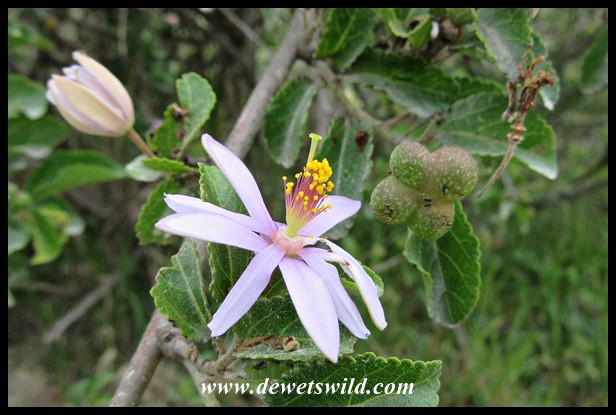
Here’s just a few of the festive decorations we found in the past few days adorning the trees (and bushes and shrubs and grasses and all other manner of plants) in the national parks of the Western Cape. I can’t pretend to know even most of their names, but I’m sure you’ll agree that they’re all stunningly beautiful!


Summertide Rambles 23 December 2020

I think it’s more the inclement weather than the government-imposed restriction on beach-going in the Garden Route (an attempt at limiting crowds to curb the spread of COVID-19) that caused the beach at Nature’s Valley to be this deserted today.

We’ll be spending the next few days with close family in Jeffreys Bay but we’ll resume our summertide rambles through two of the Eastern Cape national parks on the 27th.

Summertide Rambles 21 December 2020

A rainy day here on South Africa’s Garden Route today – always welcome in a dry country such as ours – so we took a short hike in the Woodville Indigenous Forest, where an 800 year old Outeniqua Yellowwood that towers above the canopy is the star attraction. There’s just something so magical about the smells in a rain-soaked forest.