“Probably there is no other bird whose appearance on the wing and on the ground offers more vivid contrast. Sailing majestically far up in the blue, without perceptible movement of its great pinions, it seems to cleave the air free of all conscious effort, and conveys to the earth dweller far below, the ideal of poetic motion. When seen on mother earth, it is hard to realise that this ungainly, clumsily hopping, and repellent-looking bird is the same that so delighted our senses when on the wing, nor is the picture in any sense restored as, distributed at its feast, it flaps heavily away to some adjacent tree.” – James Stevenson-Hamilton, Wildlife in South Africa, 1947.
If ever there’s a bird suffering from bad press, it must be the vulture. Their unflattering appearance perfectly suits their vital ecological function. If they look like undertakers, it is because they are: clearing away the dead and the rotting, minimising disease and recycling nutrients through the system. Vultures spend most of their time gliding effortlessly on the thermals, using their incredible eyesight to find carrion on the ground far below, each species supremely adapted to consuming particular portions of the carcass.
Nine species of vulture has been recorded in South Africa.
Hooded Vulture (Necrosyrtes monachus)
With a weight of around 2kg and wingspan of 1.6m, the Hooded Vulture is one of the smaller vulture species occurring in South Africa. They prefer savannah and woodland, and often scavenge around refuse dumps and abattoirs. Their thin bills allow Hooded Vultures access to scraps of meat other vultures can’t reach. Locally, these birds breed in the dry season raising a single chick in a treetop nest after an incubation period of around 50 days. Chicks fledge between 80 and 130 days after hatching and are then cared for by their parents for another 3-4 months.
Hooded vultures are quite common in Africa north of our borders, but in South Africa they are rare and occur only in the Lowveld of Mpumalanga and Limpopo Provinces, where they can be seen in the Kruger National Park. Despite estimating their African population at just below 200,000, the IUCN classifies them as endangered due to a declining population.
EDIT: In 2017 the IUCN reclassified the Hooded Vulture as “Critically Endangered” due to a rapid decline in their population.

Hooded Vulture

Hooded Vulture

Hooded Vulture

Hooded Vulture

Hooded Vulture

Hooded Vulture silhouette

Hooded Vulture (photo by Joubert)

Hooded Vulture

Hooded Vulture (photo by Joubert)
White-headed Vulture (Trigonoceps occipitalis)
White-headed Vultures are medium-sized vultures, with a wingspan of up to 2.3m and up to 4.7kg in weight. They occur in savannah and dry woodlands, and nest and roost on treetops, especially baobabs. Pairs are thought to probably be territorial, incubating a single egg and raising the chick during the dry season, when carcasses are more abundant.
White-headed vulture populations are declining across their range and they are largely restricted to conservation areas. With a total population of between 10,000 and 20,000, the IUCN considers them vulnerable. In South Africa they occur in Kwazulu-Natal, Mpumalanga, Limpopo and the Northern Cape – we’ve encountered them at Hluhluwe-Imfolozi Park and the Kruger National Park before.
EDIT: In 2017 the IUCN reclassified the White-headed Vulture to “Critically Endangered“.

White-headed Vulture

White-headed Vulture

White-Headed Vulture

White-headed Vulture

White-headed Vulture

White-headed Vulture

White-headed Vulture

White-headed Vulture

White-headed Vulture (photo by Joubert)

White-headed Vulture (photo by Joubert)
White-backed Vulture (Gyps africanus)
White-backed vultures are closely related to the Cape Vulture, but much smaller, with a wingspan of 2.2m and a weight of between 4 and 7kg. They feed predominantly on carrion, preferring the softer pieces of the carcass. White-backed Vultures breed in small colonies, making their nests in the tops of trees, where they raise a single chick. They range widely, covering enormous areas daily in their search for food. White-backed vultures can congregate in huge numbers at large carcasses and waterholes.
The White-backed vulture is the most numerous vulture in South Africa’s savannah areas, occurring in the provinces of Kwazulu-Natal, Mpumalanga, Limpopo, North-West, the western Free State and the Northern Cape. Their population has however decreased drastically, prompting the IUCN to classify them as endangered with a total estimated population of 270,000 of which 40,000 occur in Southern Africa. Hluhluwe-Imfolozi Park, uMkhuze Game Reserve, Kruger National Park and Ithala Game Reserve are good places to search for White-backed Vultures.
EDIT: In 2017 the IUCN reclassified the White-backed Vulture to “Critically Endangered“.

White-backed Vulture

White-backed and Lappet-faced Vultures

White-backed Vulture

White-backed Vulture

White-backed Vulture

White-backed Vulture

White-backed Vulture

White-backed Vulture

White-backed Vulture

White-backed Vulture

White-backed Vulture

White-backed Vulture

White-backed Vulture

White-backed Vultures in a tree near a carcass

White-backed Vultures

White-backed Vulture in flight

White-backed Vulture in flight

White-backed Vultures near Mpila

White-backed Vultures

White-backed Vultures

White-backed Vultures

White-backed Vulture on nest

White-backed Vulture at its nest

White-backed Vultures

Vultures in a tree

White-backed Vulture

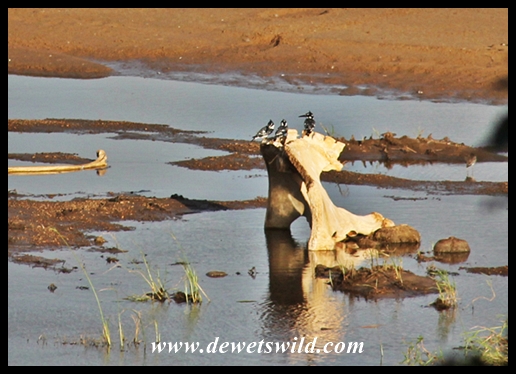
White-backed Vultures in a Leadwood stump

White-backed Vulture in flight

White-backed vulture trying to dry off

White-backed Vulture

White-backed Vultures

White-backed Vultures (photo by Joubert)

White-backed Vulture

White-backed Vulture

White-backed Vulture

White-backed Vulture (photo by Joubert)

White-backed Vulture

White-backed Vulture

White-backed Vulture soaring over Senyati

White-backed vulture in flight

White-backed vulture in flight

White-backed Vulture
Bearded Vulture (Gypaetus barbatus)
The Bearded Vulture, or Lammergeier, is a specialised vulture occurring in high mountains (normally above 2000m) and feeding especially on marrow and bone fragments rather than meat. They carry large bones to a considerable height before dropping them on rocks below so that it splinters into pieces it can swallow and exposes the marrow inside. It also employs this practice when preying on tortoises! These vultures have also been observed hunting prey of considerable size by forcing them off cliffs. Pairs forage over enormous areas, covering hundreds of kilometres on the wing in a single day. These vultures breed in large nests built on inaccessible cliffs and raise 1 or 2 chicks; eggs hatch within 60 days of laying and the chicks fledge 100-130 days later. Young remain dependant on their parents for up to two years. Adults’ wingspan stretches to 2.8m and African specimens average 5.7kg in weight.
In South Africa, the Lammergeier is threatened with extinction and occurs only in the Drakensberg Range and surrounds, where the population is estimated at about 100 breeding pairs. We’ve been fortunate to encounter them at Golden Gate Highlands National Park and in the uKhahlamba Drakensberg Park, especially at Giant’s Castle Game Reserve. They also have a localised distribution across the highlands of East Africa and a wide distribution in Europe and Asia, although they can’t be considered numerous anywhere.
The IUCN considers the Bearded Vulture as being “Near Threatened” on a global scale.

Bearded Vulture

Bearded Vulture

Bearded Vulture (juvenile)

Bearded Vulture (juvenile)

Lucky visitors may spot a Bearded Vulture soaring above

Juvenile Lammergeier (or Bearded Vulture)

Bearded Vulture in flight over Giant’s Castle

A juvenile Bearded Vulture

A juvenile Bearded Vulture
Lappet-faced Vulture (Torgos tracheliotos)
The Lappet-faced Vulture is the most powerful of the African vultures and dominates all other species at a carcass. It has a wing-span of up to 2.9m, weighs up to 9.4kg and has one of the largest and most powerful beaks of any bird of prey, useful to break through the tough skins of large mammal carcasses. Carrion is their main food source, preferring the skin, tendons and ligaments that other vultures can’t cope with, but they are known to hunt small prey up to the size of flamingoes. These vultures inhabit dry savannah and deserts and are less social than many other species – any congregations are likely to be at or near a large carcass or waterhole. Their enormous nests are placed in the forks of large trees, and here both parents incubate (mostly) a single egg for about 55 days.
The IUCN considers them vulnerable, with a total population of about 8,000 remaining in Africa. In South Africa they are seldom found outside of the big game reserves in Kwazulu-Natal (Hluhluwe-Imfolozi Park), Mpumalanga and Limpopo (Kruger National Park) and the Northern Cape.
EDIT: In 2017 the IUCN reclassified the Lappet-faced Vulture to “Endangered“.

Lappet-faced Vulture

Lappet-faced Vulture

Lappet-faced Vulture

Lappet-faced Vulture

Lappet-faced Vulture

Lappet-faced Vulture (photo by Joubert)
Cape Vulture (Gyps coprotheres)
Endemic to Southern Africa, the Cape Vulture, or Cape Griffon, inhabits mountains, grasslands, savannah and semi-desert, nesting in colonies on high cliffs and rocky ledges. At 11kg in weight with a wingspan of 2.6m they are the biggest vulture in Africa, much bigger than the closely related White-backed Vulture, yet are dominated by the Lappet-faced Vulture at carcasses. They cover immense distances in search of large mammal carcasses, the staple of its diet being the softer tissues like meat and organs.
In 2006 the IUCN estimated their population at between 8,000 and 10,000 birds and classifies them as vulnerable. They occur in all South Africa’s provinces and we’ve seen them at Golden Gate Highlands National Park, Hluhluwe-Imfolozi Park, Kruger National Park, Marakele National Park (one of the country’s biggest breeding colonies), Oribi Gorge Nature Reserve and the reserves comprising the uKhahlamba Drakensberg Park, where they are the most numerous kind of vulture.
EDIT: In 2017 the IUCN reclassified the Cape Vulture to “Endangered“.

Cape Vulture

Cape Vulture

Cape Vulture

Cape Vulture

Cape Vultures in flight over Marakele – the Park is home to the world’s biggest colony of these birds.

Soaring Cape Vulture

Cape Vulture (photo by Joubert)

Cape Vulture (photo by Joubert)

Cape Vulture in flight

Cape Vultures and White-necked Ravens near Potberg
Three other vulture species have been recorded in South Africa. A small population of Palm-nut Vulture (Gypohierax angolensis) occurs patchily along the north coast of Kwazulu Natal Province and can be seen at Umlalazi Nature Reserve, where we hope to visit in 2016. The Egyptian Vulture (Neophron percnopterus) appears to have become extinct as a resident species in South Africa and is now only seen very rarely, probably as a vagrant from elsewhere on the continent. There has similarly been only a handful of South African observations of Ruppell’s Vulture (Gyps ruepelli), a species common further north in Africa.

Palm Nut Vulture being harried by a gull at sunrise over the beach

Palm-nut vulture close-up

Palm-Nut Vulture, Umlalazi Nature Reserve, March 2016
The first Saturday of September is recognised annually as International Vulture Awareness Day; a day to highlight the plight of these enigmatic birds that perform such an important ecological function and yet face so many threats to their continued existence. South Africa’s vulture populations are declining due to poisoning (accidental and deliberate), habitat loss, diminished food availability, electrocution by powerlines, drowning in small reservoirs and poaching for use in traditional medicine and other cultural practices. Several vulture restaurants operate throughout the country, where carcasses are made available to vultures to supplement their diets, especially when raising chicks, and reduce the risk of poisoning and poaching.




















 DeWetsWild