Category Archives: South African Wildlife

The inhabitants of South Africa’s wild places

Bold, begging crocodile and terrapins near Olifants

Serrated Hinged Terrapin

Pelusios sinuatus

The Serrated Hinged Terrapin is commonly encountered in large rivers, dams and lakes from northern Kwazulu-Natal, through Mpumalanga and Limpopo and northwards to Somalia. They’re often seen basking on rocks, fallen trees and sandbanks (and even on top of hippos!). During wet weather, Serrated Hinged Terrapins will migrate over land and establish themselves in isolated bodies of water. When their watery abodes dry up during the dry season or a drought, these terrapins will aestivate under the roots of trees on the bank. They are carnivorous, feeding on aquatic invertebrates (especially molluscs), amphibians, frogs and fish and scavenging on crocodile kills, and have been recorded as picking ticks from wallowing animals. In the summer months, females lay clutches of 7-30 eggs near the water. Those eggs that are not discovered by water monitors hatch 3-6 months later. Fully grown they measure up to 55cm in length, with the heavier females weighing as much as 7kg.

Black-backed Puffback

Dryoscopus cubla

A common member of the shrike family occurring in woodland, thickets and forests (as well as well-planted parks and gardens), the Black-backed Puffback feeds on a wide variety of invertebrates and occasionally small berries.

Black-backed Puffbacks are usually seen singly or in monogamous pairs, often foraging along with other insectivorous birds, usually quite high in the tree tops. They breed throughout the year with a definite peak in the spring and early summer, building cup-shaped nests using soft plant material and spiderwebs in the fork of a branch. The male has an impressive display, fanning pure white plumes on its back in the shape of a powder puff (see image below) to impress his female before mating. The pair is quite brave in the defense of their nest, eggs and chicks, even attacking venomous snakes venturing too close. The parents take turns to incubate the clutch of 2 or 3 eggs over a 2 week period, with the hatchlings leaving the nest about 3 weeks after emerging from the eggs.

Adults measure about 17cm and tip the scales at around 26g.

Black-backed Puffbacks are considered to be of least concern and occurs widely south of the equator in east, central and southern Africa. In our country they’re found from the Garden Route through the Eastern Cape, Kwazulu-Natal, Mpumalanga and Gauteng into Limpopo and the Northwest Province.

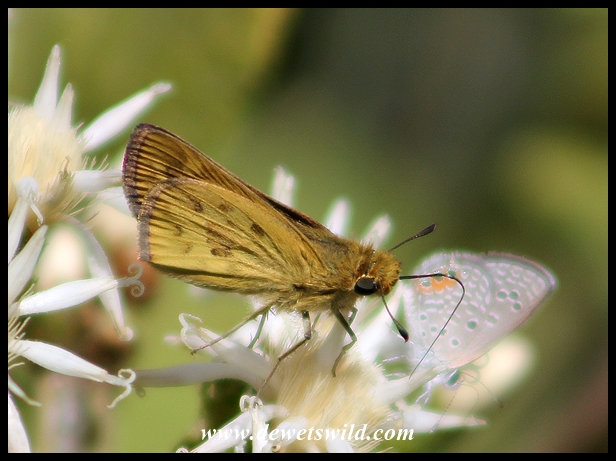
Common Hottentot Skipper Butterfly

Gegenes niso

The Common Hottentot Skipper is a small (3cm wingspan) but lively butterfly, flying fast over short distances (hence the “skipper” name) and often coming to rest for short periods on flowers or grass stems and at mud puddles. They occur in grasslands and grassy patches in a wide range of other habitats, from the Western Cape through the Eastern Cape, Kwazulu-Natal and the Free State to Limpopo Province, and throughout most of the rest of sub-Saharan Africa. Males are territorial and fiercely aggressive to other males venturing into their space. Females lay single eggs on a wide variety of grasses, which the larvae uses as food. Adults can be seen right through the year.

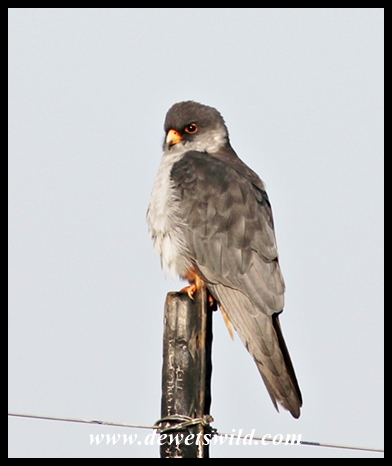
Amur Falcon

Falco amurensis

The Amur Falcon is a summer (October to May) visitor to South Africa, particularly the eastern half of the country, migrating in their thousands over enormous distances of over 11,000km to get here from their Asian (Siberia, Mongolia, China, Korea) breeding grounds – among the longest distances migrated by any raptors. They live in open country, preferring grasslands, open savannas and agricultural areas, and feed on a wide variety of larger insects and occasionally small birds, mammals and frogs. Adults measure around 30cm in length and weigh about 140g.

Amur Falcons are usually seen in large flocks sitting on telephone wires and fencelines and sleeping in colonies that may number into the tens of thousands in high trees, often exotics standing in towns and cities.

The IUCN considers the Amur Falcon to be of least concern, though they are hunted extensively while migrating.

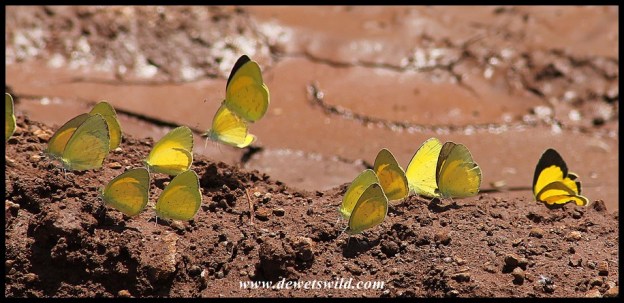
Broad-bordered Grass Yellow

Eurema brigitta

The Broad-bordered Grass Yellow is a very common butterfly in grassland and savanna habitats, occurring over all of South Africa with the exception of most of the Western and Northern Cape provinces. They’re also widely distributed over the rest of Africa, the islands in the India Ocean, India, south-east Asia, and  Australia. Adults can be seen throughout the year, flying low to the ground, perching on flowers and blades of grass and often congregating at muddy puddles. At rest they’ll often hang below small plants, looking like dead leaves moving in the breeze. Adults have a wingspan of around 3.5cm.

Wood Sandpiper

Tringa glareola

The Wood Sandpiper is another wading bird that migrates to South Africa from its northern breeding grounds to escape the harsh cold of winter in those parts. When they’re here, between August and May, they are one of the most numerous waders to be seen and can be expected at almost any freshwater habitat in any province.

Wood Sandpipers are usually encountered singly, in pairs or in small groups and seldom occurs at estuaries, river mouths or along the beach, preferring freshwater marshes, dams and temporary pans with inundated vegetation. They feed mainly on aquatic and terrestrial worms, insects, crustaceans, small frogs and small fish, with seeds of various plants being a minor addition to their diet.

Adults measure about 20cm in length, with a wingspan of ±55cm and a weight of 60-80g.

With a total population estimated at over 3 million, distributed across much of Asia and Europe in the breeding season and migrating to Africa, tropical Asia and Australia during the northern winter, the IUCN lists the Wood Sandpiper as being of least concern.

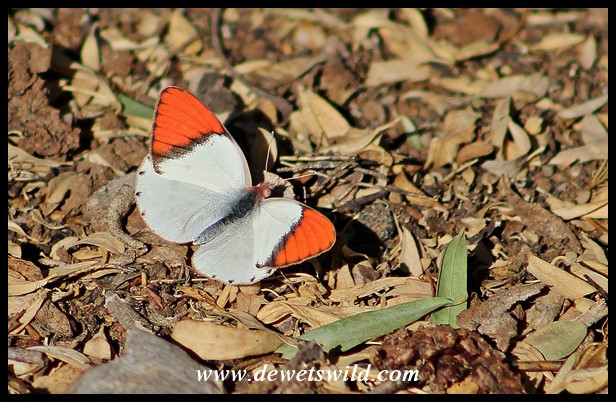
Common Orange Tip

Colotis evenina

The Common Orange Tip is a common and widespread savanna butterfly, occurring in all South Africa’s provinces with the exception of the Western Cape and as far north as Ethiopia and Somalia. They are striking butterflies that fly low and fast, staying within close proximity to flowers. Eggs are laid singly on Boscia-plants (including the Shepherd’s Tree) and Caperbushes (Capparis-spp). Adults have a wingspan of 3.5 – 5cm and are on the wing throughout the year (though most numerous in late summer and autumn).

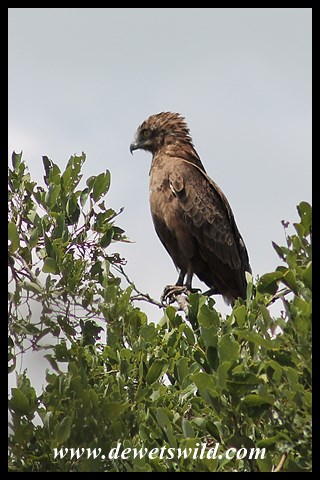
Brown Snake Eagle

Circaetus cinereus

An inhabitant of savannas and open woodland areas, where they are often seen on high vantage points such as dead trees or utility poles, the Brown Snake Eagle subsist on a diet of snakes (large and venomous kinds included) and other reptiles and smaller mammals.

Adult Brown Snake Eagles are usually solitary, except in the summer breeding season when they form monogamous pairs and construct their stick nests on the flat crowns of thorn trees, also often taking over the abandoned nests of other raptors and refurbishing these for their own needs. They usually lay and hatch only one egg at a time, the female incubating the egg for around 7 weeks with the male feeding her at the nest and the hatchling taking to the wing for the first time when it is about 3 months old. Adult Brown Snake Eagles weigh around 2kg, and measure about 74cm in length with a wingspan of 1.6m or so.

Despite noting that some populations are declining due to habitat loss and poisoning, the IUCN currently lists the Brown Snake Eagle as being of least concern. It is widely distributed over the savanna regions of sub-Saharan Africa, and in South Africa is found predominantly in the north-east of the country, from Kwazulu-Natal to North West Province through Mpumalanga, Limpopo and northern Gauteng, where they are much more commonly encountered inside large conservation areas than outside in the adjacent rural areas.

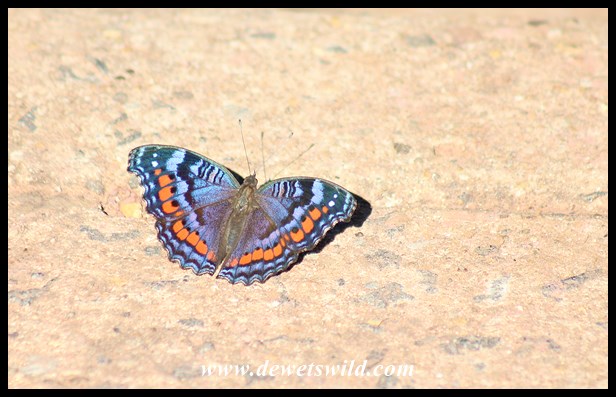
Gaudy Commodore

Precis octavia

The strikingly beautiful Gaudy Commodore inhabits rocky grasslands, savannas and gardens and in South Africa can be found from the Eastern Cape northwards to the Lowveld and Limpopo Valley. North of our borders they occur in similar habitats throughout sub-Saharan Africa. They are restless and fast fliers, often hiding in the shade along stream banks and earthen walls in winter though commonly encountered in the open on hilltops during warmer weather. Eggs are laid singly and the larvae is sustained by a wide range of food plants. Adult Gaudy Commodores have a wingspan of 5 – 6.5cm and can be seen throughout the year.

Rainbow Skink

Trachylepis margaritifera

The Rainbow Skink, or Five-lined Skink, is an active lizard occurring in rocky terrain in savanna habitats from Kwazulu-Natal, through the Lowveld and Limpopo Valley to as far north as Kenya. They feed primarily on insects and other invertebrates. Males are territorial. Females lay one, perhaps two, clutches of 6-10 eggs in summer, with the baby skinks emerging around two months later. Females, adolescents and immature males exhibit the distinct lines and brilliant blue tails associated with this species, while the adult males have an olive base-colouration speckled with tiny white spots. Adults may grow to 20cm in length, including the tail. The IUCN lists the Rainbow Skink as being of least concern.