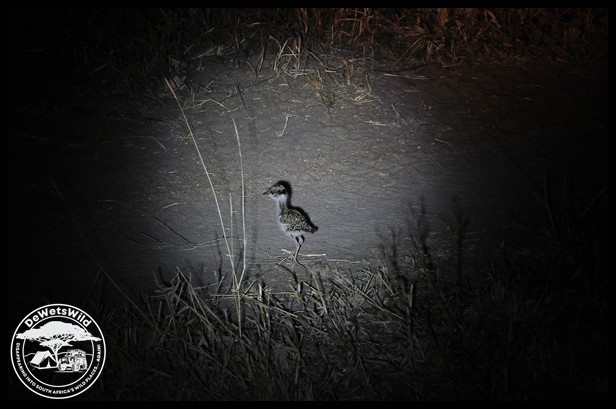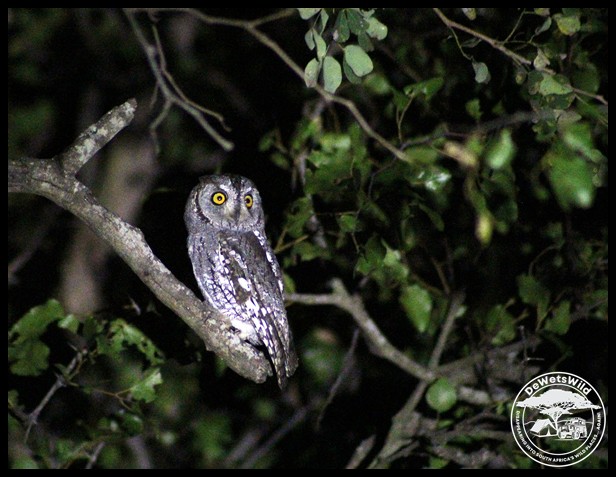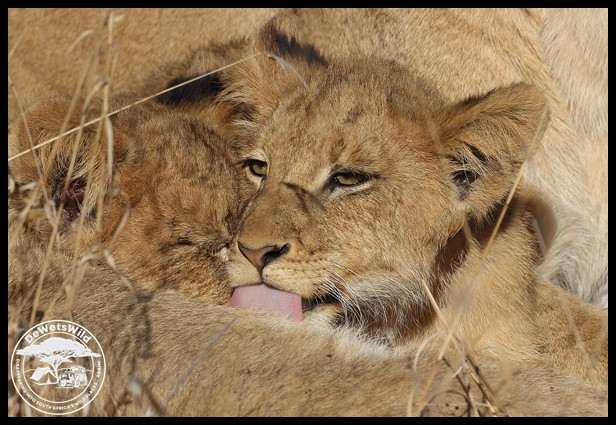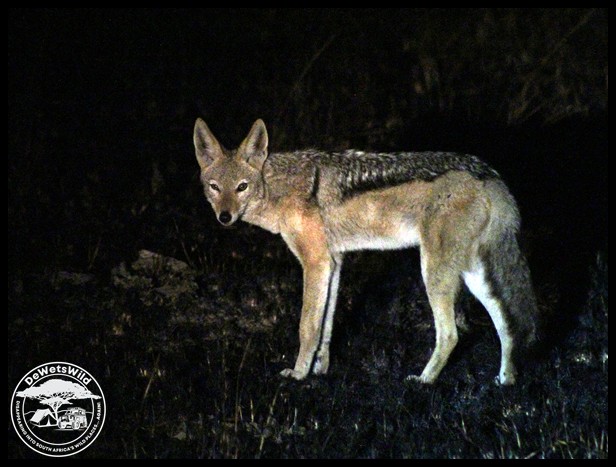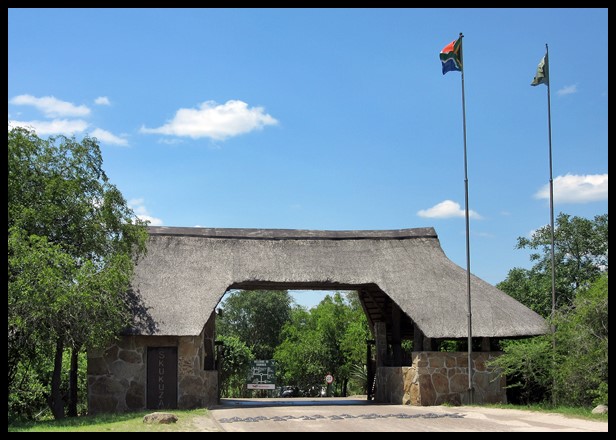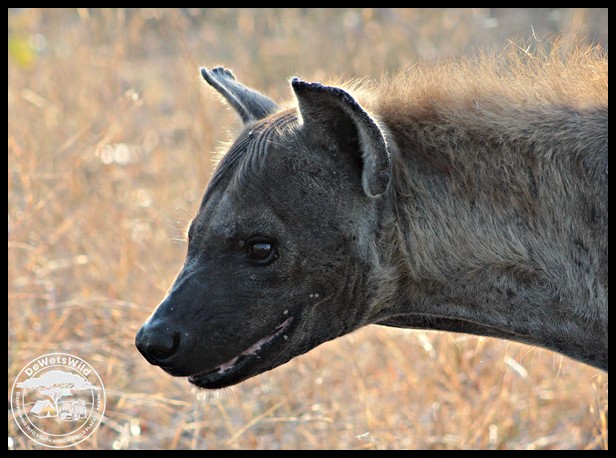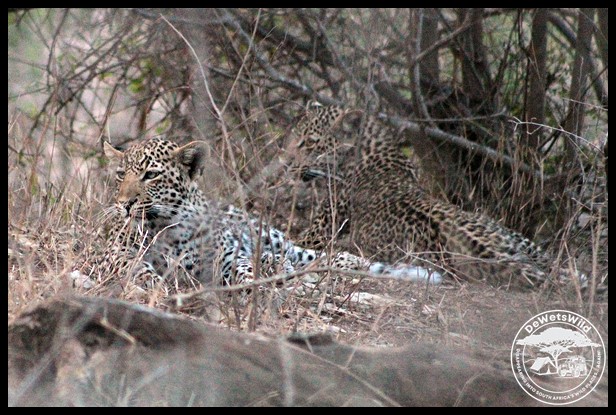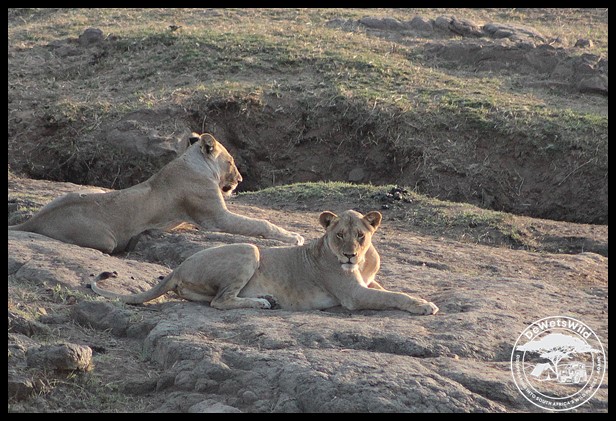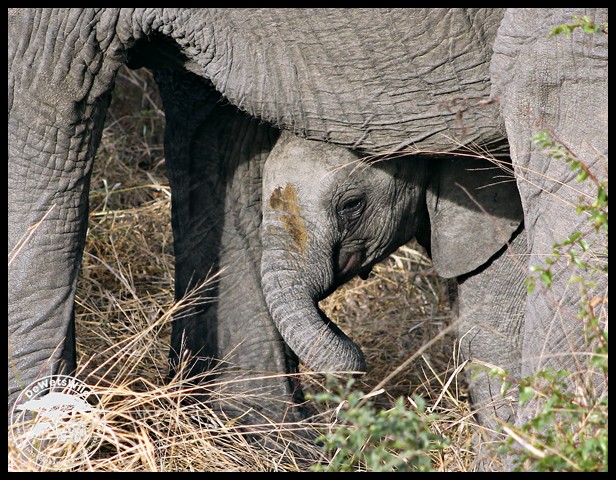
I am fresh back from our Manyeleti Magic Photo-Safari & Workshop hosted in conjunction with Hannes Rossouw Photography out of Buffelshoek Tented Camp, and what a trip it was – without a question one of the best I have ever had, and with 40+ years of visiting South Africa’s wild places that takes some doing! Of course I will be telling you all about it in good time, but here’s a little taste of what you can look forward to.
Red-billed Oxpecker diving into a White Rhino’s ear
Spotted Hyena
Bateleur pair
Lilac-breasted Roller
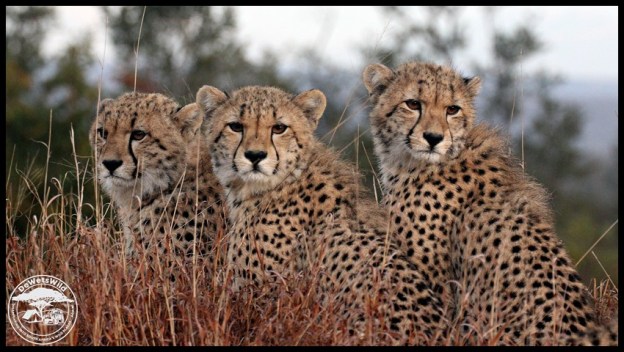
Cheetah
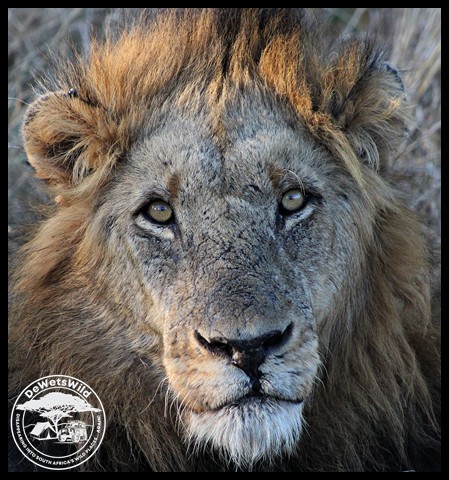
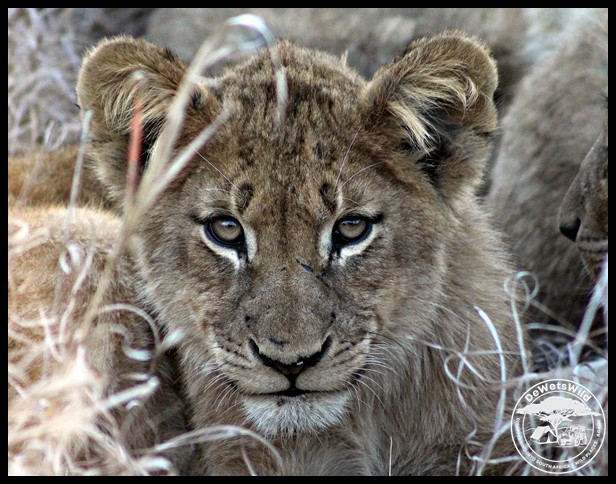
Young male Lion
Magpie Shrike
One buffalo from a herd several hundred strong
Pearl-spotted Owlet
The head of a Southern African Rock Python encountered on our Manyeleti Magic Photographic Safari
Spotted Hyena
African Wild Dogs in playful mood before starting their hunt
A Buffalo standing on a dam wall gives an unusual perspective
White Rhino
Leopard
Hippo eyeing us from the waterhole
Cheetah
Lions after dark
One of the males from the Kambula Breakaway pride
Two of the Kambula Lions at Manyeleti
Buffalo taking a little longer to chew this prickly grasshead
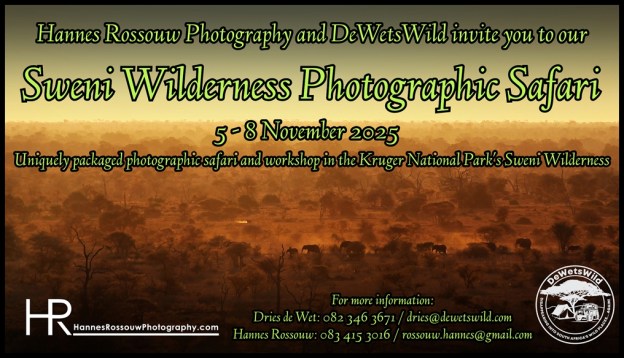
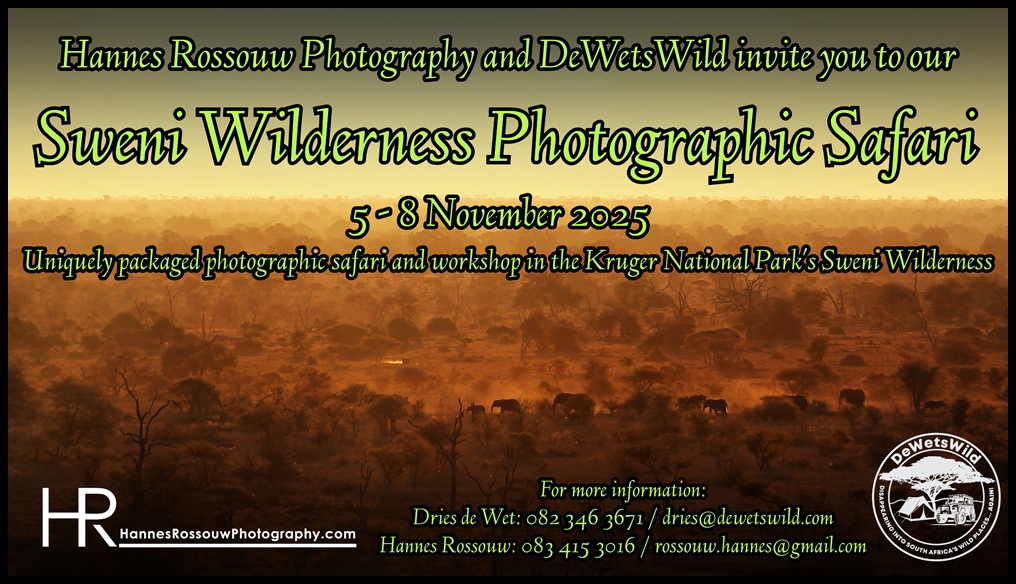
DeWetsWild and Hannes Rossouw Photography invite you to Manyeleti Magic, 27 June to 1 July 2024. A one-of-a-kind photographic safari in the Manyeleti Nature Reserve, an integral part of the Greater Kruger National Park.
Over the past couple of weeks we’ve been showing you some of what we experienced during a holiday visit to the Kruger National Park in early January. There was the excitement of a wild dog hunt, endearing hyena pups, smiles thanks to dung beetles and baboons, the royal presence of lions and leopards and even a concert by the Skukuza frog choir. The Kruger National Park is an amazing place, and well deserving of its position among the great wild places on the planet. We just cannot stay away.
Lake Panic near Skukuza
Dawn at the confluence of the Mutlumuvi and Sand Rivers
View from Mathekeyane
Fruit of the Lowveld Chestnut Tree
Interesting mushroom sprouting from a lawn in Skukuza
Sausage Tree fruit
The Kruger National Park is one of South Africa’s premiere bird-watching destinations, and even more so in summer when the park’s prolific birdlife is boosted by summer migrants from as far away as Eurasia. This gallery is but a tiny morsel of the amazing diversity of birds we encountered while exploring the southern reaches of the Park in January.
Fork-tailed Drongo (photo by Joubert)
Marabou Stork
Male Village Indigobird
Common Sandpiper
Wood Sandpiper
White-crowned Lapwing
Pied Kingfisher (photo by Joubert)
Black-headed Oriole (photo by Joubert)
Bearded Scrub-Robin
Willow Warbler (photo by Joubert)
Southern Carmine Bee-eater
Yellow-billed Kite (photo by Joubert)
African Jacana (photo by Joubert)
African Hoopoe (photo by Joubert)
Brown Snake Eagle
Diederik Cuckoo (photo by Joubert)
Grey Heron using a hippo as an island
Grey-headed Bush-shrike (photo by Joubert)
Terrestrial Brownbul (photo by Joubert)
Southern Boubou
Southern Masked Weaver
Lilac-breasted Roller
Hamerkop
Three-banded Plover
Eurasian Golden Orioles
White-faced Whistling Ducks
African Fish Eagle
Trumpeter Hornbill (photo by Joubert)
Bateleur
The Kruger National Park is even better known for its astounding variety of mammals, which at almost 150 recorded species is among the highest of any conservation areas on the planet! The animals are so used to the gawking people driving around them all day that it makes for wonderful photographic opportunities.
Impala Lambs
Impala Ram (photo by Joubert)
Impala Ram
Buffalo Bull
Southern African Tree Squirrel
Nyala bull (photo by Joubert)
Nyala bull
Hippopotamus
Elephant Cow (photo by Joubert)
Elephants drinking from a temporary stream
Common Duiker
Buffalo Bull
Hippopotamus
Hippopotamus
Cape Porcupine (photo by Joubert)
Elephant Bull
Far less glamorous – some may even call them creepy-crawlies! – but equally as important in the natural cycles that drums the beat in the Kruger National Park is the extraordinary variety of insects, fish, amphibians and reptiles that you may encounter if you keep your eyes peeled.
Red-headed Signal Fly (Bromophila caffra)
Southern Foam Nest Frog
Common River Frog
Common River Frog
Great Waterbug (Hydrocyrius columbiae)
Wahlberg’s Velvet Gecko
Platanna
Southern Tree Agama (photo by Joubert)
Rock Monitor
Nile Monitor (photo by Joubert)
Rock Monitor
Nile Crocodiles
Nile Monitor (photo by Joubert)
Male Rainbow Skink
Mozambique Tilapia
Platannas
Leopard Tortoise
Two-phase Emerald Moths mating
We’d love for you to join DeWetsWild on a guided tour of the Kruger National Park or to help you arrange a self-guided visit. Don’t hesitate to reach out!
No matter how often you visit our national parks and game reserves or how many encounters you have with these regal cats, you just don’t get blasé about seeing Lions in the wild. Our most recent visit to the southern Kruger National Park earlier this month delivered some very exciting and some not so exciting, but still very memorable, sightings of Lions.
Our first Lion sighting of the trip came at the bridge over the Nwatimhiri River, where a small pride of lionesses and youngsters were lying in the long grass and trying their best to blend in with their surroundings.
Lioness in the Nwatimhiri River (photo by Joubert)
Lionesses in the Nwatimhiri River (photo by Joubert)
Lionesses in the Nwatimhiri River
Not much further we found the Lubyelubye pride walking along the road with a cavalcade of vehicles following them. As they walked past our vehicle they were close enough to touch, not that we’re foolish enough to ever attempt that – watch how carefully Joubert videos the passing procession from inside the car! 😉
The Lubyelubye lions walking along the road, just north of Lower Sabie Rest Camp
Early the next morning we were on our way from Skukuza to Tshokwane when we came across three lionesses stalking a zebra in dense growth. The zebra did not notice the lions until it almost step on the closest one, but it still got away! Thrilling to watch for us but I thought I saw a rather miffed expression on the faces of the lions…
Lions failing at their zebra hunting attempt
Lions failing at their zebra hunting attempt (photo by Joubert)
Sometimes you have to work really hard for even a glimpse of a lion, as this one relaxing in the shade in the heat of the day proves.
Being out of the camp gates as soon as they open improves your chances of finding the lions up and active. On our final morning in the Kruger National Park we found this group of 4 lionesses walking over the Sand River Causeway.
Lioness in the dark of early morning
We were still wondering where the males associated with the group of female’s we’d just seen could be, when we found these two lazing on the Marula Loop road only about 2km further.
Very tired male lion wondering why he decided to sleep on the road… (photo by Joubert)
Very tired male lion wondering why he decided to sleep on the road…
And then getting up to find a quiter spot for his early morning lie-in (photo by Joubert)
If seeing lions in the wild is on your wish list we’d love for you to join DeWetsWild on a guided tour of the Kruger National Park or to help you arrange a self-guided visit. Don’t hesitate to reach out!
Chacma Baboons are great entertainers and most visitors to the Kruger National Park enjoy seeing these animals. I suppose that’s because their obvious intelligence, playful nature, endearing family interactions and the occasional aggressive altercation is like a mirror held up to our faces.
Baboon reaching for a grass stem full of seeds
Baboons are omnivores (photo by Joubert)
Baboon reaching for a grass stem full of seeds
Baby Baboons ride their mom like a jockey when they’re a bit older
Playful Baboon toddlers
Male Baboon looking very unimpressed
Is it just a Baboon yawn, or a sign of aggression?
We’d love for you to join DeWetsWild on a guided tour of the Kruger National Park or to help you arrange a self-guided visit. Don’t hesitate to reach out!
Outside of the reception office at Skukuza in the Kruger National Park is a beautiful pond, which by night is transformed into a stage for dozens of frogs of various kinds. For us it has become a tradition to visit the pond every night we spend in Skukuza to admire the sights and sounds of animals that are becoming ever more rare in the modern world.
We’d love for you to join DeWetsWild on a guided tour of the Kruger National Park or to help you arrange a self-guided visit. Don’t hesitate to reach out!
The Kruger National Park has a healthy Leopard population and the Skukuza-area of the Park is renowned for excellent encounters with these big cats, especially if you know where and when to look for them. During our short visit earlier in January we had three memorable Leopard sightings to share with you.
We were still readying our cameras at the Malelane Gate shortly after arriving when some kind folks told us about this Leopard lazing in a tree just a few kilometers into the Park on the way to Skukuza. We were grateful it was still in the same spot when we got there – starting your visit with a Leopard sighting is a very good omen of things to come!
Lazy Leopard in a tree near Malelane in the Kruger National Park
Lazy Leopard in a tree near Malelane in the Kruger National Park (photo by Joubert)
Lazy Leopard in a tree near Malelane in the Kruger National Park
Our next Leopard encounter was with this individual of whom we caught only a quick glimpse along the main road leading to Lower Sabie from Skukuza before it melted away in the lush summer vegetation.
In January the Park’s Rest Camps open their gates at 04h30 in the morning, with there then being still quite a while before first light. Skukuza’s gates had just been swung open and we joined the first few cars heading out when this brute of a Leopard male stepped out onto the road at the 4-way crossing not even a kilometer further. In our wild places an early start to the day is often handsomely rewarded!
Leopard just outside Skukuza in the early morning
Leopard just outside Skukuza in the early morning (photo by Joubert)
We’d love for you to join DeWetsWild on a guided tour of the Kruger National Park or to help you arrange a self-guided visit. Don’t hesitate to reach out!
Even if Spotted Hyenas were not the most numerous large predator around Skukuza Rest Camp in the Kruger National Park – and I think they are – they’re definitely the most frequently encountered, a fact borne out yet again by the many rendezvous we had with these fascinating creatures during our visit to the Skukuza-area earlier in January.
Spotted Hyena near Leeupan, north-east of Skukuza Rest Camp
On a night drive from camp, following the course of the Sabie River, we crossed paths with several clans all searching for food.
We paid frequent visits to a Hyena den just a few kilometres south of the camp, where the many curious cubs kept us well entertained. These encounters were definitely in the “cute and cuddly” category.
Adult female Spotted Hyena at their den near Skukuza
Spotted Hyena cub at their den near Skukuza
Spotted Hyena cub at their den near Skukuza (photo by Joubert)
Spotted Hyena cubs at their den near Skukuza (photo by Joubert)
Spotted Hyena cub at their den near Skukuza (photo by Joubert)
Spotted Hyena cub at their den near Skukuza
Spotted Hyena cubs at their den near Skukuza
Spotted Hyena cubs licking at a puddle of aircon water in the road at their den near Skukuza (photo by Joubert)
Spotted Hyena cub at their den near Skukuza (photo by Joubert)
We were awed by their tenacity when we spent time with this group of four Hyenas who were following the hunting wild dogs we shared with you a few days ago. While they couldn’t keep up with the pace of the painted wolves they were not put off, hoping that if they stayed on the spoor of the dogs they would catch up with them and could steal their meal. As it turned out the kill was quickly consumed by the wild dogs and the hyenas were left without a morsel by the time they arrived, but I am sure this will not prevent them trying again!
Spotted Hyena following a pack of wild dogs on the hunt
Spotted Hyenas following a pack of wild dogs on the hunt (photo by Joubert)
Spotted Hyena following a pack of wild dogs on the hunt (photo by Joubert)
Definitely the scariest run-in with a Spotted Hyena during this latest trip was with an individual who popped into the Tshokwane Picnic Spot while we were having breakfast. Luckily he didn’t stay long and moved off again without using those powerful jaws on any of the humans.
Spotted Hyena inspecting Tshokwane Picnic Spot in the Kruger National Park (photo by Joubert)
Spotted Hyena inspecting Tshokwane Picnic Spot in the Kruger National Park
We’d love for you to join DeWetsWild on a guided tour of the Kruger National Park or to help you arrange a self-guided visit. Don’t hesitate to reach out!
We’ve just returned from another wonder-filled visit to the Kruger National Park, where as always we had great luck and enjoyed the most memorable experiences. One of those was this encounter with a pack of African Wild Dogs hunting along the Sand River while we followed behind until they caught, killed and devoured a young Impala early yesterday (11 January 2024) morning. This video – not for sensitive viewers – was taken by Joubert.
We’d love for you to join DeWetsWild on a guided tour of the Kruger National Park or to help you arrange a self-guided visit. Don’t hesitate to reach out!