Category Archives: Kwazulu Natal Province

Our experiences in the reserves of Kwazulu-Natal, South Africa

African Bullfrog

Pyxicephalus edulis

While I doubt it reached proportions that would convince the Pharaoh to allow the Israelites to leave Egypt, the “eruption” of little froglets we saw at uMkhuze Game Reserve during our recent visit was quite fascinating. Rain or shine, literally hundreds (if not more) of tiny frogs could be seen jumping around on the roads all over the reserve, making driving quite tricky if you didn’t want to squash them under the vehicle’s wheels.

Thanks to the help of the iSimangaliso Wetland Park the little ones were identified as juvenile African Bullfrogs (also known as Edible or Lesser Bullfrogs), a species that occurs over wide areas of Eastern, Central and Southern Africa, and indeed is eaten by humans in many countries where they occur. Though these newly metamorphosed juveniles were only about the size of a thumbnail, the African Bullfrog can grow to 12cm in length.

African Bullfrog

They can be found in seasonally flooded savannas and grassy woodlands, remaining dormant underground for most of the year (up to 10 months) and emerging only when sufficient rain has fallen for breeding to commence. During the breeding season males act very aggressively towards one another and will even kill each other. Eggs are laid in well vegetated, shallow, seasonal bodies of water where the males guard the eggs and tadpoles against other males and predators. Interestingly, when the tadpoles’ pools start drying up the males will dig channels to deeper pools. African Bullfrogs feed on a variety of invertebrates and small vertebrates, including other frogs, and feature in turn in the diets of various species of birds, reptiles and mammals (humans included).

During a visit to the Kruger National Park in December 2019 we witnessed the breeding habits of the African Bullfrog following a few days of continuous rain.


Rhino Social Media

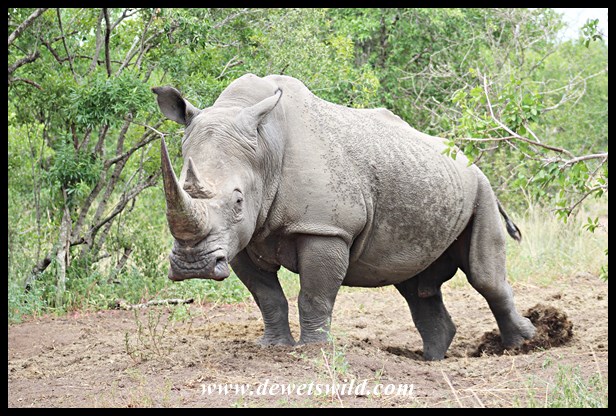
White rhino bulls use dung middens to communicate their presence and demarcate their territories. They’ll also kick around in the middens to transfer the scent onto their feet and then spread it throughout their stomping grounds, communicating their ownership to interlopers.


Hluhluwe-Imfolozi’s Giants

Hluhluwe-Imfolozi Park is home to giants; behemoths that can cause the earth to tremble with every step. And they’re not shy about showing themselves either, as we found out again during our visit in December.

Buffaloes were in evidence throughout the Park, whether as lone bulls, in small bachelor groups or in huge herds.

We could never tire of seeing elephants!

The curious giraffes tower over everything else in Hluhluwe-Imfolozi, except the magnificent scenery…

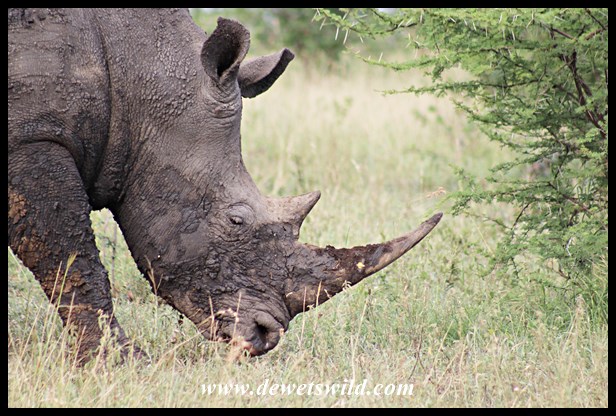
It is thanks to Hluhluwe Imfolozi that we can still see the Southern White Rhino in the wild today.

We didn’t get to see the hippos on this trip, and only managed two quick sightings of black rhinos that were too fleeting for photos, but still, these galleries should be proof enough that giants still roam Hluhluwe-Imfolozi Park.

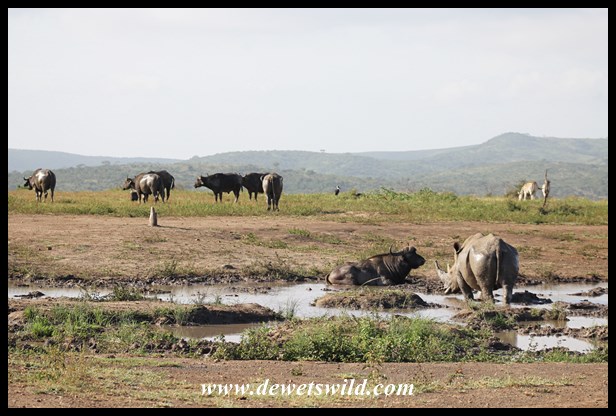
hip-white-rhino-and-buffaloes

The staple diet…

A selection of five common herbivore species form the base diet of most of Hluhluwe-Imfolozi Park’s predators. Apart from the warthogs we showed you yesterday, the majority of their menu is mostly made up of impalas, nyalas, plains zebras and blue wildebeests with the more “exotic” fare consisting of primates (like the samango monkey), kudu, waterbuck, buffaloes and giraffes (we’ll share some pictures of the latter two tomorrow).

Looking at the excellent condition of the game following good rains just before our December visit, you’d be forgiven though for thinking that it is an easy life for a herbivore in Hluhluwe-Imfolozi!

These little piggies

During our visit to Hluhluwe-Imfolozi Park in December we found that at least two warthog sows decided that Mpila Camp would make an excellent nursery for their tiny piglets.

Aren’t they adorable!?

Encounters with Cheetahs at Imfolozi

Many of our friends here at de Wets Wild are great fans of cheetahs, so they especially would be thrilled to know that we had three wonderful encounters with these lithe cats during our December visit to Hluhluwe-Imfolozi Park.


Monkey Cuteness

This tiny vervet monkey, playing with his toes and being amazed by the things he sees around him in the Hluhluwe-Imfolozi Park’s Hilltop Camp, must be one of the cutest things I’ve seen in a long time!

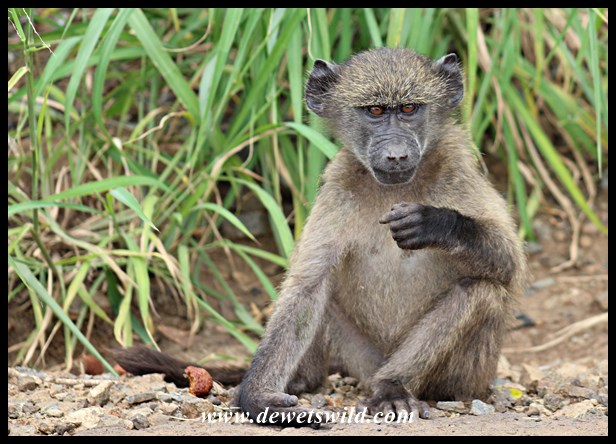
This baboon youngster on the other hand reminds me of that evil doll Chucky

evil-looking-baboon

Bird Watching in Hluhluwe-Imfolozi

Hluhluwe-Imfolozi is blessed with a rich diversity of avifauna – this gallery shows just a small selection of the 104 bird species we identified during our visit in December.

Nest Building Secretarybirds

A pair of Secretarybirds had just started building their platform-nest on top of a small tree near the Hluhluwe-Imfolozi Park’s Cengeni Gate when we visited in December. It was quite interesting to watch them searching the surrounding area for sticks and twigs to use in the construction.

Mauritian Tomb Bat

Taphozous mauritianus

When we found a small colony of Mauritian Tomb Bats on the outside walls of the reception office at the Hluhluwe-Imfolozi Park’s Nyalazi Gate, it presented a good opportunity to learn a bit more about this seldomly seen creature.

Mauritian Tomb Bats are quite large for insectivorous bats, weighing as much as 36g and up to 11cm long. They occur in the moist savanna areas of north-eastern South Africa, further north into Central and East Africa, as well as on a few of the islands of the Indian Ocean. By day they roost in small, loosely associated groups on the shaded walls of buildings or on tree trunks, and not in caves or tombs as their name might suggest. At night they forage for moths and other nocturnal invertebrates, which they catch and eat in flight.

Most females raise a single baby at a time, though some do give birth twice annually. Dependent young cling to the mother as she flies around and at their roost, but as soon as they can fly themselves they become autonomous.

The IUCN considers the Mauritian Tomb Bat of “Least Conservation Concern” owing to its wide distribution, large population, and tolerance for habitat change.