Summertide Diary: Spending time with hungry elephants

I can’t think of another reserve in South Africa where the elephants are quite so relaxed around humans and their vehicles as they are in the Addo Elephant National Park. Of course this allows visitors to observe up close just how dexterously elephants use their trunks – and feet! – to uproot even tiny morsels of tasty plants.

Summertide Diary: Arriving at Addo

27 December 2020

After spending a lovely three days over Christmas at home with Marilize’s parents, whom we haven’t seen in person since they retired to Jeffreys Bay 15 months ago, we all headed together to the Addo Elephant National Park‘s Matyholweni Gate, just an hour’s drive away, for a four night visit to this very special place.

It takes a few hours of leisurely driving to travel through the Park from Matyholweni to the Main Camp where we were booked to stay, and this of course means there’s wonderful sightseeing, bird-watching and game-viewing along the way! Jack’s Picnic Spot, just a little over halfway, is a great place to stretch tired legs while enjoying visits from all kinds of birds and other small creatures at your picnic table.

In the afternoon, and after getting settled into our comfortable chalet, we have a little time to take a drive along a few loop roads close to camp before the gates close.

If you’d like to learn more about the Addo Elephant National Park’s history and all it has to offer visitors, why not have a read through this post we compiled after our previous visit? And to follow along on our travels through Addo, you might find this map (from the SANParks website) most handy.Addo map from https://www.sanparks.org/parks/addo/tourism/map.php


Summertide Diary: Nature’s Valley (Garden Route National Park)

22 – 24 December 2020

Located at the mouth of the Groot River, the small holiday town of Nature’s Valley is surrounded by the western reaches of the Tsitsikamma section of the Garden Route National Park. The town is connected to the N2 national highway by the Groot River Pass which makes for a magnificent drive as one descends through the forest canopy to the town below.

South African National Parks manages the De Vasselot Rest Camp, which offers two fully-equipped chalets, ten rustic forest huts and a camping area on the outskirts of town. Private holiday homes are available to hire in town where there’s also a small general store and restaurant. Several hiking trails traverse the forests and beaches around Nature’s Valley, and canoes can be hired to explore the river and lagoon.

We spent two nights at the De Vasselot Rest Camp at Nature’s Valley during our 2020-21 Summertide Ramble, arriving in the early afternoon on the 22nd and departing again late morning on the 24th of December 2020. Our chalet on the bank of the Groot River had a lovely setting from which we could wonder at the beauty of Nature’s Valley.

When the sun was out we enjoyed the most beautiful sunrises and sunsets from our stoep. When it was raining, the sound of the drops hitting the river and the quacking of the raucous toad beneath the deck combined to make a soothing lullaby, lulling me to sleep right there on the veranda.

We didn’t see the sun very often during our time at Nature’s Valley and couldn’t explore as widely as we wanted to due both to the very rainy weather and government restrictions imposed to clamp down on South Africa’s “second wave” of COVID-19 infections, and we’ll definitely have to return to remedy that. Still, there were many trails that we did explore in between (and sometimes during) the rain showers, and even walking in the camp and town proved very rewarding.

One of our hikes took us on a forest trail in the early morning, and we were hoping to reach a cliff-top vantage point overlooking the Indian Ocean. But we got lost in the forest. Thankfully we could trace our steps back after realising that we lost our way. And we could swing on monkey vines (yes, strong enough to hold even me!). And we got soaking wet after it started raining. And yet there was so much life to marvel at that the hike really was still more than worth the effort. The fact that we really do want to go see that viewpoint is just another reason why we have to return to Nature’s Valley!


Nature’s Valley location (Google Maps) Click on the map for an enlarged view.


Summertide Diary: Departing Wilderness

22 December 2020

Our last morning in Wilderness and one final chance to take a walk through the camp – even if it was drizzling slightly it’s amazing to still find so much new to see!

As we start our drive to our next destination, the sun finally puts in an appearance, inviting us to pull to the side of the road and enjoy the view over Swartvlei, the largest of the lakes in the Wilderness section of the Garden Route National Park.

A view over Swartvlei from a lay-by along the N2-highway

If you’d like to read more about the Wilderness section of the Garden Route National Park, please have a look at this special feature about it that we published a while ago.

Summertide Diary: Exploring Wilderness and surrounds

21 December 2020

It pays to be out early in South Africa’s wild places, and the Wilderness section of the Garden Route National Park is no exception. Even when the sky is still heavy with rain and the sun nowhere to be seen.

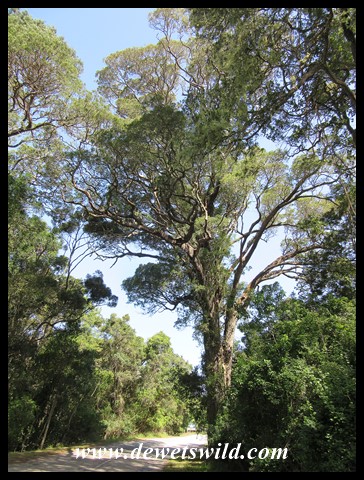
After breakfast we felt like exploring a little further afield, and so headed to the Woodville indigenous forest a few kilometers away from Ebb-and-Flow. We explored the wet forest, marveled at the enormous Outeniqua Yellowwood that rules over it and kept a lookout for birds and other creatures trying to hide from us, until we could stand the pestering mosquitoes no more!

From Woodville we extended our joy ride to Rondevlei and the Swartvlei beach, and then had a quick look around the holiday town of Sedgefield, of which I have many happy childhood memories, before heading back to camp.

Just being outside at Wilderness was such balm for the soul. You don’t always have to be out chasing the “hairy and scary” animals for which Africa is famous to enjoy yourself in our wild places…

More frog hunting before bed-time resulted in these photographs of Raucous Toads:

If you’d like to read more about the Wilderness section of the Garden Route National Park, please have a look at this special feature about it that we published a while ago.

Greater Red Musk Shrew

Crocidura flavescens

One of the real highlights of our visit to the Wilderness section of the Garden Route National Park was an encounter with a rarely seen small mammal: a Greater Red Musk Shrew.

Although it is tiny, weighing only about 30g, the Greater Red Musk Shrew is one of the biggest members of the shrew-family occurring in South Africa. We found the shrew next to a reed bed along the Touw River – typical habitat for the species, although they do occasionally venture into gardens and houses. Greater Red Musk Shrews are insectivores, feeding on a wide range of insects, worms and other invertebrates, and like other shrews have a relatively enormous appetite needing to consume at least half its own weight on a daily basis.

These cute creatures are mostly nocturnal, so we count ourselves very lucky seeing one in daylight (although heavily overcast) and out in the open. By day they hide in grass-nests built slightly above ground level in dense grass cover.

Females give birth to up to 7 young after a gestation of only a month, mainly in the summer months. The babies follow their mother around from 6 days old by forming a “train” nose-to-tail with their siblings. Like other shrews they live extremely fast-paced lives – the young are weaned at only 3 weeks old, reaching sexual maturity when they’re 2-3 months old and then have a life expectancy of maximum 18 months!

The IUCN considers the Greater Red Musk Shrew to be of least concern in conservation terms. It is almost endemic to South Africa, occurring all along our coast from Namaqualand to Maputaland and into extreme southern Mozambique and also along the Drakensberg through Lesotho and eSwatini to the escarpment in Mpumalanga.

Joubert photographing the Greater Red Musk Shrew at Wilderness

Summertide Diary: Arriving at Wilderness

20 December 2020 (cont.)

Even though we arrived at the Ebb-and-Flow Rest Camp in the Wilderness section of the Garden Route National Park under heavy skies, there was no reason to be gloomy. There’s no doubt that the Garden Route is one of the most beautiful parts of South Africa, no matter the weather.

There’s no containing our enthusiasm for exploring a destination once we’ve arrived and not even the threat of a downpour was going to keep us indoors while the expansive Ebb-and-Flow Rest Camp beckoned outside our log cabin, however comfortable it may be.

By now you probably know that we have a propensity to extend our explorations into the hours of darkness. Most of the camps in our national parks are safe to do just that and if you apply some common sense rules like walking with closed shoes you’re likely to be handsomely rewarded with some unusual encounters, like these we had on our first night at Ebb-and-Flow.

If you’d like to read more about the Wilderness section of the Garden Route National Park, please have a look at this special feature about it that we published a while ago.


Summertide Diary: Departing from Bontebok

20 December 2020

With our next destination, the Wilderness section of the Garden Route National Park, relatively close we can afford to have a leisurely start to our final morning at Bontebok National Park. Marilize and Joubert opt to sleep in, while I start my morning attempting to get photographs of the Cape Serotine Bats catching moths around the outside lights in the camp before setting off on a drive. By the time I get back we have breakfast together before packing the car and heading to reception to check out.

If you’d like to learn more about the Bontebok National Park, have a read through this special feature we published after a previous visit. For more about the beautiful Bontebok antelope, read here.

Map of Bontebok National Park, from a brochure published by SANParks

Summertide Diary: Exploring Bontebok

19 December 2020

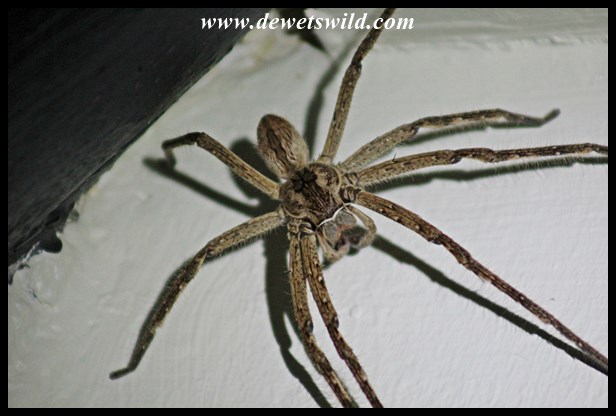
Our first morning in the Bontebok National Park started with a visit from a VERY big Rain Spider in the kitchen. Despite their large size these spiders aren’t deadly to humans (though a bite would be very painful), but considering that other visitors might overreact if they encounter this one and kill it I decided to catch it and relocate it to a suitable spot outside (and had to keep a curious Cape Bulbul at bay while the spider hid in an aloe). After all this excitement we could enjoy breakfast overlooking the Breede River as morning broke over the Lang Elsie’s Kraal Rest Camp feeling very pleased with ourselves.

The previous time we visited Bontebok it rained for most of the two days we spent in the Park, and so we didn’t get to explore much. This beautiful morning presented an opportunity to rectify that, so we got an early start to our first drive through the reserve.

We wanted to go check out the local picnic spot, known as Die Stroom (“The Stream”) before it got too busy with day visitors. It does seem a lovely spot to enjoy a relaxed picnic while also taking pleasure in all the Park’s other attractions.

When we got back to camp one of the star attractions of the Park, a Bontebok, was waiting for us at our chalet, together with an Angulate Tortoise and lots of birds.

Another one of the things we missed out on during our previous visit to Bontebok was most of the walking trails available to visitors, so before lunch (and before it got too hot) I got going on the Acacia and Bushbuck Trails, which follow the course of the Breede River. Along the way a few viewing decks have been built overlooking peaceful stretches of the river.

After lunch there was time to walk around the camp.

And then another circuit of the Park’s game viewing drives saw us through till sunset.

After dinner and with the camp now clothed in darkness I went down to the river to look for frogs at the water’s edge. Thrilled to find a few of three different species, though even more exciting to see was the Sharp-toothed Catfish actually jumping onto the river banks to catch any frogs sitting too close to the water!

While away from our chalet our little “camera trap” caught this Large-spotted Genet patrolling outside.

Large-spotted Genet caught by our camera-trap outside our chalet at Bontebok National Park

If you’d like to learn more about the Bontebok National Park, have a read through this special feature we published after a previous visit. For more about the beautiful Bontebok antelope, read here.

Map of Bontebok National Park, from a brochure published by SANParks

Summertide Diary: Arriving at Bontebok

18 December 2020 (cont.)

After an exhilarating day on the road, traversing no less than four different mountain passes including the famous Swartberg Pass, it was good to arrive at the Bontebok National Park outside Swellendam in the Western Cape. It’s just a short drive from the reception office to the Lang Elsie’s Kraal Rest Camp.

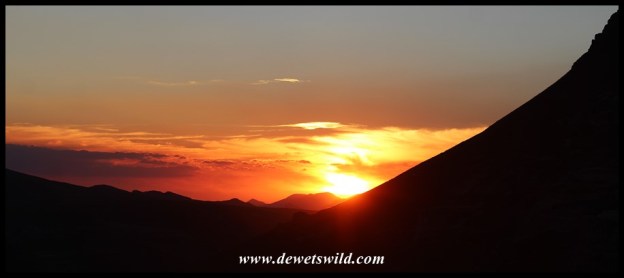
With our chalet overlooking the serenity of the Breede River and the sunset beyond, the day came to a fitting close.

If you’d like to learn more about the Bontebok National Park, have a read through this special feature we published after a previous visit. For more about the beautiful Bontebok antelope, read here.

Map of Bontebok National Park, from a brochure published by SANParks