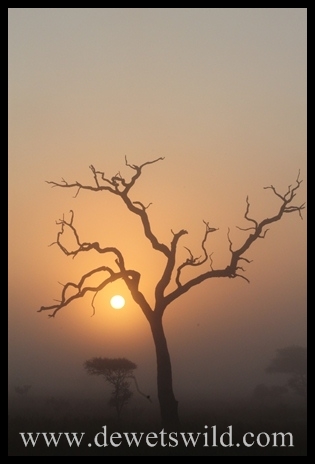
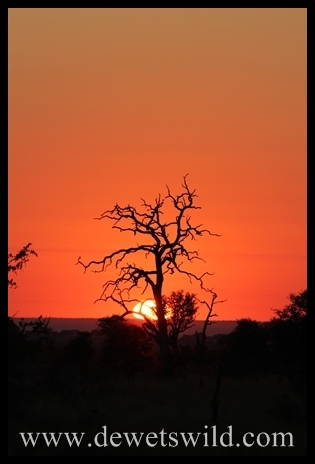
Sunrise

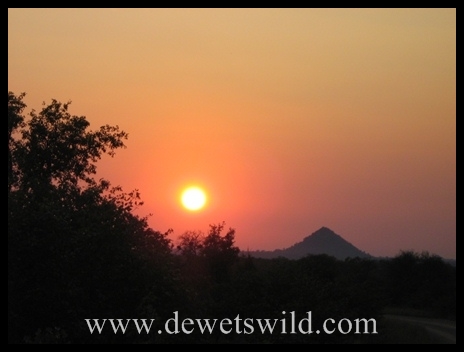
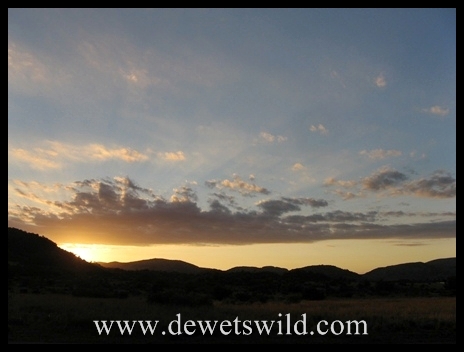
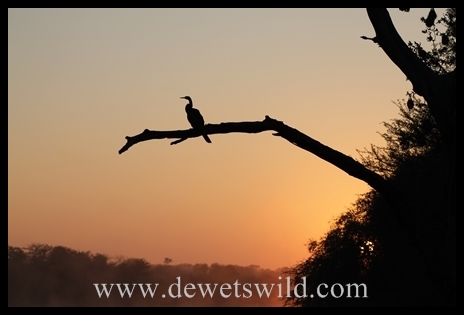
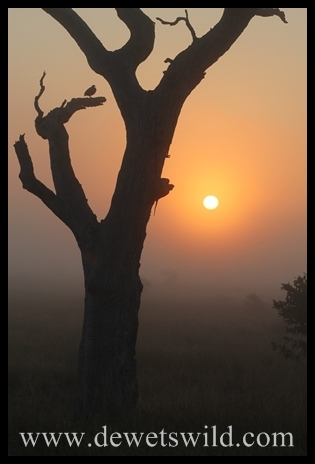
Our visit to the Kruger National Park in April 2012 delivered some of the most gorgeous sunrises we can recall:

Sunrise1

Sunrise2

Sunrise3

Sunrise4

We’re participating in the online adventure travel and photography magazine LetsBeWild.com‘s Wild Weekly Photo Challenge for bloggers. This week’s challenge is Sunrise

Kruger’s Big Tuskers

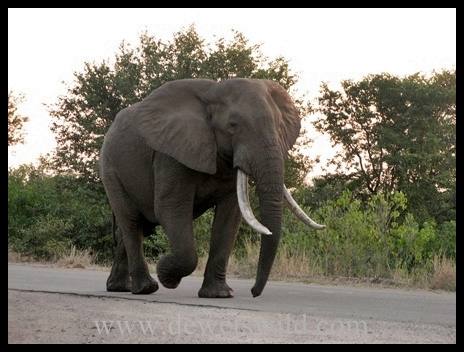
There’s more than 14,000 elephants in the Kruger National Park, and of course they are a big drawcard for visitors to this game reserve, being charismatic animals and members of the famed “Big 5”.

For us too, encountering elephants is always a special treat: witnessing the interactions between different herd members or the playful antics of the calves, and there’s few things in nature as beautiful as the gait of a confident elephant bull, his massive head swaying from side to side,  intent on ensuring anything and everything in his way clears out before he gets there.

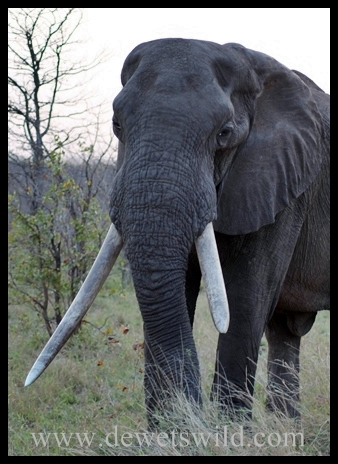
The Kruger Park is known as one of the few remaining places on the African continent where you still have the chance to see elephants carrying impressive tusks, sometimes in excess of 2 or even 3 metres in length and weighing anything between 40 and 70kg. In the Letaba Rest Camp there’s a fascinating  museum dedicated to the elephant, where visitors can also marvel at the tusks of some of Kruger’s most famous tuskers.

Over the years, we’ve been extremely fortunate to have encountered a handful of these living monuments while exploring the Kruger National Park, especially in the northern regions of the park in the vicinity of Shingwedzi, Letaba and Mopani Rest Camps. Traditionally, these remarkable giants are given distinctive names, either for the area they roam or in honour of Kruger staff members who have dedicated their lives to the protection of this special place.

Eventhough I was then only a child travelling to the Kruger Park with my parents, long before the advent of cheap (digital) photographic equipment, encounters with the magnificent Mandleve and Mabarule will live in my memory forever.

The photographs we’re sharing here are more recent. In January 2006, Marilize and I became two of the very small number of people to have had the honour of seeing Masbambela -we’ve already posted some pictures of him in a previous post (here)

MASBAMBELA_JAN06

Masbambela

Our sighting of Ngunyupezi in April 2007, when the whole de Wet clan went camping at Shingwedzi, was just as special – it was only the second officially recorded sighting of this enigmatic bull, whose left tusk characteristically grows almost straight down. At one point he charged at us, head held high and that straight tusk leading the way like the lance of a medieval knight! Ngunyupezi is still seen in the Shingwedzi area from time to time.

Ngunyupezi_APR07

Ngunyupezi

Hlanganini was a well-known tusker, regularly seen around Letaba Rest Camp. This is also where we met him, in September 2007. Hlanganini died a couple of years ago, following a fight with another bull.

HLANGANINI_SEP07

Hlanganini

During a visit in June 2011, my brother Niel and I came accross two of the new generation of Kruger  Tuskers: Machachule, right at Shingwedzi’s back gate, and Masanana, near Letaba.

Machachule_Jun11

Machachule

Masasana_Jun11

Masasana

We’ve already had five encounters with Masthulele, believed to be Kruger biggest tusker at the moment, over the years. This sighting was in April 2012 near Letaba, while visiting the Park with our friends the du Plessis’.

Edit: SANParks announced in September 2017 that Masthulele had died during 2016.

Masthulele_Apr12

Masthulele

During our visit in September of 2012 we were lucky to see two more tuskers: Mandzemba welcomed us back to our beloved Shingwedzi, while Ngodzi bade us farewell us we departed from Mopani. These two tuskers haven’t been named “officially” by Kruger’s management (yet) and their names are, for now, derived from waterholes found in their home ranges.

Mandzemba_Sep12

Mandzemba

Ngodzi_Sep12

Ngodzi

Everytime we visit the Kruger Park, we hope for another special appearance by one of these majestic animals. It may be years before we are fortunate to have our path cross one of theirs again, but when it happens it will surely be another thrilling experience!
Kiss

Our silly contribution for the Valentine’s week photo challenge

Kiss

More thanks from de Wets Wild

Elizabeth Turner (elleturner4), the talented blogger responsible for Dot knows!– a delightful mix of beautiful photos and intelligently humorous writing that you’d surely enjoy – have done us the great honour of nominating de Wets Wild for two awards recently!

Thank you, again, Elle (everyone seems to be calling you Elle in the blogosphere – do you prefer that to Liz?) for thinking of us – it is always nice to receive a pat on the back and more so from someone as talented and experienced as you!

versatileblogger

First off, Elle nominated us for “The Versatile Blogger Award” and, in accepting the award there’s a couple of courtesies we need to adhere to:

Acknowledging and linking back to the blogger that nominated us – Done!
Next give seven random pieces of information about ourselves, so here goes:

1)     Marilize is a terrific cook!
2)     Dries enjoys a bit of “plane-spotting” every now and then

3)     Joubert has a little rabbit called “Snoesie” as a pet

4)     Snoesie rules the back yard

5)     Marilize is a passionate reader of fiction

6)     Dries enjoys reading non-fiction only

7)     Joubert, at three years of age is quite multilingual – Afrikaans is our home language, but he is quite accomplished in English and understands a fair bit of isiZulu.

And then the Grand Finale; nominating fifteen other bloggers that we consider worthy of this award, based on the following guidelines: “The quality of the writing, the uniqueness of the subjects covered, the level of love displayed in the words on the virtual page. Or, of course, the quality of the photographs and the level of love displayed in the taking of them. Honour those bloggers who bring something special to your life whether every day or only now and then.”

mjculverphotography

Nature on the Edge

Notes from Africa

about.the.bush

Derek Evans Photography

Zeebra Designs & Destinations

The Serenity Space

The Unwitting Traveller

23 Thorns

Through My Lens

Francine in Retirement

Cee’s Photography

human Triumphant

Our second award nomination from Elle is for the “Liebster Award” – in accepting, we have to mention and link back to our nominator (please refer to the opening paragraph), answer eleven quick questions about ourselves, and nominate eight favourite fellow bloggers for the award:

What is your favourite song?

Amazed by Lonestar

What was the last thing you ate?

The contents of the lunchbox Marilize packed for me…

Do you prefer to read from an eReader or a paper copy?

Paper!

List your five favourite movies?

Notting Hill

Robin Hood, Men in Tights

The Lion King

Miss Congeniality

The Hangover

What writing project are you working on now?

We’re working on a series on the nature destinations around Pretoria, another on the camps of the Kruger Park, and one on the big tuskers of Kruger – all to be featured soon on de Wets Wild.

Are you allergic to anything?

Not that we know of!

Do you have any real life stories that start with, “This one time at camp…?”

Of course there are many, given that we escape to nature every chance we get – the hyena incident at Hluhluwe-Imfolozi is a recent example.

How do you handle telemarketers?

Politely decline their offer the first time but then if they don’t want to relent I put my phone down next to the radio or television so that they too can experience the joy of listening to something you are not the least interested in…

When was the last time you wrote someone a letter by hand and mailed it?

1997

Besides writing, do you have any other artsy talents?

Dries and Joubert enjoy drawing, and Marilize is, as mentioned before, an excellent cook

What is your favourite joke?

Not a joke, but a funny saying: If at first you don’t succeed, then maybe sky-diving isn’t for you!

In turn we’d like to nominate the following eight blogs for the Liebster Award:

mjculverphotography

Nature on the Edge

Notes from Africa

about.the.bush

Derek Evans Photography

Zeebra Designs & Destinations

The Serenity Space

The Unwitting Traveller

We hope that our nominees accept these small tokens of the high regard we have for the work they publish!

Wanderlust

It’s scenery like this that causes us to return to one of South Africa’s wild places at every opportunity, and why we pine for the bush whenever we cannot be there. This photograph was taken in the Hluhluwe-Imfolozi Park and shows a guided sunset drive about to cross the Black-Imfolozi River.

Wanderlust

We’re participating in the online adventure travel and photography magazine LetsBeWild.com‘s Wild Weekly Photo Challenge for bloggers. This week’s challenge is “Wanderlust

Rietvlei Nature Reserve – 3 February 2013

Rietvlei_6213

We’ve made mention before of how fortunate we are to live in Pretoria, where so many nature reserves are to be found in close proximity to the city. At 3600ha, the Rietvlei Nature Reserve is the largest of the nature areas within the city limits, and is located right at the southern edge of the metro.

Rietvlei_9934

Rietvlei_9895

Rietvlei_9893

Rietvlei_9829

Rietvlei_9799

Rietvlei_0004

Rietvlei is an important reserve in that it protects a variety of rare and threatened plants, animals and habitats. Visitors are drawn by a wide range of birds and animals that include lion (in a separate 100ha camp), white rhinoceros, buffalo, hippopotamus, cheetah, brown hyena and large herds of zebra and antelope. In addition, the Rietvlei Dam offers opportunities for fishing and sailing, with hiking, biking and horse trails being attractive alternatives to driving around or spending hours in one of the four photographic hides for exploring to reserve. Visitors can even overnight in the reserve, with camping and chalets being available next to the dam. There are two picnic sites in the reserve and a coffee shop where you can enjoy delicious baked treats.

Rietvlei_0009

Rietvlei_0015

Rietvlei_9823

Rietvlei_9836

Rietvlei_9843

Rietvlei_9869

Rietvlei_9984

Unfortunately, due to its urban setting, the reserve can hardly be described as pristine and its management has to contend with a lot of human impact, much of it totally unavoidable and irreversible. The encroaching city sprawl almost surrounds the reserve while electricity pylons, water pipelines and invasive alien plants are very much in evidence. These negative factors however shouldn’t deter you from visiting Rietvlei – it has so much counting in its favour and it certainly is a popular retreat, especially over weekends, for city-dwellers intent on spending some time in the outdoors, as we were last Sunday.

Rietvlei_6188

Rietvlei_9950

Home

We may be living in Pretoria for most of the time, but in the Kruger National Park our souls are at home!

(This photograph was taken on the verandah of unit 14 at Olifants Rest Camp – the unit has a fantastic view over the Olifants River in the valley below. You can click on the image for a clearer view)

For other blogger’s interpretation of this week’s challenge theme: “Home

Green

These photographs were taken this past Sunday in the Rietvlei Nature Reserve in Pretoria, South Africa – more from Rietvlei coming soon, so watch this blog 🙂 !

Green_6177

A river runs through it

Green_9837

A herd of eland dot a green hillside in the Rietvlei Nature Reserve

We’re participating in the online adventure travel and photography magazine LetsBeWild.com‘s Wild Weekly Photo Challenge for bloggers. This week’s challenge is “Green

Masbambela

One of our most treasured sightings ever in the Kruger National Park. This magnificent animal was called “Masbambela”, named in honour of ranger Ben Pretorius who had spent 35 years working in the Park. Masbambela means “the one that can stand his ground” – isn’t that an absolutely apt name for this beautiful creature?

Masbambela was a shy tusker rarely seen by tourists to the Park and even Kruger’s researchers had difficulty tracking him, making our sighting on the 15th of January 2006 all the more special. We found him to the north of our beloved Shingwedzi Rest Camp, along the course of the Mphongolo River, where he was feeding peacefully only meters away from our vehicle.

Unfortunately, by August 2006 researchers noticed that he had broken a piece off his left tusk and sadly, Masbambela died, of natural causes, in November of that same year. His intact right tusk measured 2.31m in length and weighed 49kg, while the stump of his left tusk was 2.07m long and weighed almost 43kg.

We are honoured to have one of our images of Masbambela featured in Johan Marais’ book “Great Tuskers of Africa” – a must read for anyone interested in these awe-inspiring African icons.

Over the years we’ve encountered a number of other bulls carrying impressive ivory – if you are as much in awe with these beautiful animals as we are, have a look at the special posts we did on Kruger’s Big Tuskers and Isilo of Tembe.

Masbambela1

Masbambela2

Masbambela3

Masbambela4

Have a look here to see other “unique” entries from wordpress bloggers.

World Wetlands Day 2013

Annually, the 2nd of February is celebrated as World Wetlands Day to highlight the important role wetlands play in improving water quality, reducing flood damage, controlling erosion and storing fresh water. In recognition of the day we are posting some more images from one of South Africa’s most important wetland areas – the iSimangaliso Wetland Park.

worldwetlandsday_7096

worldwetlandsday_7101

worldwetlandsday_7194

worldwetlandsday_7202

worldwetlandsday_7371

worldwetlandsday_7468