Letaba, February 2014

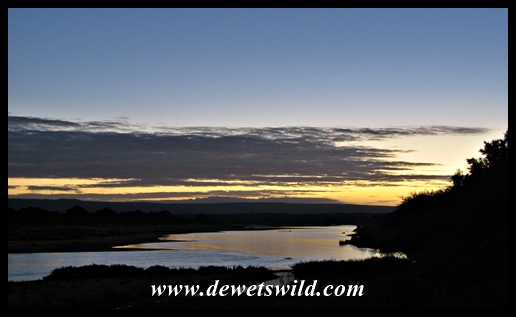
From Pafuri, we travelled southwards towards the central section of the Kruger National Park, spending two nights at peaceful Letaba Rest Camp and exploring the mopane country between the Letaba and Olifants Rivers.

Letaba 17Feb14

We had some great sightings – including wild dogs! – and will share some more photos from our visit to Letaba in an upcoming installment of de Wets Wild.

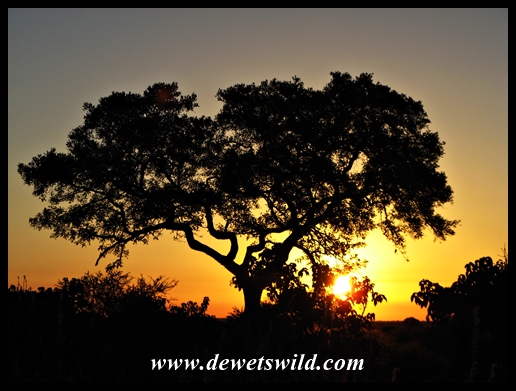
Valentines at Pafuri Rivercamp

We spent our Valentine’s Weekend at the rustic but very romantic Pafuri Rivercamp, in the extreme north-east of South Africa’s Limpopo Province.

Pafuri Rivercamp 14Feb14

We’ll share more about our travels in the Pafuri region of the Kruger National Park soon, but for a teaser have a look at our entry into the “Treasure” photo challenge.

Treasure

We’ve just spent three days exploring the beautiful Pafuri region of the Kruger National Park. Unspoiled and remote, Pafuri is true wilderness.

Heaven!

We post these pictures in response to WordPress’ weekly photo challenge theme “Treasure” and will soon publish more from our trip, showcasing all that Pafuri has to offer.

Zebra Valentines

We are heading into the wilds of far northern South Africa for a few days and, just in case our network coverage is not good enough to post a daily picture of the places we’re exploring, we’re leaving you with a special Valentine’s Day photograph until we’re back in range 😉

Zebra Valentines 2014


Southern White Rhinoceros

Ceratotherium simum simum

White Rhino (13)

It’s hard to imagine a more prehistoric looking large mammal alive in the world today than the white rhinoceros. Being one of our favourite species, we cherish every sighting we have of them while exploring the wild places of South Africa.

It is thought that the white rhino got its name from its wide mouth – a miss-translation of the Dutch word “wijd” which means wide. Scientifically, the name “Square-lipped Rhinoceros’ is probably more correct, but not widely used. The white rhino uses its broad mouth to good effect, grazing as it does almost exclusively on short grasses, in contrast to its smaller African cousin, the black rhinoceros, which is a browsing species. After the elephants, the white rhinoceros is the biggest living land animal. They can stand over 1.8m (6 feet) high at the shoulder and bulls weigh up to 2,400 kg. Cows are lighter at up to 1,800 kg, while calves weigh between 40 and 60 kg at birth.

White rhinos prefer open, lightly wooded habitats with a good covering of short, sweet grasses and easy access to drinking water (they drink about 72 liters of water a day). They are by far the most social of the rhinoceroses, at times congregating in groups of up to 18, though normally much fewer. Adult bulls are territorial, and groups of cows and their calves range over the territories of several bulls.

Cows give birth to a single calf every 3 to 5 years. The calves are vulnerable to attack from lions and spotted hyenas, but healthy adults have little to fear from any natural predators. Most adults succumb to a natural death from injuries sustained in fights, freak accidents like getting stuck in mud, drowning or getting caught in bush fires, and during prolonged droughts. Sickeningly, poaching for their horns has recently become probably the biggest single cause of death for adult white rhinos, which would normally have a life expectancy of up to 45 years in the wild.

Today, the Southern White Rhinoceros is considered “near threatened“. At the start of the 1900’s, only between 20 and 50 animals remained, all of them in the Umfolozi Game Reserve (today part of Hluhluwe-Imfolozi Park). One of South Africa’s greatest conservation success stories is how the Natal Parks Board (today Ezemvelo KZN Wildlife) and dedicated conservationists like Dr. Ian Player pulled these majestic animals from the jaws of extinction: by 2010 their wild population stood at an estimated 20,170 of which 18,800 were being protected in South Africa. Now, ever escalating pressure from poaching is threatening to undo their fantastic work. Sadly, the fortunes of the Northern White Rhinoceros, which historically occurred in the Sudan, the DRC and Uganda, is even more dire, with only four individuals remaining in the wild, having been relocated from a zoo in the Czech Republic to a conservancy in Kenya.

White Rhino (7)

Selfie

We (the Wild de Wets), posing for a portrait, at Glen Reenen Rest Camp in the Golden Gate Highlands National Park

Selfie

Selfie” is the theme for this week’s WordPress Photo Challenge

Moreletakloof, 2 February 2014

There’s always something beautiful and interesting to enjoy in the Moreletakloof, our “local” nature reserve!

World Wetlands Day 2014

The 2nd of February is World Wetlands Day and the theme this year is “Wetlands & Agriculture: Partners for Growth“.

Last year, we visited the Karkloof Conservation Centre, a prime South African example of how agriculture need not be in conflict with the conservation of threatened habitats and endangered species.

Black Rhinoceros

Diceros bicornis

Black Rhino (8)

One of the rarest and most rewarding sightings you can hope to have in a South African game reserve or national park, is of the black rhinoceros. Even the most fleeting glimpse of this worthy member of the charismatic “Big 5” is sure to excite any wildlife lover!

The black rhinoceros is not named for the colour of its hide, which can in fact be vary varied depending on the shade of mud the animal has been rolling in. Instead, it is named in contrast to the other African rhino species, the white rhinoceros. Many people will however testify that the black rhinoceros may well be named for its volatile and extremely aggressive temperament, and having lived through more than one determined black rhino charge, we certainly agree! Just yesterday (30/01/2014) another game ranger was seriously injured in a black rhino attack in South Africa.

Black rhinos are much smaller than the white rhino, and further differs in having a pointed upper lip instead of the wide flat mouth of their “white” cousins, which explains their alternative (and scientifically more correct) name of hook-lipped rhinoceros. These plucky animals weigh up to 1,200kg and stand up to 1.65m high at the shoulder.

Being almost exclusively browsers, black rhinos use their pointed upper lips with great dexterity when feeding on the leaves, shoots, twigs, thorns and flowers of a huge variety of trees, shrubs, herbs and succulents (some of which would be deadly poisonous to other animals).

As long as there’s sufficient food, water and shade available, black rhinos inhabit a wide range of habitats, ranging from the dry riverbeds of the Namib desert to the edges of forests. They tend to be solitary except when mating or when cows are accompanied by their calves, only very occasionally getting together in bigger temporary groupings around waterholes.

Females give birth to single calves, that weigh around 40kg, at intervals of between 3 and 5 years, after a gestation period of 450 days. Black rhinos have a life expectancy of 30 to 40 years in the wild and while adults seldom fall prey to predators, the calves are at risk of attack by lions and spotted hyenas.

Today, the black rhinoceros is considered to be critically endangered. Relentless poaching saw their population dwindle from an estimated 100,000 animals in 1960 to an all time low of 2,410 in 1995. Dedicated conservation efforts resulted in the total population increasing to 4,880 by 2010, of which 1,915 (or 40% of the total) found sanctuary in South Africa’s wild places. However, the explosion in illicit hunting to feed a seemingly insatiable demand in the Far East (where rhino horn is considered to be both medicinal and a status symbol) is threatening once again to bring this majestic animal to the brink of extinction. It is against this backdrop that the recent auction of a black rhino hunting permit by the Dallas Safari Club for US$ 350,000 caused major international controversy.

Object

A natural “sculpture” in the Ezemvelo Nature Reserve east of Pretoria, South Africa

Object

Object” is the theme for this week’s WordPress Photo Challenge