Well, if you ask us what makes the Kruger National Park “THE KRUGER”, our answer wouldn’t be the prolific game or birdlife, awesome as that might be. To us, what makes the Kruger National Park special is the wide variety of habitats and scenery where all this life finds a niche to flourish. At almost 20,000km² in size, the Kruger National Park is bigger than some countries, and naturally a piece of land that enormous would encompass many different landscapes and habitats; in fact there are pronounced differences in the scenery as one travels from south to north through Kruger’s 350km length.
This first gallery of images were taken during my solo visit at the end of May to Pretoriuskop and Skukuza in the south of the Park.

Scenery near Pretoriuskop, complete with a giraffe

Beautiful Blue Water Lily

Impala Lily

Growing Sausage-Tree fruit

The reed-grown bed of the Sabie River

A Sycomore Fig Tree in a dry stream bed near Phabeni Gate

Sunrise over the Sabie River

Sunset Dam at Lower Sabie

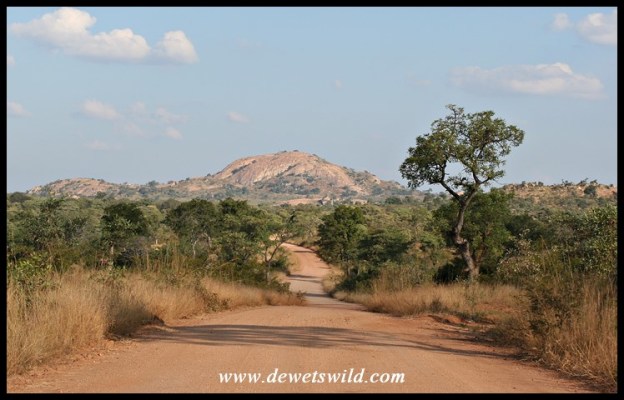
Rocky outcrops are a feature of the Pretoriuskop area

Animals congregating at Transport Dam

Animals congregating at Transport Dam

The Mountains of Malelane

Rocky outcrops are a feature of the Pretoriuskop area

Rocky outcrops are a feature of the Pretoriuskop area

Rocky outcrops are a feature of the Pretoriuskop area – this hill is called Shabeni

Rocky outcrops are a feature of the Pretoriuskop area

Kruger sunset

Rocky outcrops are a feature of the Pretoriuskop area

Sunset near Pretoriuskop
The north of Kruger has a quite different character to the southern parts. Here, the Mopane and Baobab trees dominate the landscape, by virtue of their numbers and size, respectively.
This gallery of images were taken during our visit from 15 to 24 June to the northern reaches of the Park (based at Shingwedzi Rest Camp)

Animals congregating at a waterhole to the north of Babalala

A wide bend in the Shingwedzi River

Giraffe crossing the dry bed of the Shingwedzi

A pool at Red Rocks

A dry Shingwedzi River near Tshange viewpoint

A seemingly serene pool of water at Red Rocks

Baobab with Buffalo Weaver nests

Impala Lily

Impala Lily (Photo by Joubert)

Mopane leaves are uniquely butterfly- or spoor-shaped

Large Jackalberry tree on the Mphongolo Road

Baobab in a see of mopane, on the way to Bateleur

Sunset at the Mphongolo-Shingwedzi confluence

Mopane shrubs

Mopane tree

Sunset elephants in the Shingwedzi (Photo by Joubert)

The last photo taken today – sunset over the dry bed of the Shingwedzi River

Red Rocks from the viewpoint




 DeWetsWild