Tragelaphus angasii
The graceful nyala is one of our favourite antelope, and a close relative of the kudu. They occur naturally in the south-east corner of Africa, ranging from Malawi to South Africa’s eastern provinces.

Nyala couple

Big Nyala bull

Nyala ewe (photo by Joubert)

Nyala Bull

Nyala calf

Nyala bull (photo by Joubert)

Nyala calf

Nyala on the run (photo by Joubert)

Young Nyala bull (photo by Joubert)

Nyala lamb

Nyala bull

Nyala lamb (photo by Joubert)

Young nyala bull (photo by Joubert)

Nyala ewe and young bull

Nyala ewe (photo by Joubert)
To the uninitiated, the adult bulls in their dark, shaggy, coats and the ewes dressed in bright chestnut seem to be from two different species altogether. Bulls are almost double the size of the ewes, and can weigh up to 130kg.

Nyala bull

Nyala ewe

Habituated antelope, like this nyala bull, roam freely through the bush at OuKlip

Nyala and buddies

Nyala female

Nyala cow

Immature Nyala Bull

Nyala bull on the Salitje Road

Nyala bull (photo by Joubert)

Young Nyala bull at Ndzhaka Camp in the Manyeleti Nature Reserve

Nyala Bull

Nyala ewe

Nyala ewe

Nyala bull

Nyala
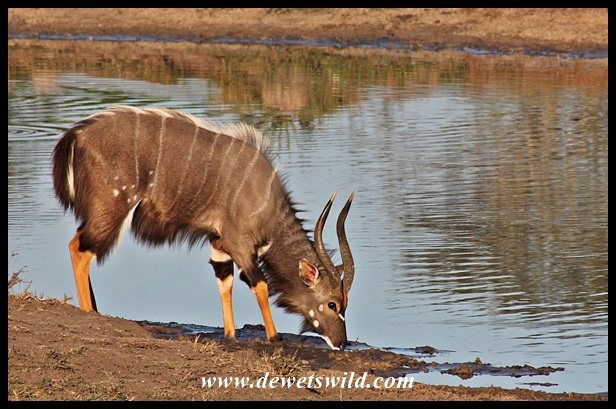
Nyalas inhabit thickets and woodland near water, and will often forage in adjacent clearings. They’re mixed feeders, subsisting on a diet of leaves, succulent shoots and short grass.

Nyala ewe

Subadult nyala male

Nyala bull

Nyala bull

Nyala bull

Nyala bull

Nyala ewe

Young nyala bull near the hide

Alert nyala ewe

Nyala at the Hluhluwe River bridge

Nyala bulls coming for a drink

Nyalas drinking

Nyalas are very common patrons at Kumasinga

Nyalas are very common patrons at Kumasinga

Nyala ewe

Nyala bull

Nyala near Skukuza

Shy Nyala bull

Nyala bull

Nyala ewe

Nyala bull and kudu cow

Nyala

Nyala
Being social animals, nyalas occur in small groups consisting mostly of adult females and their offspring, with adult males tending to form bachelor groups. Lambs are born at any time of the year, though mostly in the wetter summer months.

Nyala bull

Nyala ewe

Nyala bull

Nyala lamb

Nyala ewe and lamb

Nyala bull

Nyala lamb

Nyala lamb

Nyala lambs

Nyala ewe

Nyala along the Sabie

Nyala lamb

Nyala bull

Nyala at Ubhejane Hide

Nyala near Charters Creek

Nyala lamb

Nyala Bull

Nyala calf

Playful warthog piglets at Mpila (photos of Joubert)

Nyala calf

Nyala calf

Nyala ewe

Nyala calf
The stiff-legged dominance display – you could even call it a dance! – of the adult bulls is one of nature’s most intriguing spectacles.

Nyala display

Nyala display

Nyala display

Nyala display

Adult nyalas use ritualised posturing to try and intimidate one another

Adult nyalas use ritualised posturing to try and intimidate one another

Dueling nyala bulls

Dueling nyala bulls
The bulls also have the curious habit of horning the ground at mud puddles, carrying the caked mud off with them on their headdress…

Battle-scarred nyala with muddy horns

Nyala with muddy horns
The IUCN consider the nyala’s conservation status to be of “least concern“, with a population of at least 32,000. The best places in South Africa to see these graceful antelope is the Kruger National Park (especially at Pafuri in the far north of the Park), Hluhluwe-Imfolozi Park, uMkhuze Game Reserve, and Tembe Elephant Park, though they occur in a number of other state and private reserves as well.

Stately Nyala bulls

Splendid Nyala bull

Nyala ewe and lamb

Beautiful nyala bull

Nyala bull

Nyala cows and calf

Nyala bull

Nyala cow

Nyala ram

Young Nyala bull

Friendly Nyala bull ( (photo by Joubert)

Nyala bull

Nyala calf

Nyala ewe just outside the Skukuza nursery

Nyala bull (photo by Joubert)

Nyala bull (photo by Joubert)

Nyala bull – go buy some manners! (photo by Joubert)

Nyala ewe

Nyala bull

Nyala ewe and lamb

Nyala bull (photo by Joubert)

Nyala bull

Nyala bull (photo by Joubert)

Nyala bull

Nyala calf

Nyala bull

Nyala bulls mingling on the banks of the Olifants River (photo by Joubert)

Nyala bull

Nyala bull (photo by Joubert)

Nyala ewe
uMkhuze Game Reserve’s Kumasinga Hide is one of the very best places to watch Nyala behaviour.

Nyala bull

Nyala bull

Nyala bull

Nyala bull

Nyala bull

Nyala bull horning the mud

Nyala bull horning the mud

Nyala bull horning the mud (photo by Joubert)

Nyala bull horning the mud (photo by Joubert)

Nyala bull horning the mud (photo by Joubert)

Nyala ewes (photo by Joubert)

Nyala ewe and lamb

Nyala ewe and lamb

Nyala ewe and lamb

Nyala bull

Nyala bull

Nyala bull (photo by Joubert)

Nyala bull

Nyala bull horning the mud

Nyala bull horning the mud

Nyala bull horning the mud

Nyala bull horning the mud (photo by Joubert)

Nyala bull horning the mud

Nyala bull horning the mud

Nyala bull horning the mud

Nyala bull with horns covered in mud

Young nyala bull also horning the ground (photo by Joubert)

Young nyala bull also horning the ground (photo by Joubert)

Young nyala bull also horning the ground (photo by Joubert)

Young nyala bull also horning the ground (photo by Joubert)

Nyala bull in dominance display

Nyala bull in dominance display

Nyala bull in dominance display

Nyala bull

Nyala bull horning the mud

Nyala bull horning the mud

Nyala bull horning the mud

Nyala bull horning the mud

Nyala bull

Nyala bull horning the mud

Nyala bull horning the mud

Nyala Bull in stiff-legged dominance display








 DeWetsWild