Ceratotherium simum simum
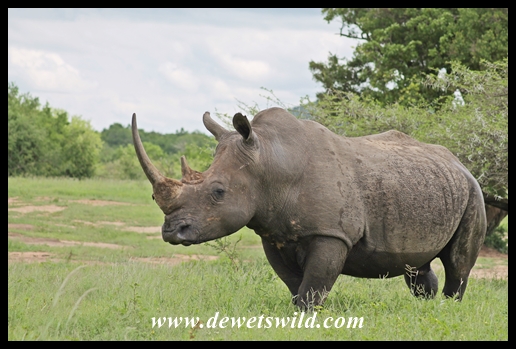
It’s hard to imagine a more prehistoric looking large mammal alive in the world today than the white rhinoceros. Being one of our favourite species, we cherish every sighting we have of them while exploring the wild places of South Africa.

White rhinoceros

White rhinoceros

White rhinos

White rhino

White Rhino

White Rhinoceros

Massive White Rhino bull

White Rhinoceros

White rhino’s poor attempt at hiding

White Rhinoceros ear

White Rhinoceros

White Rhinoceros

White Rhinos walking in the road

White Rhinoceros tail

White Rhinoceros ear
It is thought that the white rhino got its name from its wide mouth – a miss-translation of the Dutch word “wijd” which means wide. Scientifically, the name “Square-lipped Rhinoceros’ is probably more correct, but not widely used. The white rhino uses its broad mouth to good effect, grazing as it does almost exclusively on short grasses, in contrast to its smaller African cousin, the black rhinoceros, which is a browsing species. After the elephants, the white rhinoceros is the biggest living land animal. They can stand over 1.8m (6 feet) high at the shoulder and bulls weigh up to 2,400 kg. Cows are lighter at up to 1,800 kg, while calves weigh between 40 and 60 kg at birth.

White Rhino

White Rhino

White Rhino

White Rhinos – Hluhluwe-Imfolozi Park

White Rhino

White Rhinos hiding from the sun

White Rhino

White Rhino

White Rhinos

White Rhino Bull (horns humanely removed to deter poachers)

White Rhinoceros (its horns have been removed to protect against poachers)

White Rhinoceros

White Rhino herd (their horns have been removed to protect against poachers)

White Rhinoceros

White Rhinoceros
White rhinos prefer open, lightly wooded habitats with a good covering of short, sweet grasses and easy access to drinking water (they drink about 72 liters of water a day). They are by far the most social of the rhinoceroses, at times congregating in groups of up to 18, though normally much fewer. Adult bulls are territorial, and groups of cows and their calves range over the territories of several bulls.

White Rhinos

White rhinoceros

White rhinos

White rhinos

White rhinos

White rhinos

White rhinos dwarfed by Ithala’s grandeur

White rhinos in long grass

White Rhino

White Rhino drinking

White Rhino Territorial Demarcation

White Rhinos

White Rhino lazing in a cool mud pool

White rhino

White Rhinoceros

White Rhinoceros

Heavyweights on the run

White rhinos

White rhinos

White Rhinoceros

White Rhino cow and calf

White Rhino bull

White Rhino

White Rhinos

White Rhino bull

White Rhino

White Rhino

White Rhino

White Rhino calf
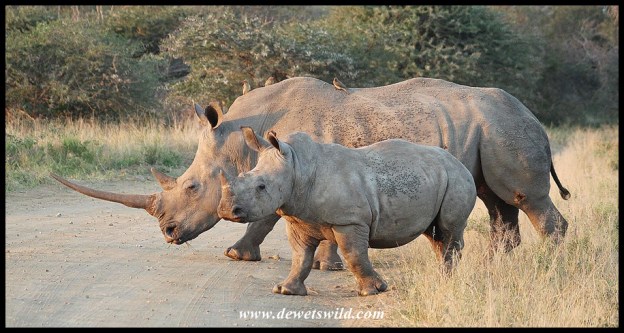
Cows give birth to a single calf every 3 to 5 years. The calves are vulnerable to attack from lions and spotted hyenas, but healthy adults have little to fear from any natural predators. Most adults succumb to a natural death from injuries sustained in fights, freak accidents like getting stuck in mud, drowning or getting caught in bush fires, and during prolonged droughts. Sickeningly, poaching for their horns has recently become probably the biggest single cause of death for adult white rhinos, which would normally have a life expectancy of up to 45 years in the wild.

White Rhino cow and calf

A tender moment between a White Rhino cow and her calf

Baby white rhino and mom

Baby white rhino

Baby white rhino

White rhinoceros cow and rather large calf

White Rhinos – Hluhluwe-Imfolozi Park

White Rhinoceros

White Rhinoceros

White Rhino Calf suckling

White Rhino Cow and Calf

White Rhino calf

White Rhino calf

Angry white rhino cow defending her calf

Impressive white rhino bull

White rhino cow with almost fully grown calf

Rhino pair in Mokala National Park

White rhino cow and calf

White Rhinos causing a traffic jam

White Rhino discussion

White Rhino cow and calf

White Rhinos

White Rhino

White Rhino calf

White Rhino calf

White Rhinoceros

White Rhino cow and calf

White Rhino cow and calf

White Rhino cow and calf (photo by Joubert)

White Rhino bull (photo by Joubert)
Today, the Southern White Rhinoceros is considered “near threatened“. At the start of the 1900’s, only between 20 and 50 animals remained, all of them in the Umfolozi Game Reserve (today part of Hluhluwe-Imfolozi Park). One of South Africa’s greatest conservation success stories is how the Natal Parks Board (today Ezemvelo KZN Wildlife) and dedicated conservationists like Dr. Ian Player pulled these majestic animals from the jaws of extinction: by 2010 their wild population stood at an estimated 20,170 of which 18,800 were being protected in South Africa. Now, ever escalating pressure from poaching is threatening to undo their fantastic work. Sadly, the fortunes of the Northern White Rhinoceros, which historically occurred in the Sudan, the DRC and Uganda, is even more dire, with only four individuals remaining in the wild, having been relocated from a zoo in the Czech Republic to a conservancy in Kenya.


White Rhinoceros in Pilanesberg National Park

White Rhinoceros in Pilanesberg National Park

White rhino calf at the Rhino & Lion Nature Reserve, April 2021

White Rhinos

White Rhinoceros (photo by Joubert)

White Rhinoceros (photo by Joubert)

White Rhinoceros

White Rhinoceros (photo by Joubert)

White Rhinoceros

White Rhinoceros

White Rhinoceros

White Rhino

White Rhino calf

White Rhinoceros

White Rhinos

White Rhino

White Rhinos

White Rhino (photo by Joubert)

White Rhino

White Rhinos crossing a river

White Rhino

White Rhino (photo by Joubert)

White Rhino

White Rhino (photograph by Joubert)

White Rhino

White Rhino calf playing in mud

White Rhino

White Rhino

White Rhino

White Rhino

White Rhino

White Rhino

White Rhino

White Rhino

White Rhino

White Rhino

White Rhino (photograph by Joubert)

White Rhino

White Rhino in Marakele National Park

White Rhino in Marakele National Park

White Rhinos in Marakele National Park (photo by Joubert)

White Rhinos going for s stroll

White Rhino in Marakele National Park (photo by Joubert)

White Rhino in Marakele National Park (photo by Joubert)

White Rhinoceros

White Rhinoceros (photo by Niel de Wet)

White Rhinoceros (photo by Niel de Wet)

White Rhinos

White Rhino

White Rhino

White Rhino

White Rhino

Red-billed Oxpecker diving into a White Rhino’s ear

White Rhino

White Rhino bull

White Rhino calf

White Rhino calf

White Rhino

White Rhino

White Rhino

White Rhinos

White Rhinos

White Rhino’s ear

White Rhino

White Rhino







 DeWetsWild