
Our September 2013 trip to the north of the Kruger National Park afforded us the opportunity of visiting our favourite Shingwedzi Rest Camp for the first time following the devastating floods in January 2013.
Most of Shingwedzi has re-opened for visitors, with only some facilities, including the restaurant, remaining out-of-service – a sterling effort getting the camp up-and-running again so soon!
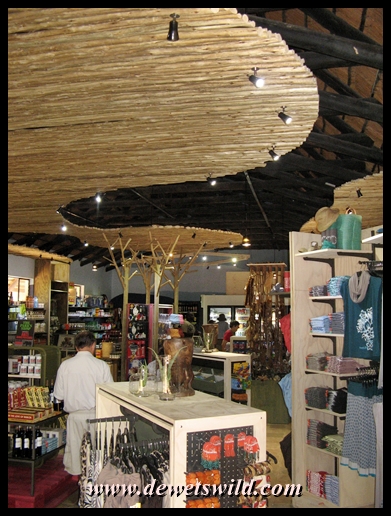
Revamped Shingwedzi shop
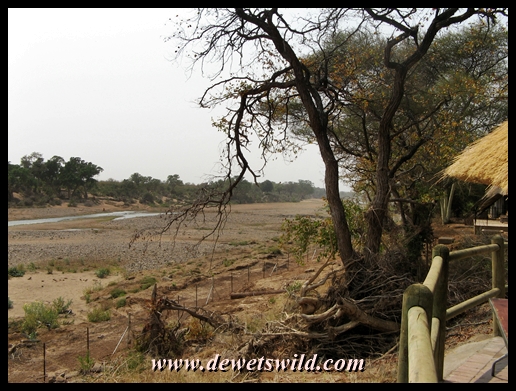
The view downstream from camp, to where the causeway is now buried beneath a thick layer of sand
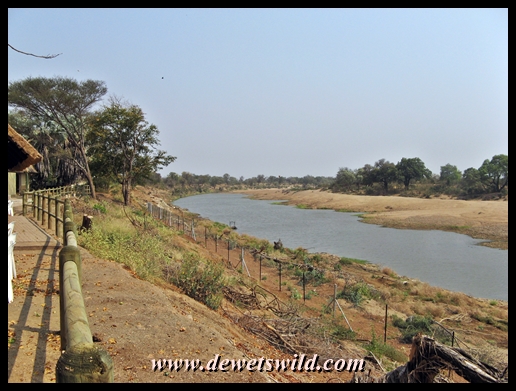
View upstream from camp – a huge pool of water now houses hippos and crocodiles where previously there would have been nothing but sand in the dry season
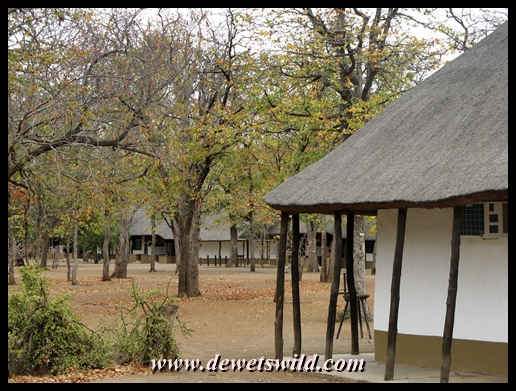
Shingwedzi accommodation

Shingwedzi camping site
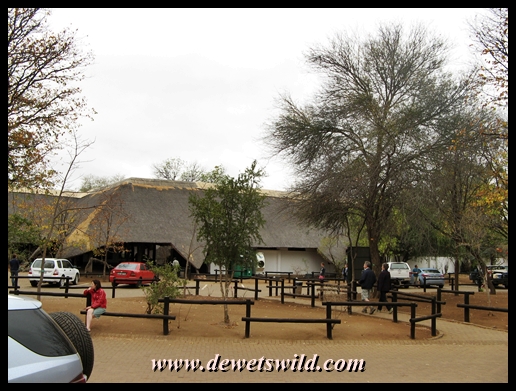
Shingwedzi main building – reception, shop and restaurant
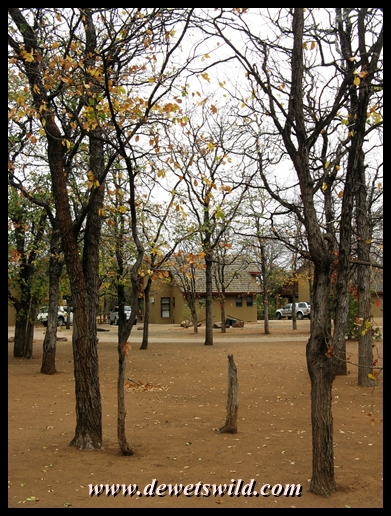
Shingwedzi accommodation

Shingwedzi camping site
Driving around the area, the impact on man-made infrastructure and the natural environment was still clearly evident eight months after the flood waters of the Mphongolo and Shingwedzi Rivers swept through here in the dark of night.

Elephant at a pool in the Shingwedzi River
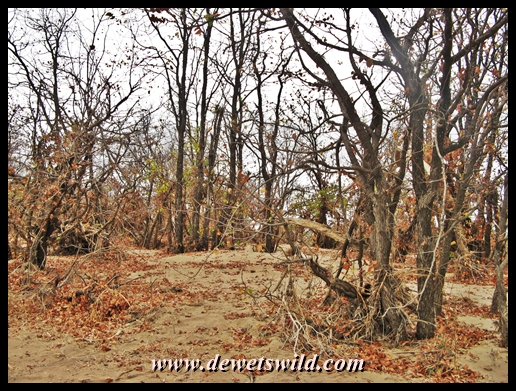
Deep sediment deposits where the Shingwedzi burst its banks
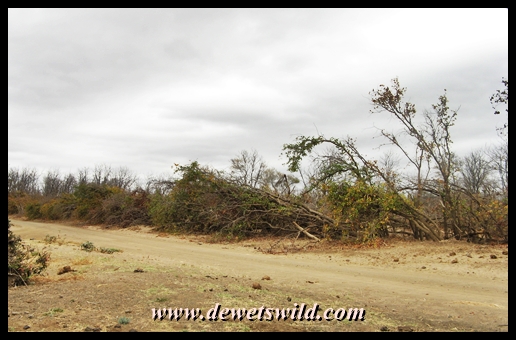
Bent trees and shrubs along the Shingwedzi river
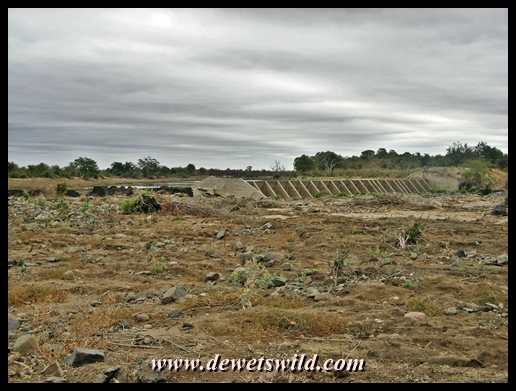
What’s left of the Kanniedood Dam wall. Not a single tree remain standing in the immediate area below the broken dam – before the flood you could not even see the wall due to the dense plantlife!
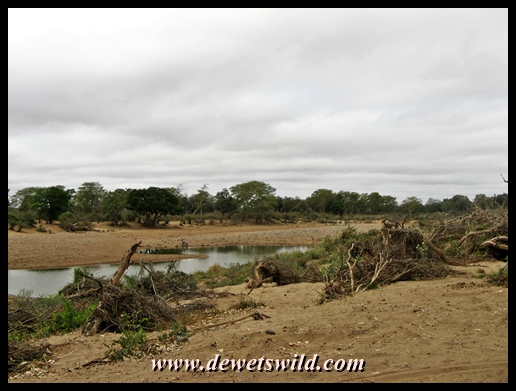
Debris, deep sand and newly formed pools of water along the course of the Shingwedzi River
Nature is resilient and we have no doubt that the Shingwedzi area will remain a firm favourite for many of the Kruger faithful, the de Wets included! Have a look here to find out why we love Shingwedzi so much!
 DeWetsWild
Pingback: Autumn in Kruger: Shingwedzi, April 2014 | de Wets Wild
Pingback: Kruger National Park, September 2013. | de Wets Wild
Thanks for sharing these images Dries and family, so been waiting for updated images of the recently opened camp. waiting for the summer birds then will be there in force.
Thanks Derek.
Some migrant birds are already in evidence; especially the yellow-billed kites, and it is the earliest in the season that we’ve ever encountered woodland kingfisher in Kruger (their call is so synonymous with Shingwedzi for me). I think the heavy rains and warm winter has a lot to do with their early arrival.
Thanks for the information Dries, our Swallows where back around the 8th of August this year. It felt earlier than normal for me to but do not have any statistics to go on.
Some lovely and interesting pictures here. Especially the one entitled ‘Shingwedzi accommodation’. Nice shot taken between two trees like that. Having now looked at the July 2012 post, I do indeed see why you love Shingwedzi so much you, some really lovely pictures in that post. Being a trifle ignorant on the subject I did notice that there were brown and grey elephants there.
Thank you very much for the kind comments and taking the time to read our other Shingwedzi post Chris!
Because elephants enjoy mud- and dustbaths, they tend to take on the colour of the soil in the areas they frequent (at least until their next session in a pool of deep water!)
Thank you.
Thank you so much for taking us along to Shingwedzi! Beautiful row nature.
Thank you Amy! Yes, Shingwedzi is a special place!
Loved reading your Kruger updates! Nice to see Shingwedzi on the mend!
Thank you! Looks like you had a grand time in the Kruger as well?
To see the power that nature is capable of, humbles you all over again! I was really battling with my emotions when I saw Shingwedzi for the first time after the flood damage! On the one hand I was so extremely grateful that no human lives were lost: a miracle!!!
On the other hand I was heartbroken at the sight of some of my beloved spots along the Kanniedood that were completely swept away! Parts that I would not see return to their glory in my lifetime (which also reminded me that I am not that young anymore ! 🙂 )
But, that said: I am looking forward to seeing how nature will restore itself..
Very well captured atmosphere – nature can be fascinating the amazing way and be cruel the scary way too – sometimes even at the same time – that’s why we love it, I guess… 🙂 😉
That’s very true Ledrakenoir! We love the “Wild Outdoors” because it is always changing and you never know what you will encounter when you venture out.
Thanks for the kind comment!
Scary, but nature rules and we will have to follow. Hopefully it will mend soon.
Absolutely Lagottocattleya! Thanks for visiting us again.
Love your post on Shingwedzi… nature has a way of fixing itself and I’m sure if one could get out and walk about there would be signs of slow recovery… the area certainly got hit hard in Jan as did our house in Lydenburg when it went under water for the second time in 12 years… lets hope these flash floods are now a thing of the past and back to their 100 year recurrence…
So sorry to hear that you too were so badly hit by the lowveld floods Bulldog!
Flash floods are scary and devastating. Thank you for sharing this and I hope the area recovers quickly.
Thanks for visiting us again Jane! Scary indeed I can still remember our shock when news first broke of Shingwedzi being inundated and so many people having been caught in the flood overnight, having to wait for first light to be rescued.
I’m glad it’s starting to mend….
As are we Seeker, Shingwedzi is to us as close as you can get to heaven on earth…
Raw power of nature; experienced flash floods in top end Oz, fascinating yet very scary. Btw, Awesome post on Shingwedzi Andries, love the bat and chameleon!
We really appreciate your support and encouragement, thank you Maurice!