Halcyon senegalensis
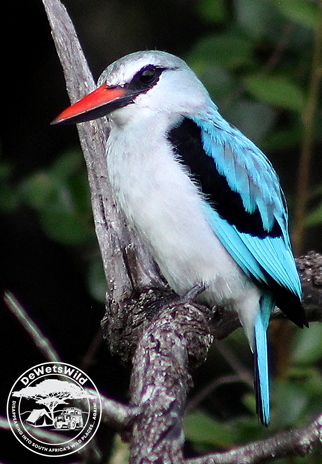
The Woodland Kingfisher is a bird of tall, open woodlands and savannas (as well as suburban gardens and parks), and despite a preference for wooded river courses does not follow an aquatic diet at all. Instead, they feed primarily on insects, especially grasshoppers, though they have been recorded taking small reptiles and chicks from Red-billed Quelea nests. Adults weigh between 55 and 80g and measure up to 24cm from the tip of the beak to the tip of the tail.
Woodland Kingfishers migrate to South Africa (North West Province, Limpopo, Mpumalanga, Gauteng and northern Kwazulu-Natal) to breed here in summer, arriving from September and departing again by end of April. They are mostly seen singly or in pairs. Pairs defend their territories aggressively against others of their kind as well as other species of birds and even humans. They nest in holes in trees, often taken over from woodpeckers and barbets. Clutches normally contain 2-4 eggs and are incubated by both parents for around two weeks. Although the chicks leave the nest at about 3 weeks old, the parents continue to care for the young for as long as 5 weeks after they’ve fledged.
The Woodland Kingfisher occurs over much of sub-Saharan Africa, from Senegal in the west to Ethiopia in the east and south to South Africa, at least for parts of the year, while they are resident in Africa’s equatorial regions throughout the year. The IUCN lists it as least concern.
The call of the Woodland Kingfisher is an unmissable part of the summer soundtrack in many of our favourite wild places, which must be why I’ve set it as the ringtone on my phone…

Woodland Kingfisher

Woodland Kingfisher

Woodland Kingfisher

Woodland Kingfisher in Letaba

Woodland Kingfisher – the sound of summer!

Woodland kingfisher

Woodland Kingfisher

Woodland Kingfisher

Woodland Kingfisher

Woodland Kingfisher in silhouette

Woodland Kingfisher

Woodland Kingfisher

Woodland Kingfishers

Woodland Kingfisher

Woodland Kingfishers

Woodland Kingfisher

Woodland Kingfisher (photo by Joubert)

Woodland Kingfisher (photo by Joubert)

Woodland Kingfisher




 DeWetsWild