Tag Archives: wildlife

Peeping Toad

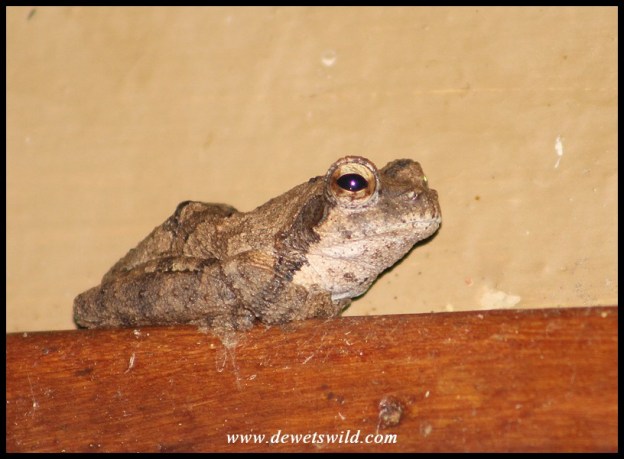
This Foam Nest Frog was sitting on a signboard from where it had a perfect view through the window of the ladies bathroom in the camping area at Crocodile Bridge in the Kruger National Park.

Come to think of it, I probably didn’t look that kosher either, hanging around the ablution block with my camera…

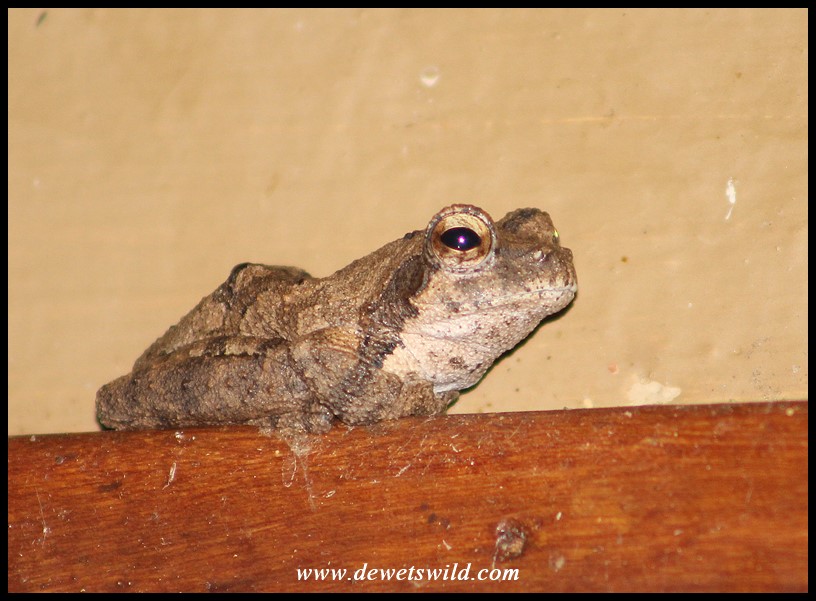
This Foam Nest Frog was sitting on a signboard from whence it had a perfect view through the window of the ladies bathroom in the camping area at Crocodile Bridge in the Kruger National Park.


How’s this for getting a name right?

Impala Street is a road through the staff village at Skukuza in the Kruger National Park, and it leads past the indigenous nursery where the public may purchase local plants for their gardens at very reasonable cost. And just to prove how well deserved the name is, a male Impala was available to pose perfectly on cue for Joubert to take this picture in September.

We should have taken a drive to Lion Street, just in case…

Impala Street is a road through the staff village at Skukuza in the Kruger National Park, and it leads past the indigenous nursery where the public may purchase local plants for their gardens at very reasonable cost. And just to prove how well deserved the name is, a male Impala was available to pose perfectly on cue for Joubert to take this picture in September.

A committee of Vultures

A committee of Vultures – Lappet-faced, White-headed and White-backed – assembling for their afternoon meeting near Crocodile Bridge in the Kruger National Park.

*”Committee” is the collective noun for a group of vultures just sitting around.*

A committee of Vultures – Lappet-faced, White-headed and White-backed – assembling for their afternoon meeting near Crocodile Bridge in the Kruger National Park

An impala celebrity and his posse

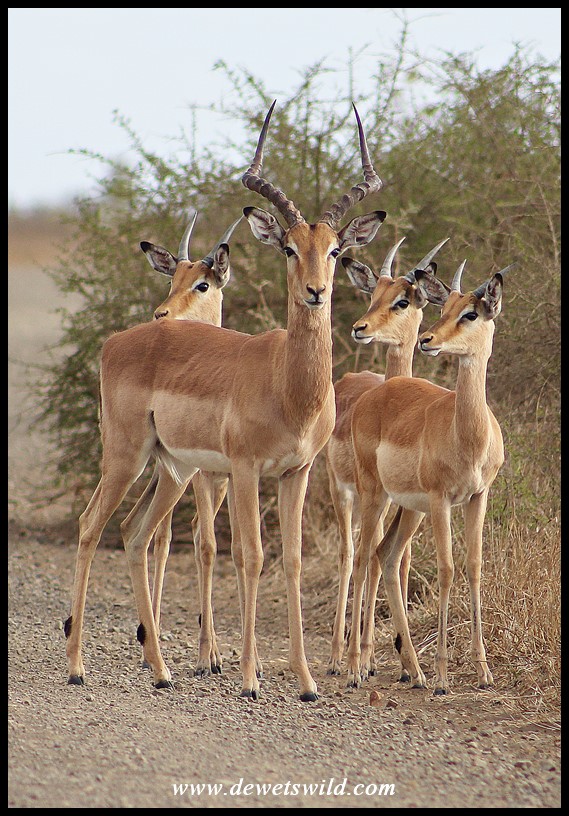
This adult Impala ram was followed quite dutifully by his much younger companions, who seemed to hang on his every word like real celebrity groupies would. Seen in September near Crocodile Bridge in the Kruger National Park.

This adult Impala ram was followed quite dutifully by his much younger companions, who seemed to hang on his every word like real celebrity groupies would.

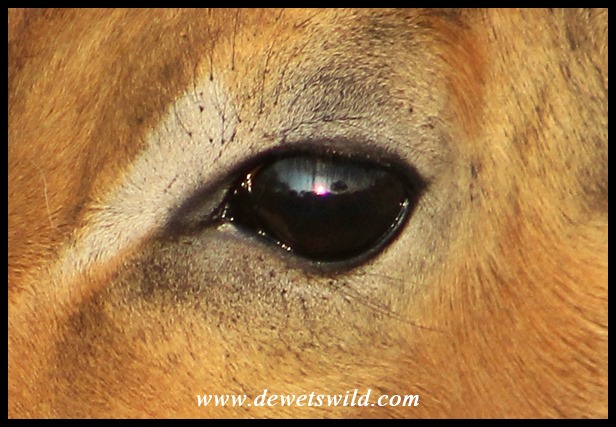
The beauty of a Kruger sunset…

reflected in the eye of one of the Park‘s iconic species, the bountiful Impala.

The beauty of a Kruger sunset, reflected in the eye of one of the Park’s iconic species – the bountiful Impala.

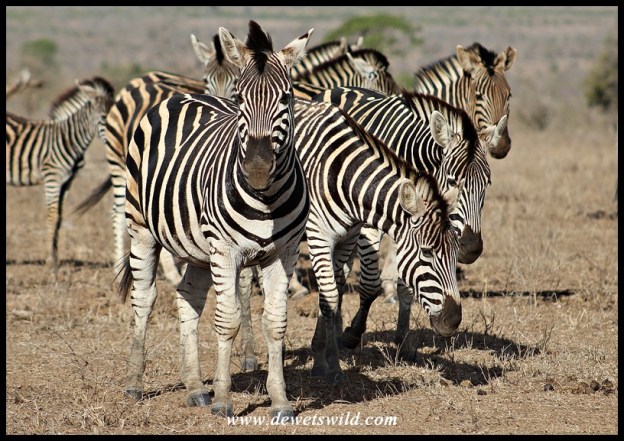
Dazzling

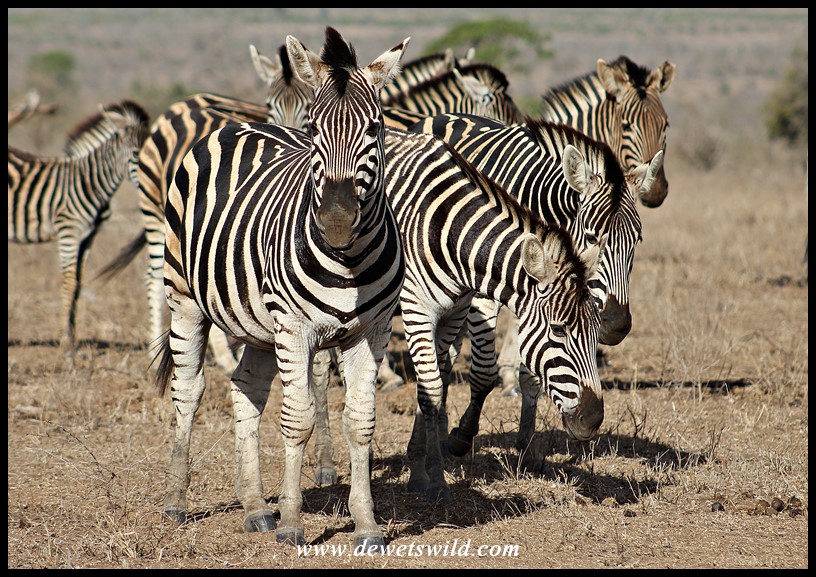
This group of Plains Zebra, seen in September between Crocodile Bridge and Lower Sabie in the Kruger National Park, illustrates perfectly just how well those black-and-white stripes are at breaking the individual animals’ outlines, making it much more difficult for a predator to single out a target.

This group of Plains Zebra, seen in September between Crocodile Bridge and Lower Sabie in the Kruger National Park, illustrates perfectly just how well those black-and-white stripes are at breaking the individual animals’ outlines, making it much more difficult for a predator to single out a target.

Where to for our rhinos?

The 22nd of September marked the ninth World Rhino Day. We were in the Kruger National Park on the day, appreciating and enjoying the opportunity to see these wondrous creatures in real life in their natural habitat.

Sadly, the scourge of rhino poaching is still very real and present, with South Africa losing a total of 769 rhinos in 2018. While this is an encouraging decline of 25% from the numbers lost in 2017, the war has by no means been won yet. In the first six months of this year, we’ve already lost 318 more rhinos, 190 of which from the Kruger National Park. We continue to rally behind our rangers looking after these animals day and night, placing their lives on the line to ensure the survival of these animals so future generations may also experience the wonder of seeing the grey behemoths walking Africa’s savannas.

We also recently had the opportunity to visit a rehabilitation centre where rhinos injured or orphaned through poaching activities are cared for. It was a sobering experience to say the least; seeing with our own eyes the horrors inflicted on these beings by humankind, and the lengths their caregivers will go to to try and save them.

We disappeared into the bush again…

But we are back now, fresh from another jaunt in the Kruger National Park. It almost goes without saying that there are lots and lots of photos to share and stories to tell over the next few weeks, so let us start off with a little gallery of pictures taken by Joubert to get you all excited for what is to come.

Beautiful impala lily flowers

Impala Lily

Adenium multiflorum

An Impala Lily in full bloom must be one of our most beautiful succulent shrubs, especially as it blooms in an otherwise drab and dry winter in the hot savannas of the Lowveld and northern Kwazulu-Natal, the only places it occurs naturally in South Africa, where it grows in well-drained brackish and rocky soil. North of our borders they are found up to Zambia and Malawi. They are extremely drought resistant and can grow to 3m tall, though such large specimens are rare. Being toxic, it was once used as poison for arrows by the San people. However, some animals are able to browse on the Impala Lily without suffering any apparent ill effects. It is also used in a few traditional medicine concoctions.

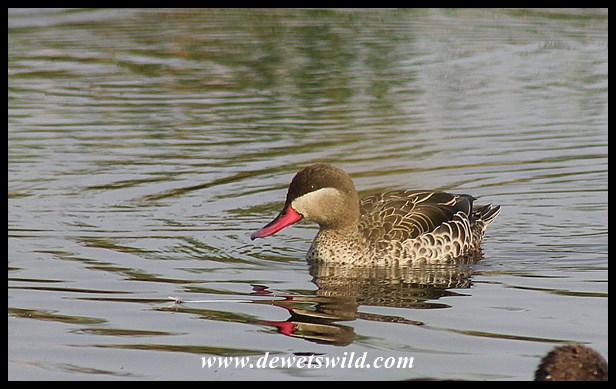
Red-billed Teal

Anas erythrorhyncha

Being a quite common inhabitant of our freshwater dams and pans (and sewerage ponds), the Red-billed Teal can be expected at any inland open water body in South Africa that provides emergent and submerged vegetation. They feed on grass, seeds, waterplants and aquatic invertebrates, mostly at night – by day they rest on the water or at its edge. Apart from South Africa, the species is widely distributed over the rest of southern, eastern and central Africa as well as Madagascar.

Red-billed Teals congregate in enormous flocks at times, especially during their annual month-long flightless moulting period, but are usually seen in pairs when breeding, which may occur throughout the year but mostly follows the rainy season, nesting in thick vegetation on dry land near temporary or permanent expanses of water. Clutches consist of 5-12 eggs, and are incubated for a month by the female only, the male by this stage having long abandoned the family. The chicks take to the wing for the first time about two months after hatching.
Adults grow to a length of about 46cm and both sexes weigh just over half a kilogram on average. The Red-billed Teal is listed as being of least concern by the IUCN.