Tag Archives: wildlife

Spring on Lake Saint Lucia’s Eastern Shores

While visiting the town of St. Lucia and the iSimangaliso Wetland Park at the end of October and into early November, my brother and I set aside three days for visiting Cape Vidal and the Eastern Shores section of the Park – an area that absolutely overflows with natural beauty!

A very easy-driving tar road leads directly from the Bhangazi Gate on the outskirts of town to Cape Vidal and offers wonderful opportunities for close encounters with a wide variety of wildlife.

Don’t miss the turnoffs for the Pan Loop and then the Vlei Loop shortly after entering!

The short cul-de-sac leading to the iZindondo Pan always has something interesting on offer

Cape Vidal’s lovely setting in the dune forest is always enchanting…

and I am yet to be convinced that there is a beach more beautiful in all of South Africa!

Finding a Sub-Antarctic Fur Seal on the beach at Cape Vidal was an enormous surprise – more about that in the next installment of DeWetsWild!

Male Sub-Antarctic Fur Seal on the shore at Cape Vidal after a heavy storm

The Grassland Loop is an excellent alternative to a large stretch of the main road when heading south again towards Saint Lucia town

Don’t think that taking the short Forest Loop leading to the hides at kuMfazana Pan is going to be a quick detour – the butterflies alone will keep you entertained for a long time!

I sincerely hope this quick overview gives you a sense of all that the Eastern Shores section of the iSimangaliso Wetland Park has to offer! If you are interested in visiting St. Lucia and the iSimangaliso Wetland Park, remember that De WetsWild can assist you with reservations in the Eden Park and Sugarloaf Campsites in town or at wonderful Cape Vidal set on the Indian Ocean in the Eastern Shores section of the Park.
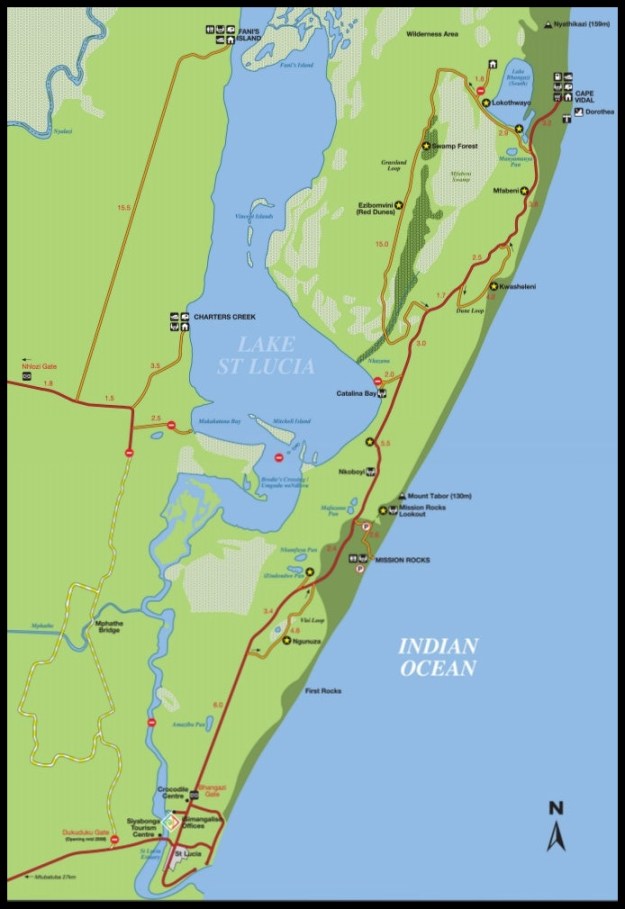
Map of the eastern shores section of the iSimangaliso Wetland Park (from https://isimangaliso.com/)

Announcement! Gooderson Leisure reservations now available through DeWetsWild!

Announcement!

We are very excited to announce that DeWetsWild can now assist you with reservations at Gooderson Leisure’s resorts!

https://dewetswild.com/about/reservation-services/gooderson-leisure-reservations/

Candy-striped Veld Lily

Crinum stuhlmannii

(previously C. delagoense /C. forbesii)

The beautiful Candy-Striped Veld Lily occurs from our Kwazulu-Natal Province all along the Indian Ocean coastal plain to East Africa. It is a bulbous plant that grows best in sandy soil at low altitudes and out in the full sun. Its leaves grow up to 1.5m in length and a single plant can bear up to 30 of the distinctive flowers, typically during the months of spring.

Announcement! DeWetsWild and aha Hotels & Lodges

Announcement!

We are delighted to announce that DeWetsWild can now assist you with reservations at the fabulous properties managed by aha Hotels & Lodges!

https://dewetswild.com/about/reservation-services/aha-hotels-lodges-reservations/

Announcement! Pilanesberg National Park with DeWetsWild & Legacy Hotels & Resorts

Announcement!

We are very proud to announce that DeWetsWild can now assist you with reservations at the fantastic Legacy Hotels & Resorts Bush Lodges in the Pilanesberg National Park!

https://dewetswild.com/about/reservation-services/pilanesberg-national-park-reservations/


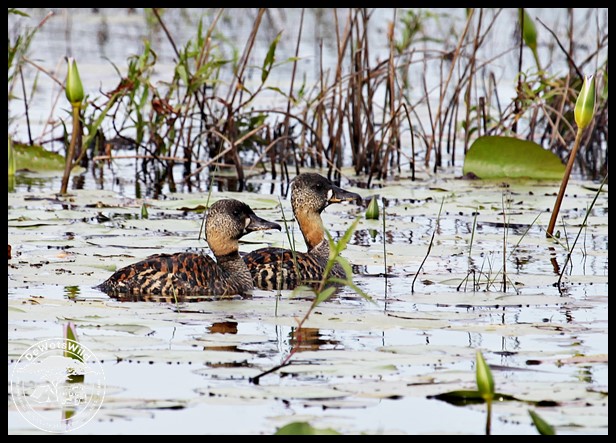
White-backed Duck

Thalassornis leuconotus

Another bird of which sightings come highly regarded in South Africa is the White-backed Duck and I was very excited to finally catch sight of them during my recent trip to St. Lucia in Kwazulu-Natal.

A nomadic diving duck that feeds mainly on submerged plant material, the White-backed Duck inhabits natural and man-made dams and pans of any size and permanence with clear water and abundant floating and emergent plants, where they are exquisitely camouflaged and easily overlooked. The white patch on their backs from which they get their name is only seen in flight. They are usually seen in pairs or family groups but occasionally form larger flocks of over a hundred. White-backed Ducks rarely venture onto dry land.

Monogamous pairs of White-backed Ducks (perhaps life-long bonds) breed year-round in dense reed beds or other thick plant material standing in the water. Clutches of up to 9 eggs are laid on a nest platform built of the surrounding plant material, and incubated by both parents for 4-5 weeks. The ducklings are able to follow their parents onto and into the water less than a day after hatching and are fully grown by the time they’re 4 months old. Adults measure about 43cm in length and weigh around 650g.

In South Africa, the White-backed Duck has a rather patchy distribution, with concentrations in the Highveld grassland areas, in Kwazulu-Natal, the Garden Route and the Cape Winelands. Beyond our borders their range stretches to Ethiopia and Madagascar, with isolated populations in the Sahel. According to the IUCN it is of least concern.

St. Lucia’s Game Park Trails

Just a little to the north of the town of St. Lucia, right at the Crocodile Centre and the Bhangazi Gate into the Eastern Shores section of the iSimangaliso Wetland Park, is a small game reserve where visitors are allowed to walk and cycle unguided and at own risk – hippos and leopards count among the game park’s inhabitants after all. Hikers have a choice of trails, several kilometers in extent, that lead through and along most of the important habitats that are found in the greater Park – swamps and marshes, grasslands, woodland and forests. I packed in a couple of hikes through St. Lucia’s Game Park while visiting the town at the end of October and into early November and, as you can tell from these pictures, I was not disappointed!

If you are interested in visiting St. Lucia and the iSimangaliso Wetland Park, remember that De WetsWild can assist you with reservations in the Eden Park and Sugarloaf Campsites in town or at wonderful Cape Vidal set on the Indian Ocean in the Eastern Shores section of the Park.

Narina Trogon

Apaloderma narina

An infuriatingly difficult bird to see, thanks to their habit of sitting dead still for long periods in their dense forest habitat, the beautiful Narina Trogon is a prized target for bird watchers and wildlife photographers alike. Their call is often the first, and usually only, indication of their presence but is seldom heard outside of the breeding season. It feeds on a wide variety of insects, other invertebrates and even reptiles and amphibians the size of small chameleons. They’re usually found singly or in pairs.

Narina Trogons form monogamous pairs and breed in hollows in trees. During the summer breeding season the male is fiercely territorial and will even drive away birds of other species. Clutches of 2-4 eggs are incubated by both parents for between 2 and 3 weeks. The chicks leave the nest by 4 weeks of age but remain with their parents for several months more. Fully grown, Narina Trogons measure about 32cm long and weigh in the region of 67g.

The IUCN lists the Narina Trogon as being of least concern. While it has a very wide distribution over much of the rest of sub-Saharan Africa, in South Africa they’re mainly found only in a narrow stretch along the coast from the Garden Route through the Eastern Cape, into Kwazulu-Natal, and then along the forests of the escarpment into Mpumalanga and Limpopo as far as the Soutpansberg.

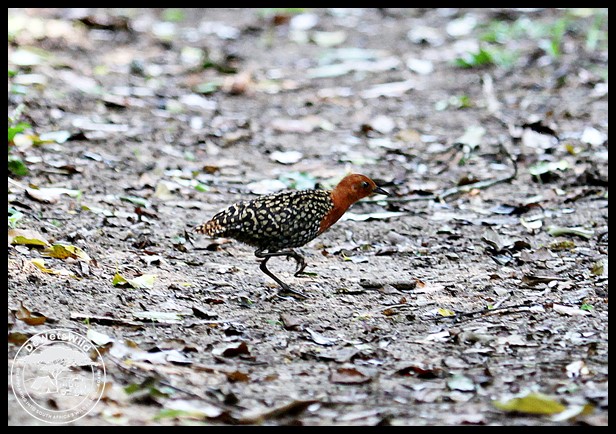
Buff-spotted Flufftail

Sarothrura elegans

A very secretive and rarely seen bird, the Buff-spotted Flufftail inhabits forests and other densely vegetated patches in areas of fairly high rainfall. These days they’re found in well planted gardens within their range with increasing frequency. It is mainly insectivorous, searching for invertebrates in the leaf litter of its dense habitat. They appear to be active throughout the day and night.

Pairs of Buff-spotted Flufftails are monogamous and territorial during the breeding season, which spans the months of spring to autumn. Using a wide range of plant material the female takes about 3 days to construct a well hidden dome-shaped nest with a side entrance underneath densely growing plants. Both partners take it in turns to incubate the clutch of 3-5 eggs over a two week period. The chicks leave the nest when they’re only a day or two old, accompanying their parents on foraging excursions. They grow quickly and can fly by the time they’re about 3 weeks old. At this point their parents will kick the chicks out of their territory and start breeding again – the pair may raise up to 4 broods in a season! Fully grown Buff-spotted Flufftails are about 15cm long and weigh around 50g.

In South Africa, the Buff-spotted Flufftail has a patchy and limited distribution, stretching from the Western and Eastern Cape through most of Kwazulu-Natal on to the escarpment in Mpumalanga and Limpopo. Beyond our borders they’re found over much of west, central and eastern Africa. The IUCN considers this species to be of least concern.

Another breakaway to iSimangaliso

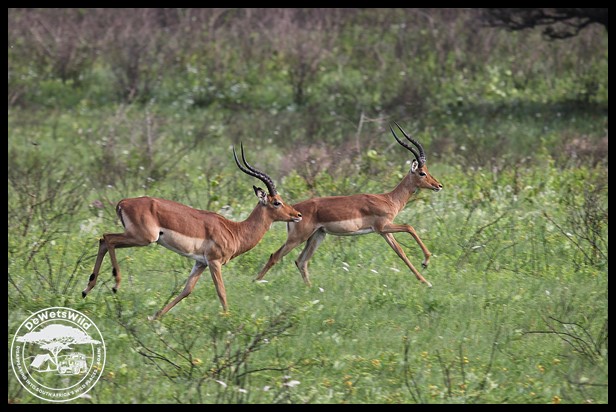
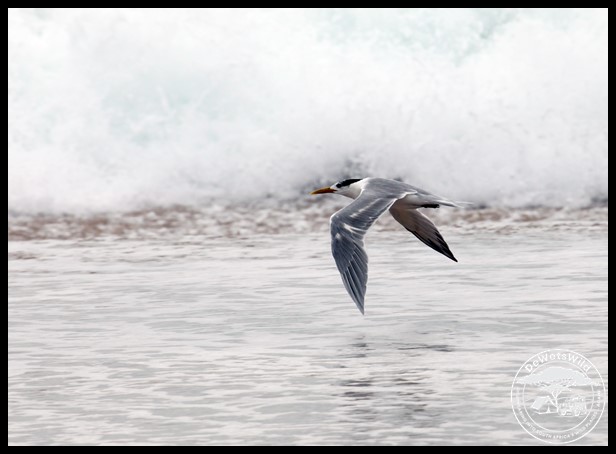
If you thought I was a little quiet over the past week-and-a-bit, you’d be right, as I disappeared into the wonderful iSimangaliso Wetland Park again, this time along with my younger brother. We were based in the holiday town of St. Lucia from where we made excursions into the surrounding sections of the park, and had a wonderful time, collecting lots of pictures to share with you in the weeks to come – this is just a little teaser.