The Great Karoo, which covers much of South Africa’s western and central interior, is an arid region, rich in drought resistant plant and animal life. Since being settled by European stock farmers in the early 1700’s, large game was systematically eradicated from the area; the last lions for instance disappearing from the region in the 1820’s. In what is today the Karoo National Park, visitors will notice the rock-traps built to catch predators like brown hyena and leopard, with an easily accessible example right inside the rest camp, between the camping area and chalets. The Park came about when, in the 1970’s, the National Parks Board (today SANParks) and interested NGO’s realised that there was very little of the Karoo being formally protected and started looking for a suitable area to be proclaimed a National Park. Eventually a site just outside the town of Beaufort-West was decided upon, and officially proclaimed the Karoo National Park, 17,706 hectares in extent, in September 1979.

Old predator trap in Karoo National Park’s Rest Camp

Old predator trap in Karoo National Park’s Rest Camp

Old predator trap in Karoo National Park’s Rest Camp

Graveyard dating back to the farming days

Plaque commemorating the proclamation of the Park
The Karoo’s history goes back much further than that though. Around 255-million years ago, the area was lush and covered in swamps, and sediments laid down then are today a rich source of fossils. This fascinating world is made accessible to the park’s visitors along the short (400m), paved Fossil Trail near the reception complex.

Karoo National Park’s Fossil Trail

Karoo National Park’s Fossil Trail

Karoo National Park’s Fossil Trail

Karoo National Park’s Fossil Trail

Karoo National Park’s Fossil Trail

Karoo National Park’s Fossil Trail

Karoo National Park’s Fossil Trail
Since its proclamation, additional land was acquired and incorporated, and today the Karoo National Park covers an extensive area of 88,133 hectares. The peaks of the Nuweveld Mountains rise to over 1,900m above sea level, though most of the plains lie at and average of 850m above sea level. This is a harsh environment, with an average annual rainfall of just over 200mm (most of which falls in summer), winter temperatures dropping as low as -15°C (with frost and snowfall a common occurence) and summer temperatures soaring to over 40°C. Most of the vegetation consists of hardy grasses and woody shrubs, with extensive stands of thorny trees along the dry river courses, and about 864 recorded plant species!

Karoo panorama

Wide open spaces in the Karoo

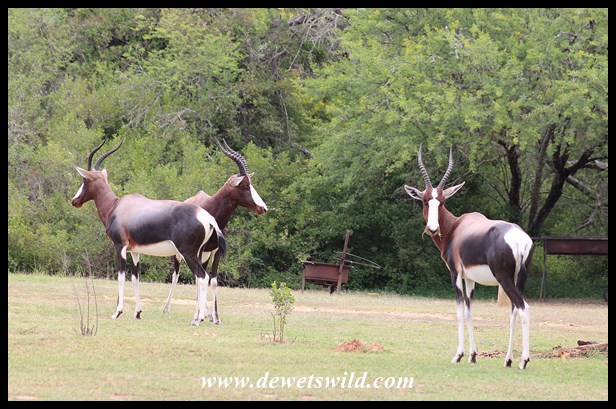
Gemsbok melting into the landscape

Gemsbok melting into the landscape

Karoo Landscape

Karoo Landscape

Rooivalle, along the Klipspringer Pass

Karoo Landscape

Karoo National Park Landscape

The Karoo is rich in hardy flowering plants

The Karoo is rich in hardy flowering plants. This is the Botterblom (“Butter Flower”)

The Karoo is rich in hardy flowering plants

Grass flowers swaying in the breeze

The Karoo is rich in hardy flowering plants

The Karoo is rich in hardy flowering plants

The Karoo is rich in hardy flowering plants
After it was proclaimed, several species of animals that occurred here naturally were reintroduced, the most notable of which are over 700 Cape Mountain Zebra, Buffalo, Black Rhino and Lion. Today, the Park protects 62 species of mammal, 63 reptile species (including 5 kinds of tortoise), 10 kinds of amphibians and even a single species of indigenous fish, the Chubbyhead Barb.

Baboon clutching an ornamental ostrich egg stolen from the camp

Black Rhinoceros

Cape Grey Mongoose playing swingball

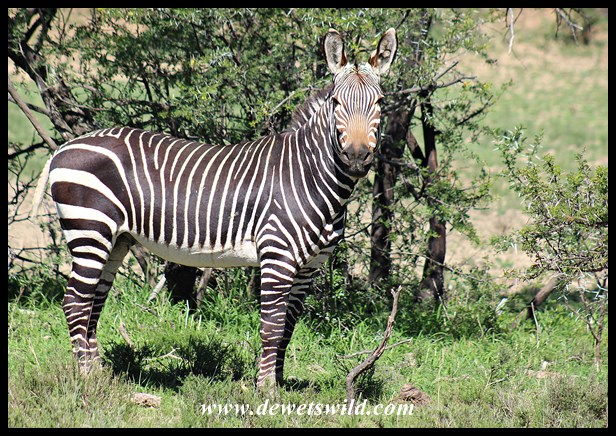
Cape Mountain Zebra

Eland

Gemsbok in the Karoo

Grey Rhebuck

Grasshopper among the rocks

Stick insect clinging to a tree trunk

Klipspringer pair

Kudu Bull

Plains Zebra

Red Hartebeest

Scrub Hare

Springbok

Steenbok Ewe

Steenbok Ram

Leopard Tortoise
More than 200 bird species have been recorded inside the Karoo National Park, several of which are endemic to this arid landscape.

Karoo Long-billed Lark

Bokmakierie

Cape Wagtail

Cape White-eye

Capped Wheatear

Cardinal Woodpecker

Double-banded Courser

Fairy Flycatcher

Familiar Chat

Fiscal Flycatcher

Grey-backed Cisticola

Helmeted Guineafowl

Tractrac Chat

Karoo Korhaan

Karoo Prinia

Karoo Scrub Robin

Karoo Thrush

Lark-like Bunting

Ludwig’s Bustard

Female Malachite Sunbird

Mountain Wheatear

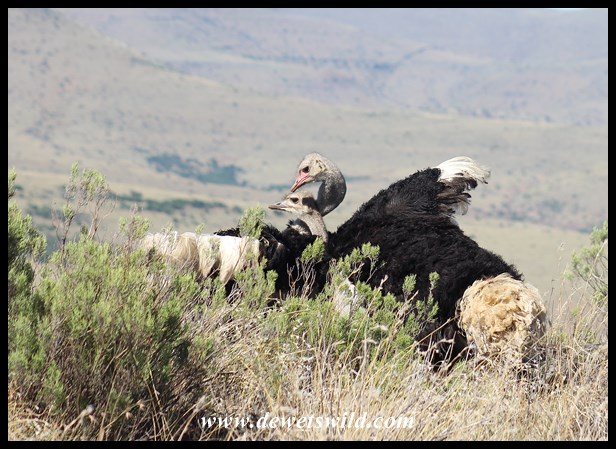
Common Ostrich Pair

Pale-winged Starling

Pin-tailed Whydah

Rock Kestrel

White-backed Mousebird

Female Yellow Canary

Yellow Canary

Pale Chanting Goshawk
For birdwatchers especially, the birdhide situated on the edge of the camp overlooking a reed-fringed waterhole is a real boon.

View from the birdhide

Common Moorhen at Karoo National Park’s birdhide

Egyptian Geese at Karoo National Park’s birdhide

Lesser Swamp Warblers

Red Bishop at the Birdhide in the camp at Karoo National Park

Male Southern Masked Weaver at the Karoo National Park’s birdhide

Marsh Terrapins at the hide in Karoo National Park
Overnight visitors have a choice of camping and accommodation (with breakfast included) available in the award-winning rest camp, which was opened in 1989. The camp also has a restaurant and little shop, as well as a very popular swimming pool. Near the campsite an old barn has been converted into an information centre, with interesting displays on the history of the Karoo and the National Park that carries its name. Two picnic sites, at Bulkraal and Doornhoek, cater to the needs of day visitors. Afsaal and Embizweni are more rustic cottages located along the Park’s extensive network of 4×4 trails. Visitors with less rugged vehicles are able to drive in comfort along the delightfully named Potlekkertjie and Lammertjiesleegte Loops, and the spectacular Klipspringer Pass.

Entrance gate into the Karoo National Park

Camping in Karoo National Park, December 2017

Several large Leopard Tortoises are right at home in the camping area at Karoo National Park

Leopard Tortoise in the camping area at Karoo National Park

Accommodation in the Karoo National Park

Wide open spaces surround the Karoo National Park’s accommodation units

Swimming pool at Bulkraal Picnic Site

Picnic facilities at at Bulkraal Picnic Site

Not only the human visitors enjoy Bulkraal Picnic Site

Vervet Monkey drinking from the swimming pool at Bulkraal Picnic Site

Doornhoek Picnic Site

Karoo’s Interpretive Centre

Karoo’s Interpretive Centre

Be careful not to drive over the smaller wildlife!
The Karoo National Park was the first destination of our recent December 2017 holidays. It is a drive of roughly 1,000 km from our home in Pretoria to the Park’s entrance gate, conveniently located along the N1 highway about 6km south of Beaufort-West. The nearest international airport is in Cape Town, about 500km to the southwest.

-32.363551
22.540845








 DeWetsWild