Join us for a look back at the wonderfully wild South African destinations we visited during 2023. May 2024 be a blessed year for you and your family, memorable for all the best reasons.
As befits a conservation area of its stature, the iSimangaliso Wetland Park is extremely rich in fauna of all description. In this final post about our recent tour of the reserve I’ll be sharing some more of the wonderful animal sightings we had.
The tropical environment of northern Kwazulu-Natal is home to some very interesting invertebrate creatures – the Flatface Longhorn Beetle I showed you a few days ago being a fantastic example.
Fish and frogs must be finding the wet conditions prevailing now after suffering through a terrible drought not so long ago very much to their liking!
Even though most of them are shy and seldomly seen, iSimangaliso is home to an amazing array of reptiles as well – many of them rather dangerous!
We dedicated an entire post to the amazing diversity of birds that we found in iSimangaliso during our most recent trip.
Mammals are well represented at iSimangaliso, and zebras, giraffes, warthogs, various kinds of antelope and primates are regularly encountered along the routes traversing the Park.
Sitting outside watching our fire one evening at Mantuma Camp in the uMkhuze Game Reserve we were joined by a large herd of impalas and nyalas.
These Kudu bulls decided to have it out right in the middle of the road between St. Lucia and Cape Vidal.
While traveling along the grassland loop through the Eastern Shores section of the Park we came across a group of hyenas finishing off the remains of a buffalo.
At the other end of the scale are Africa’s grey behemoths, all of which are found at iSimangaliso. Without forgetting to mention the Humpback Whales and dolphins so often seen just offshore, I’ve also already given closer attention to elephants and buffaloes. Hippos were one of the main reasons for the establishment of the St. Lucia Game Reserve 128 years ago, and they are still very much in evidence. We also encountered White and Black Rhinos, but I won’t be sharing photo’s of them as they were in some easily recognisable spots.
Remember that DeWetsWild will gladly assist you with reservations and guided tours of the iSimangaliso Wetland Park if you’d like to visit this wonderful place as well.
More than 500 bird species have been recorded within the borders of the iSimangaliso Wetland Park, making it one of the country’s most rewarding bird-watching destinations – a fact that was once again proven to be undeniable during my latest tour of “The Place of Miracles and Wonders”. Even if I hadn’t ticked the Lesser Moorhen for the first time this would still have been a bumper birding trip! Lets start the birdwatching off with a few videos.
African Pygmy Kingfishers are little winged jewels and in our experience iSimangaliso is one of the best possible places to search for them during summer.
Another bird that you are more likely to see in iSimangaliso than probably anywhere else in South Africa is the Crested Guineafowl.
Grey-headed Gulls are the most commonly observed of their family on the beaches of iSimangaliso. This one found a dead fish but is struggling to gulp it down!
There were so many Hamerkops to be seen all over the Park – they’re obviously enjoying the inundated conditions and the boom in fish and frog numbers associated with it!
Of course, with so much of the Park under water now it’s hardly a surprise that waterfowl are to be seen in exceptional numbers, but what was especially gratifying to me was the plentiful sightings of African Pygmy Geese and White-backed Ducks – elusive species I’ve only rarely seen previously.
At the KwaMalibala-hide this flock of White-faced Whistling Ducks dabbling and diving for food were great entertainment. In the hot weather their splashing seemed quite refreshing!
Altogether we managed to see and identify 174 different species of birds in the 10 days that we spent in the iSimangaliso Wetland Park on this latest tour that included the town of St. Lucia and its surrounds, the Eastern and Western shores sections and the uMkhuze Game Reserve.
Remember that DeWetsWild will gladly assist you with reservations and guided tours of the iSimangaliso Wetland Park if you’d like to visit this wonderful place as well.
A wonderful consequence of the water wonderland that is the iSimangaliso Wetland Park now, is the incredible numbers of amphibians evident throughout the Park. I’m featuring just a few of them here.
Driving around the Park you cannot escape the calls of the Painted Reed Frogs, though they’re almost impossible to see without stepping out of your vehicle and searching for them (which isn’t allowed, due to the presence of dangerous animals). I was therefore very impressed with myself when I saw this Painted Reed Frog as I was driving by. See how small it is!
While using the facilities at one of the stopping points on the Western Shores of Lake Saint Lucia I noticed this Peeping Tom hiding in a corner. It is a Red Toad and I left him there to amuse the next visitor as well…
Platannas seem to have quickly colonized all the newly formed stretches of water in the iSimangaliso Wetland Park, but usually quickly dive under water at the slightest disturbance. It was pleasing to find one that wasn’t too shy to pose for a few photo’s.
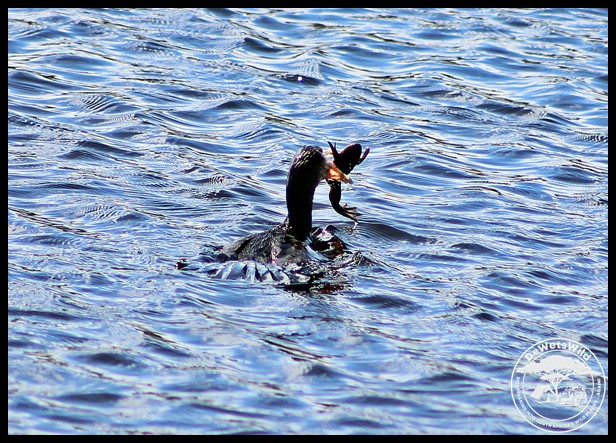
It would be better if it cultivated a more apprehensive disposition though, because Platannas are on the menu of many waterbirds and in the 10 days I spent in iSimangaliso on this latest trip I saw many a Platanna disappearing down a gullet.
After dark, hundreds of immature African Bull Frogs emerged onto the roads, especially following rainy days.
Kumasinga Hide at uMkhuze Game Reserve has turned into a paradise for Southern Foam Nest Frogs, with dozens of the cute little creatures clinging to the hide’s framework, with a few foam nests already constructed over the water and a few still in the making (allowing me to make a video of the process).
Remember that DeWetsWild will gladly assist you with reservations and guided tours of the iSimangaliso Wetland Park if you’d like to visit this wonderful place as well.
I’m fresh back from a 10 day tour through the iSimangaliso Wetland Park, visiting the Eastern and Western Shores of Lake Saint Lucia, the estuary, beaches and trails around the town of Saint Lucia as well as the uMkhuze section of the Park. Regular readers will know that this is one of my favourite South African wild places to visit and take guests to, but in almost thirty years of visiting I have never seen the Park live up to the “Wetland” part of its moniker as wonderfully as I have on this latest trip. Of course there’s a lot of photographs and videos in store for you in the weeks to come, but here’s a little appetizer to tide you over while I get down to the business of sorting and editing hundreds more.
Remember that DeWetsWild will gladly assist you with reservations and guided tours of the iSimangaliso Wetland Park if you’d like to visit this wonderful place as well.
The Western Shores section of the iSimangaliso Wetland Park was opened to visitors a lot more recently than most other parts of the Park, and in many ways it is still being rehabilitated to its natural state – in fact there are still several exotic eucalyptus plantations in this area that still need to be harvested.
Just about 2km outside of St. Lucia town, on the main road to Mtubatuba, visitors will find the Dukuduku Gate providing quick and easy access to this interesting area. Unfortunately during our visit early in November Charter’s Creek was off limits due to flooding, but there’s other very rewarding areas where visitors can stretch their legs at: uBhejane Picnic Spot, kuMgandankawu Hide and uMthoma Aerial Boardwalk. The road network, while still rather limited, provides access to various interesting habitats and the birds and animals that find refuge there.
If you are interested in visiting St. Lucia and the iSimangaliso Wetland Park, remember that De WetsWild can assist you with reservations in the Eden Park and Sugarloaf Campsites in town or at wonderful Cape Vidal set on the Indian Ocean in the Eastern Shores section of the Park.
After uMkhuze, Lake Saint Lucia was the next destination on the itinerary of our December bush holidays. We had only two days available to explore the area, and wanted to pack in as much as we could in that time.
Unfortunately rainy weather brought an early end to our plans of exploring the collection of walking trails around Saint Lucia town. The town is entirely surrounded by the iSimangaliso Wetland Park and it is not unusual to find hippos, antelope, warthog and even leopard roaming the streets from time to time. We had to be content driving on the outskirts of town to the beach and estuary, enjoying a meal at one of the restaurants and buying fresh fruit from the street vendors.
The 23rd of December we set aside to explore the newly opened Western Shores section of the Park, an area we have not visited before. It is accessible from either the Nhlozi Gate in the north, near the town of Hluhluwe and which provided access to the now closed camps at Fani’s Island and Charters Creek, or from the Dukuduku Gate in the south, close to St. Lucia town.

Dukuduku Gate to the Western Shores section
We had hoped to spend the midday hours at Charters Creek, enjoying a picnic lunch and perhaps doing some birdwatching on the lake shore and in the surrounding woodland. Unfortunately the accommodation at Charters Creek had to be closed some years ago due to a terrible drought in the area, and we found the few remaining facilities at the disposal of day visitors in a sad state of disrepair. Not very inviting for picnics, although the wildlife and natural scenery did not disappoint. We certainly hope the Park authorities will consider reopening the camp and revamping the day visitor facilities so that Charters Creek can again become a worthwile destination and base from which to explore the Western Shores section of the Park.
Despite the let down of Charter’s Creek, we found the rest of the newly built facilities on the Western Shores to be in excellent condition, well planned and entirely worth the trip.
The road network provides access to a wide variety of scenery and habitats, as well as the wildlife that lives there; the most commonly encountered animals being reedbuck, waterbuck, kudu, giraffe, blue wildebeest and plains zebra, and we also had good sightings of rare birds like the southern banded snake eagle and osprey.
The uBhejane picnic spot has some shady trees, very welcome in the heat of summer. Just south of the picnic site, the road skirts the Kwelamadoda Pan, which was absolutely alive with a variety of waterbirds and wildlife along the shores.
Although there was little wildlife activity at the pans overlooked by the kuMgadankawu hide at the time we visited, it seems to be a place well worth stopping at during the dry season when water is less widely available elsewhere.

kuMgadankawu hide
From the uMthoma Aerial Boardwalk there’s a great view over the marshes along the lake shore, not to mention the opportunity to explore the forest habitat through which the pathway and boardwalk winds.
We had a lovely day on the Western Shores of Lake Saint Lucia. The area has much to offer, and we’ll certainly be back for more.
————————————————————————————————————————————–

The road to Chane Cheese Farm (iSimangaliso 21/12/2014)
While exploring the area around Lake Saint Lucia during our December 2014 bush holidays, we based ourselves for three comfortable nights at Chane Cheese Farm, a working dairy entirely surrounded by exotic bluegum plantations just a few kilometres outside the town of Mtubatuba. From there, Saint Lucia town and the Dukuduku Gate into the Western Shores section of the iSimangaliso Wetland Park is an easy 20km drive away.

Chane Cheese Farm, December 2014
An osprey takes flight over the Western Shores of Lake St. Lucia