Tag Archives: view sites

Sweeping views over the Olifants

Olifants Rest Camp, Kruger National Park

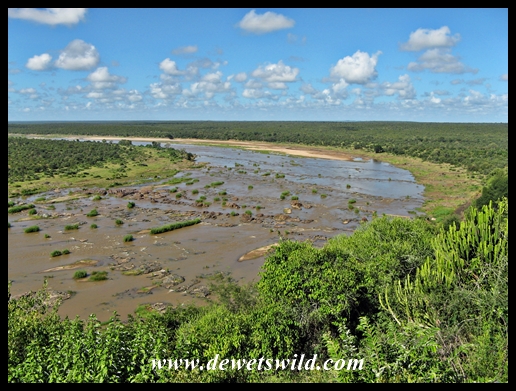
Olifants Rest Camp undoubtedly offers the best views of any of the Kruger National Park‘s camps, situated as it is on a cliff high above the Olifants River in the central regions of the Park. Many guests spend all day on their accommodation unit’s veranda, using their binoculars to scan the river below and the plains beyond for wildlife, or simply soaking in one of the grandest vistas in wild Africa.

Olifants was opened in June 1960, though it was closed for a 16 month period in the early 1970’s after a fire destroyed the reception, restaurant and shop. The cliff-top viewpoint near the restaurant is one of the most popular spots in the entire Park, and during the day is always packed with spectators enjoying the wildlife show along the river banks below. The camp offers guests a choice of 112 accommodation units, ranging from 2 and 3 bed bungalows to two luxurious and very exclusive guest houses that accommodate up to 8 guests each. Some of the accommodation units have been built right on the edge of the cliff, offering guests the most exquisite views, but you have to book a year in advance if you want to secure one of those. The two-bedroomed cottage number 14 is a personal favourite of ours. Olifants also offers guests a Mugg & Bean restaurant (itself with stunning views), a shop, filling station, small meeting room, swimming pool, picnic area for day visitors and guided activities.

Nearby, tiny Balule is a much more rustic camp offering accommodation in a small camping area and six very basic three-bed huts on the southern bank of the Olifants River. The huts were built in 1930 in the “Selby” style: a rondavel (round hut) without any windows, just a gap all around between the roof and wall for ventilation. The huts share a communal kitchen (with a paraffin freezer) and ablution block, and the same applies to the camping sites. Balule has no electricity and paraffin lamps are used to provide light at night. During the Apartheid years Balule was available only to non-white visitors.

Just outside Balule, a low level causeway crosses the Olifants River. The pontoon-crossing that operated over the river since 1929 was replaced by the causeway in 1937, but the old bridge was extensively damaged in the massive floods of January 2012 and had to be rebuilt. The high-span bridge across the same river, on the main tarred H1 route through the Park, lies about 5km due west from Balule and affords visitors the opportunity to stop and stretch their legs while enjoying the views up- and downstream. Both bridges are very popular with guests to Olifants, as they allow close-up views of so many of the river’s denizens.

South of Olifants, the roads initially follow the course of the river before leading down to the Satara-area. Nwamanzi offers more spectacular views over the Olifants, and the open plains south of the river host a huge number and variety of game and birds. Bangu waterhole and the Hlahleni stream crossing on the S90, as well as the Ngotso Weir on the S89, are especially rewarding spots to wait for the herds (and the predators that prey on them) to come and drink.

North of Olifants you enter the mopane-dominated northern plains of Kruger. There’s two general options of routes leading northwards from Olifants, both leading to Letaba Rest Camp. The quickest route follows the tarred H8 and H1-5 roads and is often very quiet game viewing-wise, especially once the road turns away from the river. The gravel S44, S93 and S46 roads follows the course of the Olifants and Letaba rivers through some very rocky terrain with several stream crossings and, apart from a lovely viewing point downstream from camp and the historic Von Wielligh’s Baobab, usually also offers lots more wildlife to see.

For scenic splendour alone, there’s no other camp in Kruger that can compete with Olifants. Combine that with the camp’s great facilities and excellent game viewing drives in the vicinity, and you’ll understand why it has become a firm favourite with many Kruger visitors.


Lower Sabie Rest Camp, Kruger National Park

Lower Sabie must be the most popular destination in the Kruger National Park. It is exceedingly hard to get a booking here if you don’t book a year in advance. In peak season, even just finding parking to visit the shop or restaurant can be a challenge, as visitors from all over the the southern sections of the Park flock to the camp. The camp’s location on the banks of the Sabie River, in an area of exceptionally high-quality grazing in the south-eastern corner of the Park, ensures that its surrounds is frequented by an astounding variety and number of herbivores and their attending predators, making for game-viewing heaven!
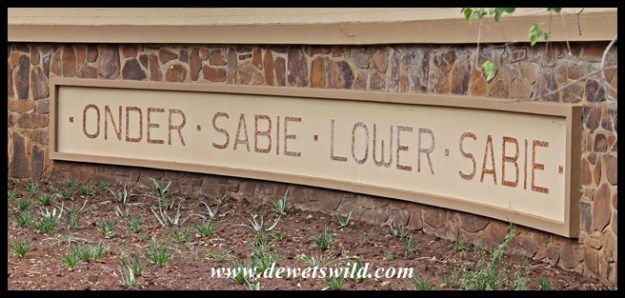
Lower Sabie (22)

The Sabie River got its name from the Shangaan word “saba” meaning fear, probably due to the large number of enormous crocodiles that call the river home. The dam in front of the camp came about after the causeway across the river was built in 1987 (it had to be rebuilt higher after the floods in February 2000).

The first tourist accommodation at Lower Sabie was a 5-bedroom house converted from ranger Tom Duke’s quarters in 1930, but this was demolished again just two years later after becoming dilapidated. The only access to Lower Sabie was via Gomondwane from Crocodile Bridge until the road from Skukuza reached it in 1931. The next attempt at providing guest accommodation at Lower Sabie then commenced in 1936, when three buildings, built in a u-shape and each housing six bedrooms, were erected – these units are still used as accommodation to this day, but has been extensively renovated since. Over the years, more accommodation and a camping site was added to the camp, leading up to an extensive project to revamp and enlarge Lower Sabie in the early 2000’s. Today the camp provides overnight accommodation in 117 huts, bungalows, cottages and safari tents and has space for 34 caravans and tents in its camping area. Lower Sabie’s restaurant (Mugg & Bean), with its deck overlooking the Sabie River, is especially popular. The camp has a well stocked shop for groceries and curios, a fuel station, swimming pool for overnight guests and a day visitors picnic area near the gate. Along the river, in front of the bungalows south of the restaurant, lush lawns and deep shade provided by enormous trees is just the place to spend a lazy afternoon, surrounded by Lower Sabie’s prolific birdlife.

We can certainly recommend joining at least one of the guided activities on offer from Lower Sabie, as excellent sightings are almost guaranteed.

Sunset Dam is a brilliant spot just a kilometer from Lower Sabie, and as its name suggests is very popular with visitors whiling away the last minutes before they have to get back to camp in the evening. You can park your vehicle right on the water’s edge, allowing excellent photographic opportunities of hippos, crocodiles, wading birds and herds of game coming to quench their thirst.

Heading north from Lower Sabie along the H10 tarred route to Tshokwane, you’ll encounter the first highlight of this route just minutes after leaving camp. The causeway across the Sabie River is a favourite spot for many visitors, who flock here to enjoy glorious sunsets and an abundance of game and bird species attracted to the water. The plains between Lower Sabie and Tshokwane is home to incredible herds of zebra and wildebeest at the end of winter, and is also an excellent place to look for reedbuck, one of the rarer antelope that occurs in Kruger. Of course, with so many herbivores roaming around it stands to reason that the predators are not far behind. If you, like us, enjoy your game viewing with as little other traffic as possible, try the gravel S29, S122 and S128 loops that turn off the main road as alternatives to explore this area. Two other beautiful places not to be missed is Mlondozi Picnic Spot, overlooking a large dam from Muntshe mountain, and Nkumbe Viewpoint, which offers an exceptional view over the open plains of Kruger.

The tarred H4-2 Gomondwane Road leading south to Crocodile Bridge is another very productive route for game viewing, though we personally prefer taking the gravel loops running roughly parallel to the main road (S28 Nhlowa Road, S82 Mativuhlungu Loop, S130 Gomondwane Loop and S137 past Duke’s waterhole) as these carry a little less vehicle traffic.

The H4-1 road between Lower Sabie and Skukuza carries more traffic than any other road in Kruger, and not without reason. There’s an excellent chance of seeing all the “big 5” game animals and so much more along this route, which follows the course of the Sabie River, on just one drive. The vegetation along the portion of this road nearer Lower Sabie is much more open than the stretch between Nkuhlu and Skukuza, making for even better game viewing. Keep your eyes open for lions and leopards at the rocks at the Lubyelubye stream crossing about 5km from Lower Sabie, as this is one of their most reliable haunts. Also, don’t miss the short S79 gravel loop that crosses the Nwatimhiri causeway, which is another favourite spot for feline predators. Nkuhlu Picnic Spot is a great place to get out, stretch the legs and have a bite to eat (though beware the monkeys and baboons that hang around here, as they will attempt to steal your picnic if they get even the slightest chance!). The gravel S30 Salitje Road along the northern bank of the river is a wonderful alternative route back to Lower Sabie.

If all these photos did not convince you, allow us to reiterate: Lower Sabie IS game-viewing heaven! Remember to book early if you also want to enjoy all it has to offer.

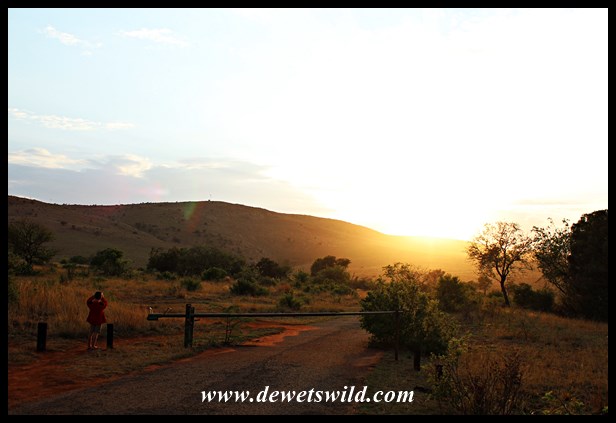
Exploring Marakele

A “Place of Sanctuary”; that Marakele National Park certainly is. As its Tswana name suggests, this Park of around 650km² in size offers protection not only to some of the most awe-inspiring scenery one could hope to find, but also to an impressive variety of fauna and flora. Humans too can find a safe and peaceful haven here in the malaria-free Waterberg range, as we were reminded again on our recent visit.

A public road splits Marakele into two sections. Kwaggasvlakte in the south-western corner is much smaller than the main portion of the Park lying to the east. Kwaggasvlakte is where the Park’s entrance gate and Bontle  Camp is located, and is characterised by flat, sandy plains on which mixed bushveld is the main vegetation type.

Overlooking a waterhole in the northern corner of the Kwaggasvlakte section, Bollonoto Hide offers a great place from which to enjoy the constant stream of game and birdlife arriving to quench their thirst.

A subway connects Kwaggasvlakte to the bigger, eastern portion of the Park. It is in this more mountainous section of the Park where elephants, buffaloes and lions also occur, just some of the 91 species of mammals that the Park hosts. Tlopi Tented Camp is available to guests who’d like to overnight in this section of the Park, which is dominated by a wholly different type of vegetation, described as “Waterberg Moist Bushveld”. A good network of roads allows visitors to explore widely – some of Marakele’s roads are only accessible to 4×4 vehicles, but most of the Park’s 80km road network can easily and comfortably be traversed in a sedan.

A very narrow tarred pass leads to Marakele’s most impressive attraction, the Lenong View Point on top of the Waterberg massif. Lenong lies at an altitude of 2050m, over a kilometer higher than Bontle on the Kwaggasvlakte below – a fact you become well aware of when your ears pop on the very steep and winding ascent. From the viewpoint you normally have fantastic views over the plains below and the mountains around, and perhaps get a close-up glimpse at Marakele’s prized colony of Cape Vultures soaring on the thermals. Unfortunately the weather didn’t play along when we went up to Lenong on our latest visit, the top of the mountain being cloaked in a thick and teeth-chatteringly cold fog. However, dipping below the clouds on our way down we did get glimpses of the wonderful views to be had from up there.

Our latest visit to Marakele was just 3 nights long, and honestly we found that too short to fully savour all the Park had to offer. The broken terrain does make game-viewing a little more challenging than in many other parks and reserves, especially if you are mostly after the “Big 5” (which we luckily aren’t, we just enjoy being “out there” and enjoy anything we find along the way), but as far as spectacular scenery and serenity is concerned Marakele has few equals.

Marakele National Park is managed by South African National Parks, and the access gate is located just 12km outside the town of Thabazimbi, which offers most of the modern conveniences. Thabazimbi is easily accessed from Gauteng along the N1 and R516 via Bela-Bela or via the R511 through Brits.

Road to Marakele (2)

On the banks of the lazy Mlalazi

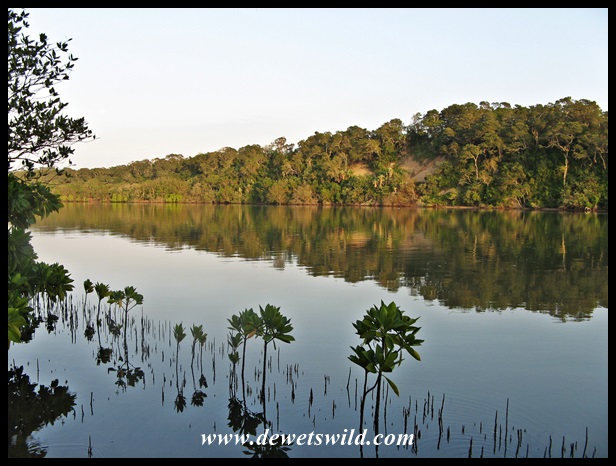
The Mlalazi River is an excellent example of an estuary in good natural condition, and considered among the twenty most important in conservation terms in South Africa. It is also a focal point for many visitors to Umlalazi Nature Reserve, who come here to enjoy a variety of watersports, or just picnic on the banks (to the delight of the clever vervet monkeys who’ll quickly raid unprotected baskets!)

One of Umlalazi’s trails leads all the way from the parking area at the lagoon to the mouth of the Mlalazi River where it empties into the Indian Ocean. Hikers can then return along the same route, or along the beach – a total distance of 8 or so kilometers. Unfortunately when I attempted the trail on our recent stay about half-way to the mouth I encountered a washed-away stream crossing, probably following the good rainfall the week before we arrived. After the thought of hungry crocodiles eyeing me from somewhere unseen crossed my mind, there was no way I was going to try and wade through a muddy backwater, and unfortunately had to turn around. Oh well, next time we’re at Umlalazi I will give it another go (the trail I mean, I’ll still refuse to wade through a muddy backwater if the bridge isnt fixed by then…)

A beach that goes on and on at Umlalazi

Whether you’re a sun worshipper, an adrenaline junky, a sports nut or just looking for a quiet position from where to contemplate your place in the world, the beach at Umlalazi definitely has a spot where you can enjoy the Indian Ocean just the way you like it.

Introduction to Umlalazi Nature Reserve

We found a treasure along the Kwazulu-Natal Coast!

We had looked forward to our first visit to Umlalazi Nature Reserve in March with great excitement, but what we found at this little jewel exceeded our expectations many times over.

Compared to many other South African conservation areas, Umlalazi is tiny. The reserve may cover only a little over 1000ha, but it is the amazing diversity of ecosystems it protects that make it such a valuable piece of land. The estuary of the Mlalazi River is considered among the top 20 most important to conserve of more than 250 South African estuaries. Another watercourse, the Siyayi, runs parallel to the sea for a distance of about 8km through the reserve, though only reaches the ocean after episodes of extreme rainfall as its mouth has been blocked by the dunes at Umlalazi’s main beach. The reserve is well known for the excellent examples of mangrove forests it protects, but you’ll also find swamp forests dominated by Swamp Fig trees (Ficus trichopoda), climax dune forests, Acacia thickets, tidal salt marshes, freshwater wetlands, coastal grasslands, seashore dune vegetation as well as miles of unspoiled beaches. A grove of Kosi Palms (Raphia australis), one of the largest species of palm in the world, was planted in 1903 by a magistrate C.C. Foxon and is today regarded a national monument.

Of course, with such a huge diversity of habitats it should come as no surprise that Umlalazi is home to an equally impressive variety of animal life. The abundance of invertebrate species of all descriptions is simply astounding. Thirteen mammal species have been recorded, with plains zebra, red duiker and vervet monkey being the most easily seen. The critically endangered Pickersgill’s Reed Frog is among 15 species of amphibians found in the reserve, while nile crocodile, python and gaboon adder feature in the list of 16 reptile species – 9 of which snakes – you might encounter. With a list of 327 bird species identified, the reserve is a prime destination for birdwatchers – pride of place of course going to the southern most breeding population of Palmnut Vultures that feed and nest in the Kosi Palms. These small vultures (wingspan of 1.5m, weight up to 1.8kg) is one of South Africa’s rarest birds, but regularly encountered here at Umlalazi, and apart from the fruit of the palms will also feed on carrion and small animals.

These three zebras seemed to act as our hosts while we were visiting Umlalazi and regularly passed by. They even formed a guard of honour at the gate when we departed 😀

In upcoming posts, we’ll focus some more attention on Umlalazi’s mangroves, the estuary, the forests and the beach.

The focus for Umlalazi’s human visitors is on outdoor recreation, with fishing, boating, canoeing (can be hired at reception), hiking, birding, swimming, surfing and picnicking being popular pursuits. Excellent information displays at the trail heads and other public areas give visitors an insight into the world they are exploring.

The reserve is managed by Ezemvelo KZN Wildlife, through whom overnight visitors can also book the twelve fully self-contained 4-sleeper log cabins, the 14 camping sites at Indaba Camp or the 36 camping sites at Inkwazi Camp available inside the reserve. The town of Mtunzini, just outside the reserve gates, also offers several alternative accommodation options, as well as a variety of other services you’d expect in a small holiday town. The area’s modern history dates back to the 1850’s when the colourful character John Robert Dunn settled here. Dunn  befriended Zulu King Cetshwayo who appointed him Chieftain over the area that Umlalazi and Mtunzini lies in today. He held his court and celebrations under a large red milkwood tree (known as the Indaba Tree) in what is now the Indaba campsite at Umlalazi. Dunn died in 1895, having married 49 wives (48 of which according to traditional Zulu custom) and fathering over a hundred children (various sources give differing numbers about exactly how many – ranging from 116 to 163!). That same year, a magistrate was appointed at Mtunzini, marking the official birth of the town. Umlalazi Nature Reserve itself was proclaimed in 1948 and today forms the northernmost section of the Siyaya Coastal Park which stretches for 37km along the coastline and also incorporates the Redhill and Amatigulu Nature Reserves.

Umlalazi Nature Reserve is located on the Indian Ocean, along Kwazulu-Natal’s North Coast about 140km from Durban (or 700km from Pretoria), and easily accessed from the Mtunzini off-ramp from the N2-highway.

How to reach Umlalazi

How to reach Umlalazi


Landscape

This week’s WordPress Photo Challenge, Landscape, seems the perfect excuse to post this panoramic view of Ntshondwe, the main accommodation facility in Ithala Game Reserve, the subject of our weekly feature.

(You may have to click on the image and then enlarge it further to fully appreciate the resort’s magnificent setting)

Ntshondwe Landscape


Weekend in Pilanesberg

By mid-February, the Wild de Wets were suffering from extreme bush withdrawal symptoms. So, with our “monochrome memories” from a visit to Pilanesberg National Park in December lined up for publishing at the same time, we headed back to Pilanesberg for a quick weekend bush-fix, camping at Bakgatla Resort for the Saturday night before Valentine’s Day.

It was noticeable that the Park received some much needed rain since our previous visit, evidenced by flowing streams, fuller dams and greener vegetation. We hope that more falls before the end of the summer rainy season, and that it will be enough to sustain the fauna and flora through the dry winter.


A month of monochrome memories: Pied Pair

A pair of Pied Kingfishers hunting from a shared perch at the Mankwe Hide in the Pilanesberg National ParkPilanesberg 29122015 (13)

Our end-of-year 2015 holidays were absolutely packed to the brim. Apart from our ten-day visit to the Kruger National Park (read more about our time at Lower Sabie, Olifants and Shingwedzi in December), we also made day trips to five other reserves, and will be sharing photos from those (except Suikerbosrand, which we introduced in a post all of its own) daily through the month of February, in a series we call “a month of monochrome memories”.

A month of monochrome memories: Mud, Glorious Mud!

A warthog finding respite from the heat in a pool of mud at the Mankwe Hide in Pilanesberg National Park.
Pilanesberg 29122015 (12)

Our end-of-year 2015 holidays were absolutely packed to the brim. Apart from our ten-day visit to the Kruger National Park (read more about our time at Lower Sabie, Olifants and Shingwedzi in December), we also made day trips to five other reserves, and will be sharing photos from those (except Suikerbosrand, which we introduced in a post all of its own) daily through the month of February, in a series we call “a month of monochrome memories”.