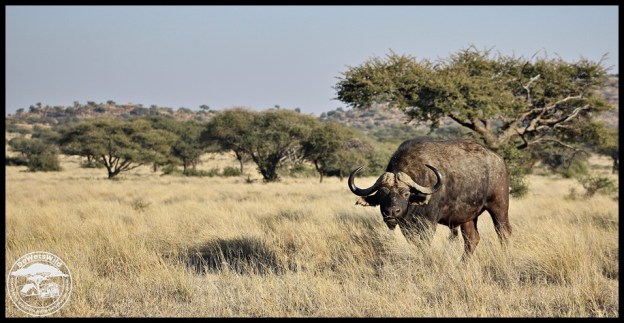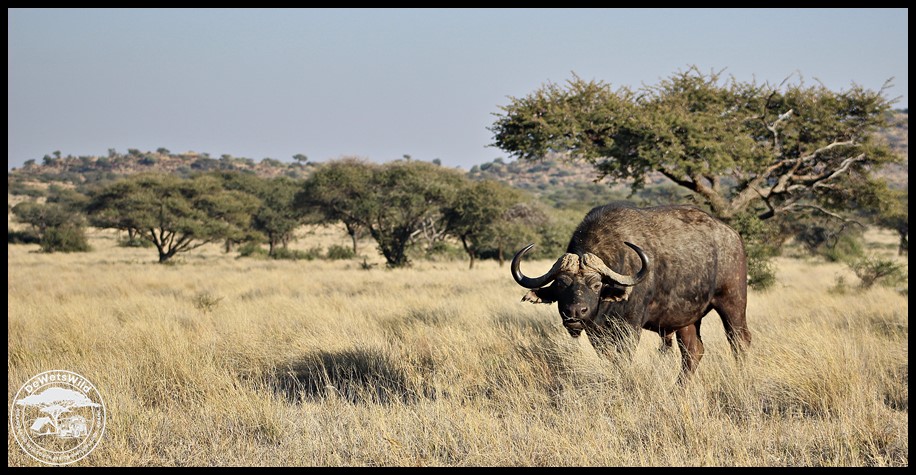
The iSimangaliso Wetland Park is home to several hundred African Buffaloes, and they’re especially numerous in the Eastern Shores section of the reserve. They’re such powerful beasts with a well deserved reputation for a dangerous disposition, and it is always exciting to see them at close quarters.
African Buffalo
African Buffalo
African Buffalo
African Buffalo
African Buffalo
African Buffaloes
African Buffalo
African Buffaloes
African Buffaloes
Remember that DeWetsWild will gladly assist you with reservations and guided tours of the iSimangaliso Wetland Park if you’d like to visit this wonderful place as well.
More than 500 bird species have been recorded within the borders of the iSimangaliso Wetland Park, making it one of the country’s most rewarding bird-watching destinations – a fact that was once again proven to be undeniable during my latest tour of “The Place of Miracles and Wonders”. Even if I hadn’t ticked the Lesser Moorhen for the first time this would still have been a bumper birding trip! Lets start the birdwatching off with a few videos.
African Pygmy Kingfishers are little winged jewels and in our experience iSimangaliso is one of the best possible places to search for them during summer.
Another bird that you are more likely to see in iSimangaliso than probably anywhere else in South Africa is the Crested Guineafowl.
Grey-headed Gulls are the most commonly observed of their family on the beaches of iSimangaliso. This one found a dead fish but is struggling to gulp it down!
There were so many Hamerkops to be seen all over the Park – they’re obviously enjoying the inundated conditions and the boom in fish and frog numbers associated with it!
Of course, with so much of the Park under water now it’s hardly a surprise that waterfowl are to be seen in exceptional numbers, but what was especially gratifying to me was the plentiful sightings of African Pygmy Geese and White-backed Ducks – elusive species I’ve only rarely seen previously.
At the KwaMalibala-hide this flock of White-faced Whistling Ducks dabbling and diving for food were great entertainment. In the hot weather their splashing seemed quite refreshing!
Cattle Egrets in flight over the sea at the estuary of Lake St. Lucia
Collared Pratincole
Common Buzzard
Common Ringed Plover
Common Sandpiper
Common (left) and Swift (right) Terns
Crested Guineafowls
Dark-backed Weaver
Fan-tailed Widowbird
Giant Kingfisher
Glossy Ibis
Great Egret
Green-backed Heron
Grey Heron
Grey-headed Gull
Hamerkop
Immature Kelp Gull
Laughing Dove
Female Lesser Masked Weaver
Little Bee-eaters
Little Egret
Long-crested Eagle
Little Grebe
Malachite Kingfisher
Narina Trogon
Purple Heron
Rattling Cisticola
Red-billed Teal
Reed Cormorants
Ruddy Turnstone
Saddle-billed Storks
Sanderlings
Secretary Bird
Spectacled Weaver
Squacco Heron
Squacco Heron
Southern Banded Snake Eagle
Swift Tern
Trumpeter Hornbill
Village Weaver
Wahlberg’s Eagle
Water Thick-knee
Whimbrel
White-backed Duck
White-backed Duck diving
White-faced Whistling Ducks
White-fronted Plover
Wood Sandpiper
Woolly-necked Storks
Yellow Weaver
Yellow-billed Egret
Yellow-billed Storks
Eastern Nicator
Yellow-throated Longclaw
Remember that DeWetsWild will gladly assist you with reservations and guided tours of the iSimangaliso Wetland Park if you’d like to visit this wonderful place as well.
There were some adorable babies in this big breeding herd – at least 50 individuals strong – that crossed the road in front of us in a hurry past the eThaleni Picnic Spot.
Remember that DeWetsWild will gladly assist you with reservations and guided tours of the iSimangaliso Wetland Park if you’d like to visit this wonderful place as well.
One of the most memorable sightings of my recent tour of the iSimangaliso Wetland Park was of a small pod of Humpback Whales playing just offshore of the St. Lucia estuary one overcast morning.
Humpbacked Whale tail-slamming off St. Lucia
Humpbacked Whale fin-slapping off St. Lucia
Humpbacked Whale tail-slamming off St. Lucia
Humpbacked Whale fin-slapping off St. Lucia
Megaptera novaeangliae
Humpback Whales occur throughout the world’s oceans at different times of the year. Locally they migrate past our shores from about June to overwinter in the tropical waters off both Africa’s Atlantic and Indian Ocean coastlines, returning to their Antarctic feeding grounds from about November at the start of the austral summer and covering as much as 16,000km on these journeys. Humpback Whales feed mainly on krill, other plankton and schools of fish, gulped down in enormous quantities after being encircled by “curtains” of bubbles released from the blowholes of the circling whales. These whales are well known for their spectacular breaches out of the water as well as their playful tail-slamming and fin-slapping behaviour (as captured in the above video). They may dive up to 150m deep and stay underwater for up to 15 minutes. While usually seen in small groups and even as single cows with their latest calf, Humpback Whales may at times congregate in pods up to 200 strong in good feeding grounds.
While in the more tropical climes the females give birth to single calves after an almost year-long gestation. The calves will suckle for up to a year, though they start eating at about 6 months of age. Females calf every two years and mating also takes place in the tropical latitudes during winter. At birth the calves weigh about a metric ton and measure more than 4 metres in length; fully grown they will weigh approximately 40,000kg and reach up to 18m in length! It is estimated that Humpback Whales live to at least 50 years of age.
Citing an increasing population estimated at approximately 84,000 mature animals (of a total of 135,000) worldwide, the IUCN lists the Humpback Whale as being of least concern. When whaling was banned in 1966 there was probably only 5,000 Humpback Whales left.
Over the years we’ve been fortunate to see these enigmatic creatures a number of times while visiting some of South Africa’s wild places, most notably the Garden Route National Park and, of course, iSimangaliso. DeWetsWild will assist you with reservations and guided tours of these places and even arrange whale watching excursions with experienced skippers if you are interested in seeing Humpback Whales up close.
The iSimangaliso Wetland Park does not only conserve some of the most magnificent terrestrial environments in our country, but it also has a grand marine component extending along the coastline and many nautical miles out into the warm waters of the Indian Ocean. Several pristine beaches are accessible to visitors for sunbathing, fishing (with permits strictly required), snorkeling, scuba-diving, canoeing and boating.
An enormous jellyfish that drifted out of a rough sea on the beach at St. Lucia
Mission Rocks
Natal Rock Crab
Cape Vidal at low tide
Swift Tern
Cattle Egrets in flight over the sea at the estuary of Lake St. Lucia
Humpbacked Whale tail-slamming off St. Lucia
The beach at the estuary of Lake Saint Lucia
Large-spot Pompano
Fishermen heading out to sea
Sunrise at the St. Lucia estuary
Cape Vidal beach
Blennies in a rock pool
Marine Crab (species unknown)
Natal Rock Crab
I know that many of DeWetsWild’s readers are very fond of spending time at the beach, so I made a few videos especially for you!
Remember that DeWetsWild will gladly assist you with reservations and guided tours of the iSimangaliso Wetland Park if you’d like to visit this wonderful place as well.
A wonderful consequence of the water wonderland that is the iSimangaliso Wetland Park now, is the incredible numbers of amphibians evident throughout the Park. I’m featuring just a few of them here.
Driving around the Park you cannot escape the calls of the Painted Reed Frogs, though they’re almost impossible to see without stepping out of your vehicle and searching for them (which isn’t allowed, due to the presence of dangerous animals). I was therefore very impressed with myself when I saw this Painted Reed Frog as I was driving by. See how small it is!
Can you spot the Painted Reed Frog?
Painted Reed Frog at a temporary pan on the eastern shores of Lake Saint Lucia
While using the facilities at one of the stopping points on the Western Shores of Lake Saint Lucia I noticed this Peeping Tom hiding in a corner. It is a Red Toad and I left him there to amuse the next visitor as well…
Red Toad in an ablution block in the Western Shores section of the iSimangaliso Wetland Park
Platannas seem to have quickly colonized all the newly formed stretches of water in the iSimangaliso Wetland Park, but usually quickly dive under water at the slightest disturbance. It was pleasing to find one that wasn’t too shy to pose for a few photo’s.
Platanna
Platanna
It would be better if it cultivated a more apprehensive disposition though, because Platannas are on the menu of many waterbirds and in the 10 days I spent in iSimangaliso on this latest trip I saw many a Platanna disappearing down a gullet.
Reed Cormorant with a Platanna
After dark, hundreds of immature African Bull Frogs emerged onto the roads, especially following rainy days.
Immature African Bull Frog on a road in the iSimangaliso Wetland Park
Kumasinga Hide at uMkhuze Game Reserve has turned into a paradise for Southern Foam Nest Frogs, with dozens of the cute little creatures clinging to the hide’s framework, with a few foam nests already constructed over the water and a few still in the making (allowing me to make a video of the process).
The toes of a Foam Nest Frog
Foam Nest Frog in Kumasinga Hide
Foam Nest Frogs mating
Foam Nest Frog nests
Foam Nest Frogs mating
Remember that DeWetsWild will gladly assist you with reservations and guided tours of the iSimangaliso Wetland Park if you’d like to visit this wonderful place as well.
I mentioned in my previous post about my latest tour of the iSimangaliso Wetland Park that I have never seen the Park so wet. There seemed to be water everywhere, and in enormous quantities. And the most astounding thing about that is that we are only at the start of the rainy season (over 150mm of rain fell just in just 2 days during our trip). It is amazing how resiliently nature is rebounding in a part of the country that, not even a generation ago, was almost completely covered by thirsty plantations of exotic pine and bluegum trees.
Sunrise over the wetlands
A stretch of the vastly expanded Lake Bhangazi
Mfabeni Swamp
Mfabeni Swamp
Mfabeni Swamp
A quiet corner of the Mfabeni Swamp
Banded Tilapia. The newly formed ponds have quickly been populated by fish and tadpoles.
Mfabeni Swamp
I took this video from the Mziki viewpoint near Mission Rocks, to show just a portion of the extent of the wetlands on the eastern shores of Lake Saint Lucia. The bird songs coming from the forest in the foreground is rather special as well.
Lake Bhangazi is a beautiful freshwater lake near Cape Vidal in the iSimangaliso Wetland Park.
Remember that DeWetsWild will gladly assist you with reservations and guided tours of the iSimangaliso Wetland Park if you’d like to visit this wonderful place as well.
I’m fresh back from a 10 day tour through the iSimangaliso Wetland Park, visiting the Eastern and Western Shores of Lake Saint Lucia, the estuary, beaches and trails around the town of Saint Lucia as well as the uMkhuze section of the Park. Regular readers will know that this is one of my favourite South African wild places to visit and take guests to, but in almost thirty years of visiting I have never seen the Park live up to the “Wetland” part of its moniker as wonderfully as I have on this latest trip. Of course there’s a lot of photographs and videos in store for you in the weeks to come, but here’s a little appetizer to tide you over while I get down to the business of sorting and editing hundreds more.
An enormous jellyfish that drifted out of a rough sea on the beach at St. Lucia
Humpbacked Whale tail-slamming off St. Lucia
Cattle Egrets in flight over the sea at the estuary of Lake St. Lucia
Common Bush Brown butterfly
Spotted Buff butterfly
The bright flowers of the Canary Creeper
Mushrooms thriving in the damp coastal forest
Blue Pansy butterfly
African Piedspot Dragonfly
Mating Common Blue butterflies
Yellow Weaver
Kudu calf
Bushbuck ram
Crested Guineafowl
African Pygmy Geese among Blue Water Lilies
Immature Kelp Gull
Collared Pratincole
Lesser Moorhen
Sunrise over the wetlands
Narina Trogon
Road through the swamp forest near Cape Vidal
Squacco Heron
A stretch of the vastly expanded Lake Bhangazi
Huge Nile Crocodile slipping into the Mfabeni swamp
Reed Cormorant with a Platanna
Mission Rocks
Natal Rock Crab
Blue Water Lilies
African Buffalo
Sunrise over the wetlands
Spotted Hyena
African Buffalo
This leucistic Samango Monkey is a familiar inhabitant of Cape Vidal
Mfabeni Swamp
Secretary Bird
Plains Zebras
Platanna
Cape Vidal at low tide
Swift Tern
Samango Monkeys
Little Bee-eaters
African Swamphen
Kudu couple
Yellow-throated Longclaw
Purple Heron
Hippopotamus
The toes of a Foam Nest Frog
Flatface Longhorn Beetle (Lasiopezus longimanus), identified with the kind assistance of the “Insects only – Southern Africa” facebook page.
Marsh Terrapins
Slug close-up
Foam Nest Frogs mating
Foam Nest Frog in Kumasinga Hide
Foam Nest Frogs mating
Elephant bull on a walk about
Elephant bull at uMkhuze
Remember that DeWetsWild will gladly assist you with reservations and guided tours of the iSimangaliso Wetland Park if you’d like to visit this wonderful place as well.
Joubert and I have just returned from a “Dads & Lads” weekend with good friends at the Kudu Private Nature Reserve outside Lydenburg in the Mpumalanga Province. While looking for crickets to use as fishing bait I came across this tiny Incognito Thread Snake underneath a rock.
The Incognito Thread Snake is a harmless and tiny reptile that lives almost exclusively underground, sometimes emerging on the surface during wet weather and then easily confused with an earthworm. They feed on invertebrates, especially termites.
Incognito Thread Snakes grow to about 15cm in length and are thinner than a matchstick. Females lay 3-4 rice-sized eggs that hatch in late summer.
In South Africa the Incognito Thread Snake occurs in Kwazulu-Natal, Mpumalanga and Limpopo Province, and beyond our borders as far as Zambia, Malawi and southern Mozambique. The IUCN considers it to be of least concern.
One of our very first sightings in the Manyeleti Nature Reserve – shortly after settling in at Ndzhaka Camp – was of two young Leopards. Their mother had caught an antelope for each of them and hoisted these into different trees so that the two cubs could eat in peace. One had a bushbuck, the other an impala. It was amazing being so close to the feeding leopards. They truly are beautiful animals.
Young leopard in Manyeleti Nature Reserve
The next afternoon while enjoying our drive from Buffelshoek Camp we eventually found ourselves back at the Leopard sighting just after sunset. Both the cubs were still there – in separate trees – and their mother joined them, snacking on the leftovers of the bushbuck. Below two Spotted Hyenas were waiting for scraps falling from the tree above.
Leopard Cub in Manyeleti Nature Reserve
Female Leopard feeding on a bushbuck carcass in the Manyeleti Nature Reserve
Spotted Hyena, Manyeleti Nature Reserve
Getting up close to feeding leopards in the Manyeleti Nature Reserve
Female Leopard feeding on a bushbuck carcass in the Manyeleti Nature Reserve
In the fading light I eventually had to switch to video. The female would stop feeding every now and then, growling ferociously at something unseen in the dense undergrowth. Minutes later the source of her irritation revealed itself as a male Leopard, in all likelihood the father of the cubs. He climbed into the other tree to feed on the remains of the Impala carcass. In 45 years of frequent visits to our wild places I have never seen four leopards in the same spot. An incredible experience, and I hope this video gives you a sense of that!
Heading back to Buffelshoek Camp in the dark we encountered more Spotted Hyenas in the road.