Outside of the reception office at Skukuza in the Kruger National Park is a beautiful pond, which by night is transformed into a stage for dozens of frogs of various kinds. For us it has become a tradition to visit the pond every night we spend in Skukuza to admire the sights and sounds of animals that are becoming ever more rare in the modern world.
We’d love for you to join DeWetsWild on a guided tour of the Kruger National Park or to help you arrange a self-guided visit. Don’t hesitate to reach out!
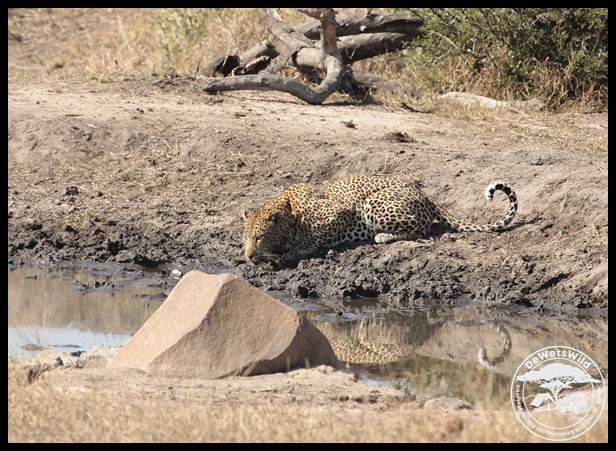
The Kruger National Park has a healthy Leopard population and the Skukuza-area of the Park is renowned for excellent encounters with these big cats, especially if you know where and when to look for them. During our short visit earlier in January we had three memorable Leopard sightings to share with you.
We were still readying our cameras at the Malelane Gate shortly after arriving when some kind folks told us about this Leopard lazing in a tree just a few kilometers into the Park on the way to Skukuza. We were grateful it was still in the same spot when we got there – starting your visit with a Leopard sighting is a very good omen of things to come!
Lazy Leopard in a tree near Malelane in the Kruger National Park
Lazy Leopard in a tree near Malelane in the Kruger National Park (photo by Joubert)
Lazy Leopard in a tree near Malelane in the Kruger National Park
Our next Leopard encounter was with this individual of whom we caught only a quick glimpse along the main road leading to Lower Sabie from Skukuza before it melted away in the lush summer vegetation.
In January the Park’s Rest Camps open their gates at 04h30 in the morning, with there then being still quite a while before first light. Skukuza’s gates had just been swung open and we joined the first few cars heading out when this brute of a Leopard male stepped out onto the road at the 4-way crossing not even a kilometer further. In our wild places an early start to the day is often handsomely rewarded!
Leopard just outside Skukuza in the early morning
Leopard just outside Skukuza in the early morning (photo by Joubert)
We’d love for you to join DeWetsWild on a guided tour of the Kruger National Park or to help you arrange a self-guided visit. Don’t hesitate to reach out!
Even if Spotted Hyenas were not the most numerous large predator around Skukuza Rest Camp in the Kruger National Park – and I think they are – they’re definitely the most frequently encountered, a fact borne out yet again by the many rendezvous we had with these fascinating creatures during our visit to the Skukuza-area earlier in January.
Spotted Hyena near Leeupan, north-east of Skukuza Rest Camp
On a night drive from camp, following the course of the Sabie River, we crossed paths with several clans all searching for food.
We paid frequent visits to a Hyena den just a few kilometres south of the camp, where the many curious cubs kept us well entertained. These encounters were definitely in the “cute and cuddly” category.
Adult female Spotted Hyena at their den near Skukuza
Spotted Hyena cub at their den near Skukuza
Spotted Hyena cub at their den near Skukuza (photo by Joubert)
Spotted Hyena cubs at their den near Skukuza (photo by Joubert)
Spotted Hyena cub at their den near Skukuza (photo by Joubert)
Spotted Hyena cub at their den near Skukuza
Spotted Hyena cubs at their den near Skukuza
Spotted Hyena cubs licking at a puddle of aircon water in the road at their den near Skukuza (photo by Joubert)
Spotted Hyena cub at their den near Skukuza (photo by Joubert)
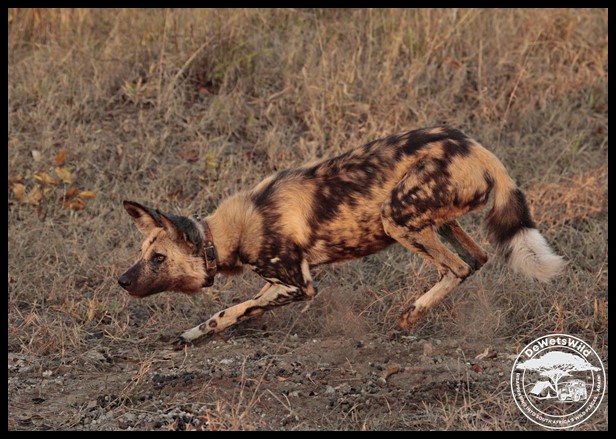
We were awed by their tenacity when we spent time with this group of four Hyenas who were following the hunting wild dogs we shared with you a few days ago. While they couldn’t keep up with the pace of the painted wolves they were not put off, hoping that if they stayed on the spoor of the dogs they would catch up with them and could steal their meal. As it turned out the kill was quickly consumed by the wild dogs and the hyenas were left without a morsel by the time they arrived, but I am sure this will not prevent them trying again!
Spotted Hyena following a pack of wild dogs on the hunt
Spotted Hyenas following a pack of wild dogs on the hunt (photo by Joubert)
Spotted Hyena following a pack of wild dogs on the hunt (photo by Joubert)
Definitely the scariest run-in with a Spotted Hyena during this latest trip was with an individual who popped into the Tshokwane Picnic Spot while we were having breakfast. Luckily he didn’t stay long and moved off again without using those powerful jaws on any of the humans.
Spotted Hyena inspecting Tshokwane Picnic Spot in the Kruger National Park (photo by Joubert)
Spotted Hyena inspecting Tshokwane Picnic Spot in the Kruger National Park
We’d love for you to join DeWetsWild on a guided tour of the Kruger National Park or to help you arrange a self-guided visit. Don’t hesitate to reach out!
We’ve just returned from another wonder-filled visit to the Kruger National Park, where as always we had great luck and enjoyed the most memorable experiences. One of those was this encounter with a pack of African Wild Dogs hunting along the Sand River while we followed behind until they caught, killed and devoured a young Impala early yesterday (11 January 2024) morning. This video – not for sensitive viewers – was taken by Joubert.
We’d love for you to join DeWetsWild on a guided tour of the Kruger National Park or to help you arrange a self-guided visit. Don’t hesitate to reach out!
Join us for a look back at the wonderfully wild South African destinations we visited during 2023. May 2024 be a blessed year for you and your family, memorable for all the best reasons.
Jakhalsfontein Guest Farm
Our camping setup at Bontle in Marakele National Park, March 2023
Chalet #1 in Lilydale Rest Camp
Hut #107 in Pretoriuskop Rest Camp, Kruger National Park (June 2023)
Hut #46 in Lower Sabie Rest Camp, Kruger National Park (June 2023)
Tent #10 in Tamboti Tented Camp, Kruger National Park (June 2023)
Guest House, Shingwedzi Research Camp, Kruger National Park, June 2023
Buffelshoek Camp, Manyeleti Nature Reserve, September 2023
Ndzhaka Camp, Manyeleti Nature Reserve, September 2023
Twanana Research Camp, Kruger National Park, September 2023
House #32, Kudu Private Nature Reserve, October 2023
The beach at the estuary of Lake Saint Lucia
Cape Vidal at low tide
Western Shores section of the iSimangaliso Wetland Park
Rest Hut #3, Mantuma Rest Camp, uMkhuze Game Reserve, November 2023
DeWetsWild is proud to announce that we can now assist with reservations for and guided tours of what is unquestionably one of South Africa’s diamonds – the Tembe Elephant Park!
Visitors can look forward to spending time with some of the country’s biggest tuskers, lions, leopards, rhinos, buffaloes and rare species like African wild dogs and sunis, while staying in the comfortable accommodation offered by one of the continent’s most affordable full service lodges in a “Big 5” reserve and being looked after by the most hospitable people.
If you feel like treating yourself to a bush retreat, have a read here and then chat to me about Tembe Elephant Park!
I recently had the opportunity to join friend and colleague Hannes Rossouw for a morning of bird photography on the Mongena Dam in the Dinokeng Game Reserve. It was an amazing experience, the sun rising beautifully over the calm water while we were drifting silently among the water plants to watch and photograph several kinds of water birds and other wildlife from close quarters. Having Hannes on hand to assist with camera settings and composition tips was of great value to me and the other participants. For anyone with a love for birds and photography this excursion with Hannes is an absolute must – keep an eye on his social media page for the date of the next trip.
Sunrise over the large Mongena Dam
Brown-throated Martin
Barn Swallow
Reed Cormorants
Sunrise over the large Mongena Dam
African Fish Eagle
Sunrise over the large Mongena Dam
Reed Cormorant
Reed Cormorant
Egyptian Goose
Water Dikkop (or Thick-knee)
African Jacana
African Jacana
African Jacana
Hippopotamus eyeing us with some suspicion from among the reeds
During a visit in November to Rietvlei Nature Reserve on Pretoria’s outskirts, along with friend and colleague Hannes Rossouw, we were treated to the show of hundreds of Sharptooth Catfish trying to move upstream following a good downpour the day before. What an amazing spectacle it was!
Sharptooth Catfish moving upstream in the Rietvlei Nature Reserve
The reason why they’re moving upstream is to mate and lay eggs in newly inundated areas. These catfish were videoed at the Marais Dam in the reserve, vying for mating rights and the best spots to lay and fertilise their eggs.
Remember that I am available to escort you on a guided tour of the Rietvlei Nature Reserve when you visit Pretoria, and that Hannes will gladly accompany us if you’re looking for tips from an expert wildlife photography tutor!
As befits a conservation area of its stature, the iSimangaliso Wetland Park is extremely rich in fauna of all description. In this final post about our recent tour of the reserve I’ll be sharing some more of the wonderful animal sightings we had.
The tropical environment of northern Kwazulu-Natal is home to some very interesting invertebrate creatures – the Flatface Longhorn Beetle I showed you a few days ago being a fantastic example.
An enormous jellyfish that drifted out of a rough sea on the beach at St. Lucia
Common Bush Brown butterfly
Spotted Buff butterfly
Blue Pansy butterfly
African Piedspot Dragonfly
Mating Common Blue butterflies
Natal Rock Crab
Flatface Longhorn Beetle (Lasiopezus longimanus), identified with the kind assistance of the “Insects only – Southern Africa” facebook page.
Slug close-up
Millipede
Unidentified Moth with wonderful camouflage
Unidentified caterpillar
False Dotted Border butterfly
Sooty Blue
Superb False Tiger Moth
Dung Beetle
Broad-bordered Grass Yellow
African Peach Moth
Giant African Land Snail
Slug and its slimy trail
Brown-veined White Butterfly
Fish and frogs must be finding the wet conditions prevailing now after suffering through a terrible drought not so long ago very much to their liking!
Platanna
Foam Nest Frogs mating
The toes of a Foam Nest Frog
Banded Tilapia. The newly formed ponds have quickly been populated by fish and tadpoles.
Even though most of them are shy and seldomly seen, iSimangaliso is home to an amazing array of reptiles as well – many of them rather dangerous!
Huge Nile Crocodile slipping into the Mfabeni swamp
Marsh Terrapins
Tropical House Gecko
Striped Skink
Serrated Hinged Terrapin
Mozambique Spitting Cobra after swallowing something (likely a frog)
Mammals are well represented at iSimangaliso, and zebras, giraffes, warthogs, various kinds of antelope and primates are regularly encountered along the routes traversing the Park.
Bushbuck ram
Chacma Baboon
Natal Red Duiker
Common Duiker
Large-spotted Genet
Impala
Kudus
Kudu bull
Fighting Kudu bulls
Giraffe cow and calf
Nyala bull
Nyala ewe
This leucistic Samango Monkey is a familiar inhabitant of Cape Vidal
Samango Monkey
Vervet Monkey
Red Bush Squirrel
Common Reedbuck
Common Reedbuck
Common Reedbuck
Suni
Warthog
Waterbuck
Waterbuck
Waterbuck
Waterbuck
Blue Wildebeest
Blue Wildebeest
Blue Wildebeest
Plains Zebra
Sitting outside watching our fire one evening at Mantuma Camp in the uMkhuze Game Reserve we were joined by a large herd of impalas and nyalas.
These Kudu bulls decided to have it out right in the middle of the road between St. Lucia and Cape Vidal.
While traveling along the grassland loop through the Eastern Shores section of the Park we came across a group of hyenas finishing off the remains of a buffalo.
Spotted Hyena
Spotted Hyena
Spotted Hyena
Spotted Hyena
Spotted Hyena
At the other end of the scale are Africa’s grey behemoths, all of which are found at iSimangaliso. Without forgetting to mention the Humpback Whales and dolphins so often seen just offshore, I’ve also already given closer attention to elephants and buffaloes. Hippos were one of the main reasons for the establishment of the St. Lucia Game Reserve 128 years ago, and they are still very much in evidence. We also encountered White and Black Rhinos, but I won’t be sharing photo’s of them as they were in some easily recognisable spots.
Humpbacked Whale tail-slamming off St. Lucia
African Buffalo
African Buffalo
Elephant bull on a walk about
Elephant bull at uMkhuze
Hippopotamus
A pod of Hippos on the shores of Lake St. Lucia at Catalina Bay
Hippopotamus
Pair of Hippopotamus
Pod of Hippopotamus in Nsumo Pan
Remember that DeWetsWild will gladly assist you with reservations and guided tours of the iSimangaliso Wetland Park if you’d like to visit this wonderful place as well.