Tag Archives: travel

November ’24 update from Rietvlei Nature Reserve

Summer has now firmly returned to our part of the world and our local Rietvlei Nature Reserve has turned into a green paradise boasting with a wide variety of colourful blooms. What a pleasure it was conducting guided drives through landscapes so vibrant with life this past month!

All around birds are nesting and many males are sporting their splendid breeding plumage, showing off their finery, doing display flights and singing loudly to attract their mate’s attention.

These Glossy Starling males were caught in the midst of a bloody fight, which could only be about a female or a prime nesting site – or both!

The spring season has brought a baby boom to Rietvlei! From tiny lapwing chicks and newly hatched leopard tortoises to the newest addition to Rietvlei’s rhino population; these cute little creatures are sure to make your heart melt!

The resident pair of Black-chested Snake Eagles are also nesting again and providing a steady stream of serpentine sustenance to their new chick.

After the first heavy rain shower at the end of October, Sharp-tooth Catfish started congregating at Otter Bridge, ready to move into their spawning grounds in the marshy area upstream.

We’re also now seeing lots of insects and reptiles out and about on the reserve thanks to the warm weather.

List of mammals seen at Rietvlei in October & November 2024:

Scientific Afrikaans English
Alcelaphus buselaphus Rooihartbees Red Hartebeest
Antidorcas marsupialis Springbok Springbuck
Canis mesomelas Rooijakkals Black-backed Jackal
Ceratotherium simum Witrenoster White Rhinoceros
Connochaetes gnou Swartwildebees Black Wildebeest
Cynictis penicillata Witkwasmuishond Yellow Mongoose
Damaliscus pygargus Blesbok Blesbuck
Equus quagga Bontsebra Plains Zebra
Hippopotamus amphibius Seekoei Hippopotamus
Kobus ellipsyprymnus Waterbok Waterbuck
Suricata suricatta Meerkat Suricate
Syncerus caffer Buffel Cape Buffalo
Taurotragus oryx Eland Eland

List of birds seen at Rietvlei in October & November 2024:

Scientific Afrikaans English
Acridotheres tristis Indiese Spreeu Common Myna
Acrocephalus gracilirostris Kaapse Rietsanger Lesser Swamp Warbler
Afrotis afraoides Witvlerkkorhaan Northern Black Korhaan
Alopochen aegyptiaca Kolgans Egyptian Goose
Amblyospiza albifrons Dikbekwewer Thick-billed Weaver
Anas erythrorhyncha Rooibekeend Red-billed Teal
Anas sparsa Swarteend African Black Duck
Anas undulata Geelbekeend Yellow-billed Duck
Anhinga rufa Slanghalsvoel African Darter
Anthus cinnamomeus Gewone Koester African Pipit
Anthus vaalensis Vaalkoester Buffy Pipit
Apus barbatus Swartwindswael African Black Swift
Apus caffer Witkruiswindswael White-rumped Swift
Ardea melanocephala Swartkopreier Black-headed Heron
Ardeola ralloides Ralreier Squacco Heron
Bostrychia hagedash Hadeda Hadeda Ibis
Bubulcus ibis Veereier Western Cattle Egret
Burhinus capensis Gewone Dikkop Spotted Thick-knee
Buteo buteo Bruinjakkalsvoel Common Buzzard
Camaroptera brevicaudata Grysrugkwekwevoel Grey-backed Camaroptera
Cecropis cucullata Grootstreepswael Greater Striped Swallow
Centropus burchellii Gewone Vleiloerie Burchell’s Coucal
Ceryle rudis Bontvisvanger Pied Kingfisher
Chlidonias hybrida Witbaardsterretjie Whiskered Tern
Chrysococcyx caprius Diederikkie Diederik Cuckoo
Circaetus pectoralis Swartborsslangarend Black-chested Snake Eagle
Cisticola juncidis Landeryklopkloppie Zitting Cisticola
Cisticola tinniens Vleitinktinkie Levaillant’s Cisticola
Colius striatus Gevlekte Muisvoel Speckled Mousebird
Corvus albus Witborskraai Pied Cow
Corythornis cristatus Kuifkopvisvanger Malachite Kingfisher
Crinifer concolor Kwevoel Grey Go-Away Bird
Crithagra gularis Streepkopkanarie Streaky-headed Seedeater
Crithagra mozambica Geeloogkanarie Yellow-fronted Canary
Curruca subcoerulea Bosveldtjeriktik Chestnut-vented Warbler
Cypsiurus parvus Palmwindswael African Palm Swift
Dessonornis caffer Gewone Janfrederik Cape Robin-Chat
Dicrurus adsimilis Mikstertbyvanger Fork-tailed Drongo
Elanus caeruleus Blouvalk Black-winged Kite
Estrilda astrild Rooibeksysie Common Waxbill
Euplectes albonotatus Witvlerkflap White-winged Widowbird
Euplectes ardens Rooikeelflap Red-collared Widowbird
Euplectes orix Rooivink Southern Red Bishop
Euplectes progne Langstertflap Longtailed Widowbird
Fulica cristata Bleshoender Red-knobbed Coot
Gallinula chloropus Grootwaterhoender Common Moorhen
Hirundo albigularis Witkeelswael White-throated Swallow
Hirundo rustica Europese Swael Barn Swallow
Icthyophaga vocifer Visarend Fish Eagle
Indicator indicator Groot Heuningwyser Greater Honeyguide
Jynx ruficollis Draaihals Red-throated Wryneck
Lamprotornis bicolor Witgatspreeu Pied Starling
Lamprotornis nitens Kleinglansspreeu Cape Glossy Starling
Laniarius atrococcineus Rooiborslaksman Crimson-breasted Shrike
Laniarius ferrugineus Suidelike Waterfiskaal Southern Boubou
Lanius collaris Fiskaallaksman Common Fiscal
Lybius torquatus Rooikophoutkapper Black-collared Barbet
Macronyx capensis Oranjekeel Kalkoentjie Cape Longclaw
Merops apiaster Europese Byvreter European Bee-eater
Microcarbo africanus Rietduiker Reed Cormorant
Mirafra africana Rooineklewerik Rufous-naped Lark
Motacilla capensis Gewone Kwikkie Cape Wagtail
Neophedina cincta Gebande Oewerswael Banded Martin
Numida meleagris Gewone Tarentaal Helmeted Guineafowl
Oenanthe pileata Hoeveldskaapwagter Capped Wheatear
Onychognathus morio Rooivlerkspreeu Red-winged Starling
Passer diffusus Gryskopmossie Southern Grey-headed Sparrow
Passer domesticus Huismossie House Sparrow
Passer melanurus Gewone Mossie Cape Sparrow
Phalacrocorax lucidus Witborsduiker White-breasted Cormorant
Phoeniculus purpureus Rooibekkakelaar Green Wood-hoopoe
Phylloscopus trochilus Hofsanger Willow Warbler
Plectropterus gambensis Wildemakou Spur-winged Goose
Ploceus capensis Kaapse Wewer Cape Weaver
Ploceus velatus Swartkeelgeelvink Southern Masked Weaver
Prinia subflava Bruinsylangstertjie Tawny-flanked Prinia
Pternistis swainsonii Bosveldfisant Swainson’s Spurfowl
Pycnonotus tricolor Swartoogtiptol Dark-capped Bulbul
Quelea quelea Rooibekkwelea Red-billed Quelea
Saxicola torquatus Gewone Bontrokkie African Stonechat
Sigelus silens Fiskaalvlieevanger Fiscal Flycatcher
Sphenoeacus afer Grasvoel Cape Grassbird
Spilopelia senegalensis Rooiborsduifie Laughing Dove
Streptopelia capicola Gewone Tortelduif Cape Turtle Dove
Streptopelia semitorquata Grootringduif Red-eyed Dove
Struthio camelus Volstruis Common Ostrich
Tachybaptus ruficollis Kleindobbertjie Little Grebe
Tchagra senegalus Swartkroontjagra Black-crowned Tchagra
Telophorus zeylonus Bokmakierie Bokmakierie
Terpsiphone viridis Paradysvlieevanger African Paradise Flycatcher
Threskiornis aethiopicus Skoorsteenveer African Sacred Ibis
Turdoides jardineii Pylvlekkatlagter Arrow-marked Babbler
Turdus smithi Geelbeklyster Karoo Thrush
Upupa africana Hoephoep African Hoopoe
Urocolius indicus Rooiwangmuisvoel Red-faced Mousebird
Vanellus armatus Bontkiewiet Blacksmith Lapwing
Vanellus coronatus Kroonkiewiet Crowned Lapwing
Vanellus senegallus Lelkiewiet Wattled Lapwing
Vidua macroura Koningrooibekkie Pin-tailed Whydah
Zosterops virens Kaapse Glasogie Cape White-eye


If you’d like to join me on a guided tour of Rietvlei – on a hike or on an open vehicle drive – you can book through melanie@rietvleicoffee.co.za / +27(0)74-820-9926.

Snaps on Tour: More than a thought for the scavengers

I’ve dedicated this post to the scavenger animals and birds we encountered while touring the Kruger National Park in October. These creatures are often terribly maligned, despite the vital function they perform in healthy ecosystems.

I have a real liking for Spotted Hyenas. They’re nothing like the cowardly scoundrels popular media would have you believe. They’re intelligent and fascinating creatures and spending a little bit of time with them, observing their behaviour and interactions, will quickly convince you of that. I was very happy that we had so many close encounters with hyenas during or October trip to Kruger.

Our vultures are in crisis. Due to poisoning and habitat loss all the species occurring in the country are now at dire risk of extinction, and it is vital that wilderness’ like the Kruger National Park remain safe havens for these birds fulfilling such a critical task in the ecosystem. We had many sightings of vultures on the wing, pairs at nests and others sitting exposed on the open branches of tall trees, and twice had the pleasure of watching them peck at and squabble over the carcasses of large animals (a buffalo and an elephant respectively).

Some birds and animals are opportunistic more than they’re scavengers. This Yellow-billed Kite is making the most of a windfall spurfowl that was the victim of a hit-and-run on the main road between Satara and Letaba.

Finishing off this post with a few images of another mammal that catches far more of its own food than it scavenges. Black-backed Jackals are the most numerous canid in the Kruger National Park and any visit to the Park will usually yield a few sightings of them. Finding a den however is a rare occurrence, so having the good luck of timing our visit to Satara with the local jackal pair in the family way was wonderful (even if the adorable family caused a traffic jam at the entrance gate to the camp every evening that they played outside just before dark)!

I am a fully accredited and legally registered tour guide (with all the necessary insurance, professional drivers license and first aid certification) – don’t hesitate to reach out if you’d like me to arrange a guided tour of beautiful South Africa and all her natural wonders, like the Kruger National Park, for you as well, or even just to assist with your holiday reservations for our national parks and nature reserves throughout the country.

Snaps on Tour: Spotted Princes and Princesses

In October 2024 I had the immense pleasure of hosting long-time blogging friend John Steiner (of Journeys with Johnbo), his wife Lynn, John’s niece Patricia Broesder and her husband Gary on a tour of Cape Town and the Kruger National Park. In Kruger we were joined by colleagues Hannes Rossouw and Irving Knight, both experts in their respective fields.

Now, you never can guarantee that you’ll see a Leopard; they’re just such experts at camouflage that they can disappear in plain sight. We were therefore all very excited at our first leopard sighting of the trip, in the early afternoon on the main road between Letaba and Satara, though she was certainly difficult to see!

Our next leopard sighting was brief but thrilling – we saw a brute of a male strangling an impala he had just caught and then seconds later he pulled the still kicking antelope underneath the dark bush where we could only see glimpses of movement afterwards.

Another memorable leopard encounter on this trip was that of a female and two well-grown cubs who had their fresh kill stolen by a crocodile, who dragged it back into the Sabie River. All these predators also almost caused a nervous breakdown in a vervet monkey that was anxiously trying to hide in a tree stump whilst making alarm calls. The despondent cats gave us some good views later that afternoon where they lay on the ground and draped over a branch.

We drove straight past this leopard and all that gave him away was the terrible smell. Just as well that he slinked off to the river, hopefully to wash the blood off his body so that his aroma won’t scare away his next meal!

Here’s another leopard lying so still and beautifully blended in with its branch overlooking the Sand River that it was almost impossible to see!

Up north at Shingwedzi we came across this leopard using a gully to stalk a mixed herd of waterbuck and impala grazing in the dry bed of the Shingwedzi River. Eventually though he was thwarted when he was seen by one of the sharp-eyed antelope.

I am a fully accredited and legally registered tour guide (with all the necessary insurance, professional drivers license and first aid certification) – don’t hesitate to reach out if you’d like me to arrange a guided tour of beautiful South Africa and all her natural wonders, like the Kruger National Park, for you as well, or even just to assist with your holiday reservations for our national parks and nature reserves throughout the country.

Snaps on Tour: It’s the Lion they’ve come to see

In October 2024 I had the immense pleasure of hosting long-time blogging friend John Steiner (of Journeys with Johnbo), his wife Lynn, John’s niece Patricia Broesder and her husband Gary on a tour of Cape Town and the Kruger National Park. In Kruger we were joined by colleagues Hannes Rossouw and Irving Knight, both experts in their respective fields.

Seeing Lions in the wild remains a highlight for anyone on safari, whether it is your first trip or your 100th. I knew that combining Satara and Skukuza on our 6-night trip to Kruger with the Steiners and Broesders would give us an excellent chance of encountering the big cats, and it was wonderful to see our first pride while we were still on our way from the airport at Skukuza to Satara, having just passed Tshokwane on our way northwards.

Next morning, we encountered the males ruling the surroundings of Satara just after we left the camp. The white lion who is part of this four member coalition was also there but we couldn’t make out much more of him than a twitchy ear where he was lying hidden behind a thorn bush.

We were still on our way to Tshokwane, where we were planning on having brunch, when we found a trio of lionesses giving up their spot in the shade to try and hunt a nyala bull, without success.

On the afternoon of our arrival at Skukuza, and after taking a quick detour to collect Hannes’ vehicle from the Skukuza airport where a fire was raging, Irving got a report of a leopard on a kill at De La Porte Waterhole just a few kilometres to the south of camp. When we got there however the leopard had been chased off its prey by a lioness and hyena, who by this time was having a stare-off at the waterhole. A second lioness appeared and the two then headed to a nearby koppie, crossing the road very near to our vehicle.

Late one morning as we were heading back towards Skukuza along the Sabie River, after having brunch at Nkuhlu, we came across a pride of lions with two sets of cubs born a month or two apart. While the females made an unsuccessful attempt at hunting kudus and impalas right next to the road the cubs came following from behind, trying as desperately as their little legs allowed to keep up with their mothers.

We found the pride still in the same general area later that afternoon, though now a lot less active.

Taking our guests to the Skukuza airport for their flight back to Johannesburg and ultimately Europe for the next leg of their journey offered one last glimpse of lions just 3km from camp, though we couldn’t stay long for fear of being boxed in by the number of vehicles building up at the sighting.

Up at Shingwedzi there was only a couple of pools of water remaining in the Shingwedzi River at the end of the dry season, and the lions were making good use of this fact to wait for their prey to come to them. Sometimes they were lying out in the open and other times they were hiding in ditches or behind clumps of vegetation, but almost inevitably some time spent scanning the surroundings of the pool would eventually reveal the tawny bodies lying in wait.

I am a fully accredited and legally registered tour guide (with all the necessary insurance, professional drivers license and first aid certification) – don’t hesitate to reach out if you’d like me to arrange a guided tour of beautiful South Africa and all her natural wonders, like the Kruger National Park, for you as well, or even just to assist with your holiday reservations for our national parks and nature reserves throughout the country.

DeWetsWild adds many more destinations in Namibia!

Following overwhelming requests from our loyal clientele, DeWetsWild is proud to announce that we’ve expanded our portfolio in Namibia considerably, and we now provide a reservation service for 26 destinations in, around and on the way to Namibia’s fabulous national parks and nature reserves!

In the /Ai-/Ais Richtersveld Transfrontier Park:
/Ai-/Ais Hotsprings and Spa
Boplaas Campsite
Hobas Lodge
(We can also assist with reservations at camps on the South African side of the Park)

In the Dorob National Park:
Jakkalsputz Campsite
Mile 72
Mile 108

In the Etosha National Park:
Dolomite Resort
Halali Resort
Namutoni Resort
Okaukuejo Resort
Olifantsrus Campsite
Onkoshi Resort

Hardap National Park

In the picturesque town of Luderitz:
Shark Island

In the Namib-Naukluft National Park:
Naukluft Camp
Sesriem Campsite
Sossus Dune Lodge

Popa Falls Game Park

In the Skeleton Coast National Park:
Terrace Bay Resort
Torra Bay Campsite

In historic Swakopmund:
Swakopmund Hotel & Entertainment Centre

Waterberg Plateau Park

In the capital city Windhoek:
Windhoek Country Club Resort

Off the beaten track in Namibia:
Duwisib Castle
Gross Barmen Resort
Khorixas Rest Camp

You are welcome to email us on dries@dewetswild.com with your request or alternatively complete the following form if you would like DeWetsWild to take care of your next holiday reservation at any of these properties in Namibia (the more detail you provide us, the better service we can provide to you):

Go back

Your message has been sent

Warning
Warning
Warning
Warning
Warning
Warning
Warning

Warning.


Snaps on Tour: Cheetahs that weren’t all that hungry…

It was mid-morning as we were driving back towards Shingwedzi along the S50 road that skirts the mostly dry course of the Shingwedzi River when we came across three youngish cheetahs on their way towards one of the few waterholes remaining this deep into the dry season. By then we had already seen Africa’s two other species of big cat, lion and leopard (more about them in posts to follow), on that same stretch of road that same morning, so we were thrilled to add the third to our tally even before 09h00!

As the cheetahs approached the waterhole a herd of impala noticed them and started running away, prompting one of the three cheetahs to follow in hot, if unsuccessful, pursuit. The remaining two cheetahs, less energetically, sauntered to the water and then took up a position in the open to wait for the return of their companion. While lying there a family of warthogs almost stepped right on top of them but our excitement at the prospect of an easy hunt for the cheetahs were quickly dashed when they just turned their backs on what looked like easy pickings.

I am a fully accredited and legally registered tour guide (with all the necessary insurance, professional drivers license and first aid certification) – don’t hesitate to reach out if you’d like me to arrange a guided tour of beautiful South Africa and all her natural wonders, like the Kruger National Park, for you as well, or even just to assist with your holiday reservations for our national parks and nature reserves throughout the country.

Snaps on Tour: Lowveld Scenery in the Kruger National Park

In October 2024 I had the immense pleasure of hosting long-time blogging friend John Steiner (of Journeys with Johnbo), his wife Lynn, John’s niece Patricia Broesder and her husband Gary on a tour of Cape Town and the Kruger National Park. In Kruger we were joined by colleagues Hannes Rossouw and Irving Knight, both experts in their respective fields.

The Kruger National Park is an enormous tract of land, for the most part entirely untouched by human interference, where the heart of Africa still beats to its own rhythm, and whether there are any people around to witness it or not makes no difference to her beauty. Scenes like these make my soul soar. I’m sure it had the same effect on our guests.

I am a fully accredited and legally registered tour guide (with all the necessary insurance, professional drivers license and first aid certification) – don’t hesitate to reach out if you’d like me to arrange a guided tour of beautiful South Africa and all her natural wonders, like the Kruger National Park, for you as well, or even just to assist with your holiday reservations for our national parks and nature reserves throughout the country.

Snaps on Tour: The Loneliest Elephant

In October 2024 I had the immense pleasure of hosting long-time blogging friend John Steiner (of Journeys with Johnbo), his wife Lynn, John’s niece Patricia Broesder and her husband Gary on a tour of Cape Town and the Kruger National Park. In Kruger we were joined by colleagues Hannes Rossouw and Irving Knight, both experts in their respective fields.

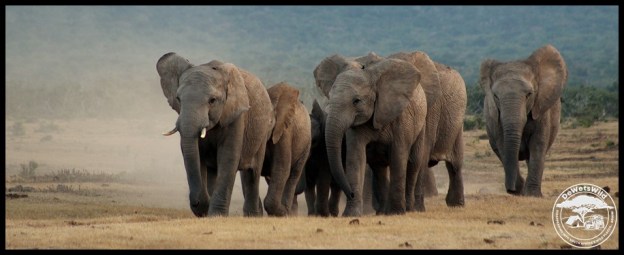
Still on the subject of elephants. Travelling between Letaba and Satara one early afternoon we came across a most harrowing sight of a lone young elephant, emaciated and totally oblivious to his surroundings and most certainly too small to have been expelled from the herd, walking along an elephant footpath towards – well, what? There was no elephant herd anywhere nearby and we could only guess as to why he was so terribly alone, and obviously has been for quite a while, and where he might be headed. Nature can be cruel at times and watching her take her course is not always easy, but in national parks like the Kruger that is exactly what has to happen. There can only be human intervention if the problem was caused by human interference to begin with and in this case there was no reason to suspect that this was the case.

Luckily we had many other wonderful encounters with elephants during our visit where we could watch their endearing familiar relations and interactions within the herd.

I am a fully accredited and legally registered tour guide (with all the necessary insurance, professional drivers license and first aid certification) – don’t hesitate to reach out if you’d like me to arrange a guided tour of beautiful South Africa and all her natural wonders, like the Kruger National Park, for you as well, or even just to assist with your holiday reservations for our national parks and nature reserves throughout the country.

Snaps on Tour: A Stingy Elephant

Last month, while following the course of the Mphongolo River north of Shingwedzi in the Kruger National Park on our morning drive, we came across this amusing scene at the Mavatsani waterhole, just south of the turnoff to Sirheni Bushveld Camp. The day was already quite hot and a herd of elephants, a couple of buffaloes, some baboons, nyalas and warthogs were milling around the muddy water. An elephant cow claimed a hole from which clear water was seeping but had her hands – or is that head, trunk and front leg? – full with a youngster trying to muscle his way in on her treasure. The calf protested with loud screams when she tried to shove him away but he did not give an inch and, her gentle nature obviously winning over her frustration, the cow eventually let him through to quench his thirst from her well.

I am a fully accredited and legally registered tour guide (with all the necessary insurance, professional drivers license and first aid certification) – don’t hesitate to reach out if you’d like me to arrange a guided tour of beautiful South Africa and all her natural wonders, like the Kruger National Park, for you as well, or even just to assist with your holiday reservations for our national parks and nature reserves throughout the country.

Snaps on Tour: Skukuza Veldfires

In October 2024 I had the immense pleasure of hosting long-time blogging friend John Steiner (of Journeys with Johnbo), his wife Lynn, John’s niece Patricia Broesder and her husband Gary on a tour of Cape Town and the Kruger National Park. In Kruger we were joined by colleagues Hannes Rossouw and Irving Knight, both experts in their respective fields.

We were heading south from Satara to Skukuza and already noticed the enormous column of smoke from near Tshokwane Picnic Spot, about 35km as the crow flies from our destination. Fire (especially naturally occurring fires caused mainly by lightning) is an integral part of savanna ecosystems like the Kruger National Park and a rather common occurrence at the start of spring, when the end of the dry season results in the vegetation being terribly desiccated. Still, having to pass straight through the fires, feeling the heat of the flames on the side of the road and breathing the acrid smoke, is an exciting affair and leaves one with a great appreciation for the teams of firefighters battling the flames (as they do with unplanned human-caused runaway fires like this one, at the time thought to have been caused by a spark from an electrical pylon). This particular blaze almost took out the airport building at Skukuza, though in the end ironically the building suffered enough water damage from the efforts to prevent it going up in flames to require temporary plans to be put in place for passengers using the facility to bypass the arrivals hall, check-in counters and car-hire offices. Thankfully we didn’t notice any large animals hurt or killed in the fire and no people suffered any injuries worth reporting on, but doubtless many smaller animals succumbed, providing a boon for especially insectivorous birds.

I am a fully accredited and legally registered tour guide (with all the necessary insurance, professional drivers license and first aid certification) – don’t hesitate to reach out if you’d like me to arrange a guided tour of beautiful South Africa and all her natural wonders, like the Kruger National Park, for you as well, or even just to assist with your holiday reservations for our national parks and nature reserves throughout the country.