Tag Archives: travel

Summertide Rambles 20 December 2020

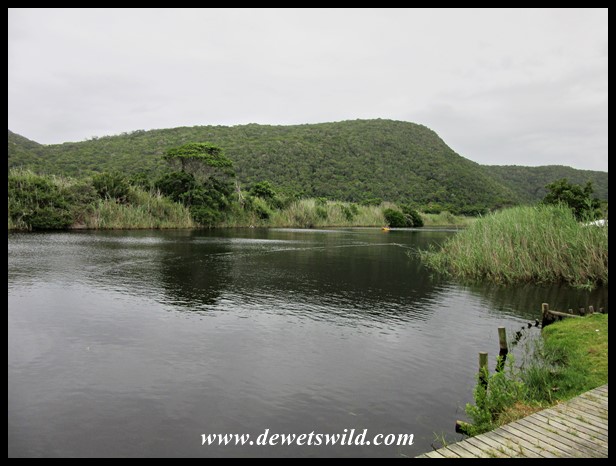
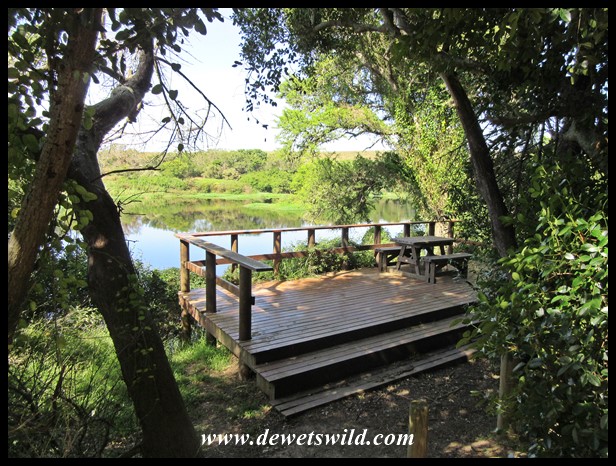
It’s the fifth day of our 2020 Summertide Ramble, and we’ve moved again – this time about 200km due east to the Wilderness section of the Garden Route National Park, where our cosy log cottage in the Ebb-and-Flow Rest Camp has a lovely (if overcast and rather chilly at the moment) view over the wetlands of the Serpentine River just before its confluence with the Touw River.

Summertide Rambles 19 December 2020

A focal point of the Bontebok National Park is the Breede River, serenely flowing along the park’s southern border. Visitors can kayak, fish and swim in the river or picnic and camp on its banks.


Summertide Rambles 18 December 2020

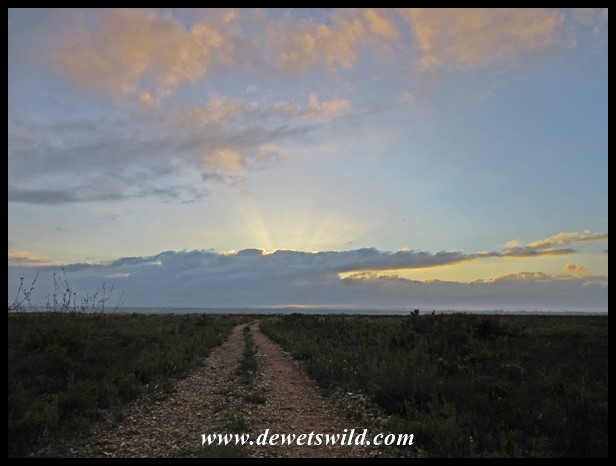
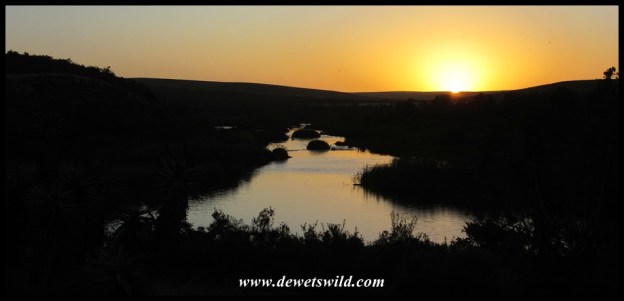
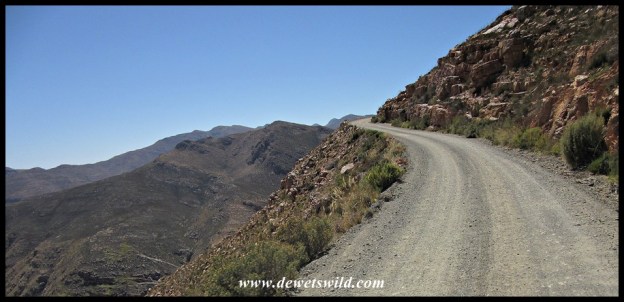
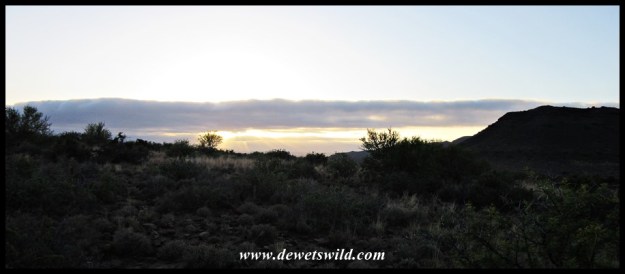
After spending two nights in the Great Karoo, today we traversed four scenic mountain passes to move to the next destination on our 2020 summertide ramble. This is the view we enjoyed at sunset this evening from the verandah of our cosy little chalet in the Bontebok National Park.

Summertide Rambles 17 December 2020

The open landscapes of the Karoo National Park really shows off the wildlife that inhabit this arid environment to great effect – in this case a beautiful gemsbok that we saw this morning just after sunrise.

Summertide Rambles 16 December 2020

Our long awaited summer holidays have finally arrived, and we kick it off in the wide open spaces of the beautiful Karoo National Park – a little over 1,000km southwest of home.


Rhino & Lion Nature Reserve

With it being a short school holiday we had the opportunity to visit the privately owned Rhino & Lion Nature Reserve for a day this past week.

The reserve was established in 1990 and is located in the Cradle of Humankind World Heritage Site northwest of Johannesburg in the Gauteng Province of South Africa. It covers approximately 1,600 hectares of undulating terrain at the transition between the open grasslands of the Highveld and the savannas of the Bushveld.

Going by the name, clearly pride of place at the reserve goes to two species. The first is the white rhinoceros, which are heavily guarded on the reserve to keep them safe from poachers – in fact, several of the reserve’s rhinos arrived here as orphans after their mothers were poached. Furthermore the horns of the rhinos at the Rhino & Lion Nature Reserve has been infused with a toxin that makes it unfit for human consumption to further deter the unscrupulous syndicates supplying the traditional medicine markets in Asia.

In a corner of the reserve are four large camps through which visitors are allowed to drive to view two prides of lion, African wild dogs and cheetahs in natural surroundings. Whenever we consider visiting a destination where large predators are kept in camps and enclosures we are always very careful that it is not in any way linked to the absolutely abhorrent canned hunting fraternity, cub petting or the lion-bone trade. The owners and management of the Rhino & Lion Nature Reserve have publicly undertaken that the animals on the reserve will not be subjected to such inhumane practices.

The first and most expansive of the predator camps at the reserve is allocated to the tawny lions. We arrived there just minutes before feeding time, and found the lions up and very active indeed!

The next camp visitors enter houses a sizable pack of the highly social African Wild Dog, also known as Painted Wolves for their beautifully blotched coats.

A pride of White Lions is to be seen in the third predator camp (regular readers of our blog will remember how excited we were to have seen one of only three known wild white lions back in January during a visit to the Kruger National Park).

In the fourth camp visitors can try and spot cheetahs, though these lanky cats use their camouflage to great effect and finding them may be neigh impossible if they don’t want to be spotted!

Another positive feature of the reserve is the vulture restaurant – a feeding station where carcasses are regularly laid out for the endangered birds. Throughout our day on the reserve we had regular sightings of the impressive but endangered Cape Vultures overhead, and many other kinds of birds were also in evidence.

Other kinds of mammals, aside from the rhinos and large predators, thrive on the reserve and roam freely over most of it. We were especially impressed by the large herd of eland and beautiful sable antelope, and we also saw black-backed jackal, black and blue wildebeest, blesbok, buffalo, gemsbok, grey duiker, impala, roan antelope, springbok, warthog, waterbuck and yellow mongoose.

Special mention needs to be made of the reserve’s population of Hartmann’s Mountain Zebra. Being not at all indigenous to this part of the country visitors are provided an opportunity to see the least well-known of the three kinds of zebra found in South Africa.

The main visitor centre of the reserve offers an extensive picnic site and playground, restaurant, swimming pool and the wildlife centre – a collection of endangered and mostly non-indigenous reptiles, birds and mammals, obviously well taken care of and displayed in well maintained terrariums and enclosures, among which visitors are allowed to stroll at their leisure.

Visitors can overnight on the reserve in chalets and log cabins, the latter overlooking a portion of the lion camp. Given the rather small size of the reserve the road network, all dirt, is not very extensive but the majority of roads can at least be fairly easily traversed in standard passenger vehicles while there’s also additional routes available to 4×4’s. Unfortunately the Wonder Cave which as adjacent to the reserve was closed at the time of our visit.

Location of the Rhino & Lion Nature Reserve (Google Maps)


The end to a most memorable day in Pilanesberg

Sadly, our time for exploring the Pilanesberg National Park has very nearly run out by the point we make one final pit stop at the Mankwe Hide. From here it’s only a 12km drive to the exit at Bakubung Gate, and however we try to dawdle the last few miles along Letsha and Kubu Drives the gate still comes into view too soon for our liking…

Mankwe Hide to Bakubung Gate

It is 18:02 as we drive out the Pilanesberg National Park at Bakubung Gate. We’ve spent exactly twelve amazing hours exploring the Park, most of it in drenching, cleansing rain. If you need to catch up on our drive through the Pilanesberg National Park, you can read all the previous posts here.

Now it’s just short of a two hour drive back to Pretoria and, as good a time as any, I think, to look back on how this Park came into existence. More than a billion years ago what is today the Pilanesberg National Park was an active volcano that, during its final eruption, collapsed in onto itself and the remains of which is visible from space as a range of concentric hills in South Africa’s North West Province.

Humans have been living in this area since the Stone Age. When the first European explorers, missionaries and eventually settlers arrived here it was ruled by Chief Pilane of the Bakgatla clan, hence the given name Pilanesberg (Pilane’s mountain). The Pilanesberg quickly became transformed into farmland. In 1961 South Africa’s apartheid government declared the homeland of Bophuthatswana for the Tswana-speaking people and Pilanesberg was one of the pockets of land incorporated into the new nominally independent “country”.

The Bophuthatswana Government started planning the Pilanesberg National Park in 1969 already. The 550km² reserve only opened on the 8th of December 1979 though, following the relocation of the farming communities that lived there originally, the removal of almost all human-made structures and exotic plants, fencing of the entire perimeter, provision of tourism infrastructure and the introduction of nearly 6,000 large wild animals from all over Southern Africa in the epic Operation Genesis.

With the dawn of a democratic South Africa in 1994 Bophuthatswana, and the Pilanesberg National Park, once again officially became part of the country.


A day in Pilanesberg: Hour 11

We’re driving along Tshwene Drive in the Pilanesberg National Park and have just passed the Korwe Link turnoff when we see two vehicles up ahead, driving very slowly. Is that ANOTHER LION in the road in front of them!? We can’t believe our luck at yet another lion sighting – our fourth for the day – and such an impressive specimen too! He proceeds close to the road for a while with his adoring fans following faithfully, then moves deeper into the veld but still more or less parallel with the road, requiring us to continue along in first gear for the occasional glimpse.

About 200m further along the road we notice a herd of giraffes, and the lion is heading right towards them. Slowly we venture forward to find the best vantage point for the impending attack, but the lion is spotted by his lofty quarry and can only roar about his disappointment… Perhaps the tsessebes another few hundred meters further along would have been easier prey, if he didn’t tell all and sundry he was there with that load roaring!

We decide to pay one last visit to the shores of Mankwe Dam, and guess what? MORE LIONS! These two are doing what lions do best – sleeping. Our fifth encounter with lions in one day at Pilanesberg is decidedly sedate compared to the others, but we appreciate it nevertheless.

In quite a contrast, our next sighting is of two lesser striped swallows serenading each other with the chirpiest tunes at the bridge over the Mankwe stream. It’s so sweet seeing each taking a turn to listen with eyes closed to the other’s melody!

If you’d like to follow along as we explore the Pilanesberg, a map may come in handy (for a large format version click here)

Tshwene Drive to Mankwe Hide via Hippo Loop

If you need to catch up on our drive through the Pilanesberg National Park, you can read all the previous posts here.

To be continued tomorrow, with the final installment.

A day in Pilanesberg: Hour 10

One of the most scenic parts of the Pilanesberg National Park, and there’s stiff competition, is the area around the Tilodi Dam near the eastern entrance at Manyane, and we just have to go see what’s around there even in the pouring rain. We find a nice spot looking out over the water and just take in the peace and quiet for a while.

If you’d like to follow along as we explore the Pilanesberg, a map may come in handy (for a large format version click here)

Mankwe Way to Tilodi and back

If you need to catch up on our drive through the Pilanesberg National Park, you can read all the previous posts here.

To be continued tomorrow.

A day in Pilanesberg: Hour 9

It’s 2pm when we see our first warthogs for the day at the junction of Tau Link with Tshwene Drive. These plucky pigs are usually a common sight in the Pilanesberg National Park but as they do not like cold or wet weather they probably stayed in their burrows for as long as they could before being forced to venture out in search of food. A kori bustard striding the plains near Mankwe Dam is another unexpected and very welcome sight. At the dam itself, seen from the aptly named Hippo Loop, the chubby denizens of the water have taken advantage of the overcast conditions to start grazing early, while an elephant munches leisurely on a tree at the side of the road.

Heading onwards again we opt to go see what’s happening at Mavuso’s carcass, and find that the black-backed jackals and brown hyena are still in attendance at the feast.

If you’d like to follow along as we explore the Pilanesberg, a map may come in handy (for a large format version click here)

Tau Link to Mankwe Way

If you need to catch up on our drive through the Pilanesberg National Park, you can read all the previous posts here.

To be continued tomorrow.