The Manyeleti Nature Reserve is renowned for its large prides of Lions and so we had high hopes for excellent sightings before we arrived. We didn’t have to wait long into our first afternoon drive from Ndzhaka Camp for our first encounter with the “Kings of Beasts” as we happened upon a large pride walking with determination through the veld while our guide tried to manoeuvre the vehicle into position for the best pictures.
Lioness in the Manyeleti Nature Reserve
Lion family in the Manyeleti Nature Reserve
A young male Lion in the Manyeleti Nature Reserve
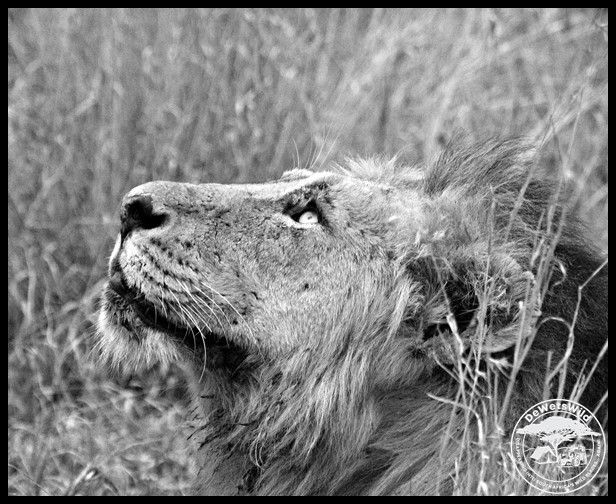
A big male Lion in the Manyeleti Nature Reserve
Young lion in Manyeleti Nature Reserve
Young lion in Manyeleti Nature Reserve
A big male Lion in the Manyeleti Nature Reserve
A big male Lion in the Manyeleti Nature Reserve
A big male Lion in the Manyeleti Nature Reserve
A young male Lion in the Manyeleti Nature Reserve
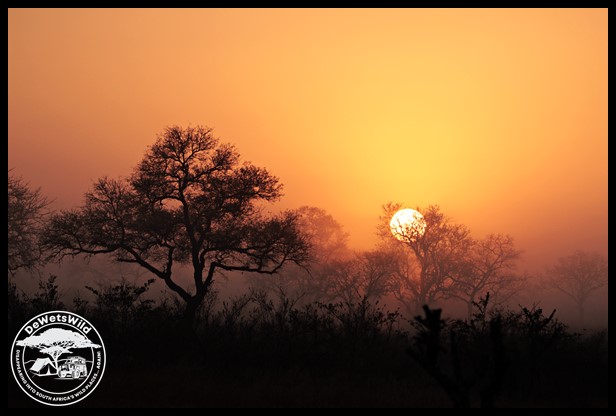
As we drove out of Buffelshoek Camp our last morning at Manyeleti Nature Reserve dawned like a painting with a glorious orange sun backlighting large trees eerily peering through the mist that settled on the plains overnight.
Sunrise over Manyeleti
Years of visiting our wild places has given me a sixth sense that told me we won’t be waiting long for another audience with Manyeleti’s monarchy that morning, but our first sighting as we drove from camp was of two spotted hyenas lying lazily on the two-spoor track, as if just waiting for us to arrive.
Lazy Spotted Hyenas on the two-spoor track
Lazy young Spotted Hyena
And then, there they were! Two enormous Lionesses with their stomachs distended from a large meal enjoyed overnight. Eventually they got up and started moving in the direction of the nearby waterhole. We followed along for a few hundred metres, until they probably felt they needed another break and picked a termite mound as an elevated bed. One of the Queens flopped onto her side almost immediately, but the other was very interested in something happening between us and the camp, still visible in the distance.
Two very full Lionesses in the Manyeleti Nature Reserve
Two very full Lionesses in the Manyeleti Nature Reserve
Two very full Lionesses in the Manyeleti Nature Reserve
Two very full Lionesses in the Manyeleti Nature Reserve
The Queen is not impressed! A Lioness in the Manyeleti Nature Reserve
Two lionesses on the move in the Manyeleti
Two lionesses on the move in the Manyeleti
Two lionesses on the move in the Manyeleti
Two lionesses on the move in the Manyeleti
Two lionesses settling on a termite mound in the Manyeleti
Being an extreme fan of African Elephants, when I made my first visit to Manyeleti Nature Reserve I was wondering how many elephants we would see there. Thankfully I can now confirm that the reserve has a thriving population of the pachyderms and they were very much in evidence as we went driving around the reserve.
This was the biggest herd we saw during our stay in the Manyeleti. In elephant society the breeding herds usually consists only of adults females and their offspring, with adult males only visiting the herd when there’s a cow in oestrus present.
Elephant family
Elephant calf
Elephant cow
Elephant cow
Elephant mother and calf
Elephant family crossing the road, with the matriarch taking a prominent protective roll
This young bull we found a bit later at a dam was definitely interested in some or other smell exuded by another elephant or elephants, using his trunk to test both the air and urine spots left on the ground.
Young Elephant bull testing for smells with his trunk
Young Elephant bull testing for smells with his trunk
Young Elephant bull testing for smells with his trunk
Young Elephant bull testing for smells with his trunk
One of our final sightings as we drove towards the gate on our way back home was of a small group of bachelor Elephant bulls hanging around at – and in – the large dam in the centre of the reserve.
Elephant bull at a large dam in Manyeleti
Elephant bull at a large dam in Manyeleti
Elephant bulls playing in a large dam in Manyeleti
Today is World Rhino Day. The ongoing war against rhino poaching still features in the headlines all over the world and unfortunately it is seldom good news. As the numbers continue to dwindle sightings of these enigmatic creatures in our wild places are getting ever more scarce. That’s probably the reason why this wonderful encounter we had with a White Rhino bull in the Manyeleti Nature Reserve when we visited earlier in September is so precious and memorable.
Surprisingly for a reserve located in one of South Africa’s tourism hotspots, the Lowveld, the Manyeleti Nature Reserve is an unexploited and unpolished gem of a destination. I’ve just recently returned from my first visit to this special place, accompanied by friend and colleague Hannes Rossouw.
The Manyeleti Nature Reserve was established in the 1960’s by the government of the Apartheid homeland Gazankulu, for exclusive use by non-white visitors. Covering an area of 227km² and sharing unfenced borders with the Kruger National Park and the Timbavati and Sabi Sand Private Game Reserves, administration of the reserve passed to the Mpumalanga Provincial Government following the end of Apartheid in 1994.
Sunrise over Manyeleti
Six Pod Mahogany trees, growing in two clusters of three each, and the only ones of their kind in the reserve, is a curious feature of Manyeleti.
Sunrise over Manyeleti
Manyeleti means “Place of stars” – looking up at the night sky will confirm this to be a very apt name – and is covered mainly by open savanna-type vegetation communities, with dense riverine forest along the course of the usually dry Nwaswitsontso River. Several large dams inside the reserve provide a year-round water supply and are focal points for the reserve’s wildlife and, consequently, human visitors.
A big male Lion in the Manyeleti Nature Reserve
Young lion in Manyeleti Nature Reserve
Lioness with a very full belly
A very alert Lioness
Young leopard in Manyeleti Nature Reserve
Young leopard in Manyeleti Nature Reserve
Cheetah in the Manyeleti Nature Reserve
Cheetah after being chased up a tree by Wild Dogs in the Manyeleti Nature Reserve
Wild Dog in the Manyeleti Nature Reserve
Playful Wild Dog pups in Manyeleti Nature Reserve
Giraffe
Elephant calf
White Rhino bull in the Manyeleti Nature Reserve
Hippos in a dam in the Manyeleti Nature Reserve
Hippo in a dam in the Manyeleti Nature Reserve
Hippo in a dam in the Manyeleti Nature Reserve
Waterbuck
Waterbuck calf
Blue Wildebeest
Nyala Bull
Young Nyala bull at Ndzhaka Camp in the Manyeleti Nature Reserve
Kudu cows being very curious about a troop of baboons
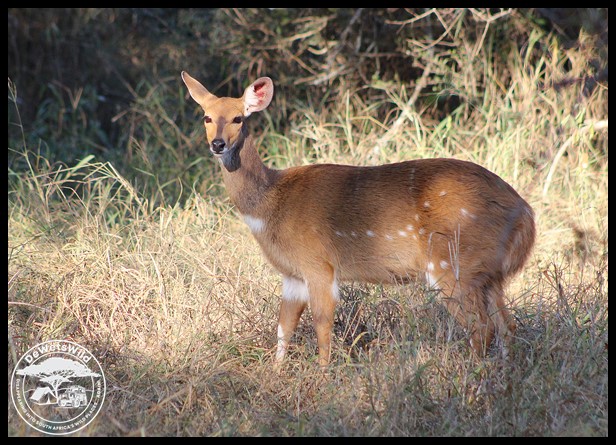
Steenbok ewe
Steenbok ewe
Red-billed Oxpeckers on a nyala bull
Arrow-marked Babbler
Black Flycatcher
Black-backed Puffback
African Hoopoe
Young Saddle-billed Storks
Grey Heron
Brown Snake Eagle
Lilac-breasted Roller
During our recent visit to the reserve, Hannes and I were hosted for one night at each of Ndzhaka and Buffelshoek Camps, and I am proud to say that DeWetsWild is now a contracted reservation agent for both. In co-operation with Hannes Rossouw Photography we will also be holding regular photographic safaris and workshops there – we’re already taking bookings for the first of these scheduled for June 2024. The camps are rustic and off the grid, and with each accommodating no more than 10 guests in 5 comfortable en-suite safari-style tents, with all meals and two daily game drives included, are perfect for an authentic bush experience. Ndzhaka is set among the enormous trees on the banks of the Nwaswitsontso almost in the centre of Manyeleti, its grounds frequented by nyala, bushbuck and waterbuck. Buffelshoek on the other hand is located on a remote open plain towards the reserve’s south-eastern corner, with herds of game and predators moving around and sometimes even through the camp to reach the local waterhole.
Ndzhaka Camp, Manyeleti Nature Reserve, September 2023
Ndzhaka Camp, Manyeleti Nature Reserve, September 2023
Ndzhaka Camp, Manyeleti Nature Reserve, September 2023
Ndzhaka Camp, Manyeleti Nature Reserve, September 2023
Ndzhaka Camp, Manyeleti Nature Reserve, September 2023
Buffelshoek Camp, Manyeleti Nature Reserve, September 2023
Buffelshoek Camp, Manyeleti Nature Reserve, September 2023
Buffelshoek Camp, Manyeleti Nature Reserve, September 2023
Buffelshoek Camp, Manyeleti Nature Reserve, September 2023
A morning coffee stop in the bush at Manyeleti, compliments of Buffelshoek Camp
On the perimeter of Ndzhaka Camp a small trough of water is like a magnet to visiting antelope. I set up my little trailcam there to see what might come visiting while we’re out on our game drive or asleep in the tent.
In upcoming posts on DeWetsWild I will be sharing some of the incredible sightings we enjoyed during our visits to Ndzhaka and Buffelshoek in the Manyeleti Nature Reserve.
Colleague and friend Hannes and I might only have had two days in the Kruger National Park before we moved on to the Manyeleti Nature Reserve (of which I will start telling you in the next installment) recently, but we still had some terrific sightings around Mopani Rest Camp – even more than we could’ve expected, and we had some pretty high hopes!
The charm of the Kruger Park really lies in the amazing diversity of habitats, plants and wildlife that finds sanctuary there.
Hill covered by Bushveld Candelabra Euphorbias next to the Tsendze River
A closer look at the Bushveld Candelabra Euphorbias growing on a hill near Shipandani Hide
African Civet
Blue Wildebeest at Mooiplaas
Black-backed Jackal looking for a little shade at Tihongonyeni
Steenbok ram in close-up portrait
Black-backed Jackal and Blue Wildebeest at Mooiplaas
Plains Zebra
Giraffe
Waterbuck
Klipspringer
Sharpe Grysbok near Mopani
No matter the weather or the time of year, the Kruger National Park is always a slice of heaven for bird-watchers!
African Scops Owl
Chinspot Batis in Mopani
Chestnut-backed Sparrowlark
Wahlberg’s Eagle
Kittlitz’s Plover
Grey-backed Sparrowlark
African Hawk-Eagles
Cardinal Woodpecker
African Green Pigeon
Black-backed Puffback
Black-headed Oriole
Southern Ground Hornbill
Seeing a Ground Hornbill trying to snatch something from between some mopane branches was a very entertaining sighting!
Buffaloes roam the north of the Kruger National Park in enormous herds, but there are also many old bulls that have broken away from the breeding groups and can be quite disagreeable!
Buffalo Calf
Buffalo Bull
Buffalo Bull
Buffalo Cow
Buffalo Cow
You know that I can never get enough of Elephants, and in the north of the Kruger Park there’s ample opportunity to enjoy these magnificent creatures, so I still have a few more photo’s and a video to share!
Elephant feeding on mopane leaves near Tihongonyeni
The very noticeable “grass notch” shows that this elephant is left-handed!
These feet were made for walking
Elephant bulls walking away from Tihongonyeni Waterhole
Of course the large predators also get us very excited, even for people who visit the Park fairly regularly like we do. We’ll be remembering our two leopard sightings – one while we had just driven into the Park, and the other the following day – every time we pass those spots in future!
Leopard up a tree near Phalaborwa Gate
Leopard in a tree on the bank of the Tsendze River south of Mopani
September is generally regarded as the start of the spring season in South Africa, but with the rainy season still weeks away and temperatures starting to climb higher as the days grow longer, it is a very dry period of the year in most of the northern parts of the country. In our wild places, like the Kruger National Park, animals are seen congregating at or near the few remaining sources of water. The Mopani area of the Park is well served by several reliable waterholes and here visitors to the Park can expect interesting sightings of birds and animals taking turns at the water’s edge.
A Steenbok drinking from a puddle in the Ngobeni streambed
Elephants on the banks of the Letaba River
Mopani is situated on a hill overlooking the large Pioneer Dam, making this the most prominent of the area’s water sources. Visitors can get close to the water along the trail through the camp or at the Pioneer Hide.
White-faced Whistling Ducks
Black-winged Stilts
Goliath Heron
African Jacana
Yellow-billed Stork
Black Crake
Lazy Hippos
Juvenile Black Crake
White-faced Whistling Ducks
Squacco Heron at Pioneer Dam
Wood Sandpiper
Big Nile Crocodiles makes Pioneer Dam a dangerous place
Immature African Fish Eagle
Marico Sunbird
Another large body of water in this section of the Kruger Park is Grootvlei Dam, more distantly located from Mopani along the S50 gravel road to Shingwedzi.
Elephant bull drinking from Grootvlei Dam
Plains zebras drinking from Grootvlei Dam
African Fish Eagle at Grootvlei Dam
Black-winged Stilt
Flock of Cut-throat Finches at Grootvlei Dam
Enormous Nile Crocodile at Grootvlei Dam
Grootvlei Dam harbours many Nile Crocodiles
Watch this short video of a big Elephant bull drinking from Grootvlei Dam on a hot September morning:
On the way to Grootvlei visitors can make a detour first to the Mooiplaas waterhole, where a drinking trough is fed by a windpump and reservoir, and then along the Nshawu Marsh where several springs provide water even in drought years. Both these places are also well frequented by large predators waiting for thirsty herbivores to ambush.
Elephants at Mooiplaas Waterhole
Elephant at Mooiplaas Waterhole
Elephant herd walking away from Mooiplaas Waterhole
A lion in the light of early morning, searching the Nshawu Marsh for easy pickings
Elephants, plains zebras and a giraffe around one of the springs in the Nshawu Marsh
Because Mooiplaas (meaning “pretty farm”) is so close to Mopani, we love whiling away the last few minutes before the gates close there, and that’s exactly what we did when this herd of Elephants were having their sundowners.
South Africa’s Kruger National Park is renowned for wonderful encounters with African Elephants, and our quick visit last week proved no exception. We were based in the Mopani region of the Park, where mopane shrubs and trees dominate the plains and elephants congregate in their numbers near permanent water sources, like the Tihongonyeni waterhole. It was on our way to Tihongonyeni late one morning that these two bulls decided to make use of a flimsy shadow cast over the road by a big tree to rest their tired legs. Every time we ventured closer to try and sneak past on the verge of the road, the bull nearer to us would give a warning step or two in our direction, trunk outstretched, and so I’d back up again. Eventually we waited half-an-hour before the two eventually allowed us, with a shake of the head and a toss of the trunk as if they’d grown tired of our meekness and just wanted to be rid of us, to pass them.
Impressive tusker near Tihongonyeni
African Elephant bull near Tihongonyeni waterhole in Kruger
African Elephant bulls near Tihongonyeni waterhole in Kruger
African Elephant bulls near Tihongonyeni waterhole in Kruger
Here’s a short video of an encounter we’ll remember fondly when passing that way again in future.
I have just returned from a visit to the Lowveld and in particular the Kruger National Park and Manyeleti Game Reserve with Hannes Rossouw Photography. The following photographs are just a little appetiser of what you can look forward to in the next few posts on DeWetsWild.
Leopard up a tree near Phalaborwa Gate
Sharpe Grysbok near Mopani
Elephant at Mooiplaas Waterhole
Elephant herd walking away from Mooiplaas Waterhole
Plains zebras drinking from Grootvlei Dam
Elephant bull drinking from Grootvlei Dam
Impressive tusker near Tihongonyeni
Elephant feeding on mopane leaves near Tihongonyeni
Squacco Heron at Pioneer Dam
African Scops Owl
Buffalo Calf
Buffalo Bull
Leopard in a tree on the bank of the Tsendze River south of Mopani
African Civet
Blue Wildebeest at Mooiplaas
Young Nyala bull at Ndzhaka Camp in the Manyeleti Nature Reserve
Young leopard in Manyeleti Nature Reserve
Young leopard in Manyeleti Nature Reserve
Young lion in Manyeleti Nature Reserve
A big male Lion in the Manyeleti Nature Reserve
Playful Wild Dog pups in Manyeleti Nature Reserve
Wild Dog in the Manyeleti Nature Reserve
Cheetah after being chased up a tree by Wild Dogs in the Manyeleti Nature Reserve
The Kruger National Park boasts with a list of 550+ species of birds recorded within its boundaries, and even though some of these were rare vagrants while many others are summer visitors, the Park always has a huge variety and number of birds to entertain keen birdwatchers – even in winter.
African Goshawk
African Hawk Eagle
African Pipit
Arrow-marked Babbler (photo by Joubert)
Black Crake
Black Storks
Black-backed Puffback
Brown-hooded Kingfisher
Brown-crowned Tchagra
Immature Brown Snake Eagle (photo by Joubert)
Crested Francolin
Fork-tailed Drongo
Goliath Heron
Female Green-winged Pytilia (photo by Joubert)
Male Grey-backed Sparrow-Lark
Kori Bustard
Lilac-breasted Roller (photo by Joubert)
Little Bee-eater
Magpie Shrike
Marabou Stork (photo by Joubert)
Martial Eagle
Natal Spurfowl
Chestnut-backed Sparrow-Lark
Red-billed Hornbill (photo by Joubert)
Red-crested Korhaan
Saddle-billed Stork (photo by Joubert)
Secretary Bird (photo by Joubert)
Swainson’s Spurfowl chicks
Tawny-flanked Prinia (photo by Joubert)
Three-banded Plover (photo by Joubert)
Verreaux’s Eagle-Owl
Water Thick-knee (photo by Joubert)
White-crowned Shrike (photo by Joubert)
White-fronted Bee-eater snacking on a Guineafowl butterfly
The Kruger National Park is home to at least 147 species of mammals, among the highest counts of any national park in the world. Many of these are small and difficult to see and/or identify, such as the various kinds of bats, shrews and rodents. However, there are also a number of other animals that are easily spotted from the roads traversing the park and bring great joy to the hundreds of thousands of visitors that flock to the reserve every year. In this post we’ll be featuring some of the mammals we encountered during our visit in June 2023.
Chacma Baboons are always great crowd pleasers, with their all to familiar human-like characters and antics. You might also enjoy our short video of two youngsters interacting with each other and their parents.
Male Baboon clinging to a log for his afternoon nap
Baboon spa treatment
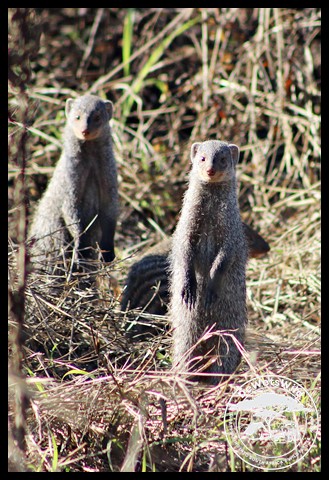
Banded Mongooses move around in troops and are often seen near picnic spots where they look for scraps, like these were doing at Tshokwane.
Black-backed Jackal seen early morning on the H10 road from Lower Sabie to Tshokwane
The comical Blue Wildebeest is a familiar sight all over the Kruger National Park.
Blue Wildebeest
Blue Wildebeest
Blue Wildebeest
Blue Wildebeest
We’ve already taken a closer look at the Kruger National Park’s big Buffalo herds.
Bushbuck are found in areas of dense vegetation, such as the riverine forests lining most of the Kruger’s large rivers.
Bushbuck ewe
The Dwarf Mongoose is the smallest carnivore occurring in the Kruger National Park. They like living in termite mounds, and to sun themselves outside their homes on cold mornings!
Giraffe catching the first rays of sunshine on the Red Rocks Loop
Giraffe Calf
Hippos may look like jolly creatures, but they’re actually among the most dangerous animals in Africa!
Hippo Babies
Hippopotamus (photo by Joubert)
Hippo baby (photo by Joubert)
Hippo babies (photo by Joubert)
Lazy family of hippos at Mestel Dam
Pair of Hippos walking along the Letaba River
Hippo family at rest
Tamboti Tented Camp is well known for its Honey Badgers who come raiding the trash cans at night, which is why we had our little cameratrap set up outside our accommodation to capture the nightly attack!
Honey Badger raiding our trash can at Tamboti
Honey Badger raiding our trash can at Tamboti
Honey Badger raiding our trash can at Tamboti
The Impala is the most numerous large mammal in the Park and so familiar that most visitors pay them little more attention than a passing glance, which is a real pity as they are quite beautiful antelope!
Impala ewe
Impala ram
Impala ram (photo by Joubert)
Impala rams in a mock fight (photo by Joubert)
Impala ewe close-up (photo by Joubert)
Be sure to scan rocky outcrops for the dainty Klipspringer!
Many people consider the Kudu among the most regal of Africa’s antelope.
Kudu bull
Kudu Bulls
Kudu calf
Kudu Bull (photo by Erlo van Aswegen, Joubert’s friend who was visiting with us)
Kudu cow portrait
Kudu bull
This Large-spotted Genet also came snooping around the trash can in Tamboti while the Badger was roaming elsewhere in camp.
Large-spotted Genet
Large-spotted Genet
We’ll remember our June 2023 visit to the Kruger National Park for a long time thanks to our wonderful Leopard sightings!
Lions are at the top of the wish list for most visitors visiting the Kruger National Park, and there’s no denying that seeing these enormous cats roaming wild is always an awesome experience!
Young male lion
Lion just outside Pretoriuskop
Lioness in the minutes before dawn (photo by Joubert)
Pregnant Lioness
Lion (photo by Joubert)
Lion (photo by Erlo van Aswegen)
Can you see the lioness hidden among the lalapalms? (photo by Joubert)
I think the video of the Lioness and her cute cubs deserves another look!
Nyalas are seen more frequently in the northern reaches of the Kruger National Park.
Nyala calf
Nyala bull
Nyala bulls mingling on the banks of the Olifants River (photo by Joubert)
Nobody will complain about the fact that the photogenic Plains Zebras are frequently seen in almost every area of the Park.
Loving Zebras
Plains Zebra (photo by Joubert)
Plains Zebra Trio (photo by Joubert)
Plains Zebra
Plains Zebras gathering at a waterhole in the Shingwedzi River
Reedbuck are a rare sighting in Kruger, but the grassy plains north of Lower Sabie is a good place to go looking for them – we found this ewe along the H10 road.
Reedbuck ewe seen along the H10 road north of Lower Sabie in the Kruger National Park
The Roan Antelope is one of the two rarest species of large antelope found in the Kruger National Park, so we were very excited to have seen them twice during our visit in June 2023; a sizable herd at the Babalala Picnic Site and later a pair along the Shingwedzi River.
Roan antelope at Babalala
Roan antelope at Babalala
Roan antelope at Babalala
Roan antelope at Babalala
Roan Antelope along the Shingwedzi River
Roan Antelope along the Shingwedzi River
Scrub Hares can often be seen among the huts in Kruger’s rest camps after dark, but seeing them out-and-about during daylight happens less frequently.
Scrub Hare
Scrub Hare
The tiny Sharpe’s Grysbok is found most regularly in the far north of the Kruger National Park.
Sharpe’s Grysbok
Side-striped Jackals are seen much less often than their black-backed cousins, so regularly seeing this one near Shingwedzi (caught here by our little cameratrap) was a rare treat.
Side-striped Jackal at Shingwedzi
The Slender Mongoose is a very active, usually solitary, predator – we were lucky to find a few willing to pose for photographs!
Slender Mongoose sunning itself on a rock
Slender Mongoose sitting out in the open on a gravel road
Slender Mongoose (photo by Joubert)
Spotted Hyenas are mostly active between dusk and dawn and a regular sighting on guided drives conducted by the Park authorities after dark.
Spotted Hyena (photo by Joubert)
Spotted Hyena (photo by Joubert)
The Steenbok is probably Kruger’s most frequently encountered small antelope.
Steenbok
Steenbok
Steenbok (photo by Joubert)
Not only are Tree Squirrels very cute but they’re also excellent alarms when predators are around, so pay attention when you hear their excited chatter!
The north of the Kruger National Park, especially around Mopani and Shingwedzi Rest Camps, is the best place to go searching for the rare Tsessebe.
Tsessebes
Tsessebes
Warthogs might not be the most attractive animals, yet they’re sure to bring a smile to your face!
Warthog
Warthog
With their white-circled backsides the Waterbuck is instantly recognizable.
Waterbuck bull
Waterbuck trio
Waterbuck bulls
Waterbuck herd
Given the huge danger poaching poses to the continued existence of the White Rhino we were extremely grateful to have had three encounters with these enigmatic beasts when we visited the Kruger National Park in June 2023.









 DeWetsWild