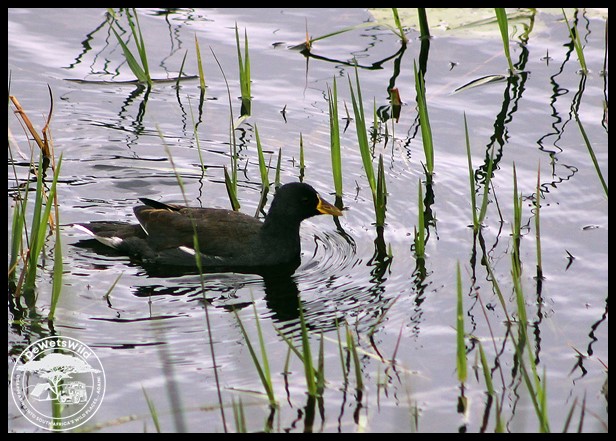
Finding a Lesser Moorhen at a newly formed pan of water in the Eastern Shores section of the iSimangaliso Wetland Park was a real highlight of my most recent visit to the “Place of Miracles and Wonders”, as it brings me to 609 species of birds seen in South Africa.
Lesser Moorhen
Lesser Moorhen
Lesser Moorhen
Lesser Moorhen
Lesser Moorhen
Lesser Moorhen
Lesser Moorhen
Paragallinula (Gallinula) angulata
The Lesser Moorhen inhabits freshwater wetlands ranging from periodically flooded grasslands to permanent swamps and marshes, showing a strong preference for areas densely covered by emergent vegetation and limited open water. They’re omnivores, feeding on water plants and aquatic invertebrates.
Lesser Moorhens start breeding after the first floods, building their cup-shaped grass nests on a platform of flattened living grass, reeds or sedges. The female is responsible for most of the incubation duties, with the clutch of up to nine eggs (though about 6 is more usual) hatching after about 3 weeks. The chicks start flying at about 5 weeks of age, but remain with their parents up to about 2 months old. Fully grown they’ll weigh about 135g and measure approximately 23cm in length. Lesser Moorhens are very shy and seldom venture into the open.
(Remember that DeWetsWild will gladly assist you with reservations and guided tours of the iSimangaliso Wetland Park if you’d like to visit this wonderful place as well.)
A wonderful consequence of the water wonderland that is the iSimangaliso Wetland Park now, is the incredible numbers of amphibians evident throughout the Park. I’m featuring just a few of them here.
Driving around the Park you cannot escape the calls of the Painted Reed Frogs, though they’re almost impossible to see without stepping out of your vehicle and searching for them (which isn’t allowed, due to the presence of dangerous animals). I was therefore very impressed with myself when I saw this Painted Reed Frog as I was driving by. See how small it is!
Can you spot the Painted Reed Frog?
Painted Reed Frog at a temporary pan on the eastern shores of Lake Saint Lucia
Painted Reed Frog at a temporary pan on the eastern shores of Lake Saint Lucia
While using the facilities at one of the stopping points on the Western Shores of Lake Saint Lucia I noticed this Peeping Tom hiding in a corner. It is a Red Toad and I left him there to amuse the next visitor as well…
Red Toad in an ablution block in the Western Shores section of the iSimangaliso Wetland Park
Platannas seem to have quickly colonized all the newly formed stretches of water in the iSimangaliso Wetland Park, but usually quickly dive under water at the slightest disturbance. It was pleasing to find one that wasn’t too shy to pose for a few photo’s.
Platanna
Platanna
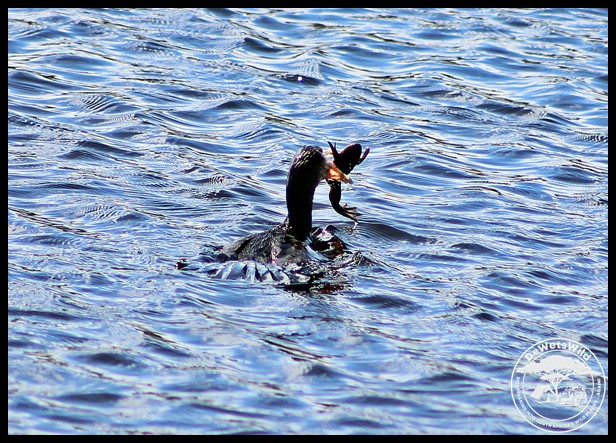
It would be better if it cultivated a more apprehensive disposition though, because Platannas are on the menu of many waterbirds and in the 10 days I spent in iSimangaliso on this latest trip I saw many a Platanna disappearing down a gullet.
Reed Cormorant with a Platanna
After dark, hundreds of immature African Bull Frogs emerged onto the roads, especially following rainy days.
Immature African Bull Frog on a road in the iSimangaliso Wetland Park
Kumasinga Hide at uMkhuze Game Reserve has turned into a paradise for Southern Foam Nest Frogs, with dozens of the cute little creatures clinging to the hide’s framework, with a few foam nests already constructed over the water and a few still in the making (allowing me to make a video of the process).
The toes of a Foam Nest Frog
Foam Nest Frog in Kumasinga Hide
Foam Nest Frog in Kumasinga Hide
Foam Nest Frog in Kumasinga Hide
Foam Nest Frog in Kumasinga Hide
Foam Nest Frog in Kumasinga Hide
Foam Nest Frogs mating
Foam Nest Frog nests
Foam Nest Frogs mating
Foam Nest Frogs mating
Remember that DeWetsWild will gladly assist you with reservations and guided tours of the iSimangaliso Wetland Park if you’d like to visit this wonderful place as well.
I mentioned in my previous post about my latest tour of the iSimangaliso Wetland Park that I have never seen the Park so wet. There seemed to be water everywhere, and in enormous quantities. And the most astounding thing about that is that we are only at the start of the rainy season (over 150mm of rain fell just in just 2 days during our trip). It is amazing how resiliently nature is rebounding in a part of the country that, not even a generation ago, was almost completely covered by thirsty plantations of exotic pine and bluegum trees.
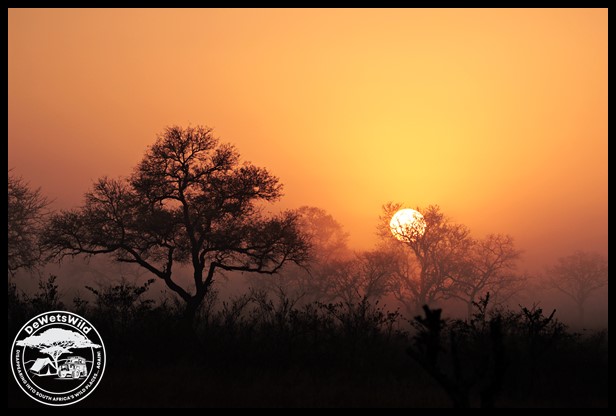
Sunrise over the wetlands
Sunrise over the wetlands
A stretch of the vastly expanded Lake Bhangazi
A stretch of the vastly expanded Lake Bhangazi
Mfabeni Swamp
Mfabeni Swamp
Mfabeni Swamp
A quiet corner of the Mfabeni Swamp
Banded Tilapia. The newly formed ponds have quickly been populated by fish and tadpoles.
Mfabeni Swamp
I took this video from the Mziki viewpoint near Mission Rocks, to show just a portion of the extent of the wetlands on the eastern shores of Lake Saint Lucia. The bird songs coming from the forest in the foreground is rather special as well.
Lake Bhangazi is a beautiful freshwater lake near Cape Vidal in the iSimangaliso Wetland Park.
Remember that DeWetsWild will gladly assist you with reservations and guided tours of the iSimangaliso Wetland Park if you’d like to visit this wonderful place as well.
I’m fresh back from a 10 day tour through the iSimangaliso Wetland Park, visiting the Eastern and Western Shores of Lake Saint Lucia, the estuary, beaches and trails around the town of Saint Lucia as well as the uMkhuze section of the Park. Regular readers will know that this is one of my favourite South African wild places to visit and take guests to, but in almost thirty years of visiting I have never seen the Park live up to the “Wetland” part of its moniker as wonderfully as I have on this latest trip. Of course there’s a lot of photographs and videos in store for you in the weeks to come, but here’s a little appetizer to tide you over while I get down to the business of sorting and editing hundreds more.
An enormous jellyfish that drifted out of a rough sea on the beach at St. Lucia
Humpbacked Whale tail-slamming off St. Lucia
Cattle Egrets in flight over the sea at the estuary of Lake St. Lucia
Common Bush Brown butterfly
Spotted Buff butterfly
The bright flowers of the Canary Creeper
Mushrooms thriving in the damp coastal forest
Blue Pansy butterfly
African Piedspot Dragonfly
Mating Common Blue butterflies
Yellow Weaver
Kudu calf
Bushbuck ram
Crested Guineafowl
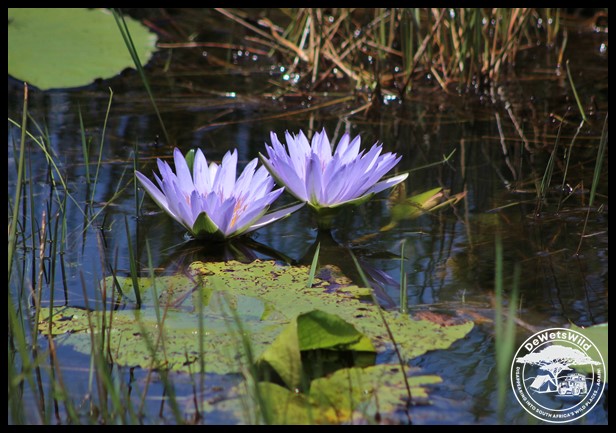
African Pygmy Geese among Blue Water Lilies
Immature Kelp Gull
Collared Pratincole
Lesser Moorhen
Sunrise over the wetlands
Narina Trogon
Road through the swamp forest near Cape Vidal
Squacco Heron
A stretch of the vastly expanded Lake Bhangazi
Huge Nile Crocodile slipping into the Mfabeni swamp
Reed Cormorant with a Platanna
Mission Rocks
Natal Rock Crab
Blue Water Lilies
African Buffalo
Sunrise over the wetlands
Spotted Hyena
African Buffalo
This leucistic Samango Monkey is a familiar inhabitant of Cape Vidal
Mfabeni Swamp
Secretary Bird
Plains Zebras
Platanna
Cape Vidal at low tide
Swift Tern
Samango Monkeys
Little Bee-eaters
African Swamphen
Kudu couple
Yellow-throated Longclaw
Purple Heron
Hippopotamus
The toes of a Foam Nest Frog
Flatface Longhorn Beetle (Lasiopezus longimanus), identified with the kind assistance of the “Insects only – Southern Africa” facebook page.
Marsh Terrapins
Slug close-up
Foam Nest Frogs mating
Foam Nest Frog in Kumasinga Hide
Foam Nest Frogs mating
Elephant bull on a walk about
Elephant bull at uMkhuze
Remember that DeWetsWild will gladly assist you with reservations and guided tours of the iSimangaliso Wetland Park if you’d like to visit this wonderful place as well.
Surprisingly for a reserve located in one of South Africa’s tourism hotspots, the Lowveld, the Manyeleti Nature Reserve is an unexploited and unpolished gem of a destination. I’ve just recently returned from my first visit to this special place, accompanied by friend and colleague Hannes Rossouw.
The Manyeleti Nature Reserve was established in the 1960’s by the government of the Apartheid homeland Gazankulu, for exclusive use by non-white visitors. Covering an area of 227km² and sharing unfenced borders with the Kruger National Park and the Timbavati and Sabi Sand Private Game Reserves, administration of the reserve passed to the Mpumalanga Provincial Government following the end of Apartheid in 1994.
Sunrise over Manyeleti
Six Pod Mahogany trees, growing in two clusters of three each, and the only ones of their kind in the reserve, is a curious feature of Manyeleti.
Sunrise over Manyeleti
Manyeleti means “Place of stars” – looking up at the night sky will confirm this to be a very apt name – and is covered mainly by open savanna-type vegetation communities, with dense riverine forest along the course of the usually dry Nwaswitsontso River. Several large dams inside the reserve provide a year-round water supply and are focal points for the reserve’s wildlife and, consequently, human visitors.
A big male Lion in the Manyeleti Nature Reserve
Young lion in Manyeleti Nature Reserve
Lioness with a very full belly
A very alert Lioness
Young leopard in Manyeleti Nature Reserve
Young leopard in Manyeleti Nature Reserve
Cheetah in the Manyeleti Nature Reserve
Cheetah after being chased up a tree by Wild Dogs in the Manyeleti Nature Reserve
Wild Dog in the Manyeleti Nature Reserve
Playful Wild Dog pups in Manyeleti Nature Reserve
Giraffe
Elephant calf
White Rhino bull in the Manyeleti Nature Reserve
Hippos in a dam in the Manyeleti Nature Reserve
Hippo in a dam in the Manyeleti Nature Reserve
Hippo in a dam in the Manyeleti Nature Reserve
Waterbuck
Waterbuck calf
Blue Wildebeest
Nyala Bull
Young Nyala bull at Ndzhaka Camp in the Manyeleti Nature Reserve
Kudu cows being very curious about a troop of baboons
Steenbok ewe
Steenbok ewe
Red-billed Oxpeckers on a nyala bull
Arrow-marked Babbler
Black Flycatcher
Black-backed Puffback
African Hoopoe
Young Saddle-billed Storks
Grey Heron
Brown Snake Eagle
Lilac-breasted Roller
During our recent visit to the reserve, Hannes and I were hosted for one night at each of Ndzhaka and Buffelshoek Camps, and I am proud to say that DeWetsWild is now a contracted reservation agent for both. In co-operation with Hannes Rossouw Photography we will also be holding regular photographic safaris and workshops there – we’re already taking bookings for the first of these scheduled for June 2024. The camps are rustic and off the grid, and with each accommodating no more than 10 guests in 5 comfortable en-suite safari-style tents, with all meals and two daily game drives included, are perfect for an authentic bush experience. Ndzhaka is set among the enormous trees on the banks of the Nwaswitsontso almost in the centre of Manyeleti, its grounds frequented by nyala, bushbuck and waterbuck. Buffelshoek on the other hand is located on a remote open plain towards the reserve’s south-eastern corner, with herds of game and predators moving around and sometimes even through the camp to reach the local waterhole.
Ndzhaka Camp, Manyeleti Nature Reserve, September 2023
Ndzhaka Camp, Manyeleti Nature Reserve, September 2023
Ndzhaka Camp, Manyeleti Nature Reserve, September 2023
Ndzhaka Camp, Manyeleti Nature Reserve, September 2023
Ndzhaka Camp, Manyeleti Nature Reserve, September 2023
Buffelshoek Camp, Manyeleti Nature Reserve, September 2023
Buffelshoek Camp, Manyeleti Nature Reserve, September 2023
Buffelshoek Camp, Manyeleti Nature Reserve, September 2023
Buffelshoek Camp, Manyeleti Nature Reserve, September 2023
A morning coffee stop in the bush at Manyeleti, compliments of Buffelshoek Camp
On the perimeter of Ndzhaka Camp a small trough of water is like a magnet to visiting antelope. I set up my little trailcam there to see what might come visiting while we’re out on our game drive or asleep in the tent.
In upcoming posts on DeWetsWild I will be sharing some of the incredible sightings we enjoyed during our visits to Ndzhaka and Buffelshoek in the Manyeleti Nature Reserve.
We are delighted to announce that DeWetsWild portfolio of reservation services has grown again and now includes the following luxury lodgings in some of South Africa’s best known destinations!
In Addo Elephant National Park:
Kuzuko Lodge
In the Bushveld:
ANEW Resort Hunter’s Rest
Clifftop Exclusive Safari Hideaway, Welgevonden Private Game Reserve
KwaFubesi Tented Safari Camp, Mabula Private Game Reserve
Next time you are planning a visit to any of the ATKV Resorts, remember that DeWetsWild can assist you with your reservations! The ATKV’s resorts are excellent bases from which to explore many of South Africa’s best known natural and cultural attractions.











 DeWetsWild