
Saldanha Bay and the Langebaan Lagoon on South Africa’s West Coast was formed as few as 9,000 years ago when the Atlantic Ocean breached the barrier dunes along the coast. Langebaan Lagoon – 15km long, between 1 and 4km wide and up to 6m deep – is still marine in nature, not receiving any fresh water from inflowing rivers, and subject to the oceanic tides. The lagoon with its crystal clear water is renowned as a refuge for wading birds, many of which migrate here in our summer months – with more than 70,000 counted at times! – and a staggering array of marine life, and was proclaimed a marine nature reserve in 1973. It attained the status of a national park in 1985 and, following the incorporation of more land adjacent to the lagoon from 1987 onwards the name was changed from Langebaan National Park to West Coast National Park in 1988. In the same year the Park was given recognition as a wetland of international importance in terms of the Ramsar convention.
Today, the Park covers 400km² of which the lagoon accounts for 56km². Aside from the 30km of pristine Atlantic coastline (known as Sixteen Mile Beach) and a few offshore islands the rest is undulating sandy terrain broken by a few limestone and granite outcrops and covered by a rich variety of Fynbos vegetation communities and South Africa’s most extensive salt marshes. All this is inhabited by at least 54 land mammal species, over 300 bird species, more than 30 kinds of reptiles and 8 kinds of amphibians, not to mention the several hundred species of marine creatures. The Park is a stronghold for the Black Harrier (an endangered species) and African Oystercatcher and hosts the largest breeding colony of Kelp Gull in South Africa. Most of the Park’s preciously little 280mm average annual rainfall occurs in winter, when daytime temperatures average 19ºC. In summer, temperatures may soar above 40ºC but averages around 28ºC.

Angulate Tortoise

Male Southern Black Korhaan

Cape Spurfowl

White-backed Mousebird

Cape Spurfowl

Grey-winged Francolin

Black Harrier (photo by Joubert)

Ostrich pair

Sea Lavender (Limonium species)

White-throated Canary

Steppe, or Common, Buzzard

Steenbok

Female Yellow Canary

Black-winged Kite

Wattled Starling

Eland

Ostrich pair

Common Starlings

Steenbok

Bontebok

Ostrich male

A view of iconic Table Mountain all the way from the West Coast National Park
The Park’s focal point is the Geelbek Manor, a restored farmhouse in Cape Dutch style complete with its outbuildings that date back to 1860. The farm was settled much longer before then though and around the 1750’s was the northernmost point of Dutch influence under the Dutch East India Company’s occupation of the Cape of Good Hope, marked to this day by the VOC logo on a stone beacon erected by their representatives that can be seen at Geelbek. The homestead now houses a top-notch restaurant, while the stables have been converted into a dormitory and educational facility for visiting school groups. A replica of a set of fossilized footprints found in the area, dated to 117,000 years ago and dubbed “Eve’s footprints”, can be seen in the small information centre next to the restaurant (the original footprints are to be seen in the National Museum in Cape Town).

The VOC (Dutch East India Company) marker near Geelbek

Sunrise at Geelbek in the West Coast National Park

Geelbek Manor

The historic Geelbek Manor, now a restaurant

The historic Geelbek Manor, now a restaurant

Sunset at Geelbek in the West Coast National Park

Geelbek’s stables have been converted to dormitories and educational facilities

Replica of “Eve’s Footprints” in the information centre at Geelbek

Barn Owl

Barn Swallow

Bontebok

Cape Hare

Cape Spurfowl (photo by Joubert)

Cape Weaver (photo by Joubert)

Clicking Stream Frog

Eland

Marbled Leaf-toed Gecko

Marbled Leaf-toed Gecko

Sunrise over the plain at Geelbek

Mole Snake (photo by Joubert)

Pied Crows

Rock Kestrel

Rock Kestrel

Rock Martin

African Sacred Ibis

Speckled Pigeon

Spider webs
The two birdwatching hides at Geelbek is rated among the best in the country, and with good reason. At low tide the mud flats in front of the hides attract thousands of wading birds after invertebrate prey, and the walk ways leading to both allow a closer view of the community of plants and invertebrates in the extensive salt marshes.

The southern of the two hides at Geelbek

The northern of the two hides at Geelbek

Salt marsh in the West Coast National Park, dominated by Perennial Glasswort

Salt marsh in the West Coast National Park, dominated by Perennial Glasswort

Salt marsh in the West Coast National Park, dominated by Perennial Glasswort

Perennial Glasswort

African Oystercatcher

Kittlitz’s Plover

Lesser Flamingoes (photo by Joubert)

Shore Crab (photo by Joubert)

Greater Flamingo (photo by Joubert)

Sanderling

Kittlitz’s Plover

Common Whimbrel

The mud flats exposed at Geelbek on the low tide

Greater Flamingoes

Grey Plover

Kelp Gull

Greater Flamingoes

Cape Teal

Little Stint

Three-banded Plover

Female Southern Double-collared Sunbird

Flock of Ruddy Turnstones (photo by Joubert)

Congregation of hundreds of birds at Geelbek

Pied Avocets

Curlew Sandpipers

Egyptian Goose (photo by Joubert)

White-fronted Plover

Little Stint

Kittlitz’s Plover

Common Whimbrel

Little Egret

Greater Flamingo in flight

Greater Flamingo

Sanderling

Common Ringed Plover

Common Whimbrels

Common Greenshanks

Curlew Sandpiper

Wattled Starling

Kittlitz’s Plover

Greater Flamingoes

Pied Avocets

Common Ringed Plover

Grey Plover
Driving between the town of Langebaan and Geelbek visitors should not miss the turnoff to the Seeberg (Sea Mountain) viewpoint. From atop the massive granite boulder you can see almost every corner of the lagoon and most of the national park. In the little house built on the boulder – at one point actually inhabited – is a fascinating display on the history of the area.

Steenbok

Female Southern Black Korhaan

Karoo Scrub Robin

Seeberg viewpoint

The viewpoint and information room at Seeberg

The view from Seeberg towards Postberg on the opposite side of the Langebaan Lagoon

The view southwards from atop Seeberg

Rock Dassies (or Hyraxes)

Black Girdled Lizard

Common Starling (photo by Joubert)

Grey-winged Francolin

Steenbok
Below Seeberg, on the shores of the lagoon, is another bird-watching hide from where the multitude of waterbirds can be watched from close quarters.

Seeberg Hide looks like a ship at a distance

A portion of the view from the Seeberg Birdhide

Salt marsh in the West Coast National Park, dominated by Perennial Glasswort

Cape Fur Seal swimming in the Langebaan Lagoon

Curlew Sandpipers

Common Ringed Plovers

Caspian Tern

Kittlitz’s Plover

Immature Kittlitz’s Plover

White-fronted Plover

Medusa’s Head Euphorbia

Suspect this is a kind of Erica

White-throated Swallows

Seeberg seen from the hide of the same name
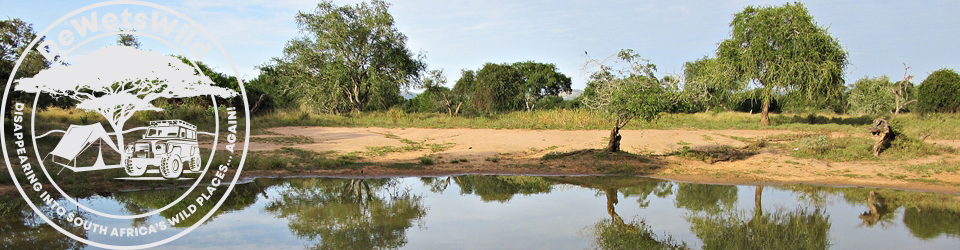
While there’s no shortage of salt water in the West Coast National Park, fresh water is a rare commodity. One of the few sources is the Abrahamskraal waterhole, where the excellent birdwatching hide allows visitors to see a whole different community of birds and animals.

The hide at Abrahamskraal waterhole in West Coast National Park

The Abrahamskraal waterhole in West Coast National Park

African Stonechat

African Swamphen

Black-winged Stilt

Cape Shoveler

Cape Teal

Common Greenshank

Eland

Kelp Gull (photo by Joubert)

Little Grebe

African Spoonbill

White-throated Swallow

Yellow-billed Ducks

Yellow-billed Duck
On the western shore of the lagoon is the beautiful beaches of Kraalbaai and Preekstoel, complete with white sand and yachts and houseboats bobbing on the crystal clear water.

Kraalbaai on the Langebaan Lagoon

The white beaches and clear water of the Langebaan Lagoon

The beach at Preekstoel

Preekstoel (Pulpit)

The beach at Preekstoel

a Hartlaub’s Gull in the crystal clear water of the Langebaan Lagoon

Cape Bulbul

Cape Bunting

Cape Robin-Chat

Karoo Prinia

Karoo Scrub Robin

Female Dusky Sunbird
Tsaarsbank is a rocky beach on the Atlantic Ocean that faces out towards Vondeling Island, which is jam-packed with a colony of Cape Fur Seals and a myriad of seabirds – they even make themselves at home inside and on top of the abandoned buildings dating back to the times when whaling was a major industry in Saldanha.

Atlantic Ocean at Tsaarsbank

Vondeling Island teems with seals and seabirds

Crowned Cormorant

Ruddy Turnstone

Kelp Gulls facing the waves

Shells accumulating on the beach at Tsaarsbank

Seashells on the seashore

Shells accumulating on the beach at Tsaarsbank

Mussel shells and a dead crab that was deposited on the beach at Tsaarsbank

Crowned Cormorants

Young Cape Fur Seal on the beach at Tsaarsbank

African Oystercatcher

Unidentified shrub at West Coast National Park

African Oystercatcher

A seal skull on the beach at Tsaarsbank

A mummified seal carcass on the beach at Tsaarsbank

Immature Kelp Gull

Hartlaub’s Gull

White-necked Raven

Exposed sand dunes at the back of Tsaarsbank
Unfortunately for us, the Postberg section of the Park is only open to visitors in August and September at the peak of the spring flower season, so we will have to return then to explore that area beyond the glimpses we had from the road leading to Tsaarsbank.

Bontebok grazing in the Postberg section of the West Coast National Park
During our visit to the West Coast National Park in December ’22 we stayed in the Van Breda Cottage just behind the Geelbek Manor. The historic cottage sleeps six people in three bedrooms, with a bathroom, fully equipped kitchen and spacious lounge. The wide stoep has a built-in braai and a lovely view towards the lagoon. Other accommodation options available in the Park include the Abrahamskraal Cottage, situated among the fynbos to the south of Geelbek, Jo-Anne’s Beach House, located beautifully with a view of the lagoon on the narrow spit of land between the lagoon and the ocean in the west of the Park, and the 2-bed Steytler Cottage at the Geelbek Manor. Remember that DeWetsWild can assist you with bookings if you are planning a visit to the West Coast National Park – either in the Park itself or at the Port Owen Marina in nearby Velddrif. Visitors to the Park can enjoy various adventure activities provided by operators in the surrounding towns, enjoy hiking or mountain bike trails, diving and swimming in the lagoon or at the beaches, or sightseeing along the excellent tar and gravel road network. Picnic sites with braai (South African barbeque) facilities are available at Tsaarsbank and Preekstoel.

Van Breda Cottage in the West Coast National Park, December 2022

Van Breda Cottage in the West Coast National Park, December 2022

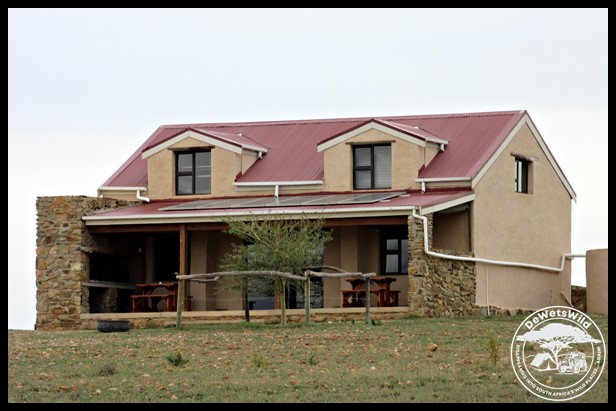
Abrahamskraal Cottage

Steytler Cottage
While the West Coast National Park has no shop and only the one restaurant at Geelbek, the holiday town of Langebaan just outside the northern entrance gate into the Park has all the amenities visitors might require. The West Coast National Park is easily accessible from Cape Town, less than an hours drive away along the R27 highway.











 DeWetsWild